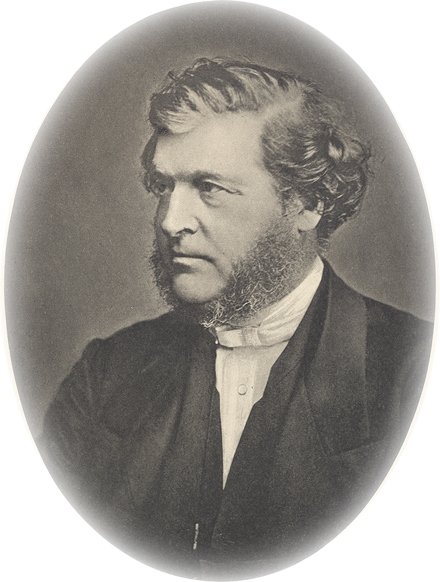
Having tried to look up the series I did some years ago on Gail Riplinger's dishonest quotations in 'New Age Bible Versions', it occurred to me to link the whole thing in one post, hence this one.
The series, 'The Craft of Dishonest Quotation'. deals primarily with Mrs. Riplinger's lies about B.F. Westcott, and the word is not too strong, as documented below.
Part 1
Part 2
Part 3
Part 4
Part 5
Part 6
Part 7
Part 8
Part 9
Conclusion
Was Westcott an Occultist? Appendix 1
Was Westcott a Communist? Appendix 2
Westcott and 1 John 2:2. Appendix 3
On the Use of Words. Appendix 4
Another Word on 'The Christ'. Appendix 5
'The Godhead's Gone' - Is that Bad? Appendix 6
Watch out for the comments on some of the posts, there is some serious mud-slinging going on.
Tuesday, September 10, 2013

Monday, July 15, 2013
The Right to be Wrong: Why Pop-Postmodernism leads to tyranny
To the unreflective, the slogan of postmodernism that "all views are equally right" sounds wonderful. The suggestion (quite false, I am quick to add) is that this means an end to persecution. Well, no, not really. For you see on a popular level, this idea that no-one is wrong and all are right reduces to the idea that no-one is allowed to be wrong. And that idea finally ends in tyranny. For we all understand that there is such a thing as truth and error, and in everyday life we use such categories. That's a good thing, for if I wish to put fuel in my car it is important for me to put the right fuel in, or the car will not run on it!
And the same thing applies with ideologies and philosophies; all of these work on the basis that they are true and the others are false, even Postmodernism does that! And people will keep on acting in such a way, whether they know it or not, whether they are honest about it or not.
And that is why the spread of the leaven of pop-postmodernism is dangerous, because the application of the idea that all sincerely-held views are valid is quite simply that people assume views that dissent from theirs are not sincerely held. This conclusion is not based upon assessment of people, but upon an often unconscious misapplication of pop-postmodernism. Not that it is merely found in recent decades, for the forerunners of Postmodernism have often fallen into the same trap, as the early Unitarians who assumed that all Trinitarian clergymen and preachers had to be hypocrites because "no educated man could believe in the Trinity".
Now, I am not saying that the "right to be wrong" means I have a right not to be corrected, but it must mean I have a right not to have the state attempt to correct me by means of penal sanctions. That is the great basis of the 18th century idea of toleration, that the state gives us a right to be wrong within certain limits (I do not have the right to persecute), and within those limits a vigorous intellectual debate can take place. It means no state heresy trials, but preserves the rights of individual debate, and of churches and societies to hold their own views and enforce them internally (so the Communist Party has the right to eject members who cease to be Communists).
Deny the right to be sincerely mistaken, and you deny any meaningful sort of toleration, because you assume that intellectual dissent is always due to deliberate evil. Western culture is dangerously close to making such a denial a matter of statute law, and that should concern everyone. I want the right to be wrong.
And the same thing applies with ideologies and philosophies; all of these work on the basis that they are true and the others are false, even Postmodernism does that! And people will keep on acting in such a way, whether they know it or not, whether they are honest about it or not.
And that is why the spread of the leaven of pop-postmodernism is dangerous, because the application of the idea that all sincerely-held views are valid is quite simply that people assume views that dissent from theirs are not sincerely held. This conclusion is not based upon assessment of people, but upon an often unconscious misapplication of pop-postmodernism. Not that it is merely found in recent decades, for the forerunners of Postmodernism have often fallen into the same trap, as the early Unitarians who assumed that all Trinitarian clergymen and preachers had to be hypocrites because "no educated man could believe in the Trinity".
Now, I am not saying that the "right to be wrong" means I have a right not to be corrected, but it must mean I have a right not to have the state attempt to correct me by means of penal sanctions. That is the great basis of the 18th century idea of toleration, that the state gives us a right to be wrong within certain limits (I do not have the right to persecute), and within those limits a vigorous intellectual debate can take place. It means no state heresy trials, but preserves the rights of individual debate, and of churches and societies to hold their own views and enforce them internally (so the Communist Party has the right to eject members who cease to be Communists).
Deny the right to be sincerely mistaken, and you deny any meaningful sort of toleration, because you assume that intellectual dissent is always due to deliberate evil. Western culture is dangerously close to making such a denial a matter of statute law, and that should concern everyone. I want the right to be wrong.
Wednesday, July 10, 2013
Conspiracy Mania
As one who still recalls the frequent bomb attacks by the Provisional IRA that were so marked a feature of my childhood (all the more so since we lived close to a military base, though mercifully one that was never targeted), I cannot help but be variously amused and disgusted by the fact that certain persons in the US seem incapable of hearing about a terrorist outrage without immediately declaring that it is a "false flag attack". This makes no sense, of course, when no "flag" has been shown at all! So why do it? Well, the cynic in me (whom I must be careful not to feed too often) suggests that this is in order to boost ratings, but the alternative suggestion arises that in fact it is because the people who make these suggestions have so entered into the conspiracy mindset that to them all things must be linked to their notional conspiracy, in other words that they presuppose the conspiracy. It cannot be that there are real terrorists setting off bombs, it must be the conspiracy, it cannot be that anyone really decides in a moment of mental derangement to go into a school with guns, but there must be the conspiracy there behind it all.
And so begins the search for anything at all to "verify" this, anything that (to a totally untrained eye, mind you!) seems "wrong". And here we hit another problem; the "reality" that is at the back of the mind in these cases is oftentimes not reality at all, but fiction. Based upon the way well-rehearsed actors backed with state of the art special effects portray a scene, the conspiracy theorist assesses what he sees. Now reality, it is important to say, does not look realistic by the standards of Hollywood, for effects in action movies are bigger and more spectacular than the real thing, explosions are less destructive (unless they are CGI) than the real thing, while they are at the same time flashier, and guns all too often have unlimited ammo, or at least clips with wildly varying numbers of rounds in them (which is odd, as even blanks have to be fired from real guns with real magazines).
And there is another point to consider; we must postulate, must we not, that the conspirators cannot at one and the same time be diabolical masterminds and total idiots, that doesn't even work in Get Smart, let alone real life. A conspiracy that manages to fool most of the world must be very, very good. That means they will not make stupid mistakes that any fool could spot; thus anything that appears unrealistic must be considered very carefully, for it may very well be, so far from a sign that something is fake, a sign that it is not.
Not that the conspiracy maniac ever considers that, of course, for he is looking for confirmation, not for anything that could destroy his theory. And that is why the most insane suggestions have been taken up enthusiastically by otherwise sensible human beings, as witness those who bought the Sandy Hook Actors Conspiracy theory, a theory that, if thought about only works if we assume that Sandy Hook Elementary School either never existed, or that at least for the last decade the school was being set up for the shooting. For you see, whilst the TV viewer in California (say), has never been there, New England exists, Sandy Hook exists - if it did not, people would have noticed, and we would have to question the reality of everything, which way leads to madness. That means that the fake families would have to be introduced to the school as real, and so on and so forth. In reality it would have to be done in such a way that the fake families resembled real ones in every way. The alternative is only credible to someone who has not actually thought about it, or who has let Conspiracy Mania addle the brain.
And that is the real tragedy of all this - people abandoning critical thinking in the name of critical thinking.
And so begins the search for anything at all to "verify" this, anything that (to a totally untrained eye, mind you!) seems "wrong". And here we hit another problem; the "reality" that is at the back of the mind in these cases is oftentimes not reality at all, but fiction. Based upon the way well-rehearsed actors backed with state of the art special effects portray a scene, the conspiracy theorist assesses what he sees. Now reality, it is important to say, does not look realistic by the standards of Hollywood, for effects in action movies are bigger and more spectacular than the real thing, explosions are less destructive (unless they are CGI) than the real thing, while they are at the same time flashier, and guns all too often have unlimited ammo, or at least clips with wildly varying numbers of rounds in them (which is odd, as even blanks have to be fired from real guns with real magazines).
And there is another point to consider; we must postulate, must we not, that the conspirators cannot at one and the same time be diabolical masterminds and total idiots, that doesn't even work in Get Smart, let alone real life. A conspiracy that manages to fool most of the world must be very, very good. That means they will not make stupid mistakes that any fool could spot; thus anything that appears unrealistic must be considered very carefully, for it may very well be, so far from a sign that something is fake, a sign that it is not.
Not that the conspiracy maniac ever considers that, of course, for he is looking for confirmation, not for anything that could destroy his theory. And that is why the most insane suggestions have been taken up enthusiastically by otherwise sensible human beings, as witness those who bought the Sandy Hook Actors Conspiracy theory, a theory that, if thought about only works if we assume that Sandy Hook Elementary School either never existed, or that at least for the last decade the school was being set up for the shooting. For you see, whilst the TV viewer in California (say), has never been there, New England exists, Sandy Hook exists - if it did not, people would have noticed, and we would have to question the reality of everything, which way leads to madness. That means that the fake families would have to be introduced to the school as real, and so on and so forth. In reality it would have to be done in such a way that the fake families resembled real ones in every way. The alternative is only credible to someone who has not actually thought about it, or who has let Conspiracy Mania addle the brain.
And that is the real tragedy of all this - people abandoning critical thinking in the name of critical thinking.
Thursday, May 16, 2013
What has Jerusalem to do with Hollywood?
Perhaps one of the more laughable (if it were not so serious) trends in modern evangelicalism is the Movie Sermon. These are sermons delivered in churches where the 'Text' is not from the Bible, but is rather the latest blockbuster movie from Hollywood or wherever. While R.F. Horton in his Verbum Dei proposed that the preacher might find a "Word from the Lord" in the newspaper, that isn't what these sermons are all about; instead they tend to be of the bait and switch method, and usually resolve themselves into a preacher who is barely able to exegete a Bible passage and who is more at home delivering a ridiculous parody of a self-help message with a straight face, unaware of how utterly parodic it is, attempting to draw some inane moral lesson from a piece of Hollywood fiction, or, in the worst cases, trying to draw some relationship lessons from James Bond. In that particular case, as someone who has actually read Fleming's entire output, and the dreadful continuation novels by John Gardner (In which the greatest surprise is that a character is who they claim to be), and Raymond Benson's first couple of continuation novels (when Bond fails to spot that the villain blatantly faked his own death and that the femme fatale is... well, one of the most obvious in history, it's time to stop reading), I find the idea of getting relationship hints from James Bond utterly hilarious on a number of levels. I mean, "long term relationship" isn't in the man's vocabulary. In the films it's made all the more inappropriate by the fact that Bond's marriage (in the hugely underrated On Her Majesty's Secret Service) is followed not only by the death of his wife, but that in the very next film he reverts to being Sean Connery. But I digress, so back to the point. And that is that either we are reading out of the film something glaringly obvious to begin with, or we are reading into it something that we decided we wanted to talk about anyhow and are merely glad of the excuse.
Personally I do not watch films or television looking for moral lessons - it usually detracts from the enjoyment of the actual thing that I am watching. That's not to say that most things don't have a point that they are trying to get across, even if it's something as inane as "don't be nasty to people" - we already knew that was a bad idea, thank you for reminding us. But you see, the big problem with the film sermon is that it ends there; it basically preaches morality, and usually a rather weak, milk-and-water version of that too. It becomes a gigantic Aesop, a moral message, and not a Gospel message. Well, I think that we can leave the Aesop to the film-maker; if the film's meant to communicate it, then it probably does a better job of it than we can, and we may be in the awkward position of pointing out the glaringly obvious, which is never a good idea.
No, as Christians we are supposed to preach the Gospel, we are meant to be about Jesus Christ and him crucified. And that is something that Hollywood does not do, on the whole. So that means that if we look at popular fiction (and I see no reason not to, within sensible limits), we shall be looking at it in two ways; first of all as illustration, and secondly, and more rarely, for echoes of the Gospel of Grace.
Illustration is fairly self-evident; a story in a film, or a scene in a TV show, illustrates a Biblical point, so why not use it to a congregation or audience who will know what you are talking about? Or it illustrates the hopelessness of mankind without the Gospel, or without the Word of God. There's nothing wrong with that, provided that the illustration does its job - that it illustrates, in other words.
The question of echoes is rather more complex; basically it is when a piece of popular fiction, perhaps all unknowingly, points to Christ, or to a truth that is really only opened up in Scripture. The most obvious example to me is the character who, rather than exercise power to destroy, suffers pain, even death, to redeem. The trouble with this is of course that by its very nature this point is hard to illustrate, because the examples always constitute spoilers, and we do not like them. This would be something deep and thoughtful, like the protagonist who must embrace the evil without becoming evil, who must suffer without being tainted, all to redeem those who are under the sway of the evil. And I am thinking of a specific thing here. Let's just say one of the more surprising Christ-figures in popular entertainment.
And here we come upon a very interesting point - namely that very few movie sermons, if any, deal with such things. The thoughtful, the intelligent, the challenging, all those are things you will not hear from pulpits where films and TV are taken as texts. Because that would be far too challenging, of course, for those who come to hear how they should emulate Captain America and not the Red Skull, because if the Church did not tell them that they might be confused.
Personally I do not watch films or television looking for moral lessons - it usually detracts from the enjoyment of the actual thing that I am watching. That's not to say that most things don't have a point that they are trying to get across, even if it's something as inane as "don't be nasty to people" - we already knew that was a bad idea, thank you for reminding us. But you see, the big problem with the film sermon is that it ends there; it basically preaches morality, and usually a rather weak, milk-and-water version of that too. It becomes a gigantic Aesop, a moral message, and not a Gospel message. Well, I think that we can leave the Aesop to the film-maker; if the film's meant to communicate it, then it probably does a better job of it than we can, and we may be in the awkward position of pointing out the glaringly obvious, which is never a good idea.
No, as Christians we are supposed to preach the Gospel, we are meant to be about Jesus Christ and him crucified. And that is something that Hollywood does not do, on the whole. So that means that if we look at popular fiction (and I see no reason not to, within sensible limits), we shall be looking at it in two ways; first of all as illustration, and secondly, and more rarely, for echoes of the Gospel of Grace.
Illustration is fairly self-evident; a story in a film, or a scene in a TV show, illustrates a Biblical point, so why not use it to a congregation or audience who will know what you are talking about? Or it illustrates the hopelessness of mankind without the Gospel, or without the Word of God. There's nothing wrong with that, provided that the illustration does its job - that it illustrates, in other words.
The question of echoes is rather more complex; basically it is when a piece of popular fiction, perhaps all unknowingly, points to Christ, or to a truth that is really only opened up in Scripture. The most obvious example to me is the character who, rather than exercise power to destroy, suffers pain, even death, to redeem. The trouble with this is of course that by its very nature this point is hard to illustrate, because the examples always constitute spoilers, and we do not like them. This would be something deep and thoughtful, like the protagonist who must embrace the evil without becoming evil, who must suffer without being tainted, all to redeem those who are under the sway of the evil. And I am thinking of a specific thing here. Let's just say one of the more surprising Christ-figures in popular entertainment.
And here we come upon a very interesting point - namely that very few movie sermons, if any, deal with such things. The thoughtful, the intelligent, the challenging, all those are things you will not hear from pulpits where films and TV are taken as texts. Because that would be far too challenging, of course, for those who come to hear how they should emulate Captain America and not the Red Skull, because if the Church did not tell them that they might be confused.
Saturday, April 20, 2013
The Tyranny of the Non-Expert
It is one of the ironies of our modern society that we are simultaneously far more reliant on experts than we have been in the past and far more distrustful of experts. Our technology is so complex that most people simply cannot understand it; we drive cars that we cannot fix ourselves and I am writing this using a computer the working of which are to me a deep mystery. So we rely upon the expert. On the other hand, resenting this, we do not trust the expert. This can be a good thing; sometimes the expert is a rogue as well as an expert, and sometimes he is only pretending.
The trouble comes when non-experts try to be experts. Since about 2005 I have followed with interest the conspiracy theories surrounding the terrorist atrocities of 9/11. I first came across them in that year, with people remarking on how things "looked wrong". Being me, I immediately asked "in what way?" What it came down to was people on the internet who are not air crash investigators drawing conclusions based upon what they thought the incidents should look like, without any actual understanding of what was going on; particularly painful to me was the remark, then common, that there were "pyroclastic flows" at the World Trade Centre collapse. A pyroclastic flow, for those interested, is a phenomenon associated with volcanoes and is basically a flow of hot gases and rock, so hot that it will incinerate any living thing it touches. Yet there were these conspiracy theorists using the term to mean simply a dust-cloud! The non-expert, the armchair detective, is hampered by the fact that he really does not know what he is doing, but believes that he has watched enough thrillers and read enough sensational fiction to know what a crime is like. He is mistaken.
The attempts to locate the Boston Bombers by internet non-experts followed precisely the same pattern that the majority of such efforts do; wild mass guesses and people following their own prejudices. Far more useful were the reports of actual eyewitnesses on the ground.
As we should really have come to expect since 2001, there were those who instantly wanted to suggest that it was a "false flag attack", never mind that no flag was really identified until yesterday! The great argument used was that certain images "felt wrong". Any terrorist attack, by definition is wrong; thankfully they are also quite rare in the West. It is a different story in other parts of the world. However, the very rareness of these events means that most people's understanding of how these things "should" look is based upon fiction. And here is the crowning irony; based on a comparison with fiction, non-experts are pronouncing images fake! All because reality does not look like Hollywood's version of it. At the same time people like Alex Jones, chief promoter of all things conspiratorial, have created a narrative of their own lives that reads like a Hollywood thriller, except of course that it is, like the Hollywood plot, fiction as well, and the forces of darkness they are fleeing from exist only in their own minds. Do you want proof? The fact that Alex Jones is still broadcasting is proof enough, for in the police state he believes he inhabits he would long ago have been arrested.
A non-medical person with no experience of dealing with major injuries simply does not know what such injuries really look like; he or she has no competence to comment one way or the other based on a single news photograph. But because that person does not think it looks right, or (more likely with people we tend to meet) a person they follow thinks so, again without medical experience or knowledge, they will pronounce a picture fake, and then look around for reasons why.
This is the tyranny of the non-expert; for the non-expert is so unwilling to defer to the expert that he or she cannot be shown to be wrong.
The trouble comes when non-experts try to be experts. Since about 2005 I have followed with interest the conspiracy theories surrounding the terrorist atrocities of 9/11. I first came across them in that year, with people remarking on how things "looked wrong". Being me, I immediately asked "in what way?" What it came down to was people on the internet who are not air crash investigators drawing conclusions based upon what they thought the incidents should look like, without any actual understanding of what was going on; particularly painful to me was the remark, then common, that there were "pyroclastic flows" at the World Trade Centre collapse. A pyroclastic flow, for those interested, is a phenomenon associated with volcanoes and is basically a flow of hot gases and rock, so hot that it will incinerate any living thing it touches. Yet there were these conspiracy theorists using the term to mean simply a dust-cloud! The non-expert, the armchair detective, is hampered by the fact that he really does not know what he is doing, but believes that he has watched enough thrillers and read enough sensational fiction to know what a crime is like. He is mistaken.
The attempts to locate the Boston Bombers by internet non-experts followed precisely the same pattern that the majority of such efforts do; wild mass guesses and people following their own prejudices. Far more useful were the reports of actual eyewitnesses on the ground.
As we should really have come to expect since 2001, there were those who instantly wanted to suggest that it was a "false flag attack", never mind that no flag was really identified until yesterday! The great argument used was that certain images "felt wrong". Any terrorist attack, by definition is wrong; thankfully they are also quite rare in the West. It is a different story in other parts of the world. However, the very rareness of these events means that most people's understanding of how these things "should" look is based upon fiction. And here is the crowning irony; based on a comparison with fiction, non-experts are pronouncing images fake! All because reality does not look like Hollywood's version of it. At the same time people like Alex Jones, chief promoter of all things conspiratorial, have created a narrative of their own lives that reads like a Hollywood thriller, except of course that it is, like the Hollywood plot, fiction as well, and the forces of darkness they are fleeing from exist only in their own minds. Do you want proof? The fact that Alex Jones is still broadcasting is proof enough, for in the police state he believes he inhabits he would long ago have been arrested.
A non-medical person with no experience of dealing with major injuries simply does not know what such injuries really look like; he or she has no competence to comment one way or the other based on a single news photograph. But because that person does not think it looks right, or (more likely with people we tend to meet) a person they follow thinks so, again without medical experience or knowledge, they will pronounce a picture fake, and then look around for reasons why.
This is the tyranny of the non-expert; for the non-expert is so unwilling to defer to the expert that he or she cannot be shown to be wrong.
Saturday, March 23, 2013
An Unspoken Assumption that Needs to be Spoken
 The gay marriage debate is one of the most acrimonious and unpleasant things around at the moment. One of the more amusing (to those with a warped sense of humour) aspects of it is the number of times that secularists say that religious arguments should not be brought to the table or given any weight. My response to this is, "why? I know that your argument is an excellent dodge to get your point of view passed without real debate or discussion, but why?"
You see, the argument begins by assuming that religious arguments are always invalid, which is a wonderful enlightenment dodge to make sure you never have to examine them, but which should not be allowed to itself go without examination. The secularist assumes that secularism, as a philosophy, is true, and therefore everyone else has to follow his rules. In a postmodern, plural society, that assumption cannot be allowed to stand, because it at one stroke destroys all real plurality of views. This is, incidentally, why Modernist pluralism is sheer humbug, but that is another matter.* Rather, modern Britain consists of people from a huge variety of backgrounds, in various religions and cultures. So why is it that not one religious person is allowed to come to the table as a religious person? Is that not deciding the outcome before the debate? Is it not as absurd, if not more so (for after all, in the Middle Ages the population of England was overwhelmingly Catholic) a Medieval friar declaring that a Lollard must affirm the faith of the Catholic Church that the Eucharistic elements are transubstantiated before they debate the Mass?
We must affirm the fact of pluralism without falling prey to a philosophy of pluralism. The fact is that Evangelical Christians are a small minority in this country, and we cannot realistically expect our views to be accepted by all. But it is an equal fact that the secularists are also a small minority, yet they expect without question or debate to be able to impose their views on everyone else. We cannot allow the Secularist to treat his worldview as the default position - rather there is no default position, and each may and must speak from his or her own position. That way at least we get honesty, and hopefully also clarity!
__________
* Modernist pluralism is humbug because really (though usually unconsciously) it says that only modernism is true, and that a plurality of faiths are allowed only really insofar as each is moving towards a full acceptance of modernism, or allows itself to be regarded as completely irrelevant. Certainly only Modernists are allowed a seat at the table.
Where do Ethics Come From?
 It was one of my regrets in Seminary that I missed the first lecture on Christian Ethics, and was therefore unable to use the joke that I had memorised for the occasion, namely, "What is a lawyer's definition of ethics? The county immediately to the north of London". While the absence of the joke was undoubtedly appreciated, the subject is one that is of great importance - what is the distinction between right and wrong, and how can we know it?
Local pastors are usually, like General Practitioners in medicine, expected to know a little about everything, which means we are rarely masters of any one topic - which is probably a good thing, as specialists in one field are often supremely (and dare I say all too often invincibly) ignorant of others. Now, there are many good works on Christian ethics out there, and one blog post cannot hope to cover the field in anything like a comprehensive way, which rather conveniently exempts me from trying to do so. Rather, I want to ramble on about a topic that is of great importance in the moral debates of our day; namely, the source of our ethics.
The great moral debate of our day, at least in public, is that of same-sex marriage. It is not a debate so much because there of a prevalence of doubt on the matter, but because of two vehemently opposed certainties. On the one hand there is the certainty of the orthodox Churches, that it is entirely wrong, and on the other hand the certainty of the liberal social elite that it is entirely right, even a fundamental human right.
In debate, it seems that the two sides are often talking past each other - quite often because they are; they are trying to appeal to the undecided middle, knowing that the other side is quite unwilling to be convinced. But even when the debate is between two persons, there is often a complete inability to understand the other's argument. Now, when I say "understand", I do not mean "agree with". There is another problem entirely, the idea that one cannot understand another's position without affirming it to be correct, but I digress. The fact is that the reason why the differing parties cannot agree is, as the wit once said about the two fishmongers arguing across the street, "Because they are arguing from different premises."
The problem, as I see it, is one of authority; what is the source of our morality? Generalising enormously, but necessarily, we can identify three different views on the matter: The first is the view we may call the Transcendent, that morality is determined by an authority outside of man. The other two views are Immanentist, that morality is determined by man. The first of these is what we may call the Societal, morality is determined by society. The second is the Individualist, that morality is a matter of personal choice and values. Again, over-generalising to an almost criminal extent we may describe the first as pre-Modernist, the second as Modernist, and the third as Postmodernist. Before the Enlightenment most people held that morality was Transcendent, that God determined what was right and wrong. The primary example of this would be the Decalogue, the Ten Commandments, "God spoke all these words..." The Enlightenment led to the idea of morality as a social construct, rules mutually agreed upon by a society. The Postmodern philosophers and their disciples, however, criticised this as an act of power, the dead hand of the past imposing itself upon the people of the present, or the social elite imposing its will upon the powerless.
Where we are today in the West is in fact somewhere between the two different Immanentist views of morality, and this is where the conflict lies. Despite the oft-repeated saw that "you cannot legislate morality", many of our laws are attempts to do just that, and they always have been. Most people do not object to efforts to legislate their own morality, just efforts to legislate moral ideas and ideologies they do not agree with. Now, if there is one area of morality that the semi-postmodern society regards as entirely beyond not only the reach of law but also of criticism, it is sexual morality. The problem is that marriage is precisely the state declaring that certain forms of sexual conduct are more favoured than others - which is why marriage has a particular form. The language of "Marriage Equality" has been adopted by some campaigners for same-sex marriage, quite ridiculously, given that they will vehemently deny that they wish polygamy and polyandry to be legal. If sexual morality is truly merely personal, then the state should have no concern in the matter at all apart from protecting the vulnerable from abuse. Marriage, in a consistently Postmodern view of sexual morality, should not be a concern of the state at all.
On the other hand the Christian argues from entirely different premises; that we do not get to decide what is right and good and what is, on the other hand, bad, but that we are the creatures of God, who has made us and who has made us in his own image. God's laws are not purely arbitrary, like the law that says you cannot exceed 70 mph on the motorway, they are the expression of God's character and of our nature. If I may put it reverently, God could not have given ten different commandments upon Mount Sinai. God stands above all of us, though he is also not far from any of us. He gets to decide what is right and good, we do not, no, not even if we are seated together in a place of worship and are elected representatives of the Christian people. The Church can neither condemn what God has approved, nor can it approve what God has condemned.
That is the state of the question. I would further argue that only from a Transcendent understanding of morality can we consistently critique others and ourselves (though not in that order). While the philosophers of the Enlightenment supposed that they were building their "rational moralities" on universal principles, we see far more clearly now that they were unconsciously reading Christian presuppositions into their analysis, and the idea of morality as decided by the society all too easily becomes morality decreed by an educated intellectual elite, which descends into nightmare in the Cambodia of Pol Pot. What is more, it cannot be consistently maintained, for a merely societal morality cannot critique a different society without assuming an unwarranted attitude of moral superiority. A purely personal understanding of morality is simply unworkable, as we all, however much we isolate ourselves, must live in society, and life together is impossible without a shared moral code, however rudimentary. But that is not my point here; rather that point is that until we realise that we are proceeding from radically different ideas about how we derive our morality, we shall never really be able to talk to those with whom we disagree.
Subscribe to:
Comments (Atom)