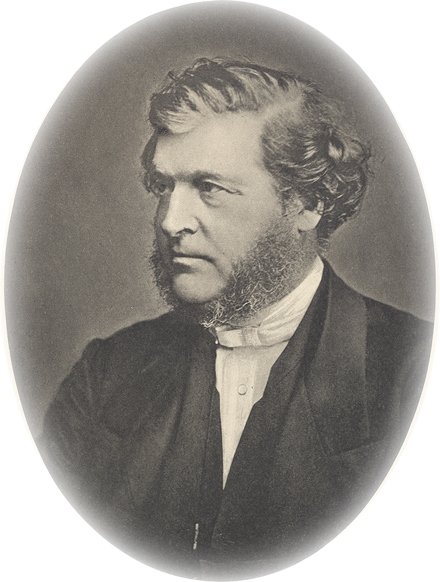
What is religious persecution? Le me state what it is not. It is not religious persecution to say that another person is wrong, and that their religion (or lack of it) will land them in hell if they do not repent. Sadly some people seem to think that is the case. Let me be a little more provocative - it's not even rudely telling someone that their religion (or lack of it) will land them in hell if they do not repent. That's just bad manners, but it's not persecution. It's my opinion that Christians ought to politely disagree with people. I have been trying to model that with a Jehovah's Witness on my doorstep recently. We finally parted still disagreeing, but amicably, and with him saying that we could be friends if it was not for the fact that we disagreeon some fundamental issues. But the people who rudely told him to push off were not being persecutors!
No, religious persecution means (as the dictionaries say) "to oppress or harrass with ill-treatment" for religious reasons. Ill-treatment is important. In a world where people are routinely killed for their religious convictions, to call being insulted by some witless fundamentalist hell-bent on living up to Lord Soper's definition "persecution" is an isult to those rotting in prison for the sake of Christ. The funny mentalist may be rude, he may be obnoxious, but he's not a persecutor. I speak as one who has been on the receiving end of King James Onlyism! Let's reserve 'Persuction' for the real thing, and adopt 'Religious irritation' for everything else. I speak as a former rligiously-irritating student! Not that I am any less outspoken - I'm just generally more polite!
Showing posts with label Fundamentalism. Show all posts
Showing posts with label Fundamentalism. Show all posts
Friday, October 1, 2010

Sunday, July 18, 2010
We are Not Infallible!
Recently a friend gave me a copy of a work by J.C. Ryle entitled The Fallibility of Ministers. Based on Galatians 2.11-16, it is of course directed primarily against the dogma of Papal Infallibility. But the title reminds us that the truth is not merely that the Pope both can and does err, but that all ministers and teachers are subject to error. God alone is inerrant and infallible - and that is why His Word does not err and contains no mistakes. The Biblical authors were "Carried along by the Holy Spirit", as Peter says. We are not.
Whenever a teacher gets it into his or her head that he or she is infallible, that person is in for trouble. Firstly, because he or she has become a fanatic, and secondly because he or she has just placed his or her self above all criticism. In other words, that person has become a little pope, no matter how opposed to Rome he may be, or how warm are his protestations of protestantism.
Ministers are not infallible, we make mistakes. This is plainly seen when we consider that some men are Presbyterian, others hold to Independency to be the church order instituted by God. Some of us believe Baptism is rightly administered only to those who profess faith in Christ, others that it is rightly administered to their children as well. Both of us cannot be right (though both of us may of course be wrong). So neither my teaching, nor that of any other man should be regarded as in and of itself true. Ordination does not confer infallibility, any more than faith does.
So beware the man or woman who refuses to admit mistakes. One suspects that this idea that the minister is infallible has contributed to the cover-up over Ergun Caner - his defenders feel they must at all costs conceal the fact that they were so mistaken about the man! And, at the risk of re-opening an old controversy, this is Part of Gail Riplinger's problem - she refuses to admit she is capable of basic factual error, resulting in New Age Bible Versions still being in print, riddled with all the errors it contains! When I contacted AV Publications concerning a factual error in Hazardous Materials, I received a reply that was nothing less than a defence of a demonstrable factual error. What was it? Well, I pointed out that R.C. Trench did not choose to put the sybol on his title page, and it was in fact the publisher's logo. The reply, instead of accepting that an error had been made, said words to the effect of "well, why was he using an occult publisher?" The answer was that he wasn't, he was using a general publisher!
Beware the infallible teacher - and doubly beware the infallible female teacher!
Whenever a teacher gets it into his or her head that he or she is infallible, that person is in for trouble. Firstly, because he or she has become a fanatic, and secondly because he or she has just placed his or her self above all criticism. In other words, that person has become a little pope, no matter how opposed to Rome he may be, or how warm are his protestations of protestantism.
Ministers are not infallible, we make mistakes. This is plainly seen when we consider that some men are Presbyterian, others hold to Independency to be the church order instituted by God. Some of us believe Baptism is rightly administered only to those who profess faith in Christ, others that it is rightly administered to their children as well. Both of us cannot be right (though both of us may of course be wrong). So neither my teaching, nor that of any other man should be regarded as in and of itself true. Ordination does not confer infallibility, any more than faith does.
So beware the man or woman who refuses to admit mistakes. One suspects that this idea that the minister is infallible has contributed to the cover-up over Ergun Caner - his defenders feel they must at all costs conceal the fact that they were so mistaken about the man! And, at the risk of re-opening an old controversy, this is Part of Gail Riplinger's problem - she refuses to admit she is capable of basic factual error, resulting in New Age Bible Versions still being in print, riddled with all the errors it contains! When I contacted AV Publications concerning a factual error in Hazardous Materials, I received a reply that was nothing less than a defence of a demonstrable factual error. What was it? Well, I pointed out that R.C. Trench did not choose to put the sybol on his title page, and it was in fact the publisher's logo. The reply, instead of accepting that an error had been made, said words to the effect of "well, why was he using an occult publisher?" The answer was that he wasn't, he was using a general publisher!
Beware the infallible teacher - and doubly beware the infallible female teacher!
Wednesday, December 30, 2009
Bad Fundamentalism
This past year I have had some interesting experiences with fundamentalists, particularly as concerns the King James Only movement. This post represents my thoughts on the particular brand of fundamentalism represented by the King James Only movement.
It is my thesis that much of the modern-day movement that is best known a Fundamentalism represents, at best, a caricature of what fundamentalism originally was. The original fundamentalist would not acknowledge many of those who claim the title today – and many who claim the title today would not own those for whom it was originally coined.
This is a strong statement, and it must therefore be supported with evidence. The term ‘Fundamentalist’ is usually considered to have been coined from the title of a series of books published in 1909. These volumes, originally a dozen paperbacks, were collected in four volumes in 1917, and are now available from Baker Book House. They are well worth reading, even though, like most multi-author works, some authors are better than others. It is these volumes, in the four-volume edition, that will be the evidence for what fundamentalism originally was.
First of all, fundamentalism was a movement seeking unity among believers.[1] The evidence for this is the remarkable diversity to be found in the backgrounds of the contributors, who came from all denominations as well as from independent and non-denominational churches. It is not always possible to determine a writer’s denominational background, but most often it is. In the third volume we find contributions from a member of the United Free Church of Scotland, a Southern Baptist, a Canadian Anglican, the Bishop of Durham, England, two men from the Presbyterian Church, USA, a Scottish Baptist, and an English Congregationalist. Not all of these denominations were ‘pure’ in themselves, let alone separatist in their stance. The men differ in their views of baptism and Church government, to say nothing of other matters. Thus The Fundamentals must be viewed as an expression of unity around a doctrinal core – the ‘fundamentals’ of the title. Gail Riplinger has described B.B. Warfield as a "liberal" in Hazardous Materials, yet Warfield contributed the article on the deity of Christ to The Fundamentals, and is one of the men commonly credited with developing the doctrine of inerrancy as presently understood. In the 1900s Warfield was regarded as a Fundamentalist. Any definition of "liberal" that includes B.B. Warfield is so broad as to be completely meaningless.
Nor were the contributors to The Fundamentals agreed concerning the doctrines of grace, except for the one point that they were not among the fundamental points of Christianity. Probably a majority of the contributors came from Churches that are historically Calvinistic, but not all. Thus, again, the intention of the original fundamentalists was to unite Bible-believing Christians in the various denominations to stand for the truth.
So what were the fundamentals? First of all, the fundamentalists held the inspiration and infallibility of the Bible as the foundation of everything else. Secondly, God as revealed in Christ, who is both true God and true man. The resurrection of the dead, the personality and deity of the Holy Spirit, sin as an objective offence against God, judgement to come, and the penal substitutionary atonement of Jesus Christ, justification by faith in Christ alone, the providence of God over all, and the personal second coming of Jesus Christ. Interestingly, this final point is without timing, one’s view on the millennium is not considered a fundamental point of doctrine. While all contributors agreed that God is the creator, they were not all creationists in the modern understanding of the word.
What then? It follows that the true heirs to the Fundamentalists are not those separatists who seem determined on ever-narrowing the circle of true believers, but those who seek unity among Bible-believing Christians on the basis of those fundamental doctrines that the original Fundamentalists fought for. It also follows that those who separate on matters other than those fundamental truths of Scripture are not real Fundamentalists at all. Thus those who anathematize professing Christians for not being King James Only, Premillennial, Dispensationalist, Arminian Baptists are not true fundamentalists at all, but false fundamentalists, schismatics and sectarians. Or, for want of a better phrase, Bad Fundamentalists.
Footnote:
[1] Note well, this was unity among Bible-believing Christians in various denominations, not unity with those who did not believe the Bible. It was unity in truth.
It is my thesis that much of the modern-day movement that is best known a Fundamentalism represents, at best, a caricature of what fundamentalism originally was. The original fundamentalist would not acknowledge many of those who claim the title today – and many who claim the title today would not own those for whom it was originally coined.
This is a strong statement, and it must therefore be supported with evidence. The term ‘Fundamentalist’ is usually considered to have been coined from the title of a series of books published in 1909. These volumes, originally a dozen paperbacks, were collected in four volumes in 1917, and are now available from Baker Book House. They are well worth reading, even though, like most multi-author works, some authors are better than others. It is these volumes, in the four-volume edition, that will be the evidence for what fundamentalism originally was.
First of all, fundamentalism was a movement seeking unity among believers.[1] The evidence for this is the remarkable diversity to be found in the backgrounds of the contributors, who came from all denominations as well as from independent and non-denominational churches. It is not always possible to determine a writer’s denominational background, but most often it is. In the third volume we find contributions from a member of the United Free Church of Scotland, a Southern Baptist, a Canadian Anglican, the Bishop of Durham, England, two men from the Presbyterian Church, USA, a Scottish Baptist, and an English Congregationalist. Not all of these denominations were ‘pure’ in themselves, let alone separatist in their stance. The men differ in their views of baptism and Church government, to say nothing of other matters. Thus The Fundamentals must be viewed as an expression of unity around a doctrinal core – the ‘fundamentals’ of the title. Gail Riplinger has described B.B. Warfield as a "liberal" in Hazardous Materials, yet Warfield contributed the article on the deity of Christ to The Fundamentals, and is one of the men commonly credited with developing the doctrine of inerrancy as presently understood. In the 1900s Warfield was regarded as a Fundamentalist. Any definition of "liberal" that includes B.B. Warfield is so broad as to be completely meaningless.
Nor were the contributors to The Fundamentals agreed concerning the doctrines of grace, except for the one point that they were not among the fundamental points of Christianity. Probably a majority of the contributors came from Churches that are historically Calvinistic, but not all. Thus, again, the intention of the original fundamentalists was to unite Bible-believing Christians in the various denominations to stand for the truth.
So what were the fundamentals? First of all, the fundamentalists held the inspiration and infallibility of the Bible as the foundation of everything else. Secondly, God as revealed in Christ, who is both true God and true man. The resurrection of the dead, the personality and deity of the Holy Spirit, sin as an objective offence against God, judgement to come, and the penal substitutionary atonement of Jesus Christ, justification by faith in Christ alone, the providence of God over all, and the personal second coming of Jesus Christ. Interestingly, this final point is without timing, one’s view on the millennium is not considered a fundamental point of doctrine. While all contributors agreed that God is the creator, they were not all creationists in the modern understanding of the word.
What then? It follows that the true heirs to the Fundamentalists are not those separatists who seem determined on ever-narrowing the circle of true believers, but those who seek unity among Bible-believing Christians on the basis of those fundamental doctrines that the original Fundamentalists fought for. It also follows that those who separate on matters other than those fundamental truths of Scripture are not real Fundamentalists at all. Thus those who anathematize professing Christians for not being King James Only, Premillennial, Dispensationalist, Arminian Baptists are not true fundamentalists at all, but false fundamentalists, schismatics and sectarians. Or, for want of a better phrase, Bad Fundamentalists.
Footnote:
[1] Note well, this was unity among Bible-believing Christians in various denominations, not unity with those who did not believe the Bible. It was unity in truth.
Subscribe to:
Posts (Atom)