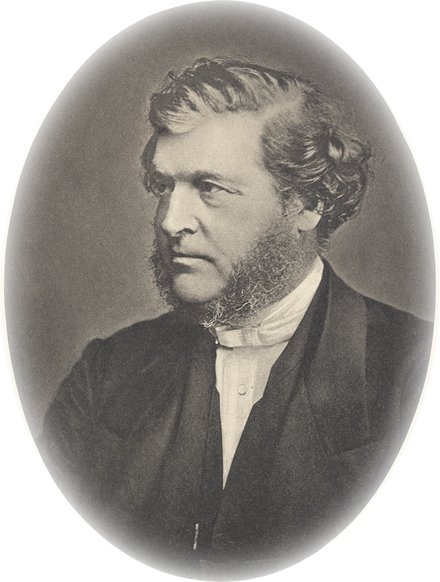
Showing posts with label Nelson Price. Show all posts

Tuesday, March 18, 2008

Nelson Price's attack on John Calvin. XIII


We shall conclude this series with history's judgement on Calvin, according to Nelson Price and according to truth.

"History has judged Calvin wrong on many issues. Many of his proponents admit this but believe him to be worthy of adulation because of his overall contributions."

Calvin was wrong on some issues, indeed. He inherited from his age a view of Church-state relations that tended to lead to persecution, and most of his errors stemmed from that. Outside of this one issue, we judge Calvin to have been a singularly clear-sighted and godly man. To say that he was wrong on 'many' issues is far too strong. In fact he was wrong on remarkably few. Where Luther gladly handed over ecclesiastical power to the civil magistrate, Calvin at least tried to resist this tendency.
We would not say that he is worthy of "adulation", the word is too strong. But certainly admiration. And it is not only those who are called Calvinists who have admitted this point. Martin Luther called him a "learned and pious" man, and many have come to the same conclusions whilst dissenting from his theology. We quote a few:
"John Calvin was a pious, wise and sensible man." -John Wesley

"Calvin possessed a divine genius." - Father Simon, a Roman Catholic

"I know of no man since the Apostles' days, whom I value and honour more than Calvin." - Richard Baxter

"A man with whom few of his age will bear any comparison for patient industry, resolution, hatred of the Roman superstition, eloquence, and genius." - Mosheim

"I exhort my pupils to peruse Calvin's commentaries... for I affirm that he excels beyond comparison in interpretation of the Scripture, and that his commentaries ought to be more highly valued than all that is handed down to us by the library of the Fathers." - Jacobus Arminius.


"His detractors believe he was obsessed with power, could not abide dissent, and is unworthy of praise often afforded him."

His detractors make, as we have shown, highly unfair statements that often bear little relation to the facts of history. Again we would remind our readers of the words of Basil Hall:
"One major difference between the older denigration of Calvin and that of our own time is that once those who sought to attack him first read widely in his writings. Now it would seem that the word 'Calvinism' is a self-justifying pejorative to be used without regard to what, in the context, the word is supposed to mean." (Basil Hall, 'The Calvin Legend', The Churchman, Vol. 73, P. 119)

Having no Biblical basis for their attack on Calvinism, they resort to vicious ad hominem arguments, attacking Calvin's person. The first man to do this was an apostate, Jerome Bolsec, and rationalists and Romanists have continued this tack for centuries. The better sort of critics, such as Wesley, have dissented from Calvin's theology while admiring him as a man.
"He lived in Geneva until his death on May 27, 1564."

Here at least we are in full agreement with Price!
"Respected historian Will Durant concludes his section on Calvin in his eleven volumes on history by saying: “But we shall always find it hard to love the man who darkened the human soul with the most absurd and blasphemous conception of God in all the long and honored history of nonsense.”The Story of Civilization, Volume 6, page 490, Will Durant"

Will Durant was no doubt a great man. Yet he was born a Roman Catholic, trained by Jesuits, and in 1905 he became a Socialist. Although he abandoned atheism in later life, we find no evidence that Durant was any sort of orthodox Christian, and he was certainly not an evangelical - much less a Southern Baptist! Yet Dr. Price feels that we ought to accept the judgement of such a man as to Calvin's theology! Whatever happened to the natural man not receiving the things of God? His verdict on secular things may be worthwhile. His efforts to bring history and philosophy to the common man certainly put much of our evangelism to shame, but nevertheless his theological views count for NOTHING to us. "Hath not God made foolish the wisdom of this world?"
If we are to quote a secular author, I prefer to quote R.N. Carew Hunt, son of an Anglican vicar and certainly no Calvinist. Of Hunt's book T.H.L. Parker says: "whatever qualifications must be made about its interpretation of Calvin's theology, [it] is reliable and well-written history":
"At this point what we may think of his doctrine or his system become of no importance. We are left in the presence of a man who followed what he believed to be the truth, and consecrated his life to its attainment, and for this he will be had in honour as long as courage and singleness of purpose are held as virtues among men."
R.N. Carew Hunt, Calvin (London, the Centenary Press, 1933) P. 316


Price's cited sources are:
http://en.wikipedia.org/wiki/Synod_of_Dort
http://en.wikipedia.org/wiki/John_Calvin
http://wsu.edu/~dee/REFORM/CALVIN.HTM
http://www.newadvent.org/cathen/03195b.htm

Our sources are:
Theodore Beza, The Life of John Calvin (Trans. Darlington, Evangelical Press, 1997)
Jean Cadier, The Man God Mastered (London, Inter-Varsity Fellowship, 1960)
R.N. Carew Hunt, Calvin (London, the Centenary Press, 1933)
Robert Duncan Culver, Systematic Theology (Fearn, Mentor, 2006)
John Gill, The Cause of God and Truth, (repr. from London edition of 1855, Grand Rapids, Baker, 1980)
Basil Hall, 'The Calvin Legend', The Churchman Vol. 73, (London, 1959)
Robert M. Kingdon (editor) Registers of the Consistory of Geneva in the Time of Calvin (Grand Rapids, Eerdmans, 2000)
T.M. Lindsay, History of the Reformation, Vol. 2 (Edinburgh, T. and T. Clark, 1908)
John Laurence Von Mosheim, Institutes of Ecclesiastical History. Trans. James Murdock (London, William Tegg, 1880)
Nick R. Needham, 2000 Years of Christ's Power, Vol. 3 (London, Grace Publications, 2004)
J.I. Packer, 'John Calvin and Reformed Europe', Honouring the People of God (Carlisle, Paternoster, 1999)
T.H.L. Parker, A Portrait of Calvin (London, SCM Press, no date)
Hugh Y. Reyburn, John Calvin (London, Hodder and Stoughton, 1914)
Williston Walker, History of the Church (Edinburgh, T. and T. Clark, 1960)
Francois Wendel, Calvin (London, Collins, 1965)
Despite the age of some of these sources, they are far more scholarly than those cited by Price. It is surely incredible that he should give a list of sources the most scholarly of which is the Catholic Encylopaedia! The article from Washington State University is the source of many of Price's errors, and in fact the Wikipedia article (!!!) is much better.
Other volumes have been read, but did not contribute to the final form of this article.

Monday, March 17, 2008

Nelson Price's attack on John Calvin. XII


We continue with this series conscious that it may be wearing to our readers to have to wade through Price's errors of fact and misguided opinion. But we have started, and so we shall finish.

"Calvin taught salvation was not a choice but based on God’s pre-determined decision from the beginning of time.
This meant certain people were the “elect” of God and were to populate the church."


The alternative to this is the "manifestly wicked" (Musculus) teaching that God's power can be frustrated by the will of man, and that the power of Christ's death is entirely dependent on the free will of man. He must first seek our permission if He is to save us. No! Before He regenerates us we can do nothing but flee from God and resist Him, as Francis Thompson put it:
"I fled Him, down the nights and down the days;
I fled Him, down the arches of the years;
I fled Him, down the labyrinthine ways
Of my own mind; and in the mist of tears
I hid from Him, and under running laughter.
Up vistaed hopes I sped;
And shot, precipitated,
Adown Titanic glooms of chasmèd fears,
From those strong Feet that followed, followed after."
('The Hound of Heaven')

And yet He followed on, and drew me by His sweet yet irresistible love to Himself. Praise God that He did not ask my permission, for, fool that I am, I would have refused Him and loved this passing world. But He who is too wise to be mistaken, too good to be unkind, did not leave me to perish in my sin. No, He who loved me when I hated Him sent His Son to die for me, and sent His spirt into my heart:
"To change the heart, renew the will,
And turn the feet to Zion's hill."

The Bible speaks of God's elect, and says "we love Him because He first loved us." From any perspectve other than the Calvinistic, it is almost impossible to say with Paul "The Son of God, who loved me and gave Himself for me." The Free-willer says "He loved all mankind and died in a general and non-substitutionary way so that I could be saved if I loved him by my own free-will."

In his “Institutes” Calvin defined predestination:
“We call predestination God’s final decree, by which He determined what He willed to become of each man. For all are not created in equal condition; rather, eternal life is ordained for some, eternal damnation for others.”

It took us a while to find this quotation in Calvin, mostly because it is mis-cited and has been abridged. Again, Price has not given a reference, so we spent half an hour searching an electronic version of the Institutes. The full quotation is:
"We call predestination God’s eternal decree, by which He determined with Himself what He willed to become of each man. For all are not created in equal condition; rather, eternal life is ordained for some, eternal damnation for others.
" (Book III, xxi, 25, Battles Translation)
Now we agree that this is a reasonable use of the quotation. It must always be borne in mind that Calvin, and those who are called Calvinists, hold that the reprobate are condemned justly for their sins, as the elect deserve to be, and would be had their sins not already been punished in Christ. Although election is unconditional, condemnation is not, it is conditional upon the one condemned being guilty. Since we are all guilty before God, we all stand condemned. But God sent His son so that all who would believe on Him shall not perish everlastingly, but will have everlasting life in Him.

God willing, next time we shall conclude this series.

Friday, March 14, 2008

Nelson Price's attack on John Calvin. XI


So we continue with Dr. Price's article. We believe that we have already demonstrated that it is stuffed with inaccuracies and misrepresentations. For a man who has claimed in a private e-mail to us to have studied Calvinism for more than fifty years, his knowledge of Calvin's life is woefully bad and seems to be based on a few Calvin-bashing articles.

"The most controversial teaching of Calvin regarded predestination."

We agree that predestination is controversial. How can it be anything else when it lays in the dust the Dagon (pictured) of man's boasted free-will, the great Diana of the Arminians? Men will not have God to rule over them, and as a result they hate the idea of his rule. But it is no wonder that rebels hate the rule of the one they rebel against! That a teaching is controversial is no test of whether or not it is true! Indeed, if a teaching is not opposed by the pride of men, it is highly unlikely to be of God. The LOrd Jesus Christ 'came unto His own, and His own received Him not', will it be any different with His Word?

"The early church and moderate Protestant churches had taught God had not predestined salvation for certain ones while predestining others to hell."

Dr. John Gill in his Cause of God and Truth, Part IV, chapter i, gives chapter and verse proving that many of the Church Fathers taught predestination, and in chapter 3 he shows their low views of the power of man's will. But here we would notice a manifest inconsistency in anti-Calvinists. If we quote the Church Fathers, they reply that the Fathers were Catholic, and therefore agreement with them proves that Calvin was not Biblical. Yet we can only know the views of the early Church from the writings of the Fathers! At the same time we would push the date back. When a free-willer can explain Romans 9 without violating every rule of context and good exegesis, we will be happy to accept his theology. The Fathers are not infallible (we are not Romanists!!!), and the Bible is always above them. Like all theological writers, the Fathers are at their best when they stick closely to the Bible.
So Dr. Price thinks that "the early church and moderate Protestant churches" did not teach predestination and total depravity. What, then , does he think they did teach?

"It was commonly held that salvation was a gift of God based on man’s free will in responding positively to God’s love initiative."

Sorry, but this is simply not true. Martin Luther, in his Bondage of the Will, if anything, out- Calvins Calvin himself! The Lutherans were also scathing about Free Will. The Lutheran Musculus called the idea that man's free-will could frustrate the saving purposes of God "manifestly wicked", and John Laurence Von Mosheim, the great Lutheran Church Historian, said:
"whatever the Arminians may say, the doctrines taught since the Synod of Dort by their principal doctors respecting grace and the points connected with it, approach much nearer to the sentiments of those called Pelagians and Semipelagians than to those professed by Lutherans." (Institutes of Ecclesiastical History, Century XVII, Sect. ii., Part 2.)

The Lutheran Augsburg Confession of 1530 states:
"Of Free Will they [Lutherans]teach that man's will has some liberty to choose civil righteousness, and to work things subject to reason. But it has no power, without the Holy Ghost, to work the righteousness of God, that is, spiritual righteousness; since the natural man receiveth not the things of the Spirit of God, 1 Cor. 2,14; but this righteousness is wrought in the heart when the Holy Ghost is received through the Word."

The Reformed Confessions, the Second Helvetic Confession of 1566, Belgic Confession of 1561 and the French Confession of 1559, all deny that man's will is freely able to obey God.
There were certain Anabaptists, many of whom also denied Justification by Faith and the total depravity of man, and who held that Christ's body was composed of 'heavenly flesh' (i.e. that He did not take flesh of the seed of David, but that His humanity was an entirely new creation that passed through Mary's body as water through a pipe), who would have agreed with Price, but they were in a decided minority. ROME might have been more favourable to the teaching, but he does not want to go there, and nor do we. Of the mainstream of the Reformation, both Lutheran and Reformed branches rejected this teaching of free-will. As Anglicanism is often taken as a third stream we append the statement of the Thirty-Nine Articles of the Church of England on Free Will (article 10):
"The condition of Man after the fall of Adam is such, that he cannot turn and prepare himself, by his own natural strength and good works, to faith; and calling upon God. Wherefore we have no power to do good works pleasant and acceptable to God, without the grace of God by Christ preventing us, that we may have a good will, and working with us, when we have that good will."

And finally the Waldensis, in their Confession of 1655, article 9, said of man: "Our free will has become a servant and a slave to sin."

Hardly a ringing endorsement of Free-willism, all things considered. Apart from a few fringe groups, the moderate Protestants of the Reformation all joined with Calvin and Luther in the Biblical teaching that man's fallen will is a slave to sin.

Next time, God willing, we shall continue.

Thursday, March 13, 2008

Nelson Price's attack on John Calvin. X


We continue with our response to Nelson Price's article on John Calvin. In an aside we should like to say that we have obtained the first volume of the English translation of the Registers of the Consistory of Geneva in the Time of Calvin (Grand Rapids, 2000). Covering the period from 1542 to 1544, they bear out everything that we have said about that court. It dealt with ecclesiastical offences and imposed ecclesiastical penalties, most often simply admonishing those accused before it to go to church and listen to the sermons, a most unlikely penalty to be imposed by an inquisition! Like all ecclesiastical courts, the Genevan Consistory sought rather the reformation of those cited before it than their destruction.
These registers were not intended for publication, in fact they are the very minutes of its sessions; So we have from them a true picture of the consistory, which did indeed deal mostly with mundane things like people not going to church, adultery, slander and fornication.
Now back to Dr. Price.

"The five points of doctrine identified by the acrostic TULIP that bear his name did not originate with Calvin. They were a product of the Synod of Dort, sessions of which were held in 1618 and 1619. They were issued in response to five special objections that arose after Calvin’s time (1509-1564). They were based on his teachings.
The Synod so strongly reacted to those opposing their positions as to have beheaded four days after the Synod one of the most respected statesmen of the time Johan van Oldenbarnevelt. Additionally the outstanding jurist of the era, Hugo Grotius, was imprisoned for life."

The Synod of Dort is more or less outside the remit of this response, which is concentrating on John Calvin himself. Nevertheless we ought to say a few words on the matter. Suffice to say that the Synod judged the writings of the Remonstrants from the Bible, not from the writings of any mere man. Richard Baxter, by no means an orthodox Calvinist himself, said of the Synod and the Westminster Assembly:
"The Christian world, since the days of the Apostles, had never such a Synod of more excellent divines (taking one thing with another) than this synod [i.e. the Westminster Assembly] and the Synod of Dort." (Quoted in John Macpherson, The Confession of Faith (Edinburgh, T. and T. Clark, 1881) P. 15)

We have read the Canons and Decrees of this famous council, and they are careful, balanced and Biblical (take a look!). The fact is that the Arminians failed to prove their point. Actually their tactics were such as to put them at a disadvantage, since, as the Lutheran historian Mosheim notes: "The Arminians wished to commence the defence of their cause by attacking the Calvinists." (Century XVII., sect. ii, Part 2.). Obviously one does not gain toleration in a time when toleration was a strange thing, by attacking your judges and the doctrine of the Belgic Confession!
Holland in 1619 was an embattled nation that had just won its freedom after a bloody war with Roman Catholic Spain. The Reformation was bound up with the Dutch nationhood, and there were suspicions that the Arminian doctrine would lead in the long run to Unitarianism. The idea of a universal atonement was seen as part of a system that undermined the doctrine of original sin, the Christian scheme of Salvation, and ultimately the person of Christ. The whole Reformation had centered on the subject of Salvation, there was no way that the extent (or rather intent) of the atonement could be regarded as an adiaphora, a thing indifferent.
Further, we note that the Arminian party produced the Rectoral or Moral Government view of the atonement, teaching that Christ did not die for any in particular, but rather as a display of God's judgement against sin. This is quite unsatisfactory, as the hymns of Charles Wesley illustrate - even as an Arminian, he rejected the Rectoral theory in favour of the Evangelical and Biblical teaching of penal substitution.

The execution of Oldenbarnevelt and the imprisonment of Grotius were undoubtedly wrong, but they are not to be charged against Calvinism but against the pernicious mingling of church and state introduced through the emperor Constantine. It is therefore
Constantinianism
that is proved false, not Calvinism. Mosheim notes "The suspicion of the Calvinists that the Arminians aimed at the overthrow of all religion." (ibid). It is surely of note that, whilst Remonstrant (Arminian) ministers were indeed deposed, none were executed or condemned to perpetual imprisonment. The Wikipedia(!) article on Grotius confirms what Mosheim says, that the execution of Oldenbarnevelt was primarily politically motivated. Prince Maurice of Nassau, Stadtholder of the Netherlands, perceived Oldenbarnevelt as a threat to his own power and ambitions, and used the Synod's condemnation of the Remonstrants for his own ends. Thus we may put the blame first on Maurice, and second on Constantine. Thankfully Maurice's death in 1625 introduced a more tolerant regime, and many exiled Remonstrants were allowed to return to Holland. They established their own seminary in Amersterdam and enjoyed freedom of worship. Unfortunately Grotius, who had escaped from prison, was not allowed to return, and it was only after his death following shipwreck in 1645 that his body was returned to his own country. All modern Calvinists condemn this sort of political persecution.

God willing, we shall continue this series next time.

Tuesday, March 4, 2008

Nelson Price's attack on John Calvin. IX


And so we continue with Dr. Price's scurrilous attack on John Calvin

"Calvin’s theocratic government believed every sin was a crime and practiced excommunication. Such applied even to persons who wore what was considered inappropriate clothes or engaged in work or pleasure on Sunday. Persons guilty of “wild dancing” or “bawdy singing” were severely punished. The latter ones had their tongues pierced.

As we have seen, the consistory alone could excommunicate. In England under Elizabeth the state excommunicated. This was not simply "Calvin's theocratic government", it was common in all Europe. Since Calvin was never a member of the government, he could pass no laws. Indeed, most of the laws Price refers to here were in existence before Calvin came to Geneva, and were acted on during his exile. For instance, in 1537, after Calvin had been expelled from Geneva and when we can reasonably suppose his opponents were in power, a man found gambling was hanged for the offence. In 1539 a group of young people were arrested for "singing indecent songs, dancing, blaspheming God and running naked about the streets."
Now we think that people doing such things would probably be arrested today (and are most weekends in British cities). We have laws, less strict of course, governing appropriate clothing and behaviour. Dr. Price, we suspect, agrees that such laws ought to be in place. He would not want young people in his town "running naked about the streets" (though we suspect that some clothing worn to nightclubs today would have exposed its wearer to the charge in the sixteenth century).
Every nation has laws that govern acceptable behaviour, and while we may disagree with them, we recognise that "the past is another country, they do things differently there."
"Such actions resulted in excommunication and many persons being banished from the city."

Again we marvel at Dr. Price's ability to misrepresent matters. He implies that excommunication and banishment were closely linked, whilst in fact most people excommunicated in Geneva remained in the city. Banishment was reserved for more serious offences than dancing!
Secondly these punishments were given by different courts. Excommunication was an ecclesiastical punishment and therefore meted out by the Consistory, while Banishment was a civil punishment inflicted by the civil magistrate. True, those who were banished from Geneva were generally (but not always) excommunicated, but that was because the crime for which they were banished was also a cause for church censure (just as a church member found guilty of a crime today will be put under church discipline as well as punished by the court). As we have said, Calvin never presided over a court in his life, he was never more than a member of the Company of Pastors. If he was treated as first among equals it was due to his moral stature, not to physical force.
"Calvin’s reprehensible approval of torture is an issue most modern day Calvinists do not deny but do disavow."

Exactly. Although ahead of his age in many ways, in others Calvin was a man of his age. It was an age when torture was an accepted part of judicial procedure. But can we really claim to stand higher than him when the bestial practice of 'waterboarding' or simulated drowning is approved by the President of the United States? Our forefathers (and some of our modern political leaders) thought torture was an acceptable method of obtaining information. We disagree, and add our voice to those of our fellow Calvinists in disavowing Calvin's approval.
We must remember that Calvin was approving something already in existence. A visit to the Tower of London will be enough to demonstrate that the use of torture was widespread in Europe in Calvin's day, and continued to be for some time after Calvin's death. It is a pity he did not see that it is cruel and an unsafe way of obtaining information.

"Calvin professed to believe in separation of church and government. However members of the consistory and church formed judicial boards that imposed theocratic law."

Once again, the consistory was a Church court! Members of the consistory were ecclesiastical, not civil, rulers! Price has not bothered to read up on Geneva in Calvin's day, and so he has turned the church court into a civil tribunal. Now this is all the more inexcusable when some of the proceedings of this court are actually available in print at the present time!
This is not to say that the Genevan Church and state were as separated as Calvin wished. confusion of church and state was general in Medieval Europe and especially in Geneva, where the Bishop had been head of state. The Council appointed its own members as Elders, and this did tend to the confusion of Church and State, especially as the president of the consistory was always an elder and therefore a civil magistrate. Calvin wished for a greater separation than then existed, but he was thwarted by the desires of the Council. In France, where the civil government remained Romanist, Calvin's dream of a free church was realised in the face of terrible persecution.
"They closed taverns and replaced them with “evangelical refreshment places” where alcohol could be consumed but only with Bible reading. This practice was short lived."


We do hope that this is merely a record of a fact (these 'Abbeyes' were meant to replace the taverns in which drunkenness was rife). It was a laudable aim to replace the taverns with places where Bible reading and Christian fellowship were encouraged. No-one in the sixteenth century (and certainly not a Frenchman like Calvin!) was teetotal. Everyone drank alcohol for the simple reason that the water was not safe to drink!

God willing, we shall continue next time

Friday, February 29, 2008

Nelson Price's attack on John Calvin. VIII

So once again we continue with our response to Nelson Price's highly misleading article on John Calvin.

"Calvin used the Consistory, a court presided over by an ecclesiastical hierocracy [sic], to aid his political aims and to maintain control over civil and religious life in Geneva."

This is a blatant falsehood. The Consistory of Geneva was, as the very name suggests, a purely religious court with purely religious authority. It was made up of the pastors and elders of Geneva who sat together to rule the church. Calvin never presided over it, and in fact its president was always an elder, one of the city's magistrates appointed by the democratically elected government of Geneva. The term 'hierarchy', which we presume is what Price was looking for, is singularly inappropriate in this context. It refers to a graduated system of priests or religious leaders, as is found in the Church of England in the protestant churches, and also in the Church of Rome. Now it is notorious that Geneva was the cradle of modern Presbyterianism, the central tenet of which as a system of church government is that all ministers are equal. Presbyterian churches are governed by a system of courts, not of men.
So it was in Geneva, the Genevan Church was ruled over by the Consistory Court. Its sole purpose was to enforce church discipline, and it had no control at all over civil affairs! Of course it could advise the civil magistrates, should they ask its advice, but its punishments were only ecclesiastical. The most it could do was bar a person from the Lord's Table. Those who have made it an inquisition court or a Star Chamber have drawn more on imagination than upon its records. The vast majority f the Consistory's business was mundane in the extreme, dealing with everyday matters of church discipline. No doubt there were some who complained that it was too strict. It will always be the case where there is functioning church discipline, for example, we know of a case today where a man resigned office in a church over his son being disciplined for immoral behaviour. Church discipline is not popular and never has been. That is not to say it is tyranny.
In fact it is necessary that there be discipline in the Church. God willing, we shall be preaching from 'blessed are the merciful' this coming Lord's Day, and we have reflected on the fact that church discipline is supposed to be merciful. Excommunication has as its goal the repentance and restoration of the fallen sinner.

"Jaques Gruet was an opponent who sided with some old Genevans in opposing Calvin. Gruet was tortured into confessing he had issued writings opposing Calvin and was beheaded for doing so."

Gruet was certainly an immoral man who believed that fornication and adultery were not sins. He was, as the historian Carew Hunt says, "an infidel of the shallower kind", whose unbelief was bolstered by attacking the Bible and covered an immoral lifestyle. While Calvin was involved in the prosecution of Servetus, it is a singular fact that he played no part at all in the prosecution of Gruet. Jaques Gruet was arrested, tortured and executed by the Council of Geneva, an elected body over the composition of which Calvin had less control than a humble Genevan shopkeeper - for only citizens could vote in elections, and Calvin was not at that point a citizen of Geneva. Among Gruet's judges were many of Calvin's enemies, men who sought to do everything in their power to humiliate Calvin.
The charges against Gruet were of sedition and heresy, and they were brought and prosecuted by the civil government. Again we must repeat that Calvin's influence in Geneva was that of a pastor. His authority was the authority of the pulpit. Despite the constant misrepresentation he was not the dictator of Geneva.
Once again let us say that we are utterly opposed to the death penalty for heresy. The fact remains, however, that in 16th century Europe every state had laws on its books in which heretics were judged worthy of death. We are thankful that times have changed. Yet it is as a result of those who built on Calvin's doctrine of the separation of Church and State that this has come to pass. Luther made magistrates rulers in the Church, and the English Reformation made the monarch 'Supreme Governor' of the Church of England, thus hopelessly confusing ecclesiastical and civil government. certain of the Anabaptists taught religious toleration and are to be thanked for doing so, yet their doctrinal errors on such vital subjects as Justification and the true humanity of Christ kept them weak. It was out of the Puritans, heirs of Calvin, that the British Particular Baptists arose. From them came the men who ensured complete freedom of worship in the United States.
The Calvinist sees, like Melville, two kings and two kingdoms. Thus he stands against the absolutism of James VI of Scotland (I of England) who wanted to set himself up as king over the Church.

Pierre Ameaux complained about Calvin bringing in inordinate numbers of French priests to support him in Geneva. Calvin said this constituted an attack on his divinely ordered authority by Ameaux. Calvin persuaded the city council to require Ameaux to wear a hair shirt and march through the city streets to the city square where he was to beg mercy.

We wonder why Dr. Price used the word 'Priests' here, when it is strictly only applicable in these circumstances to Roman Catholics. Calvin brought PASTORS, and that was not Ameaux's offence. What happened was that Ameaux got drunk in company and accused Calvin of heresy. His offence was therefore slander, and the punishment was actually very light for the period. What is more, it was the punishment Ameaux would have been given in England for the same offence as late as the 1700s! John Wesley's father Samuel, no friend of Calvin, was notoriously unpopular in Epworth for enforcing the same public penance upon open sinners in the town.
That Calvin ever said it was "an attack on his divinely ordered authority" is absurd. We find no record of such a statement in any reputable source. No, it was an attack on his person. No doubt Ameaux also felt there were too many French asylum-seekers in Geneva. Opposition to immigration is not a new thing!
What would Dr. Price do if one of his church members accused him of heresy in company? We feel that such an accusation would require discipline, for 'an elder must be blameless', and such a serious accusation as heresy cannot be allowed to stand. So where is the Fault in Calvin? We simply fail to see, unless it be in the manner of the public penance.

God willing, we shall continue next time.

Thursday, February 28, 2008

Nelson Price's attack on John Calvin. VII


Having dealt with the judicial murder of Michael Servetus, we continue:
Followers of Servantus [sic.], known as Libertines, were targeted by Calvin. In 1555 the Libertines attempted to displace Calvin. When their efforts failed Calvin had their leaders rounded up and executed.

Contrary to wherever Price got his ideas from, the Libertines were NOT followers of Servetus, but a political faction within Geneva who used Servetus to their own ends, and then dropped him when he was of no further use to them. It was finally the fact that Libertine magistrates voted to execute Servetus that ensured the Spaniard's death, and it was the Libertines, not Calvin, who chose to burn him to death rather than to behead him.
The Libertine party preceded Servetus' entry into Geneva and it was a political and not a religious party. By misrepresenting them as followers of Servetus, Price makes their executions seem an example of religious persecution when they were in fact the climax of a political power struggle. Perhaps he is aware of the fact that Servetus was alone killed in Geneva, and is trying to increase the numbers by illegitimately linking the executions of the Libertine leaders to Calvin. The facts are quite different, as we will show. We shall be posting a full bibliography of sources in due course, if any readers wish to know our sources of information. Suffice to say for the present that they are reputable printed sources.

It is extremely important in any discussion of the power that Calvin had in Geneva to bear in mind that Geneva was a democracy, albeit of a very young kind. Regular elections allowed the citizens within the franchise to choose their own rulers. Whilst there were no political parties of the modern kind, there were informal groupings of men. The two main parties in Calvin's Geneva were the Guillaumists and the Libertines, the former supporters of the Reformed ministers and their moral reforms, the latter opponents of those reforms.
The Libertines had wanted freedom from Savoy, but they also wanted freedom to indulge themselves. They were made up of old Genevan families who resented immigrants and refugees. Although they had initially supported the Reformation, they had done so more out of a desire to be free from Rome than out of a desire to reform the Church according to the Bible. Following the disgraceful conduct of Libertines in the Servetus case the citizens of Geneva showed their disgust at the Libertines' behaviour by voting overwhelmingly against their candidates at the next election.
Today when a party is defeated they go away and plan a return by democratic means. Even in a democratic state like Geneva, the 16th century method was different. Defeated party leaders were regularly accused of treason and exiled or killed.
But Calvin had no part in the prosecution of the Libertines, for their political opponents did not need him. After the crushing electoral defeat that followed the Servetus debacle, the leaders of the Libertine party and many of their followers drowned their sorrows with drink. In their speeches they blamed the immigrants for their defeat, and their followers became more and more inflamed with a xenophobic rage. They spilled out onto the streets crying 'death to the French!'
What followed was a drunken riot rather than a serious coup attempt. Whilst some people were wounded, no-one was killed. It had been too late at night for the streets to be thronged with immigrants, and the police had swiftly dealt with the sword-waving rioters.
Unfortunately Ami Perrin, the chief of the Libertines, had on two occasions tried to seize the baton of office from two senior Council officials, giving some colour to the claim that the Libertines were intending to stage an armed coup. The Council decided that they constituted a threat to the government and had those leaders they had arrested tortured and executed. They were tortured in an attempt to make them confess that they were indeed planning a coup. This was a barbaric thing to do, but the sad fact is that practically every state in Europe would have done the same at that time. A young democracy like Geneva could not afford to do anything other than execute the Libertine leaders who constituted a threat to its very existence. They were charged with treason, a capital offence in every part of Europe at the time. Their apparent contempt for the democratic government of Geneva, not their contempt for Calvin, led to their defeat and the execution of their leaders.

God willing, next time we shall deal with Calvin's alleged inquisition, the Consistory court.

Wednesday, February 27, 2008

Nelson Price's attack on John Calvin. VI

We continue this task of defending John Calvin from extreme misrepresentation.

The system of theology he devised came to be known as Calvinism or Reform [sic.] Theology.

We assume that Price has merely left the 'ed' off the end of 'Reformed'. 'Reform' is a branch of Judaism. It is not so much that Calvin 'devised' the Reformed theology, but that he systematized it.
In the mid-1550s Protestants from France, England, Germany and the Netherlands fled persecution in their countries and came to Geneva. They joined Calvin’s efforts to establish the more radical Calvinistic doctrines. They believed all policies should be based on a literal reading of the Scripture. Not only should this be the standard in the church but in civil government and society in general.

Now obviously Christians all agree that, since God is the creator of man, He knows what is best for us. We are taught to pray for His will to be done on earth as it is in heaven. Thus laws that reflect the Word of God are just laws. The Pilgrim Fathers in New England believed the same and tried to put it into practice. Christianity teaches a rule of laws, not of men, and is thus the only true source of genuine freedom from tyranny. Atheism, which derives all morality from man, logically leads to dictatorship and oppression.

Calvin instituted four primary categories of offices in the church.
Pastors: They exercised authority over all religious affairs in Geneva.
Teachers: They were to teach theology to the populace.
Elders: They were older individuals elected by the city council. Their job was to oversee everything everyone did. This formed a bond between church and state.
Deacons: They were appointed to look after the elderly, sick, poor, and needy.

Again this is misrepresentation. In fact it was the Consistory court that exercised authority over all religious affairs in Geneva, and this court was made up of pastors and elders. Teachers were those particularly set over schools and colleges. They taught not only theology but all other subjects, depending on where they taught. The account of the elders is substantially correct, but Calvin himself later regretted the appointment of elders by the city Council. None of this was Calvin's idea alone, he was in fact deeply influenced in his thinking by Martin Bucer of Strasbourg. This has been shown by a number of reputable scholars including T.H.L. Parker and Jean Cadier.

Servantus [sic.] of Spain was one who strongly opposed Calvin. Of the possibility of Servantus [sic.] coming to Geneva Calvin said:
“…if he comes here, if my authority is worth anything, I will never permit him to depart alive.”
He did come, was arrested, and his property confiscated.
The theocratic government Calvin had helped establish desired to have him burned alive. Calvin belatedly appealed for him to be decapitated. He was burned alive with Calvin’s consent.
Calvin wrote, “Whoever shall maintain that wrong is done to heretics and blasphemers in punishing them makes himself an accomplice in crime and is as guilty as they are.”

The Servetus Case (Price consistently mis-spells the Spanish Unitarian's name) is brought up by all Calvin's opponents as a method of blackening Calvin's reputation. Now we are Baptist, and therefore opposed to all persecution for the sake of religion. But although Calvin was in error in holding the death penalty to be appropriate in the Servetus case, it was an error he shared with most of his contemporaries. When Church and State are confused, is it any wonder that ecclesiastical offences are punished with the force of the state? If hundreds were killed in England, and thousands in Spain, in the name of the Church of England and the Church of Rome, is it any wonder that one man was burned in Geneva? We have to put this in perspective. The last execution of heretics in England was in 1612! Is it any wonder that one man was burned for heresy in Geneva nearly sixty years before?
We repeat that. ONE man. One man who was wanted for heresy in every country of Europe, who was on the run from the Inquisition, and a man whom even gentle Melanchthon judged worthy of death. In the sixteenth century a man such as Servetus could not survive long. The tragedy is that he was killed in Geneva, the only man to die at the stake there.

Servetus' theology should be mentioned in all fairness to the man. His writings have survived (ironically in one case in Calvin's own copy), and from them we find that he was a pantheist, one who believed that all things were made up of God. He was by necessity a unitarian, for if all things are part of God then there can only be one god (we use a small 'g' because such a god is not the God of Scripture).
Far from the case being as clear-cut as Price suggests, it was a bizarre climax to the struggle between Calvin and his enemies. The Council at the time was controlled by the Libertines, a party made up of old Genevans who opposed the Reformers' moral reforms and despised church discipline. Servetus was notorious throughout Europe, and there were several warrants out for his arrest on charges of heresy. Calvin himself had, in 1537, been accused of being in essential doctrinal agreement with Servetus, a circumstance that may have added to his desire to see the heretic brought to repentance or to justice.
True, Calvin was Servetus' accuser. We must remember that the French Reformer shared the error of his age in holding heresy to be a crime that ought to be punished by the state. But Calvin was far from the all-powerful dictator imagined by his modern-day critics. Hugh Reyburn writes:
During the time of Servetus' trial, Calvin himself was ceaselessly attacked by formidable enemies, his friends were few, and his power to defend himself was at its minimum. Everything that could be done was being done to humiliate him, and his ministry in Geneva might be ended at a day's notice." (Hugh Y. Reyburn, P. 165)

Calvin's enemies used Servetus to humiliate Calvin. They encouraged the Spaniard to think he might be free, so that Servetus called for Calvin to be 'eliminated' and thrown out of Geneva. But the Libertines knew that Geneva could not actually free so notorious a heretic once brought to trial. They condemned Servetus anyhow, and ordered him to to burned. Calvin was horrified by their cruelty and begged that Servetus be decapitated instead of burned to death. His request was refused, and ironically Calvin himself has been blamed for that mode of execution he himself opposed.
As Servetus waited in the condemned cell Calvin reasoned with him to recant. Servetus did not, and the Spanish physician went to his death calling out "Jesus, O thou son of the eternal God, have mercy on me!" If he had only said "O thou eternal son of God", he would not have died. But after all, execution is no way to convert men to true religion. We are glad that we live in more enlightened times. Ironically it has been men following out the logic of Calvin's position on the freedom of the Church who have secured us the very liberty that Calvin himself denied in his day.
It is vain to expect perfection of men. The best of men are, as has so wisely been said, only men at best. Yet it is just Calvin's own godliness that leads us to be shocked at his advocating the capital punishment of heretics.

God willing, next time we shall continue our task.

Thursday, February 21, 2008

Nelson Price's attack on John Calvin. V

So we come to Dr. Price's frankly silly treatment of Calvin's Institutes. The fact that he gives the title incorrectly suggests to us that he has never actually read the book. Now, as Dr. Price claims to have studied Calvinism for over fifty years, this does not bode well for the actual nature of this study!
In Strasbourg in 1538 Calvin wrote his “Institutes of the Christian Church.” [Sic.] Calvin’s writings were declared to be an exposition of Scripture. Instead they became a defense of his personal theology. They were used as a defense of his theology, social and political philosophy.


Price's error in giving the title of Calvin's famous book instantly alerts us to the derivative nature of this piece. We would charitably assume that '1538' in Price is a misprint for 1536, the real date in which the first edition of the Institutes of the Christian Religion was published, were it not for certain other pieces of information in Price's piece. Calvin was not in Strasbourg in 1536, he was in 1538. And the placing of the writing of the Institutes after his time in Geneva does place it during his time in Strasbourg. Now this error is somewhat understandable, for Calvin was always revising his Magnum Opus throughout his life, and he did indeed publish a gratly expanded second edition of the Institutes at Strasbourg, though in 1539, not 1538. However Price and his ilk are, we suspect, keen to date its first publication to after his Geneva experience for their own ends. The suggestion is that it was intended as a defence of what he had done in Geneva. In fact it was a defence of the persecuted French Protestants, from whom we claim descent. Calvin wrote it to defend them from the accusations that they had denied the Faith.
Hugh Reyburn, writing in 1914, called the Institutes "one of the greatest books on theology ever written", a verdict that has been echoed by many who, like Reyburn, do not agree with Calvin theologically.
Nelson Price has extensively relied on a highly inaccurate account of Calvin's life. Even his mistakes are not his own! Despite the comments of Richard Hooker on the website of Washington State University (from whom Price copied much of this article), Calvin did not merely defend his own theology in his commentaries, but sought to expound the Bible. It is notable that they are the only commentaries of the Reformation era still widely used today. We use them often and find Calvin to be always moderate and Scriptural. Indeed, Calvin is so concerned not to twist the text that at times he actually holds back from using texts to teach a doctrine when he is unsure that the text will hold the weight of the teaching. This is not only true of his excellent commentaries, which Arminius praised highly, but of all Calvin's writings. In the Institutes he always seeks to give Biblical support for his teachings, using the Bible in context rather than as a volume of proof-texts (which was the Roman Catholic method). We may disagree with him in places, but we see in Calvin a man honestly trying to construct a Biblical theology. Calvin's method is always to seek to draw out of the text what is there, never to insert his own fancies or to support preconceived views.
Would that many modern preachers would do the same!!!

God willing, next time we shall continue with this task. It is not one we relish, but it is needful. Dr. Price says that he is unwilling to debate the subject. We would point out that it is Dr. Price who brought the subject up in the first place. If he does not want to debate, he ought not to have used 'fighting words'.

Wednesday, February 20, 2008

Nelson Price's attack on John Calvin. IV

So we continue our refutation of Dr. Price's wretched attack on John Calvin with this statement:
In 1540 a new group of city rulers invited him back and soon he was the dominate [sic.] force in the area.

This statement is also frankly untrue. When a man pens and makes public an attack upon the character of another, dead or alive, he owes it to honesty and decency to fully check his facts. Of course, he may find the possibility of libel action a more pressing reason to check his facts when writing of a living man, but a Christian should be moved by higher motives that encompass the dead as well as the living.
First let us return to one of Price's earlier statements, that Calvin was called to Geneva as a lawyer. The source of that statement is here. It says" Calvin, by now a successful lawyer, was invited to Geneva to build the new Reformed church." We do not know the source of this statement, but it is simply incorrect. He was not a successful lawyer, he was a student of the Bible and a preacher of the Gospel.

It is true that he was invited back to Geneva in 1541, but he returned to many years of bitter strife with men in the civil government who were opposed to any sort of Church discipline. Of course a state Church makes discipline difficult, for it makes ecclesiastical offences crimes against the state. This conflict raged until 1556 - fifteen years. Since Calvin died in 1564, the conflict lasted for the larger part of the rest of his life! Calvin was only granted Genevan citizenship in 1559, and as only citizens were allowed to vote in the council elections there were times when Calvin had less real power than a Genevan tradesman.
John Calvin never held any post in the government of Geneva (indeed until 1559 he was legally debarred from doing so as a non-citizen). He was never more than a minister, a member of a consistory court that was headed by a magistrate appointed by the Council. Any power Calvin had in Geneva was as a pastor, as nothing else. It was purely the power of the Word that ruled in Geneva. Calvin himself lived a very frugal life, refusing to accept gifts over and above his salary.
Of course, as a preacher, Calvin applied the Word of God to every part of life. But what preacher dares to do less? Must not the Christian live all his life as a Christian? We suspect that Dr. Price would, like us, have little respect for those in government who profess Christianity but seem to leave their religion at the door of the council chamber. Would he rather have his rulers governed by the will of God or the whim of man?

We referred to Calvin's struggles to 1556. They were struggles for the independence of the Church. We freely admit that men in the 16th century generally failed to recognise this principle, but Calvin went further than most, insisting that the Church ought to be self-governing. For this principle he was hated and opposed by those who had invited the Reformed preachers to Geneva in the first place but who found that Calvin's preaching hit a little too close for comfort. Immoral men do not like to hear their vices condemned from the pulpit, and when those men hold power they will do what they can to silence the preacher. Biblically we see Herod's arrest of John the Baptist, whilst in the present day we see a creeping attempt to silence ministers who dare to say that homosexual behaviour is sinful.

We close with the words of Basil Hall, who had examined Geneva's civil records:
"If Calvin had dictatorial control over Genevan affairs, how is it that the records of Geneva show him plainly to have been the servant of its council which on many occasions rejected out of hand Calvin's wishes for the religious life of Geneva and was always master in Genevan affairs?"


God willing, next time we shall refer to Calvin's Magnum Opus and have some choice words to say to Dr. Price.

Tuesday, February 19, 2008

Nelson Price's attack on John Calvin. III

So we come to Price's misrepresentation of Calvin's first period in Geneva, passed over in a few lines packed with mistakes.
The house of Savoy had ruled over Geneva for years. When the local populace overthrew that government locals invited John Calvin, a lawyer, in to help reform the local church and government.

This is another example of oversimplification to the extent that it has become misleading. Note that John Calvin's conversion from Romanism has been completely overlooked. The impression is given that he was asked to come to Geneva as a lawyer.
In fact he had already been converted, and had begun to preach. The first edition of the Institutes had already been published (in 1536), and he had left France in 1535 to escape persecution for the sake of the Gospel.
Calvin, still in his mid-twenties, was staying over in Geneva on a journey when the senior minister of Geneva, William Farel (already himself unpopular due to his opposition to the sins of the townsfolk), having discovered that he was in the town, put pressure on him to stay in Geneva. Calvin himself, a lover as he put it of "le recoy et la tranquilitié," in fact intended to devote himself to the private study of Scripture. Farel would have none of it. "I speak to you in the Name of Almighty God. You make the excuse of your studies. But if you refuse to give yourself to this work of the Lord, God will curse you, for you are seeking yourself rather than Christ." This "dreadful imprecation" Calvin himself said was the reason why he stayed in Geneva. He did not want to stay, he had no desire to rule, but he sought instead a private place where he could study!
So it was not "locals" who invited Calvin at all, but another French preacher, William Farel. Nor was Calvin 'invited' (we would hardly describe being threatened with the curse of God as an invitation, but there you go) as a lawyer but as a preacher. As a lawyer he was totally unknown, but the young author of the Institutes of the Christian Religion would be quite a gain as a minister.
For another thing, the Genevan government was not being reformed. Geneva in 1536 presented the appearance of a young democracy. After the expulsion of the Bishop and the creatures of Savoy (see below) the city was ruled by a democratically elected council with no one head of state. The Genevan government was not perfect, but then what government of men is? The fact remains that the people of Geneva HAD reformed their government, and neither wanted nor needed the aid of a young Frenchman to do it!

To say that 'The House of Savoy had ruled over Geneva for years' is also rather misleading. Medieval Geneva was a city-state nominally ruled by its Bishop (note that Church and state were therefore already confused in Geneva before Calvin). It passed into the hands of Savoy through Pope Felix V, formerly Amadeus VIII, duke of Savoy, in 1444. Felix V. appointed himself Bishop of Geneva in that year, and when he resigned the papacy in 1449 he made it a condition that he should remain Bishop of Geneva. From that point on the Bishops were mere appointees of Savoy, and answered to the Duke. One Bishop was seven years old when appointed, another eleven, whilst yet another was the illegitimate son of a previous Bishop.
Geneva was legally a free city, and with the Bishops being mere creatures of Savoy, the city council grew in power and tried to shake off the tyranny of Savoy, which trampled on their ancient liberties. Final liberty came through the Reformation.

The citizens soon found themselves under an even more tyrannical leader than the Pope had been. They rebelled and drove Calvin out of town.

This statement is what is known as a lie. By not actually reading anything other than biased accounts by his own side and by theological liberals and unbelievers, Price has created a very misleading picture. Most of the trouble came from the fact that Church and state were still intermingled in Geneva. The vast majority even of protestants at that time simply could not conceive of anything else. The Papacy was founded on the principle of the church (by which was meant the hierarchy) ruling the state. The Lutheran states were firmly Erastian, with the civil rulers acting as bishops. The idea of a free Church in a free state was something Calvin began to develop, but even he could not achieve it. When all the citizens of a state are treated as Church members, then they are all expected to live as Christians under Church discipline. What was more, under the rule of Savoy's puppet-bishops morality in Geneva had decayed to a shocking extent. Any attempt to enforce morality is bound to be unpopular, whether in the church or the state. Calvin and Farel sought to keep immoral persons from the Lord's Table. Who will dare to say that the Lord's Table should be open to all? Yet the Council of Geneva insisted that should be the case! They tried to impose ceremonies on the Church, and when Calvin and Farel spoke against this state interference in the worship of God they were ordered to cease preaching, an order they ignored. The Council then ordered them to leave the city.
The final reason why Farel and Calvin were kicked out of Geneva in 1538 was that they refused to admit the Erastian abuses of the Genevan state when it sought to dictate to the Church. They were expelled for ignoring tryanny, not for committing it! We ask Dr. Price if he would cease preaching should the government tell him to stop on pain of imprisonment? Of course not! But it was for that very offence that Calvin and Farel were expelled!

Next time, God willing, we shall continue with this defence

Saturday, February 16, 2008

Nelson Price's Attack on John Calvin - II

So we begin our rebuttal of Dr. Price's poorly-researched, highly inaccurate and very ungracious article on John Calvin. It is heavily reliant on a brief article on Calvin by Richard Hooker, found on the website of Washington State University. Whilst Hooker's article contains a number of factual errors, Price, in editing some of Hooker's remarks, actually adds to them considerably!
We are reminded of a remark by Basil Hall:
"One major difference between the older denigration of Calvin and that of our own time is that once those who sought to attack him first read widely in his writings. Now it would seem that the word 'Calvinism' is a self-justifying pejorative to be used without regard to what, in the context, the word is supposed to mean." (Basil Hall, 'The Calvin Legend', The Churchman, Vol. 73, P. 119)


John Calvin
JOHN CALVIN = JEAN CHAVIN
1509 - 1564
John Calvin was born in Noyon, 1509. He was trained as a lawyer in the humanistic school of Scripture interpretation.

At once we see an error. Today a 'humanist' is a type of atheist, but in the 16th century it referred to one who studied 'the humanities', Greek and Latin and the classical authors who wrote in those tongues. A humanist in Calvin's day referred to a man of learning. Even today some university subjects are referred to as 'the Humanities'.
Fancois Wendel explained what the 'humanistic method' of interpreting a text is:
"[The humanist] appeals to grammar and logic, he points out the figures of rhetoric, and draws upon his knowledge of antiquity to collect parallel quotations." Francois Wendel, Calvin (London, Collins, 1965), P.31

This is the method that Calvin used in his early studies of the classics, and he was to transfer this approach to the study of the Bible. Today we use this method all the time, and good preachers may find it hard to imagine that this method could ever have been seen a revolutionary. Yet in the sixteenth century it was seen as a new way of understanding the Bible. Abandoning the Medieval Scholastic approach with its 'four senses' of Scripture, Calvin and the other Reformers interpreted the Bible using the Grammatical-Historical method, that is, according to what the text actually said, not using a complex allegorical system. We expect that Dr. Price would agree with such an approach to the Bible!
But it was Calvin himself who applied the humanist grammatical-historical method to the Bible. He was not trained to do so, but it was natural for him to approach the Greek New Testament with the same method with which he approached the Greek Classics.

Dr. Price passes over Calvin's conversion. We hope that this is not to imply that Calvin never was converted. Dave Hunt suggests that Calvin's conversion was nothing but an intellectual change. Nothing could be further from the truth, for Calvin speaks not only of his being called from the errors of the Church of Rome, to which he was before deeply attached, "by a sudden conversion", but of a deep conviction of sin that preceded that conversion. We do not know the exact date of Calvin's conversion, for the scrap of autobiography that is found as his preface to his commentary on the Psalms does not give it, but it was between 1530 and 1533. In 1533 he was found preaching the Gospel and acting as an itinerant evangelist in France. In 1534 Calvin resigned the posts he had held in the Roman Church, both of which had been in the nature of scholarships to support his studies. In the normal order of things he would have proceeded to the priesthood. In refusing ordination he broke with the Church of Rome, evidencing that by 1534 he had thrown in his lot with the despised people of Christ.

Next time, God willing, we shall look at Nelson Price's misrepresentation of Calvin's first period in Geneva.

Friday, February 15, 2008

Nelson Price's attack on John Calvin.

It is a worrying fact to us that many Freewillers think that they are doing God service by attacking great men of God of the past. Nelson Price has joined this group in attacking the character of John Calvin.
Let us state first that we have not recieved our teaching from John Calvin but from the Bible. We do however feel that the saints of God are worthy at least of honour for their works of faith. 'Not unto us' is our motto, but equally to defame a man of God is a serious act. In fact we would go so far as to say that to speak evil of any man is a serious matter. Yet Dr. Price and his ilk carelessly defame Calvin without a second thought. The truth of the doctrines commonly called Calvinism does not depend on the character of John Calvin, any more than the truth or otherwise of Arminianism depends on the character of Jacob Arminius. At the same time it is a serious matter to libel any one of God's servants.

These attacks on Calvin consist of three parts. First of all, the good Calvin did is forgotten. Dave Hunt has even gone so far as to state that Calvin was an unconverted man, and that his "sudden conversion" was merely intellectual. Secondly all of his mistakes are played up, and his actions are put in the worst possible light. Thirdly outright falsehoods are written. Sometimes these are based on a misunderstanding of genuine facts, others are just lies.
This piece by Dr. Price is not original. Like most of these free-willer attacks it is drawn from the writings of other free-willers, thus perpetuating errors. If they bothered to do some serious research they would very soon discover that some 'facts' they had received are nothing of the sort.
It is not only Calvin who has received such unfair treatment. Jonathan Edwards is well-known to have been the victim of similar misrepresentations. We are in the possession of a dreary book on John Wesley called Wrestling Jacob by Marjorie Bowen (from the 1930s). The book is written in such a way as to make Mr. Wesley appear to have been a joyless fanatic, a man whose death was a great gain to the world. Ms. Bowen has followed just the methods used by these free-willers on Calvin. In short, by such methods even the best of men can be made to appear an ogre!
It is surely a cause for concern that Dr. Price is using the same methods to attack Calvin that are used by liberals and unbelievers!

Some may think that we are defending Calvin because we are Calvinist. This would be untrue. Some years ago it was our privilege to defend John Wesley against the attacks of a 'Calvinist' who denied that the great Methodist leader was a regenerate man. Despite our disagreements with Wesley's theology we are second to none in our admiration of him as a man. So we are defending Calvin as a Christian, and our first concern in the forthcoming series will be Calvin's character, not his theology. We have already exposed Dr. Price's shameful misrepresentation of Reformed theology.

Tuesday, February 12, 2008

Nelson Price and Fisher Humphreys Proved to be Erroneous - VII

We have already dealt with Price and Humphreys' blatant misrepresentation of the Reformed doctrine of the Perseverence of the Saints. This ridiculous untruth has been exposed to all the world in our previous post, yet Dr. Price has not withdrawn this article from his website, nor as he (as of 8th February 2008) removed the offfending section. He is therefore exposed as a liar, since he KNOWS these accusations to be utterly without foundation.

PERSEVERANCE OF THE SAINTS

"Southern Baptists are in general agreement on the concept of the security of the believer known as “once saved always saved” or preservation of the saints.

There is a slight semantic difference in what Calvinists believe on this topic. They believe in the perseverance of the saints.

(The following two paragraphs are a sidebar to the book review.)

Put side by side the difference becomes clear.

SOUTHERN BAPTIST CALVINIST
Preservation of the saints Perseverance of the saints
God does it Man does it
It is based on God’s promises It is based on man’s performance
It is absolute It is relative

Contrary to the concept of “it is all about grace” this last point actually means the Calvinists position on the subject is works based. This leaves some Calvinists hoping they have done enough good work. Baptist know for sure God has done a perfect work."


Our Comment: We have contacted Dr. Price to protest against this blatant and ridiculous straw man argument. He has not seen fit to respond or to take this outright falsehood down from his site. Like the bus illustration, it remains up. Yet Dr. Price knows it is false. We have sent him quotations from every Calvinistic Confession and Catechism we could lay our hands on to prove that this stayement is a LIE (let us use plain language), and yet Dr. Price continues to promote the idea that Calvinists believe their salvation is conditional on their good works.
When the Calvinist says as he does that
Yes, I to the end shall endure
As sure as the earnest is given;
More happy, but not more secure
The glorified spirits in heaven.
He does so on good grounds. God has chosen him from eternity, has given His only begotten Son to die in his place, bearing his sins, and has drawn him to Himself by His sweet yet irresistible grace. Dr. Price's doctrine of 'eternal security' is potentially antinomian, and has no foundation at all. Indeed, if Free Will is so important to his God, why does God not give men free will to abandon Him after they have been converted? The teaching of eternal security in a Free-willer's system is like a pair of columns we have seen at the front of an old chapel. They were of wood, and had originally appeared to be holding up an ornate arch behind the pulpit. When a new organ was introduced these columns had been cut off, so that the capitals appeared to be supported by nothing. Such is Price's doctrine of eternal security, it has no foundation in his system.

"When the Southern Baptist Convention was organized in 1845 five traditions were represented. One was known as the Charleston tradition, which was Calvinistic. The Sandy Creek tradition discounted Calvinism and emphasized evangelism. The Georgia tradition represented the Southern regionalism of the Convention. The Tennessee tradition emphasized the distinctiveness of Baptists churches. The Southwest tradition stressed evangelical-denominationalism. The Convention sided against the Calvinist tradition and with the evangelical persuasion. The Sandy Creek tradition prevailed. That is the doctrinal foundation of most Southern Baptist churches. Their heritage is other than Calvinistic. There have always been some in the ranks of Southern Baptists with Calvinistic leanings. Some are people of note. However, the denomination in general has always supported the position of its founders who sided against the Calvinistic tradition."


Our Comment: It has been shown by James White and Tom Ascol, not to mention Tom Nettles, that the Sandy Creek Association was in fact Calvinistic to the core. The statement that they were free-willers is a LIE, and can only be held if we imagine that Calvinism and Evangelism are opposed. But we have shown the two are in fact closely connected. A host of writers have demonstrated that the founders of the Southern Baptist Convention were in fact Calvinists, and the heritage of the denomination is solidly Calvinistic. We point our readers to Dr. Tom Nettles fine books 'The Baptists' (Fearn, Christian Focus, 3 volumes) and By His Grace and For His Glory (Founders Press). It will bear stating this again.
Article 4 of the Sandy Creek Association's Principles of Faith states:
IV. We believe in election from eternity, effectual calling by the Holy Spirit of God, and justification in his sight only by the imputation of Christ's righteousness. And we believe that they who are thus elected, effectually called, and justified, will persevere through grace to the end, that none of them be lost.

If this is not Calvinism, we do not know what is!

"Humphreys concluded that in light of this Southern Baptists who resist Calvinism may be called traditional Baptists in the sense that the first Baptists resisted Calvinism, and in the sense that today most Southern Baptists resist it."

THE WAY WE WERE, by Fisher Humphreys, Smyth & Helwys, Macon, Georgia, revised 2002, pp. 67-73.


Our Conclusion. Humphreys and Price are both in error. They are promoting falsehoods, and Price has been repeatedly corrected by us and others. Yet he refuses to confess his errors and blatant falsehoods and continues to pretend that he is an expert on Calvinism. He is bearing false witness against the brethren, and by his sin he is harming the Churches. Our advice to him is that he repent.