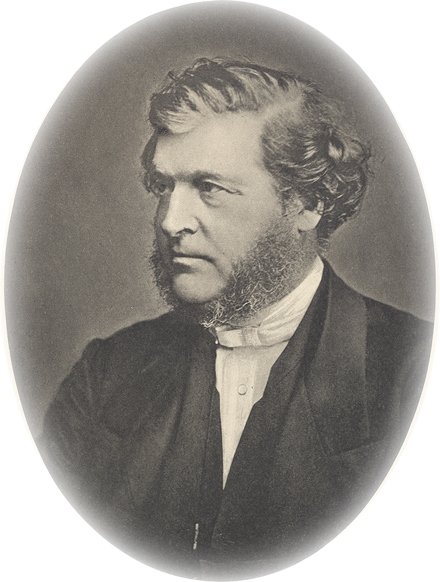
Joseph Ratzinger was born in Bavaria in 1927. In 2005, following the death of John Paul II, he was elected to the Papacy, and took the name Benedict XVI. In a huge shock, on 11th February 2013 he announced that he would be resigning from office at the end of the month. I had to check to make sure he had not said that he would be resigning on the 29th February 2013, but no, he really meant it.
And yes, a Pope can do that. Celestine V established that in 1294, shortly before exercising the right, quite probably because the man who would succeed him as Boniface VIII was leaning rather heavily on him at the time (with good reason, we hasten to add, Celestine V was a hermit who could not handle the role). But it is a right that has been exercised very little. Now, as far as I am concerned the whole thing is a matter of very little importance. The nice thing about Benedict XVI is that you know where you are with him. He is a conservative Roman Catholic, and so he believes there is such a thing as absolute truth. That's the good part.
But the trouble is, he's wrong about some rather important matters. The whole Roman Catholic system is the problem, and however good a man a pope may be, he is still holding an office that ought not to exist. Many years ago in a small village church by a river in Norfolk, I heard an old Anglican minister give a short sermon on the Papacy, and one thing that stuck was that good old man's insistence that there is really no such thing. There is a Bishop of Rome (that is, a chief Presbyter of the Church of Rome), but he has no right to the title of "Papa", that is, "Father", as his exclusive property. That has stuck with me, though the man who taught it to me is now in glory, where few great men in the eyes of the world go. There is no office of Pope in the Bible!
Back in 2005 I was at Seminary in London, and Rev. Graham Harrison, my systematic theology tutor, set us as an essay topic, "What happened to the Pope when he died?" Of course he meant us to think about the Bible's teaching about the end of a person's life. What it finally comes down to is this: what or who are you trusting in? And I am very much afraid that the Roman Catholic Church encourages people to put their trust in the wrong place; in the Roman Catholic Church, not in Jesus Christ. It represents itself as the channel of God's grace (coincidentally it was Boniface VIII, who persuaded Celestine V to resign, who promulgated the Bull Unam Sanctum, which officially stated that outside the Roman Catholic Church there is no salvation), though liberals have modified this in recent years.
More than that, it has a fundamentally false idea of grace, that it is in the nature of a substance that you may have more or less of; and the whole sacramental system of Rome is a massive and elaborate method of getting and keeping this "stuff" that centres upon what the believer does, and upon the priestly system. While the Bible tells us that there is one God and one Mediator between God and men, the man Christ Jesus, Rome says in effect "yes, but you need mediators with the mediator". In effect it lost the humanity of Christ through emphasising his kingship, for it made him a Medieval king, approached through his courtiers (the saints) and his mother, and not the one we may go to directly.
The Council of Trent is still the touchstone of Roman Catholic theology. Of course Rome teaches that grace is necessary for salvation - but not that it is sufficient for salvation. Rome still teaches that we must co-operate with the Holy Spirit in salvation, and have the free will to do so or to refuse; that salvation is not after all, "All of grace". However many liberal Roman Catholics explain it away, Transubstantiation is still taught, Purgatory is still dogma, and the Mass is still said to be a re-presentation of the Sacrifice of Christ. Alphonsus Ligouri's Glories of Mary is still very much representative of Roman Catholic thought, however horrific (and yes, I have read it, at Seminary, back when we had that essay!) it may appear to Protestants.
There will be those who will point to the scandals of child abuse by Roman Catholic priests - and that is a terrible thing. But there have been Protestant pastors who have done the same thing, and Protestant Church members too. No, the problem with a Roman Catholic priest is not that he is a wicked man, but that he is a sacrificing priest! The problem with monasteries is not that they are sinks of iniquity - it is that they are monasteries. Protestants and Roman Catholics all agree that child abuse is wrong - the priest abusing a child is being a bad Roman Catholic. But even if he is a good Roman Catholic, he is in error! At the time of the Reformation there were many who, like Desiderius Erasmus, criticised the abuses of the papacy, but it took a Luther to see that the real problem was not the abuses, but that false doctrine about salvation had crept into the Church.
A number of leading Protestant scholars have said many nice things about Ratzinger - and a lot of those things are true, so far as they go. But at this time what Protestants need to do is to point out, as that faithful old man in the Norfolk Church did, that Ratzinger occupies an unbiblical office, and however many good things he has said, however many good books he has written, facts are facts, and he is not our Pope - because we have no pope. And also we must say that, whatever his excellencies (and they are many), there is one fatal flaw - the fatal flaw of the Roman system of salvation by grace plus. The Gospel is more important than anything; we must speak the truth in love - and remember that we dare omit neither the love nor the truth!
Showing posts with label Romanism. Show all posts
Showing posts with label Romanism. Show all posts
Monday, February 18, 2013

Thursday, September 23, 2010
Book Review: Catholicism: East of Eden
Catholicism: East of Eden – Richard Bennett. Pp. 336. £ 8.50. Paperback. ISBN 9781848710832
Banner of Truth
This is one of those books that I always want to be more positive about than I find I can be. One has a great deal of sympathy for Richard Bennett. He was brought up a devout Roman Catholic, and decided to dedicate himself to missionary work. He was priest in the West Indies, and clearly a very devout, though mistaken man. He is a very intelligent man, and his decision to dedicate himself to missionary work was at the expense of a university career.
As a former Roman Catholic priest, Richard Bennett has first-hand experience of the Church of Rome, and learned Roman Catholic theology from Roman Catholics. He is therefore qualified to present an insider’s view of Rome. This is the great strength of the book. Bennett is able to see through the smoke-screen Rome has erected, and through the confusion of ecumenical statements that are all give on the Protestant side and all take on the Roman side. The book is strongest as a personal testimony with theological reflection. Richard Bennett’s expertise and personal experience are obvious in his treatment of Roman Catholic theology and practice.
There is a very perceptive section on ecumenicism, pointing out that in fact what we have in the Ecumenical movement is a unity that is based almost ccompletely on the use of equivocal language. The chapter 'The Mystic Plague' is quite helpful too, and related. Mystical experience, divorced from doctrine, is a fruitful basis for the union of people belonging to groups with fundamental disagreements.
The section on marriage deals with matters that I for one was unaware of until quite recently, when another Christian remarked that a member of his family was kept from becoming a Roman catholic when he was told that, because his marriage was not a Roman Catholic one, it was no marriage at all, and his children were all illegitimate. Today Rome rarely speaks like that - but it lost at least one person many decades ago! If there is one criticism it is that perhaps Bennett tries to pack everything into a relatively short book. I personally prefer those works that seek to point out the most important differences between Rome and the Reformation churches - but that is just a minor criticism.
On the other hand, this book has a very serious weakness. In writing about the history of the papacy it is obvious that Bennett is far outside of his area of expertise, and he relies almost entirely on 19th century popular works that have since been superseded. The trouble is particularly with his treatment of certain medieval groups which 19th century Protestant groups assumed were evangelical, but which more recent discoveries have shown were not. This mars what is otherwise a good book. I was surprised that the only 20th century work he cites from is from a Seventh-Day Adventist.
Why is this a problem? It is a problem because all of these works treat the Albigensians and Paulicians as orthodox theologically. Yet today, with access to more information about these groups than 19th century Protestant historians had, no serious historian takes such a view. N.R. Needham's 2000 Years of Christ's Power is by no means an academic work, and he distinguishes between the orthodox Waldesians (whom he describes as "Protestants before the Reformation") and the heretical, dualistic Albigensians and Paulicians (Vol. 2, Pp. 114-7,309-313). Given that some of the works cited by Bennett are somewhat obscure, it will not do to say on this point "he is merely a popularizer". No, he has made the mistake of relying on outdated scholarship. We have to be very careful here. Our Protestant forefathers in their conflict with Rome often made the mistake of assuming that those who opposed Rome in the Middle Ages were of necessity in more or less full agreement with them. While there were such groups - like the Waldensians, the Petrobrussians and the Hussites, there were also groups that were not at all orthodox. Readers are directed to Harold O.J. Brown's magisterial work Heresies (Hendrickson, 2003) and chapter 14. For an in-depth study of dualist religions, see Yuri Stoyanov, The Other God (Yale, 2000). An older but still authoritative study is Sir Steven Runciman, The Medieval Manichee (Cambridge, 1947). It is telling that most of the works cited by Bennett are not actually studies of the Albigensians, but either Wylie's History of Protestantism, or studies of the Waldensians. This is undoubtedly the reason why they have merely repeated others' mistakes. However, given that Brown and Needham are on the market, there is really no reason for any modern writer to make such errors. Wylie in particular focuses on the Reformation era, not the Middle Ages.
It seems to me that Bennett is attracted to the idea of an alternative 'Apostolic Succession' of churches reaching back to before the rise of the Papacy and preserving the true doctrine. While understanding the appeal of such ideas to a former Roman Catholic, I have to dissent from it. For one thing, the Reformation came from inside the Medieval Catholic Church, not outside.
Having said this, it must not be forgotten that there is much in this book that the reader will appreciate, all relating to Bennett's area of expertise - modern Roman Catholicism. In my opinion it would be much improved if the ‘historical’ sections which deal with pre-Reformation times were either removed or revised in the light of research carried out in the 20th century. Read it carefully, and pay particular attention to the statements about modern Rome. The Reformation was necessary because of false teaching, and that teaching has not been reformed in Rome.
Banner of Truth
This is one of those books that I always want to be more positive about than I find I can be. One has a great deal of sympathy for Richard Bennett. He was brought up a devout Roman Catholic, and decided to dedicate himself to missionary work. He was priest in the West Indies, and clearly a very devout, though mistaken man. He is a very intelligent man, and his decision to dedicate himself to missionary work was at the expense of a university career.
As a former Roman Catholic priest, Richard Bennett has first-hand experience of the Church of Rome, and learned Roman Catholic theology from Roman Catholics. He is therefore qualified to present an insider’s view of Rome. This is the great strength of the book. Bennett is able to see through the smoke-screen Rome has erected, and through the confusion of ecumenical statements that are all give on the Protestant side and all take on the Roman side. The book is strongest as a personal testimony with theological reflection. Richard Bennett’s expertise and personal experience are obvious in his treatment of Roman Catholic theology and practice.
There is a very perceptive section on ecumenicism, pointing out that in fact what we have in the Ecumenical movement is a unity that is based almost ccompletely on the use of equivocal language. The chapter 'The Mystic Plague' is quite helpful too, and related. Mystical experience, divorced from doctrine, is a fruitful basis for the union of people belonging to groups with fundamental disagreements.
The section on marriage deals with matters that I for one was unaware of until quite recently, when another Christian remarked that a member of his family was kept from becoming a Roman catholic when he was told that, because his marriage was not a Roman Catholic one, it was no marriage at all, and his children were all illegitimate. Today Rome rarely speaks like that - but it lost at least one person many decades ago! If there is one criticism it is that perhaps Bennett tries to pack everything into a relatively short book. I personally prefer those works that seek to point out the most important differences between Rome and the Reformation churches - but that is just a minor criticism.
On the other hand, this book has a very serious weakness. In writing about the history of the papacy it is obvious that Bennett is far outside of his area of expertise, and he relies almost entirely on 19th century popular works that have since been superseded. The trouble is particularly with his treatment of certain medieval groups which 19th century Protestant groups assumed were evangelical, but which more recent discoveries have shown were not. This mars what is otherwise a good book. I was surprised that the only 20th century work he cites from is from a Seventh-Day Adventist.
Why is this a problem? It is a problem because all of these works treat the Albigensians and Paulicians as orthodox theologically. Yet today, with access to more information about these groups than 19th century Protestant historians had, no serious historian takes such a view. N.R. Needham's 2000 Years of Christ's Power is by no means an academic work, and he distinguishes between the orthodox Waldesians (whom he describes as "Protestants before the Reformation") and the heretical, dualistic Albigensians and Paulicians (Vol. 2, Pp. 114-7,309-313). Given that some of the works cited by Bennett are somewhat obscure, it will not do to say on this point "he is merely a popularizer". No, he has made the mistake of relying on outdated scholarship. We have to be very careful here. Our Protestant forefathers in their conflict with Rome often made the mistake of assuming that those who opposed Rome in the Middle Ages were of necessity in more or less full agreement with them. While there were such groups - like the Waldensians, the Petrobrussians and the Hussites, there were also groups that were not at all orthodox. Readers are directed to Harold O.J. Brown's magisterial work Heresies (Hendrickson, 2003) and chapter 14. For an in-depth study of dualist religions, see Yuri Stoyanov, The Other God (Yale, 2000). An older but still authoritative study is Sir Steven Runciman, The Medieval Manichee (Cambridge, 1947). It is telling that most of the works cited by Bennett are not actually studies of the Albigensians, but either Wylie's History of Protestantism, or studies of the Waldensians. This is undoubtedly the reason why they have merely repeated others' mistakes. However, given that Brown and Needham are on the market, there is really no reason for any modern writer to make such errors. Wylie in particular focuses on the Reformation era, not the Middle Ages.
It seems to me that Bennett is attracted to the idea of an alternative 'Apostolic Succession' of churches reaching back to before the rise of the Papacy and preserving the true doctrine. While understanding the appeal of such ideas to a former Roman Catholic, I have to dissent from it. For one thing, the Reformation came from inside the Medieval Catholic Church, not outside.
Having said this, it must not be forgotten that there is much in this book that the reader will appreciate, all relating to Bennett's area of expertise - modern Roman Catholicism. In my opinion it would be much improved if the ‘historical’ sections which deal with pre-Reformation times were either removed or revised in the light of research carried out in the 20th century. Read it carefully, and pay particular attention to the statements about modern Rome. The Reformation was necessary because of false teaching, and that teaching has not been reformed in Rome.
Friday, December 4, 2009
Conspiracy! Two Babylons Revisited
Presenting a second post on conspiracy theories:
Alexander Hislop's book The Two Babylons is sadly still regarded by many as a work of outstanding scholarship and a great help in the controversy with Rome. Ralph Woodrow, among others, has shown that it is neither. The great problem with Hislop's approach is that it is arbitrary and can be used to prove anything (and therefore it actually proves nothing).
Put simply, the Hislop Hypothesis is that the worship of the Roman Catholic Church today is practically identical to that of the ancient Babylonian Mystery Religion, and that the Roman Catholic Church is nothing more than paganism Christianized.
The greatest problem with Hislop's thesis is that it does not fit the facts, and therefore the facts have to be massaged to fit it. All must be placed on Hislop's Procrustean bed and forced to fit! The second problem is that the method, if applied consistently, ends with the claims of Dan Brown that there is nothing original in Christianity! Why? Because similarity (even a similarity that, on closer examination, proves to be nothing of the kind) is enough for Hislop to establish a link. The Babylonians had a celibate priesthood, so does Rome! No, the Babylonians had priests who were Eunuchs. There is a slight difference here! Where this sort of thing leads those who do not hold on to Hislop's relatively orthodox Presbyterianism is to make like Dan Barker in the now-notorious debate with James White, claiming that Mark must have borrowed from Homer because in Homer's Oddysey they got into a boat and sat down, and in Mark's Gospel they got into a boat and sat down. Really? You know what I did last time I got into a boat? I sat down.
Let me repeat, that two people do something similar does not prove a connection. The Medieval dualist sect called the Bogomils believed that Jesus and Satan were brothers, sone of the most high God, but Satan disobeyed and became evil, while Jesus was obedient. The Mormons believe essentially the same thing. Does this prove that Mormonism is nothing other than a continuation of Bogomilism? Of course not! As Yuri Stoyanov has shown in his book The Other God, the dualist heresy has resurfaced time and again through history with no apparent connections to previous dualist groups. Thus similarity, even of belief, cannot prove a connection. How much less can a mere similarity of form? And that is even if one exists!
And another thing, there was no "Babylonian Mystery Religion". The Mystery religions (plural!) originated in many areas, Greece, Egypt, Phrygia, Syria and Persia (see Romanld H. Nash: The Gospel and the Greeks [P. & R., 2003]. Nash is undoing some of the damage caused by Hislop's recklessness). None of the chief mystery religions originated in Babylon, and the Persian mystery was that of Mithras, not a worship of Nimrod. Hislop conflates dozens of gods from a score of nations to produce his own mythic Nimrod. In his zeal against Rome he forgot the first rule of controversy - be fair. If you can pick and choose bits from all over antiquity to make your "Babylonian Mystery Religion," you can make it look like anything you want! Which of course fits very well if you want to make Rome look pagan.
Hislop was not a historian or a student of Babylonian culture, he was a parish minister with a bee in his bonnet about the Church of Rome who was not too particular what arguments he used against it. The main thing was that the arguments were against Rome!
To summarize. There are many faults with the Church of Rome, and these have beeen laid out in such books as Dr. James R. White's The Roman Catholic Controversy, Eric Svedsen's Evangelical Answers and McCarthy's The Gospel According to Rome. The objections are doctrinal, rooted in Rome's exaltation of the pope, her doctrine of justification and merits, and her undue exaltation of the Virgin Mary, to name just three points. None of these are derived from Babylon. It may fairly be argued that Romanism is "Christianity paganized", to paraphrase Thomas E. Peck, it cannot be argued that it is Paganism Christianized.
Christians ought not to read Hislop's book. As he was Free Church minister of Arbroath, I can only conclude that the book is the result of too many kippers! Joking aside, The Two Babylons will not prepare any Christian to answer the claims of Rome, and Rome has no doubt answers to it - such as the obvious one that it is chock-full of errors. Thus, if a person's opposition to Rome is built on a myth, they can easily be shaken from it. But, if it is based on facts, then it is going to be much more stable.
Alexander Hislop's book The Two Babylons is sadly still regarded by many as a work of outstanding scholarship and a great help in the controversy with Rome. Ralph Woodrow, among others, has shown that it is neither. The great problem with Hislop's approach is that it is arbitrary and can be used to prove anything (and therefore it actually proves nothing).
Put simply, the Hislop Hypothesis is that the worship of the Roman Catholic Church today is practically identical to that of the ancient Babylonian Mystery Religion, and that the Roman Catholic Church is nothing more than paganism Christianized.
The greatest problem with Hislop's thesis is that it does not fit the facts, and therefore the facts have to be massaged to fit it. All must be placed on Hislop's Procrustean bed and forced to fit! The second problem is that the method, if applied consistently, ends with the claims of Dan Brown that there is nothing original in Christianity! Why? Because similarity (even a similarity that, on closer examination, proves to be nothing of the kind) is enough for Hislop to establish a link. The Babylonians had a celibate priesthood, so does Rome! No, the Babylonians had priests who were Eunuchs. There is a slight difference here! Where this sort of thing leads those who do not hold on to Hislop's relatively orthodox Presbyterianism is to make like Dan Barker in the now-notorious debate with James White, claiming that Mark must have borrowed from Homer because in Homer's Oddysey they got into a boat and sat down, and in Mark's Gospel they got into a boat and sat down. Really? You know what I did last time I got into a boat? I sat down.
Let me repeat, that two people do something similar does not prove a connection. The Medieval dualist sect called the Bogomils believed that Jesus and Satan were brothers, sone of the most high God, but Satan disobeyed and became evil, while Jesus was obedient. The Mormons believe essentially the same thing. Does this prove that Mormonism is nothing other than a continuation of Bogomilism? Of course not! As Yuri Stoyanov has shown in his book The Other God, the dualist heresy has resurfaced time and again through history with no apparent connections to previous dualist groups. Thus similarity, even of belief, cannot prove a connection. How much less can a mere similarity of form? And that is even if one exists!
And another thing, there was no "Babylonian Mystery Religion". The Mystery religions (plural!) originated in many areas, Greece, Egypt, Phrygia, Syria and Persia (see Romanld H. Nash: The Gospel and the Greeks [P. & R., 2003]. Nash is undoing some of the damage caused by Hislop's recklessness). None of the chief mystery religions originated in Babylon, and the Persian mystery was that of Mithras, not a worship of Nimrod. Hislop conflates dozens of gods from a score of nations to produce his own mythic Nimrod. In his zeal against Rome he forgot the first rule of controversy - be fair. If you can pick and choose bits from all over antiquity to make your "Babylonian Mystery Religion," you can make it look like anything you want! Which of course fits very well if you want to make Rome look pagan.
Hislop was not a historian or a student of Babylonian culture, he was a parish minister with a bee in his bonnet about the Church of Rome who was not too particular what arguments he used against it. The main thing was that the arguments were against Rome!
To summarize. There are many faults with the Church of Rome, and these have beeen laid out in such books as Dr. James R. White's The Roman Catholic Controversy, Eric Svedsen's Evangelical Answers and McCarthy's The Gospel According to Rome. The objections are doctrinal, rooted in Rome's exaltation of the pope, her doctrine of justification and merits, and her undue exaltation of the Virgin Mary, to name just three points. None of these are derived from Babylon. It may fairly be argued that Romanism is "Christianity paganized", to paraphrase Thomas E. Peck, it cannot be argued that it is Paganism Christianized.
Christians ought not to read Hislop's book. As he was Free Church minister of Arbroath, I can only conclude that the book is the result of too many kippers! Joking aside, The Two Babylons will not prepare any Christian to answer the claims of Rome, and Rome has no doubt answers to it - such as the obvious one that it is chock-full of errors. Thus, if a person's opposition to Rome is built on a myth, they can easily be shaken from it. But, if it is based on facts, then it is going to be much more stable.
Friday, August 21, 2009
Bad ways to argue against Roman Catholicism

When the Da Vinci Code was coming out, I met with an evangelical who declared that he was surprised I was arguing against the movie because "it was against Roman Catholicism." I replied that, while it was true that the book contained criticism of the Roman Catholic Church, those criticisms were in fact mostly arguments against all Christianity. I expect that the majority of readers know that the Da Vinci Code contains the claim (repeats the claim might be a better way of putting it) that Jesus was married to Mary Magdalene and they had a child. Parrotting such strange fantasies as The Holy Blood and the Holy Grail, Dan Brown's book claimed that the early Church believed that Jesus was just a man, and that the deity of Christ was a doctrine imposed on the Church by Constantine at the Council of Nicea in the 4th century.
I told him so, and he went on his way. But a recent e-mail to Fighting for the Faith has set me thinking, and starting Gail Riplinger's original New Age Bible Versions (Ararat, VA, AV Publications Corp, 1995) has confirmed the need to say something about this. There are, sadly, a lot of Protestants who think that as long as they have an argument against Roman Catholicism, it must be valid. As a result they do not consider however the wider implications of the argument and the reasoning behind it.
The example of this referred to by the correspondent was The Two Babylons by Alexander Hislop, which she recommended enthusiastically. As Hislop was writing in the 1850s, we don't want to treat him too harshly. After all, he was a minister in the Scottish Highlands in the mid-19th century, and not an achaeologist, historian or anthropologist. The state of knowledge about the ancient world was sketchy at the time, and it takes time for information to travel from London and Edinburgh to Arbroath. The fact of the matter is, however, that the book is far more a work of the imagination than an account of the realities of Babylonian mythology. Hislop's vivid imagination constructed a complex web of connections between the ancient Babylonian religion and the worship of the Roman Catholic Church. The book seemed very convincing to many at the time, and is still accepted as such by many Protestants today.
Sadly, the fact is that there is no informed scholar today who would describe the Babylonian religion the way Hislop does. I'm not an archaeologist, but I know a bit about the subject from reading widely, and I know an archaeology student at one of England's top universities. I have read somewhat in the mythology of the pagan world, including Egypt and the Middle East. A lot has been learned since Hislop's death, remember! The genetic fallacy and the fallacy of false etymology are committed often by Hislop. Scottish words are derived from Chaldean roots, and pagan gods from widely separated cultures identified with one another where there is no connection. In fact, if Hislop is to be believed, practically all pagan gods are Nimrod, and practically all goddesses his wife Semiramis (in fact there is no evidence that Nimrod and Semiramis were around at the same period in history, let alone that they were married). Hislop wrongly dated the rise of the Mystery Religions to pre-Christian times when most modern scholars would date them to after the time of Christ, and thus brings in ceremonies that post-date Christ as coming from Babylon.
Hislop is a source of the argument that the letters 'IHS' stand for the Egyptian triad of Isis, Horus and Set. There are two problems with this. First of all, Isis and Horus are associated with Osiris, whose brother Set was, secondly, Set (or Sutekh), is the evil god who murdered Osiris, but his body up, and usurped his throne. As anyone with any knowledge of Egyptian mythology (or the Doctor Who story 'Pyramids of Mars') knows. It seems Hislop had to hunt around for an Egyptian god whose name begins with 'S'!
In the course of his argument, Hislop proposed that Constantine had merged the official Roman paganism with Christianity. Now, he was an orthodox Presbyterian and held to the Westminster Confession. But his arguments, that the religion of the Roman Catholic Church was mostly derived from paganism, and that Constantine corrupted Christianity, have been picked up on to attack not Roman Catholicism, but the Church of Jesus Christ. Writers hostile to all Christianity followed Hislop's lead, and used his method to attack Christianity itself and to argue that nothing in Christianity is original - which leads us right back to Dan Brown and the Da Vinci Code. Intending to attack the Church of Rome, Hislop has made a rod for Protestant backs. As a reviewer (Quoted in Woodrow The Babylon Connection? P. 20), wrote in 1859: "Mr. Hislop's argument proves too much. He finds not only the corruptions of Popery, but the fundamental articles of the Christian Faith, in his hypothetic Babylonian system". Others have seen just that - and acted accordingly!
In the course of his argument, Hislop proposed that Constantine had merged the official Roman paganism with Christianity. Now, he was an orthodox Presbyterian and held to the Westminster Confession. But his arguments, that the religion of the Roman Catholic Church was mostly derived from paganism, and that Constantine corrupted Christianity, have been picked up on to attack not Roman Catholicism, but the Church of Jesus Christ. Writers hostile to all Christianity followed Hislop's lead, and used his method to attack Christianity itself and to argue that nothing in Christianity is original - which leads us right back to Dan Brown and the Da Vinci Code. Intending to attack the Church of Rome, Hislop has made a rod for Protestant backs. As a reviewer (Quoted in Woodrow The Babylon Connection? P. 20), wrote in 1859: "Mr. Hislop's argument proves too much. He finds not only the corruptions of Popery, but the fundamental articles of the Christian Faith, in his hypothetic Babylonian system". Others have seen just that - and acted accordingly!
Ralph Woodrow, once a supporter of the Hislop hypothesis, wrote an excellent book refuting it called The Babylon Connection? (Palm Springs, CA, Ralph Woodrow Evangelistic Association, 1997). Woodrow's original book, Babylon Mystery Religion was extremely popular, and is cited by Gail Riplinger in NABV. I recommend The Babylon Connection? to anyone who wants an in-depth analysis of what's wrong with Hislop.
[NOTE: I am NOT a supporter of Roman Catholicism, and I think it seriously flawed and unbiblical. I just don't think that it's a mythical 'Babylonian Mystery Religion' that never existed in reality'. I would point to books such as James White's The Roman Catholic Controversy; Mary, Another Redeemer?; McCarthy's The Gospel According to Rome, Svedsen's excellent Evangelical Answers. And for the voice of the Church of Rome, the Catechism of the Catholic Church. But I am also a believer in the importance of truthfulness, and the use of good arguments.]
[NOTE: I am NOT a supporter of Roman Catholicism, and I think it seriously flawed and unbiblical. I just don't think that it's a mythical 'Babylonian Mystery Religion' that never existed in reality'. I would point to books such as James White's The Roman Catholic Controversy; Mary, Another Redeemer?; McCarthy's The Gospel According to Rome, Svedsen's excellent Evangelical Answers. And for the voice of the Church of Rome, the Catechism of the Catholic Church. But I am also a believer in the importance of truthfulness, and the use of good arguments.]
Subscribe to:
Posts (Atom)