Showing posts with label Spurgeon. Show all posts

Sunday, January 12, 2014

Book Review: 'Living by Revealed Truth'

Tom Nettles: Living by Revealed Truth, the Life and Pastoral Theology of Charles Haddon Spurgeon. Tain, Christian Focus,  2013, Pp. 683 large hardcover. £29.99


There are some men (and fewer women) who are veritable magnets for biographers, John Wesley, John Knox, Martin Luther and John Calvin come at once to mind. Many biographies of these men have been issues, but the flow of them does not seem to lessen. Charles Haddon Spurgeon is one of these figures who attract biographers, for despite the pile of existing biographies of the man, new ones continue to be written. How, the reader may ask, can there be anything new to say? If the old volumes of the Autobiography are not sufficient, surely Arnold Dallimore's volume and the two studies by Iain Murray have brought the issue up to date. Lewis Drummond promised us a definitive biography twenty years ago and gave us a work that, while it did incorporate new material, could have done with being at least 100 pages shorter, how can Tom Nettles have produces a work of over 600 double-column pages that is actually worth the sacrifice of trees?

Let me assure the reader that it is worth the trees. Having been disappointed by the Drummond biography a little under five years ago, only the fact that I know Nettles to be a clear and very readable author could have induced me to open the pages of a new and large work on Spurgeon. Tom Nettles has made a name for himself with clear, well-written works of Baptist history and biography including his three volume set on The Baptists, also from Christian Focus, and his By His Grace and For his Glory, combining readability with scholarship. All his works have a definite plan and purpose to them; he does not write as one who beats the air, but as one who knows what he is writing. Where Drummond suffered from a lack of plain purpose and produced a work that was neither fish nor fowl nor good red herring, Nettles has carefully laid a plan and carried it out.

As the subtitle suggests, this is not a straightforward biography of Spurgeon, such books already exist, and it would be a work of supererogation to produce another one. The reader who wants a straightforward narrative of Spurgeon's life is already spoiled for choice, and no good purpose would be served by writing another one. Instead Nettles deals with Spurgeon's thought and theology as revealed in his writings; this book is about the why more than the what of Spurgeon's life, his mind more than his acts. By taking this approach, Nettles justifies a book of such dimensions on such a subject. Spurgeon is allowed to speak for himself as much as possible, a fact that further increases readability, since Spurgeon was so engaging. Chapters are long, but broken up with sub-headings, a vital necessity in a chapter of over 50 pages when those pages are large and written in double columns.

There are, inevitably in a work of such length, a smattering of typographical errors, most glaringly in the contents page where Chapter 14 is entitled “Destroyed or be Destroyed” when the actual heading is of course “Destroy or be Destroyed”. The Surrey Tabernacle and Surrey Chapel are occasionally confused in what must be errors of typing, for James Wells is described as pastor of (incorrectly) the Surrey Chapel and (correctly) the Surrey Tabernacle. Newman Hall suffers the same error, though of course he was pastor at Surrey Chapel. Hall is also victim of what must be the book's one great historical howler: On P. 527 Nettles writes that, “Newman Hall came in for equal if not greater laudations from Spurgeon [than J.C. Ryle] as a useful Anglican”; this rather surprised me, for Newman Hall was never an Anglican, he was a Congregationalist. I can only suppose that Nettles read that Hall was minister of Christ Church, Westminster Bridge Road, and that he wore a gown and used a prayer-book in his church, put two and two together, and forgot to check that what he was putting together was in fact two and two. The entire paragraph oh Hall is therefore lovingly marked in pencil in my copy of the book. The mistake is understandable, but Nettles ought to have checked before putting Newman Hall in a section of the book on Spurgeon and Anglicans. Still, it is only one paragraph.


This is a very good book indeed. What errors of fact it has are small and explained by the fact that its subject is Spurgeon's though, not his life and times. For a book of its dimensions, it is eminently readable, and it answers admirably the end to which it was written. For this, Dr. Nettles, we are thankful. If possible, buy the book from your local Christian bookshop - they need you!

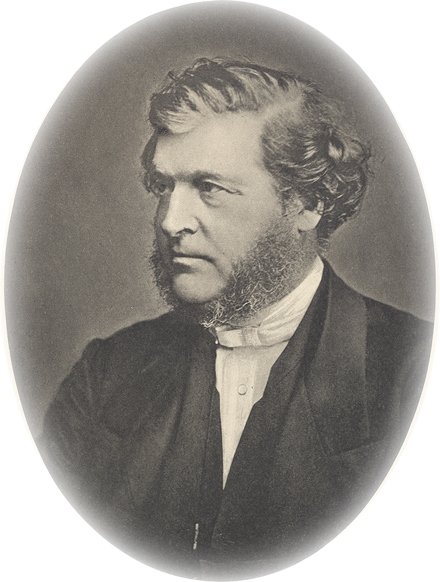
Monday, September 29, 2008

Pulpit Language and Eccentric Preachers

While I was at the London Theological Seminary, the then Homiletics tutor recommended to us Mr. Spurgeon's little book 'Eccentric Preachers'. Something of an apologetic for Spurgeon's own preaching, it is a delightful little book about some of the more unusual preachers of the past. In it Spurgeon revels in that 'eccentricity' that is the result of men being themselves in the pulpit. In preachers who, like the Apostles, 'turned the world upside-down'. Men like John Berridge and Rowland Hill, both of whom just could not avoid being humorous at times.

But there is also a bad eccentricity, Spurgeon warns, when a preacher behaves in an odd way with the intent to shock people, and to get publicity. It is one thing for a man to be naturally humorous in the pulpit, and to speak as a common man to common men, as Billy Bray did, but it is quite another to be vulgar. "Real vulgarity lies in foul allusions and indelicate hints," Spurgeon writes (P. 38) "Tinge your stories or your figures with dirt, Mr. Slopdash! and we anandon you: Nothing which is indelicate can be endured in the service of a holy God." (P. 39). This set me thinking about the question of appropriate pulpit language. Perhaps an appropriate response from the man who referred to 'a great steaming pile of manure' in the pulpit yesterday. Not that it was gratuitous, for it was in illustration of a Biblical figure. Read Philippians 4 for context, and use the Greek or the Authorised Version, some modern versions tone it down.. And it wasn't a generic pile of manure I was referring to as an illustration, it was a specific one that I have to go past on the way to work. I am a countryman, after all, and it was a rural congregation.

There was a man called G.A. Studdart-Kennedy, an Army Chaplain in World War I, who went by the nickname of 'Woodbine Willie' because, in an attempt to get closer to the private soldiers, he smoked cheap cigarettes and used bad language as they did. Thankfully the experiment failed. But it seems that we have a resurgence of 'Woodbine Willies' today, who think that the language of the trenches belongs in the pulpit. It does not. Let a man be himself, but please remember that there is a time for everything. I recall a young man speaking at a Christian Union who did not actually use foul language, but used a risqué story to introduce his message, a story that another young man at the same university had been reprimanded for using to introduce an after-dinner speech for a secular political society! If it not appropriate for an after-dinner speech, how can it be in the pulpit?

It is not only foul language and vulgar allusions that are out-of-place in the pulpit. There are some preachers who, having read perhaps that C.H. Spurgeon and D.L. Moody used humour, make the 'sermon' into a stand-up routine, with no aim other than to leave the audience (for that is what they treat them as) rolling in the aisles. To them I say with Mr. Spurgeon that they should at once cease to call themselves ministers and to receive a salary for that end, and let them try to make an honest living on the boards. Humour in the pulpit should have a serious end, and those who like to remind us taht Spurgeon made his hearers laugh need to remember that he made them mourn as well, and that his sermons were in earnest as whole productions.

I conclusion, let me suggest that no minister should ever speak in the pulpit things that would not be welcome in mixed company (excepting of course the things of Christ), that no language that is not allowed on television before nine in the evening is appropriate in the pulpit, and that no story, comical or not, should be allowed in the sermon that does not contribute to the edification of the hearers. Also that no man should be allowed to preach someone else's sermon as if it were his own, and that all artificial tones of voice or mannerisms should be banished as well!

Wednesday, August 27, 2008

Spurgeon on Hermeneutics

Charles Haddon Spurgeon was a very sagacious writer, and a gifted preacher. His commentaries on the Psalms and on the Gospel of Matthew are still very useful. Therefore we would like to give two quotations from Spurgeon dealing with the question of Bible interpretation. In both of these quotations Spurgeon’s main target is the early Plymouth Brethren. The original dispensationalists, they taught the famous Dispensationalist catchphrase, “if the plain sense makes sense seek no other sense”, and the notorious ‘law of first use’, which meant that a word was always to be understood in the Scriptures in the sense that it bore in its first use chronologically.

These have a show of wisdom, but both are false. Spurgeon explains below:

“In Holy Scripture the same word does not always mean the same thing. The Bible is a book meant for human beings, and therefore it is written in human language; and in human language the same word may signify two or three things. For instance, “a pear fell from a tree;” “a man fell into drunken habits.” There the meaning of the second word “fell,” is evidently different from the first, since it is not literal, but metaphorical. Again, “the cabman mounted the box; the child was pleased with his Christmas box;” “his lordship is staying at his shooting box.” In each case there is the same word, but who does not see that there is a great difference of meaning? So it is in the Word of God. You must explain the difference between a word used in a peculiar sense, and the ordinary meaning of the word, and thus you will prevent your people falling into mistakes. If people will say that the same word in Scripture always means the same thing, as I have heard some assert publicly, they will make nonsense of the Word of God, and fall into error through their own irrational maxims. To set up canons of interpretation for the Book of God which would be absurd if applied to other writings is egregious folly: it has a show of accuracy, but inevitably leads to confusion.

“The obvious literal meaning of a Scripture is not always the true one, and ignorant persons are apt enough to fall into the most singular misconceptions: a judicious remark from the pulpit will be of signal service. Many persons have accustomed themselves to misunderstand certain texts; they have learned wrong interpretations in their youth, and will never know better unless the correct meaning be indicated to them.”

CHS - The Swords and the Trowel’ Vol. 2, P. 293


The trouble is, the understanding of a text that is the ‘obvious literal meaning’ to me may be false. It may be anachronistic, so that some have understood ’through a glass darkly’ as having reference to a telescope - which had not been invented yet. The word ’mill’ may conjure up a false image to me. In my home county of Norfolk, we historically used water mills. In Kent and Sussex most mills were wind-powered. But in Biblical times they were either hand-driven or driven by an animal. Or take the word ‘corn’. In America that is usually understood of maize, but in Europe in the past it was used to describe wheat and Barkley and other cereal crops. We have laughed out loud when we have heard atheists use the mention of ‘corn’ in the Bible as evidence that the Bible is in error (what do they think, that it was made up in the last five hundred years?).

Again, in Apocalyptic and figurative language, the ‘obvious literal meaning’ as I might take it is false, because the author’s intent was to use language symbolically. What we seek in Biblical interpretation is not my ‘obvious literal meaning’, but what the Holy Spirit sought to communicate in the text.

Another caution that Spurgeon gives is against those who try to find new meanings for texts. This is always a very hazardous enterprise:

“Do not be carried away with new meanings. Plymouth Brethren delight to fish up some hitherto undiscovered tadpole of interpretation and cry it round the town as a rare dainty. Let us be content with more ordinary and more wholesome fishery. No one text is to be exalted above the plain analogy of faith, and no solitary expression is to shape our theology for us. Other men and wiser men have expounded before us, and anything undiscovered by them it were well to put to test and trial before we boast too loudly of the treasure-trove.”
- ditto, P. 296


It should be noted that Spurgeon was pre-millennial and held to a future restoration of the Jews. He was NOT, however, a Dispensationalist, and some of his harshest words about misinterpreting the Bible are reserved for the disciples of John Nelson Darby.