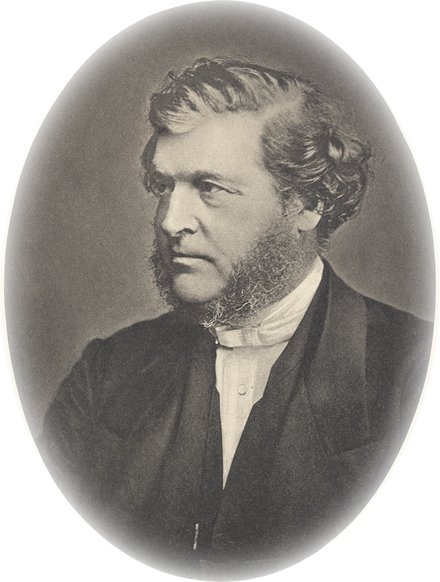
Cornelius Van Til:
Reformed Apologist and Churchman
John R. Muether
We were suprised to find that Muether's book is the first biography of Van Til since William White's 'authorized biography' of 1979. Cornelius Van Til, whilst never the easiest of men to read (he writes in Dutch American, which is equally difficult for those of us not used to it to follow when it is spoken), is by far the most influential Reformed apologist of the 20th century. Yet Muether has not simply taken that part of VAn Til, he has presented, as his subtitle shows, Van Til as both thinker and churchman. Indeed, as Muether contends, you cannot truly understand Van Til except in both of these capacities. We need, as it were, a stereoscopic picture of Van Til, the man in the Church as well as the professor in his study.
Muether has an obvious sympathy for his subject, always a good thing in a biographer. Whatever anyone else may think, we prefer our biographies to be written by those who actually like their subject. And Van Til, though inclined to fierce rhetoric, and the last man to back away from a fight, comes across as a genuinely likeable man, the man that we recognise from listening to recordings of his lectures (a word to those who find Van Til difficult to read, listen to him first. Sermonaudio.com has a number of excellent Van Til lectures). Here is Van Til in context, not some disembodied voice floating in the ether, but the Dutch Reformed man in the Orthodox Presbyterian Church, the outsider trying to forge a place in America for his adopted denomination, and the champion of Reformed theology.
Like Dr. Van Til, we regard the Reformed Faith as simply Biblical Christianity in its purest form, and that theology needs a consistent defence. We believe that Van Til, both practically and in his writings, offered and still offers that defence. Meuther gives us food for thought, showing how Van Til was one of the first to raise concern about the direction of the New Evangelicalism, and how he was the strongest voice of warning when Karl Barth came on the scene. This is a gripping read. In one sitting it would probably take about three and a half hours to read properly. We read most of it on a three-hour coach journey, and it certainly shortened the journey time.
Highly, HIGHLY recommended to all who want to know something about the man whose apologetic methodology still casts a long shadow (and, we think, a welcome shadow) over the Church today.