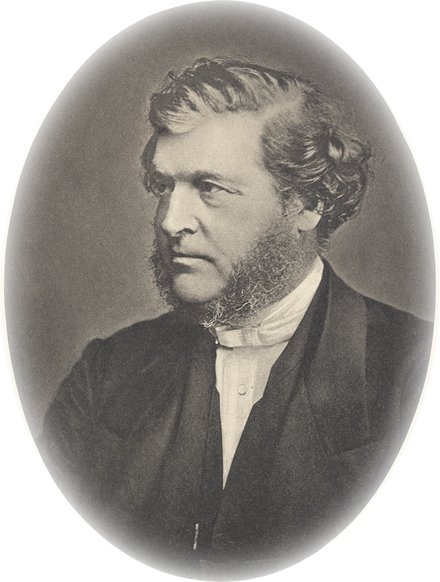
The following forms Appendix 3 to my essay 'The Craft of Dishonest Quotation'. The abbreviations in the titles of books are those used in the body of the essay.
On P. 234 of NABV Riplinger writes of Westcott:
“Commenting on I John 2:2 which reads, ‘[H]e is the propitiation for our sins,’ Westcott says this verse is ‘Foreign to the language of the New Testament.’”
The implication is that B.F. Westcott denied that 1 John 2.2 belongs in the New Testament. Since the book I facetiously refer to as The Big Book of Textual Variants (Philip Comfort's New Testament Text and Translation Commentary) lists no variant in this place, it follows that Riplinger is accusing Westcott of engaging in conjectural criticism of the text – a sort of New Testament version of the so-called ‘Higher Criticism’[1] of the Old Testament. If this were true it would indeed be a serious indication of unsoundness in Westcott, rejecting a verse that is in every manuscript that contains 1 John 2 for purely theological reasons. But there’s the rub, is it true?
At this point Riplinger has forgotten to give the reference to Westcott’s Epistles. As the specific quotation is not found in the body of the work on the text in question,[2] but in an additional note, this failure to give the reference actually gives the false impression that Riplinger has given a bad reference, when in fact she has given no reference at all. The context is:
“The Scriptural conception of hilaskesthai is not that of appeasing one who is angry, with a personal feeling, against the offender, but of altering the character of that which from without occasions a necessary alienation, and interposes an inevitable obstacle to fellowship. Such phrases as ‘propitiating God’ and God ‘being reconciled’ are foreign to the language of the N.T. Man is reconciled (2 Cor. V.18 ff.; Rom. V.10 f.). There is a ‘propitiation’ in the matter of the sin or of the sinner. The love of God is the same throughout; but He ‘cannot’. In virtue of His very Nature welcome the impenitent and sinful: and more than this, He ‘cannot’ treat sin as if it were not sin.
“This being so, the hilasmos, when it is applied to the sinner, so to speak, neutralises the sin. In this respect the idea of the efficacy of Christ’s propitiation corresponds with one aspect of the Pauline phrase ‘in Christ.’ The believer being united with Christ enjoys the quickening, purifying, action of Christ’s ‘Blood,’ of the virtue of His life and death.”[3]
Note first of all that it is not the verse that Westcott says is “Foreign to the language of the New Testament.” He is not engaging in the 'higher criticism' (or, as James Begg called it, "the lower scepticism"). At first reading the passage the evangelical reader is put on the defensive. Westcott appears to be trying to make the verse say something other than its plain meaning by quoting various extra-Biblical sources and Greek translations of Old Testament texts. Then, however, a second reading clears the air somewhat.
An Evangelical would not have used Westcott’s language, but in fact he is substantially correct. Westcott is right to say that the idea that Christ’s sacrifice changes something in God is unbiblical, and this is in fact the force of the passage. He is also quite right to say that the effect of Christ’s death is finally not in God, but in us. If Christ’s death affects the way God treats those who believe in Jesus, it is because the death has changed something about us, it has taken away our sins. And it is the false idea of Christ’s death changing God’s mind that Westcott, rightly understood, says is “foreign to the language of the N.T.” There has been, sadly, a school of Evangelical preaching that has given the impression of God the Father in a fearful rage being mollified by the self-sacrifice of a loving Son. The impression is given that, before the cross, the Father had no love for us, and that it was the cross that created the Father’s love. This is of course not what the Bible teaches at all, nor is it what the best Evangelical preachers have taught. Most of the time it is merely rhetoric, bad and false rhetoric, but still merely rhetoric and not the actual belief of the speaker. Still, Westcott is quite right to say that such a view of the cross is false, and ultimately dangerous, for it creates the idea of disharmony in the Trinity, the Son loving those the Father does not love. It also gives the impression that the Father’s wrath is ultimately unjust, wrong and merely emotional.
Thus, while I disagree with Westcott that “Such phrases as ‘propitiating God’ and God ‘being reconciled’ are foreign to the language of the N.T.” absolutely, I agree that, if understood as referring to a change produced in God, such phrases are. But, if they are understood as referring to a new relation which we, as Christians, now enjoy due to our position in Christ, the phrases are quite permissible.
The Footnotes Begin Here
[1] “Why ‘higher’? The word bewilders me always.” – B.F Westcott to Archbishop Benson, Life Vol. 2 P. 224
[2] Epistles P. 44
[3] Ibid. P. 87.
Showing posts with label Westcott. Show all posts
Showing posts with label Westcott. Show all posts
Monday, October 5, 2009

Friday, October 2, 2009
Was B.F. Westcott a Communist?
 (This post is in the nature of "Appendix 2" to The Craft of Dishonest Quotation.)
It has been said by King James Only writers that Brooke Foss Westcott was a communist. Most found this accusation on a quotation found in Life Vol. 1 P. 309: “I suppose I am a communist by nature.”
A fuller quotation reads:
“But ‘the Speaker’s’ made me bitterly sad. I suppose I am a communist by nature; but surely dress and jewels cannot be tolerated even in this world for ever. What a ‘Commentary on the Bible,’ could the people of Whitechapel have seen it, that would have seemed!”
A few words of explanation are in order. Westcott’s John first appeared as a volume in the Speaker’s Commentary on the Bible series. There was some sort of reception or launch party associated with the commentary, and Westcott records his disgust with the level of display in the clothing of those attending the party. Whitechapel was of course a slum district of London, notorious as the place where Jack the Ripper committed his crimes. The quotation comes from a private letter, and in context can only be a rather acid social comment, that professed Christians, instead of caring for the poor, were adorning themselves with jewellery and expensive clothes. What Westcott is in fact saying is that he would be viewed as a communist by many people for such remarks, not that he actually was a communist.
The other ‘evidence’ for Westcott’s socialism often cited is his involvement in the Christian Social Union. This is to mistake the CSU for a socialist body, or in other words to read the title of the organisation as if it was ‘Christian Socialist Union. Westcott admits, “The title ‘Christian Social Union’ is liable to misconstruction.”[1] Thus he goes on to explain the true meaning of the name:
“The use of the word ‘Christian’ is positive and not negative. It says that the work of the Union is founded on the Christian Creed. It says nothing of others. ‘Social’ again is necessary. It indicates that the aim of the Union is to influence our social life, as distinguished from our individual life. It is perhaps unfortunate that the first two epithets suggest the title ‘Christian Socialist,’ but members of the Union are by no means pledged to what is called Christian Socialism – a most vague phrase.”[2]
It should not need to be added that a genuine Christian Socialist would not view the phrase ‘Christian Socialism’ as vague at all. Nor is there any reason Westcott would have concealed his views. Others did not, after all! Indeed, in his biography of his father, Westcott’s son writes that his father, “Acted as a restraining influence on those who would confine the Union practically to the promulgation of advanced socialistic views.”[3] It must be recalled that Westcott was at this time the Bishop of Durham, and that the diocese contained large industrial areas. This was the age of starvation wages and inadequate housing. In the 19th century many Evangelical believers interested themselves in improving the lot of the poor in society. While Westcott’s theology was hardly evangelical, his interest in improving the lot of the poor does not make him a communist.
Furthermore, the fact that he was offered the Bishopric of Durham, which brought with it a seat in the House of Lords, indicates first of all that his politics cannot have been radically Socialist. W.E. Gladstone would not have offered such an opportunity to air his views to a man known to hold subversive and revolutionary views. Secondly, the fact that Westcott accepted an appointment that brought with it the trappings of aristocracy, including a grand castle (pictured) as his main Episcopal residence, fits ill with any sort of “communism”.
Footnotes:
[1] Life Vol. 2 P. 260
[2] Ibid.
[3] Life Vol. 2 P. 198
Thursday, October 1, 2009
Was Brooke Foss Westcott an Occultist?
 Riplinger’s doughty defender has written that Riplinger’s method with the writings of Westcott is quote correct, because
“Riplinger is reading him between the lines as his fellow occultist [sic] did”
Of course, this defence fails first of all on the ground that we are supplied with no evidence that Westcott intended his writings to be thus interpreted. We have instead the ipse dixit that occultists hide their true beliefs in their writings, a method I have facetiously compared to a scene in Without a Clue an otherwise very bad spoof Sherlock Holmes film I saw many years ago, where Holmes, who is in the film a bungling American (don’t ask), declares that Moriarty has hidden clues in his name, and comes up with the remarkable deduction that Moriarty is really called Arty Morty. How do we know Westcott’s writings have to be read in this manner? Because Riplinger’s defender says so!
Secondly, he fails on the count that Westcott was not an occultist at all. The sum of the evidence for Westcott’s occultism presented by Riplinger is as follows:
1). While an undergraduate at Cambridge he was a founder member of a club called ‘Hermes.’
2). While a graduate student at the same University, he was a founder member of an institution called ‘The Ghostlie Guild.’
3). A man called W.W. Westcott, who founded the Hermetic Order of the Golden Dawn, might be an alternative identity of B.F. Westcott.
None of these proofs, however, can support the weight Riplinger wishes to hang on them, that Westcott was an ‘occultist.’
1). The Hermes Club.
Arthur Westcott writes in his biography of his father B.F. Westcott:
“These four, together with W.C. Bromhead, J.E.B. Mayor, and J.C. Wright, were the original members of an essay-reading club, which was started in May 1845, under the name of ‘The Philological Society.’ At a later date the society took the name of ‘Hermes.’ The society met on Saturday evenings in one or other of the members’ rooms, when a paper was read, and a discussion, not infrequently somewhat discursive, ensued. The following were the subjects of papers read by my father:- The Lydian Origin of the Etruscans; the Nominative Absolute; The Roman Games of (or at) Ball; The so-called Aoristic Use of the Perfect in Latin; The Funeral Ceremonies of the Romans; The Eleatic School of Philosophy; The Mythology of the Homeric Poems; The Theology of Aristotle; Theramenes.”[1]
This is all the evidence that we have of the activities of the ‘Hermes Club’. It tells us firstly that it was an “essay-reading club”, and originally christened the “Philological”, a name that sounds dull rather than sinister. Take the subjects, and behold, the true nature of the club becomes apparent – a group of earnest young classicists meeting together to discuss classical subjects! The only danger I can conceive in the meetings of this club might be that of extreme boredom in some of the meetings! Seriously, only Riplinger, who regards the poetry of Homer as satanic, would find anything sinister in this list of classical subjects. I can think of far worse activities for students to engage in on Saturday nights. And most of them happen in the city centre here!
As for the identity of ‘Hermes’, Riplinger on P. 400 of NABV refers to “Hermes Trismegister”. She is confusing the Egyptian Hermes, usually identified with the ancient Egyptian god of Wisdom, Thoth, with the Greek. Of course those classicists who met to discuss the mythology of Homer referred to the Grecian Hermes. They were not Egyptologists or occultists. This is the same Greek Hermes whose name appears in the Greek New Testament in Acts 14.12. The AV translators, Latinists as many of them were, render the name “Mercurius”, but the Greek is ‘Hermes’. J.A. Alexander writes that Hermes was “the interpreter or spokesman of the gods.”[2] In other words, Riplinger has confused the Hermes’! This I call the ‘Another Man of the Same Name’ fallacy. I hope to be able to show you a picture of the true Egyptian Hermes as soon as I am able to get out to Biddulph on my bicycle! You will agree he looks most unlike the Grecian Hermes.[3] Also that Paul is unlikely to have been confused with him.
It seems that this harmless “essay-reading club” existed only as long as Westcott was an undergraduate.
2). The ‘Ghostlie Guild’
According to Westcott’s biographer, the chief source we have for this club, its aim was to investigate reports of supernatural activity. It was not engaged in séances or attempts to provoke or cause supernatural events.[4] Arthur Westcott writes:
“What happened to this Guild in the end I have not discovered. My father ceased to interest himself in these matters, not altogether, I believe, from want of faith in what, for lack of a better name, one must call Spiritualism, but that he was seriously convinced that such investigations led to no good.”[5]
Please note that the only source Riplinger quotes to prove Westcott’s involvement in the occult limits that involvement to a few years during his years as a graduate student! A man who dabbled in the investigation of alleged ghost sightings as a graduate student is not properly called an ‘occultist’, yet that is all the evidence we have of Westcott’s involvement with the occult. Yes, I labour the point. It needs labouring! Note also that Westcott’s mature judgement was that: “such investigations led to no good,” and that he "ceased to interest himself in such matters" for that reason.
3). W.W. Westcott
It has been satisfactorily proven that William Wynn Westcott was an individual separate from Brooke Foss Westcott, Bishop of Durham. Riplinger’s speculation is to be found on Pp. 676-7 of NABV, where she speculates that Bishop Westcott of Durham was also W.W. Westcott, founder of the ‘Hermetic Order of the Golden Dawn” Riplinger writes, “The similar identity of these two is not a matter of historical record.” Now, I will admit to not being a logician, but two men are either “identical” or “similar”, I suppose she means ‘the identity of these men’ (i.e. their in fact being the same man). They are in fact two different people. She sheepishly admits, “The connection between B.F. Westcott and the activities attributed to the possible allonym W.W. Westcott are speculation on my part.” The fact remains that that they were as much different persons as were Matthew Henry and Matthew Poole! And yes, the Hermes of ‘Golden Dawn’ was the Egyptian, not the Grecian. Yet Riplinger refers to Bishop Westcott as "B.F Westcott, a London Spiritualist" on P. 25, a description that only fits if Brooke Poss Westcott was also W.W. Westcott. If the two were not the same man, then Bishop Westcott is not the man whom "Secular historians and numerous occult books see... as 'the father' of the modern channeling phenomenon, a major source of the 'doctrines of demons' driving the New Age movement" (NABV P. 25).
Of course it is possible, given the information Riplinger supplies, to think that the identity of W.W. Westcott is a mystery, that he is nothing but a name. He is not; he is a real person whose life is documented extensively, there are even pictures of him - as seen above! Nor does he suddenly appear on the scene out of no-where and disappear again about the time of Bishop Westcott's death. For this reason it is impossible to suppose that he is a mere “allonym” of Bishop Westcott. And in fact "allonym" is the wrong word, as a dictionary definition of 'allonym' is 'the name of a historical figure taken as a pen-name.' The correct word for a literary alias that is not the name of a historical figure would be a "pseudonym". Thus, were I to write under the name 'Spartacus', that would be an allonym. 'The Highland Host' is only a nom de plume or pseudonym. But to return from nit-picking... (I apologise, but Riplinger twits others for their use of English, so hers is fair game in my book)
Brooke Foss Westcott was born in Birmingham on 12th January 1825. His father was Frederick Brooke Westcott. He was baptized according to the rite of the Church of England in St. Philip’s Church on 7th February.[6] He went to school in Birmingham and took his degree at Cambridge. On leaving Cambridge in 1852 he taught at Harrow School.[7]
William Wynn Westcott was born in Leamington, Warwickshire, on 17th December 1848. He was adopted by his uncle after the death of his parents when he was ten, and educated at Kingston-upon-Thames. He studied medicine at University College London, and on taking his medical degree he became a rural doctor.[8]
In 1869 Brooke Foss Westcott became a canon of Peterborough Cathedral,[9] in 1870 he became Regius professor of Divinity at Cambridge.[10] In 1890 he became Bishop of Durham.[11] Brooke Foss Westcott died on 27th July 1901.[12] He wrote a number of books, including commentaries on John's Gospel and Epistles, on the Epistle to the Hebrews, and on the Epistle to the Ephesians.
In 1881 W.W. Westcott became Coroner for central London,[13] an official post of great responsibility, meaning that he had to carry out inquests into deaths within central London. It is estimated that he carried out more than ten thousand inquests – a level of activity incompatible with also being the Bishop of Durham and having another family up north. He held this post until 1910 – nine years after the death of the Bishop of Durham. In 1918 he emigrated to South Africa, where he died in Durban on 30 June 1925.[14] Willim Wynn Westcott seems to have become involved with the occult after moving to London. There he joined (and eventually led) the Societas Roscruciana in Anglia, and co-founded the Hermetic Order of the Golden Dawn, as well as being a member of the Theosophical Society. He authored more than a dozen books on the occult, including An Introduction to the Study of the Kabalah, Sepher Yetzira, The Number 666: Its Symbolism, The Occult Power of Numbers, and The Magical Mason. He was active in the occult from the 1880s onwards, although in the latter part of the 1890s he was forced to curtail his occult activities by the authorities, who did not want the bad press attendant on a senior coroner being a leading spiritualist.
There is simply no way that Brooke Foss Westcott and William Wynn Westcott could be the same person. Both were highly educated men whose lives left a long paper trail. Neither man’s origin nor end is shrouded in mystery, and their activities do not overlap in location. The Bishop died nearly a quarter of a century before the occultist coroner, who was born more than twenty years after his namesake. Their lives overlap, but that is all. Riplinger refers to Bishop Westcott as "B.F Westcott, a London Spiritualist" on P. 25, a description that is most inapt for the Bishop of Durham, but fits perfectly with William Wynn Westcott. While Brooke Foss Westcott spent very little time in London, and is most linked with Durham and Cambridge, William Wynn Westcott was based in London for more than thirty years, and held his most prominent post in London. He was also deeply involved in the London occultic scene. It is William Westcott whom "Secular historians and numerous occult books see... as 'the father' of the modern channeling phenomenon, a major source of the 'doctrines of demons' driving the New Age movement" (NABV P. 25). Thus Riplinger, on the basis of wild and errant speculation, has libelled Bishop Westcott. About the only connection between the two men is that they both had the same surname! It is as if someone should suppose Dr. James White and Dr. John White to be the same person.
The alternative is that Brooke Foss Westcott took the identity of William Wynn Westcott, who either died naturally or was bumped off by the Bishop at some point. Did he do this when W.W. Westcott was a doctor in the West Country? Certainly not during W.W. Westcott's time in London, as it would be impossible to replace such a prominent public official without someone noticing!
We would then have to belive that this clergyman, in order to keep up the pretence that W.W. Westcott and B.F. Westcott were two different people, instead of opening a private clinic in London, applied for the post of coroner for central London and was employed in that post. He then accepted a post as a university professor at Cambridge, and then the Bishopric of Durham, hundreds of miles from London. In an age when the fastest mode of transport was the steam train, Brooke Foss Westcott was able to live a double life in London and Durham, often being in both places at the same time, or at least managing to appear to be. He faked his own death in his bed in 1901, and then lived for another twenty-four years in the identity of William Wynn Westcott without anyone suspecting until Gail Riplinger. Moreover, the period of W.W. Westcott's emergence as an occult leader coincides with the period at which B.F. Westcott was at his busiest, first as a Cambridge Professor, and then as Bishop of Durham. You will pardon my inability to believe such errant nonsense.
The fact that there is no dark veil of mystery over the identity of W.W. Westcott means that Riplinger’s speculation is utterly pointless. So why does she do it? The same reason she engages in all this misquotation – the hope that if she slings enough mud, some of it will stick!
So let me recap.
1). The Hermes Club was a harmless essay-reading club of young classicists.
2). The 'Ghostlie Guild' was a club to investigate reported sightings of Ghosts, and after leaving Cambridge Westcott abandoned all such activity.
3). Brooke Foss Westcott and William Wynn Westcott were two completely different individuals. There is no eveidence the two men ever even met each other.
The evidence that B.F. Westcott was an occultist is therefore non-existent. The most that could be said is that he dabbled in the paranormal for a few years while a graduate student, before giving up such invesigations as dangerous. And don’t bother coming up with the quotations using supposed occultic vocabulary. Remember, what must be proved is that Westcott intends the words in an occult way, and to do that, you must first prove that he was an occultist. B.F. Westcott, not William Wynn.
If I receive an answer along the lines of “but of course he hid the fact…”, I think I will laugh very loudly and advise the writer to read some elementary texts on research. Or boil his head, whichever he likes.
Here come the footnotes!
[1] Life, vol. 1 P. 47
[2] Joseph Addison Alexander, A Commentary on the Acts of the Apostles (Reprinted London, Banner of Truth, 1963) Vol. 2 P. 54
[3] He is to be found beneath a pyramid of topiary, in a secret underground grotto. Those who know Biddulph Grange gardens will know of what I speak.
[4] Life vol. 1, Pp. 117-8
[5] Ibid. P. 119
[6] Life Vol. 1 P. 1
[7] Ibid. P. 173
[8] http://www.casebook.org/about_the_casebook/cbindex.html?showindex=William%20Wynn%20Westcott It amuses me to give this citation, as Riplinger uses the same site to link Charles Dodgson (‘Lewis Carroll’) with the Ripper murders. Perhaps she can link B.F. Westcott too! W.W. Westcott is also a highly unlikely suspect, suggested ony by recent conspiracy theorists. See also http://www.golden-dawn.org/biowestcott.html
[9] Life i. 301
[10] Ibid. P. 366
[11] Life ii. P. 91
[12] Ibid. P. 401
[13] http://www.casebook.org/about_the_casebook/cbindex.html?showindex=William%20Wynn%20Westcott
[14] Ibid.
A Note:
Our 'Puritan' Commenter has written of Westcott that:
"he was a dark-minded, dishonest, consciously dishonest individual who knew very well he was dishonestly putting a false bible over on the Christian world ..."
It is a common piece of rhetoric to argue that those you disagree with are dishonest. However, unless one is able to prove it (as I believe I have done with Riplinger), it really amounts to little more than saying "I don't agree with your interpretation of the evidence." Fine. It's a free internet, after all. But Christians ought to be cautious of throwing such accusations around. After all, lying is a sin. So unless you can prove the charge, don't make it. The same goes for the accusation Westcott was an occultist, and incidentally the charge he was a pederast.
Subscribe to:
Posts (Atom)