Showing posts with label election. Show all posts

Monday, March 17, 2008

Brethren, we are not Muggletonians!


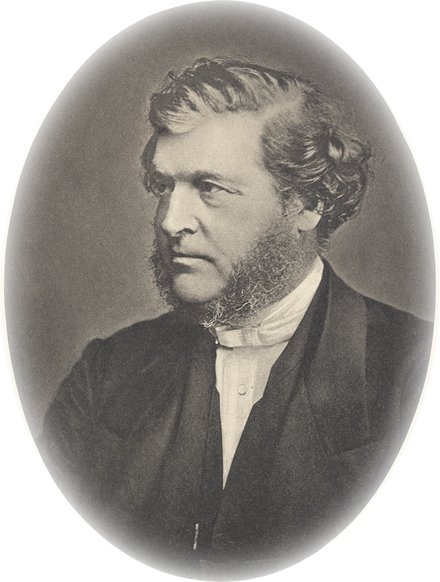
We ought to once again emphasise that Calvinists do not think that we can infallibly recognise the elect. The only person we know of in Church history who has claimed that power was Lodovic Muggleton (left), founder of the Muggletonian sect in the 17th century. The Muggletonians had nearly nothing in common with Calvinists, but they did hold that God's providence was not universal, so obviously they left a lot of room for free-will!
But then they also believed that heaven was six miles above the earth, that God had a physical human body, and that when Jesus (the only God they believed in) was on earth, he left the universe in the care and keeping of Moses and Elijah (they came down on the Mount to give their report to Jesus).
The last Muggletonian died in 1979, much to the surprise of historians, who had thought the sect already extinct. His family were quite shocked too, they'd thought he he was Church of England.

Thursday, November 8, 2007

Nelson Price and Fisher Humphreys Proved to be Erroneous - III

"In general Baptists believe God chose to save those who would of their own free will put their faith in Christ. They do not believe God in His sovereignty arbitrarily decided who would be saved and who damned. They believe God wants all people to be saved but will not override their free will given them by God."

The term 'Free Will', so beloved of those we call Free-willers (as Free Will is their great Diana of the Ephesians), is never used in Scripture in the manner that Nelson Price uses it here. The philosophical concept of free will as a freedom of indifference (or the freedom of contrary choice) is simply not Biblical at all, but a creation of man's imagination. Now, if free will is defined simply as the freedom to choose according to our own wills, we affirm it. If it is used to mean that we make real choices, again, we have no problem with it. It is this great idol of free-will that is exalted above God and made sovereign in the universe that we abhor. We know this is strong langauge, but feel it to be justified when this figment of 'Free Will has bound the very hands of the Omnipotent God Himself, so that man's 'own free will' is sovereign in salvation. That every man is able of his own free will to choose Christ we utterly deny, and would point our readers to Psalm 14 and Romans 3 for Scriptural confirmation.
Note that it is not the TERM free will that we reprobate, but the concept inserted into it by the Free-willers. The Rev. John Brown of Haddington notes: "Freedom of will is either NATURAL, when we are not invincibly determined in our choise towards this or that particular thing; or EXTERNAL, when no forcible restraint put on our body or mind hinders our choice; or PHILOSOPHICAL, when we have a prevalent disposition to act according to the dictates of our reason; or MORAL, when no superior, by his forbidding or commanding authority, interferes in the regulation of our acts." (Systematic Theology, P. 4). Freedom of choice we affirm, freedom to choose contrary to our nature, we deny, particularly as GOD HIMSELF cannot act contrary to His own nature.

So much for the great Diana of the Free-willers. Now to their figment of Prescient election, neatly defined by Dr. Price himself above. This false doctrine is based on such texts as 1 Peter 1.2 'Elect according to the foreknowledge of God the Father', and Romans 8.29, 'Whom He did foreknow, He also did predestinate.'
The relevant Greek words here are 'Proginosko' and 'Prognosis'. The Romans 8 passage is Proginosko and the I Peter 1 passage Prognosis. These two words occur only seven times in the New Testament, Proginosko five times and Prognosis twice (information Courtesy of Moulton and Geden's 'Concordance to the Greek New Testament', Third Edition [Edinburgh, T. & T. Clark, 1926] P. 851). The first occurence of Proginosko is in Acts 26.5, where it is translated 'knew from the beginning'. Paul is speaking of his friends and close acquaintances in Jerusalem who would be able to testify that he had lived 'after the most straitest sect of our religion.' The second occurance is in the Romans 8.29 passage, the third in Romans 11.2, 'God hath not cast away His people which He foreknew." Next we have I Peter 1.20, 'Who [Christ] was verily foreordained before the foundation of the world.', and finally 2 Peter 3.17, where it is simply rendered 'seeing ye know'.
Prognosis is found only in Acts 2.23 and 1 Peter 1.2. We have already given the 1 Peter 1.2 quotation. Acts 2.23 reads 'Him [Christ] being delivered by the determinate counsel and foreknowledge of God, ye have taken and with wicked hands have crucified and slain.'
The Acts 26.5 and 2 Peter 3.17 passages refer to the knowledge of men, of course, and we should not construct a theory of God's knowledge based on ours. Some Free-willers have, and we call them open theists and heretics who have denied the faith.
That leaves us with, in addition to the two disputed passages, three (!!!) passages in which eith Proginosko or Prognosis is used. Acts 2.23 and 1 Peter 1.20 are most instructive in this connection. Surely the Free-willers do not say that the Father merely knew in advance that the Son would go to the cross? No, as the Open Theistic heretics have rightly realised, God's foreknowledge is never simply passive. In all of it there is an element of foreordination! God did not just passively know that Christ would be crucified, but He ordained that it would be so.
So yes, God's election is based on foreknowledge. But no-where is that foreknowledge said to be foreseen faith, rather 'WHOM He did foreknow, He also did predestinate.' It was the person He foreknew, not actions of that person.

Thus we see that Nelson Price's Arminian doctrine is not based on an unstable fondation, but on no foundation at all! General Baptists may believe such nonsense, but Particular Baptists do not and cannot.

Wednesday, November 7, 2007

Nelson Price and Fisher Humphreys Proved to be Erroneous - II


Continuing our point-by-point answer to a particularly silly post by Nelson Price, who will not respond to our e-mails informing him that he is in error.

"The five Canons of Dort are summarized by the acronym TULIP standing for:"

Our Comment: The synod of Dort was called to ANSWER the Arminians, so that its five points are simply a mirror-image of the five points of Arminianism. If Nelson Price disagrees with four of the five points of Calvinism, then he is an ARMINIAN, whether he likes it or not.

"Total depravity
Unconditional grace
Limited atonement
Irresistible grace and the
Preservation of the saints.

The last of these is the primary one with which the original Baptists agreed as do most present day Baptists. The other four tenants are held by a vocal minority of Baptists."

Our comment: More begging the question. In fact the majority of the old Anabaptists and General Baptists were far more coherent in their theology and reasoned that as free will was so important a man should be able to damn himself by his free will as well as be saved by his free will choice, so they held that true saints could nevertheless finally fall away. The modern belief in an 'eternal security' unrelated to God's unconditional election or efficacious saving grace would be ridiculed, and rightly so, by these Arminians. As we have noted, some of the Anabaptists opposed the doctrine of salvation by grace alone as antinomian. They would say that the modern doctrine of once saved, always saved is an evil, antinomian doctrine. As indeed it is.
We assume 'Tenants' to be simply a mis-print for 'Tenets'.

"Calvinists point out various Christian leaders who adhered to their beliefs. A far larger number can be noted who disagree with them. It is not a matter of who believes what but the validity of what is believed that matters. These held by an articulate minority of Baptists are presented with viable objectivity."

Our response: Not hardly. We find presented here nothing but the same stale objections we read in Wesley and Adam Clarke. Only Wesley and Adam Clarke were more consistent. Of course numbers are not important, but truth is very often in a minority. The question is not, how many people in Church history agree with this teaching, but, is it Biblical?

GOD UNCONDITIONALLY ELECTS SOME PEOPLE TO BE SAVED

This is a sweet truth of the Word, for if God had not unconditionally elected some, then all would have perished in their sins.

"Calvinists believe in what is known as “double predestination,” that is God predestined how people would respond to Him and foreknew they would respond. Baptists cannot reconcile this idea with such texts as II Peter 3:9 “the Lord is not willing that any should perish, but that all should come to repentance…” and I Timothy 2:4 stating God “will have all men to be saved, and to come unto the knowledge of the truth.”"

Our Comment: We note that Price falsely claims that his views are 'Baptist'. In fact historically most Baptists would have rejected his interpretation of these texts and affirmed that which he says Baptists cannot accept. We would point him to 1 Thessalonians 5.9: "For God hath not appointed us to wrath, but to obtain salvation by our Lord Jesus Christ." From this text we see (and no Arminian Bible commentator that we have consulted disagrees) that God has appointed some to wrath and some to obtain salvation. Now what is this but double predestination, in the Word of God? Furthermore, in verse 10 we read of those who are appointed to obtain salvation that Jesus died for THEM. So there is Limited Atonement as well. And in the ninth chapter of Romans we see the sovereign freedom of God set out in all its glory. Now Dr. Price will say that Jacob and Esau refer to nations, but will he please tell us where the chapter switches from individuals to nations and back again?
Dr. Price has his 'Arminian texts', he thinks. What he fails to realise is that there are no Arminian texts in the Bible. Take 2 Peter 3.9. Dr. Price quotes it as “the Lord is not willing that any should perish, but that all should come to repentance…”, but in fact it reads, "“the Lord is not slack concerning His promise, as some men count slackness; but long-suffering to us-ward, not willing that any should perish, but that all should come to repentance.” Now who are the 'us' here? They are those to whom Peter was writing, namely 'them that have obtained like precious faith with us', that is, to Christians. To those, as he says in his first letter, 'Elect according to the foreknowledge of God'. Now we see that this verse actually speaks of God's love to the elect, that He is not willing that any of the elect should perish.

"In general Baptists believe God chose to save those who would of their own free will put their faith in Christ. They do not believe God in His sovereignty arbitrarily decided who would be saved and who damned. They believe God wants all people to be saved but will not override their free will given them by God."

Our comment: This belief is directly contrary to the Biblical declaration that God is no respecter of persons. It exalts the will of the creature above the will of the creator and declares that those who were saved can thank themselves for it. No Free-willer can sing 'Amazing Grace' consistently. The Scripture says that we love Him because He first loved us, but the Free-willer says that He loved us because He first saw that we would love Him. This figment of prescient election is based on a highly dubious interpretation of the term 'foreknowledge' as applied to God. Now is not the time for a detailed study of the term in Scripture, but we commend such a study to our readers. God willing, next time we shall look into the meaning of this word in the Bible, and see that Nelson Price and his free-will brethren are guilty of textual abuse.

Monday, October 22, 2007

Leicester, John 15 and Psalm 37


Late last night I returned from Leicester, where I had the immense privilege of preaching in Grey Hazelrigg's pulpit at Zion Chapel, Leicester. Grey Hazelrigg was a man who knew what it meant to suffer for Christ. While his sermons were not published as those of many of his contemporaries were, after his death a volume of notes of his sermons, entitled 'Fragments that Remain' was published. Mr. Hazelrigg often referred to his own experiences in preaching, and this imparts a very personal and autobiographical feel to his preaching.
My texts were John 15.16 'Ye have not chosen Me, but I have chosen you', and Psalm 37.39.

The sermon on John 15.16 was entitled 'A Whip for Free-willers', establishing that it is Christ who chooses sinners, not sinners who choose Christ. Those who read this blog will know that I am what is called a Calvinist (though Calvinism is simply Biblical Christianity). Free-willers were roundly whipped and revealed to exalt man more than Christ, while the Bible exalts Christ and lays man in the dust where he belongs. It was shown that man does not seek the true God, but a god of his own invention. The Bah'ai were referred to as worshipping a god who was neither Jehovah, Allah, Brahma or Krishna, but a monsterous chimera composed of the parts of all of those deities that the Bah'ai like. If the Bah'ai want to avoid such remarks they shouldn't have put their book depot in Oakham by the railway where I could see it on the way to Leicester.

The afternoon sermon was entitled 'Salvation and Strength', and incidentally demolished the Prosperity heresy. Read Psalm 37 and ask youself, who had the better life now, the righteous or the wicked? No prizes for guessing the patently obvious! Of course the wicked have their best life now! And Joel Osteen is reavealed by the Bible to be what Mr. Huntington called 'an erroneous man' (phrase taken from the title of the work 'The Mystery of Godliness Established in a letter to an Erroneous Man'). Prosperity teaching makes those sad whom Christ has not made sad.