Not all that is called ad hominem is really so - for example, showing that a person has misrepresented a source is not ad hominem, because it is really germane to the argument to show that that which is claimed for support is no support at all. True ad hominem is an attack on the character of an opponent - for example, I am reminded of a case in a Church court where a man accused of heresy retorted that his opponent had an adult son who had become an actor. It involves bringing in matters about a person that have no relevance to the point at question.
On the other side is misrepresentation. It is very easy to accuse a person or group of holding to positions they repudiate, or doing things that they do not do. To give a current example, it is no good policy to argue against Harold Camping that he is a dispensationalist, because he is not; though his eschatology included dispensationalist elements, it was in fact a form of amillennialism. I have heard someone say of Mormonism "they do not believe in the deity of Christ", of course they do - they simply re-define deity, being polytheists.
Misrepresentation comes in many forms, from the simple making of false claims without any evidence offered to substantiate them to the use of mutilated and out-of-context quotations, followed by a statement "and so you see that such-and-such believes this." Somewhere in the middle of these two is the drawing of false inferences from quotations. So, for example, In New Age Bible Versions, Gail Riplinger (P. 304) quotes Westcott's words "Christ was and is perfectly man" as if they somehow substantiate the claim that Westcott did not believe in the deity of Christ; that is a false inference, inferring from "Christ was and is perfectly man" 'and therefore not God', although the inference is monstrous and heretical, for if it follows from Christ being perfectly man that he cannot be perfectly God, then there can be no incarnation. Lest I be misunderstood, let me say that she at no point proves that Westcott himself felt a true incarnation of deity to be impossible, and therefore this false inference is mere smoke and mirrors.
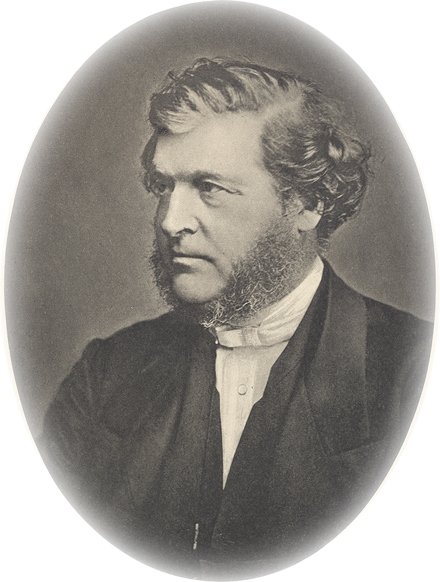
Often false inferences are made by taking obscure quotations out of context, and then building on them structures that their foundations will not and cannot support. So to give another example from Riplinger (who I consider one of the worst polemicists I have ever read), on P. 313 of NABV, she argues that Westcott did not identify the historic Jesus with 'Christ'. This is shown to be patently false by the foregoing quotation "Christ was and is perfectly man", where 'Christ' is used expressly of the man. It is also formally refuted by the following quotation:
"Popular Christology is largely though unconsciously affected by Cerinthian tendencies. The separation of Jesus, the Son of Man, from Christ, the Son of God, is constantly made to the destruction of the one, indivisible Person of our Lord and Saviour." - B.F. Westcott, 'Commentary on the Epistles of St. John' P. xxxvi
Note that the only thing Westcott can be saying there is that Jesus is the Christ, and that the sort of separation that New Age heretics and false teachers make between Jesus and 'The Christ' is a destructive falsehood. The misrepresentation is of a common type: rather than going to a place where a writer is expressly treating a subject, you take a quotation that is not addressing the subject at all and present it as if it is. While this will have no effect at all on the discerning reader, who will look up your reference and marvel at your deceit, it will confirm the prejudices of the ignorant. Thus according to Riplinger, Westcott denied the deity of Christ, the sinlessness of Christ, and the unity of the person of Christ. In fact he affirmed all of these things explicitly, something that no reader of his works could ever doubt.
The use of ad hominem and misrepresentation may work well in a play to the gallery or to convince the ignorant, but in the long run it can only be destructive, firstly because it makes refutation a lot easier than patient work and careful attention to detail. The careless polemicist actually does most of his opponent's work for him, by lining up an easy row of targets to shoot at. It makes Christians look foolish, ignorant, and nasty. Lies are from the Devil, for he is the father of lies, and the children of God cannot, must not, do the devil's work.
It will be interesting to see if the Riplinger Defence League shows up. If they do, may I ask them to explain to me how fabricating quotations out of snippets taken from different books is consistent with Christianity. I confidently expect no reply to this request.