Wednesday, February 20, 2008

Nelson Price's attack on John Calvin. IV

So we continue our refutation of Dr. Price's wretched attack on John Calvin with this statement:
In 1540 a new group of city rulers invited him back and soon he was the dominate [sic.] force in the area.

This statement is also frankly untrue. When a man pens and makes public an attack upon the character of another, dead or alive, he owes it to honesty and decency to fully check his facts. Of course, he may find the possibility of libel action a more pressing reason to check his facts when writing of a living man, but a Christian should be moved by higher motives that encompass the dead as well as the living.
First let us return to one of Price's earlier statements, that Calvin was called to Geneva as a lawyer. The source of that statement is here. It says" Calvin, by now a successful lawyer, was invited to Geneva to build the new Reformed church." We do not know the source of this statement, but it is simply incorrect. He was not a successful lawyer, he was a student of the Bible and a preacher of the Gospel.

It is true that he was invited back to Geneva in 1541, but he returned to many years of bitter strife with men in the civil government who were opposed to any sort of Church discipline. Of course a state Church makes discipline difficult, for it makes ecclesiastical offences crimes against the state. This conflict raged until 1556 - fifteen years. Since Calvin died in 1564, the conflict lasted for the larger part of the rest of his life! Calvin was only granted Genevan citizenship in 1559, and as only citizens were allowed to vote in the council elections there were times when Calvin had less real power than a Genevan tradesman.
John Calvin never held any post in the government of Geneva (indeed until 1559 he was legally debarred from doing so as a non-citizen). He was never more than a minister, a member of a consistory court that was headed by a magistrate appointed by the Council. Any power Calvin had in Geneva was as a pastor, as nothing else. It was purely the power of the Word that ruled in Geneva. Calvin himself lived a very frugal life, refusing to accept gifts over and above his salary.
Of course, as a preacher, Calvin applied the Word of God to every part of life. But what preacher dares to do less? Must not the Christian live all his life as a Christian? We suspect that Dr. Price would, like us, have little respect for those in government who profess Christianity but seem to leave their religion at the door of the council chamber. Would he rather have his rulers governed by the will of God or the whim of man?

We referred to Calvin's struggles to 1556. They were struggles for the independence of the Church. We freely admit that men in the 16th century generally failed to recognise this principle, but Calvin went further than most, insisting that the Church ought to be self-governing. For this principle he was hated and opposed by those who had invited the Reformed preachers to Geneva in the first place but who found that Calvin's preaching hit a little too close for comfort. Immoral men do not like to hear their vices condemned from the pulpit, and when those men hold power they will do what they can to silence the preacher. Biblically we see Herod's arrest of John the Baptist, whilst in the present day we see a creeping attempt to silence ministers who dare to say that homosexual behaviour is sinful.

We close with the words of Basil Hall, who had examined Geneva's civil records:
"If Calvin had dictatorial control over Genevan affairs, how is it that the records of Geneva show him plainly to have been the servant of its council which on many occasions rejected out of hand Calvin's wishes for the religious life of Geneva and was always master in Genevan affairs?"


God willing, next time we shall refer to Calvin's Magnum Opus and have some choice words to say to Dr. Price.

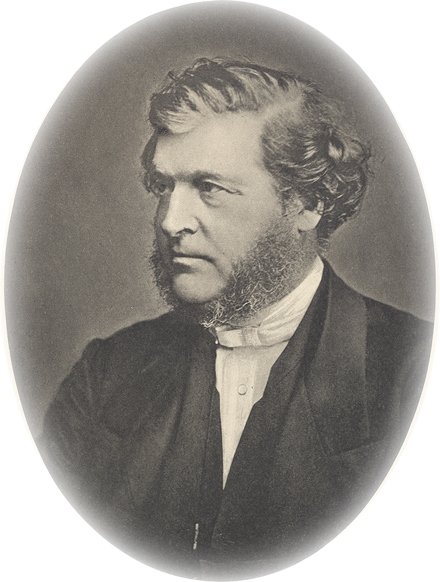
Tuesday, February 19, 2008

Nelson Price's attack on John Calvin. III

So we come to Price's misrepresentation of Calvin's first period in Geneva, passed over in a few lines packed with mistakes.
The house of Savoy had ruled over Geneva for years. When the local populace overthrew that government locals invited John Calvin, a lawyer, in to help reform the local church and government.

This is another example of oversimplification to the extent that it has become misleading. Note that John Calvin's conversion from Romanism has been completely overlooked. The impression is given that he was asked to come to Geneva as a lawyer.
In fact he had already been converted, and had begun to preach. The first edition of the Institutes had already been published (in 1536), and he had left France in 1535 to escape persecution for the sake of the Gospel.
Calvin, still in his mid-twenties, was staying over in Geneva on a journey when the senior minister of Geneva, William Farel (already himself unpopular due to his opposition to the sins of the townsfolk), having discovered that he was in the town, put pressure on him to stay in Geneva. Calvin himself, a lover as he put it of "le recoy et la tranquilitié," in fact intended to devote himself to the private study of Scripture. Farel would have none of it. "I speak to you in the Name of Almighty God. You make the excuse of your studies. But if you refuse to give yourself to this work of the Lord, God will curse you, for you are seeking yourself rather than Christ." This "dreadful imprecation" Calvin himself said was the reason why he stayed in Geneva. He did not want to stay, he had no desire to rule, but he sought instead a private place where he could study!
So it was not "locals" who invited Calvin at all, but another French preacher, William Farel. Nor was Calvin 'invited' (we would hardly describe being threatened with the curse of God as an invitation, but there you go) as a lawyer but as a preacher. As a lawyer he was totally unknown, but the young author of the Institutes of the Christian Religion would be quite a gain as a minister.
For another thing, the Genevan government was not being reformed. Geneva in 1536 presented the appearance of a young democracy. After the expulsion of the Bishop and the creatures of Savoy (see below) the city was ruled by a democratically elected council with no one head of state. The Genevan government was not perfect, but then what government of men is? The fact remains that the people of Geneva HAD reformed their government, and neither wanted nor needed the aid of a young Frenchman to do it!

To say that 'The House of Savoy had ruled over Geneva for years' is also rather misleading. Medieval Geneva was a city-state nominally ruled by its Bishop (note that Church and state were therefore already confused in Geneva before Calvin). It passed into the hands of Savoy through Pope Felix V, formerly Amadeus VIII, duke of Savoy, in 1444. Felix V. appointed himself Bishop of Geneva in that year, and when he resigned the papacy in 1449 he made it a condition that he should remain Bishop of Geneva. From that point on the Bishops were mere appointees of Savoy, and answered to the Duke. One Bishop was seven years old when appointed, another eleven, whilst yet another was the illegitimate son of a previous Bishop.
Geneva was legally a free city, and with the Bishops being mere creatures of Savoy, the city council grew in power and tried to shake off the tyranny of Savoy, which trampled on their ancient liberties. Final liberty came through the Reformation.

The citizens soon found themselves under an even more tyrannical leader than the Pope had been. They rebelled and drove Calvin out of town.

This statement is what is known as a lie. By not actually reading anything other than biased accounts by his own side and by theological liberals and unbelievers, Price has created a very misleading picture. Most of the trouble came from the fact that Church and state were still intermingled in Geneva. The vast majority even of protestants at that time simply could not conceive of anything else. The Papacy was founded on the principle of the church (by which was meant the hierarchy) ruling the state. The Lutheran states were firmly Erastian, with the civil rulers acting as bishops. The idea of a free Church in a free state was something Calvin began to develop, but even he could not achieve it. When all the citizens of a state are treated as Church members, then they are all expected to live as Christians under Church discipline. What was more, under the rule of Savoy's puppet-bishops morality in Geneva had decayed to a shocking extent. Any attempt to enforce morality is bound to be unpopular, whether in the church or the state. Calvin and Farel sought to keep immoral persons from the Lord's Table. Who will dare to say that the Lord's Table should be open to all? Yet the Council of Geneva insisted that should be the case! They tried to impose ceremonies on the Church, and when Calvin and Farel spoke against this state interference in the worship of God they were ordered to cease preaching, an order they ignored. The Council then ordered them to leave the city.
The final reason why Farel and Calvin were kicked out of Geneva in 1538 was that they refused to admit the Erastian abuses of the Genevan state when it sought to dictate to the Church. They were expelled for ignoring tryanny, not for committing it! We ask Dr. Price if he would cease preaching should the government tell him to stop on pain of imprisonment? Of course not! But it was for that very offence that Calvin and Farel were expelled!

Next time, God willing, we shall continue with this defence

Saturday, February 16, 2008

Nelson Price's Attack on John Calvin - II

So we begin our rebuttal of Dr. Price's poorly-researched, highly inaccurate and very ungracious article on John Calvin. It is heavily reliant on a brief article on Calvin by Richard Hooker, found on the website of Washington State University. Whilst Hooker's article contains a number of factual errors, Price, in editing some of Hooker's remarks, actually adds to them considerably!
We are reminded of a remark by Basil Hall:
"One major difference between the older denigration of Calvin and that of our own time is that once those who sought to attack him first read widely in his writings. Now it would seem that the word 'Calvinism' is a self-justifying pejorative to be used without regard to what, in the context, the word is supposed to mean." (Basil Hall, 'The Calvin Legend', The Churchman, Vol. 73, P. 119)


John Calvin
JOHN CALVIN = JEAN CHAVIN
1509 - 1564
John Calvin was born in Noyon, 1509. He was trained as a lawyer in the humanistic school of Scripture interpretation.

At once we see an error. Today a 'humanist' is a type of atheist, but in the 16th century it referred to one who studied 'the humanities', Greek and Latin and the classical authors who wrote in those tongues. A humanist in Calvin's day referred to a man of learning. Even today some university subjects are referred to as 'the Humanities'.
Fancois Wendel explained what the 'humanistic method' of interpreting a text is:
"[The humanist] appeals to grammar and logic, he points out the figures of rhetoric, and draws upon his knowledge of antiquity to collect parallel quotations." Francois Wendel, Calvin (London, Collins, 1965), P.31

This is the method that Calvin used in his early studies of the classics, and he was to transfer this approach to the study of the Bible. Today we use this method all the time, and good preachers may find it hard to imagine that this method could ever have been seen a revolutionary. Yet in the sixteenth century it was seen as a new way of understanding the Bible. Abandoning the Medieval Scholastic approach with its 'four senses' of Scripture, Calvin and the other Reformers interpreted the Bible using the Grammatical-Historical method, that is, according to what the text actually said, not using a complex allegorical system. We expect that Dr. Price would agree with such an approach to the Bible!
But it was Calvin himself who applied the humanist grammatical-historical method to the Bible. He was not trained to do so, but it was natural for him to approach the Greek New Testament with the same method with which he approached the Greek Classics.

Dr. Price passes over Calvin's conversion. We hope that this is not to imply that Calvin never was converted. Dave Hunt suggests that Calvin's conversion was nothing but an intellectual change. Nothing could be further from the truth, for Calvin speaks not only of his being called from the errors of the Church of Rome, to which he was before deeply attached, "by a sudden conversion", but of a deep conviction of sin that preceded that conversion. We do not know the exact date of Calvin's conversion, for the scrap of autobiography that is found as his preface to his commentary on the Psalms does not give it, but it was between 1530 and 1533. In 1533 he was found preaching the Gospel and acting as an itinerant evangelist in France. In 1534 Calvin resigned the posts he had held in the Roman Church, both of which had been in the nature of scholarships to support his studies. In the normal order of things he would have proceeded to the priesthood. In refusing ordination he broke with the Church of Rome, evidencing that by 1534 he had thrown in his lot with the despised people of Christ.

Next time, God willing, we shall look at Nelson Price's misrepresentation of Calvin's first period in Geneva.

Friday, February 15, 2008

Nelson Price's attack on John Calvin.

It is a worrying fact to us that many Freewillers think that they are doing God service by attacking great men of God of the past. Nelson Price has joined this group in attacking the character of John Calvin.
Let us state first that we have not recieved our teaching from John Calvin but from the Bible. We do however feel that the saints of God are worthy at least of honour for their works of faith. 'Not unto us' is our motto, but equally to defame a man of God is a serious act. In fact we would go so far as to say that to speak evil of any man is a serious matter. Yet Dr. Price and his ilk carelessly defame Calvin without a second thought. The truth of the doctrines commonly called Calvinism does not depend on the character of John Calvin, any more than the truth or otherwise of Arminianism depends on the character of Jacob Arminius. At the same time it is a serious matter to libel any one of God's servants.

These attacks on Calvin consist of three parts. First of all, the good Calvin did is forgotten. Dave Hunt has even gone so far as to state that Calvin was an unconverted man, and that his "sudden conversion" was merely intellectual. Secondly all of his mistakes are played up, and his actions are put in the worst possible light. Thirdly outright falsehoods are written. Sometimes these are based on a misunderstanding of genuine facts, others are just lies.
This piece by Dr. Price is not original. Like most of these free-willer attacks it is drawn from the writings of other free-willers, thus perpetuating errors. If they bothered to do some serious research they would very soon discover that some 'facts' they had received are nothing of the sort.
It is not only Calvin who has received such unfair treatment. Jonathan Edwards is well-known to have been the victim of similar misrepresentations. We are in the possession of a dreary book on John Wesley called Wrestling Jacob by Marjorie Bowen (from the 1930s). The book is written in such a way as to make Mr. Wesley appear to have been a joyless fanatic, a man whose death was a great gain to the world. Ms. Bowen has followed just the methods used by these free-willers on Calvin. In short, by such methods even the best of men can be made to appear an ogre!
It is surely a cause for concern that Dr. Price is using the same methods to attack Calvin that are used by liberals and unbelievers!

Some may think that we are defending Calvin because we are Calvinist. This would be untrue. Some years ago it was our privilege to defend John Wesley against the attacks of a 'Calvinist' who denied that the great Methodist leader was a regenerate man. Despite our disagreements with Wesley's theology we are second to none in our admiration of him as a man. So we are defending Calvin as a Christian, and our first concern in the forthcoming series will be Calvin's character, not his theology. We have already exposed Dr. Price's shameful misrepresentation of Reformed theology.

Tuesday, February 12, 2008

Nelson Price and Fisher Humphreys Proved to be Erroneous - VII

We have already dealt with Price and Humphreys' blatant misrepresentation of the Reformed doctrine of the Perseverence of the Saints. This ridiculous untruth has been exposed to all the world in our previous post, yet Dr. Price has not withdrawn this article from his website, nor as he (as of 8th February 2008) removed the offfending section. He is therefore exposed as a liar, since he KNOWS these accusations to be utterly without foundation.

PERSEVERANCE OF THE SAINTS

"Southern Baptists are in general agreement on the concept of the security of the believer known as “once saved always saved” or preservation of the saints.

There is a slight semantic difference in what Calvinists believe on this topic. They believe in the perseverance of the saints.

(The following two paragraphs are a sidebar to the book review.)

Put side by side the difference becomes clear.

SOUTHERN BAPTIST CALVINIST
Preservation of the saints Perseverance of the saints
God does it Man does it
It is based on God’s promises It is based on man’s performance
It is absolute It is relative

Contrary to the concept of “it is all about grace” this last point actually means the Calvinists position on the subject is works based. This leaves some Calvinists hoping they have done enough good work. Baptist know for sure God has done a perfect work."


Our Comment: We have contacted Dr. Price to protest against this blatant and ridiculous straw man argument. He has not seen fit to respond or to take this outright falsehood down from his site. Like the bus illustration, it remains up. Yet Dr. Price knows it is false. We have sent him quotations from every Calvinistic Confession and Catechism we could lay our hands on to prove that this stayement is a LIE (let us use plain language), and yet Dr. Price continues to promote the idea that Calvinists believe their salvation is conditional on their good works.
When the Calvinist says as he does that
Yes, I to the end shall endure
As sure as the earnest is given;
More happy, but not more secure
The glorified spirits in heaven.
He does so on good grounds. God has chosen him from eternity, has given His only begotten Son to die in his place, bearing his sins, and has drawn him to Himself by His sweet yet irresistible grace. Dr. Price's doctrine of 'eternal security' is potentially antinomian, and has no foundation at all. Indeed, if Free Will is so important to his God, why does God not give men free will to abandon Him after they have been converted? The teaching of eternal security in a Free-willer's system is like a pair of columns we have seen at the front of an old chapel. They were of wood, and had originally appeared to be holding up an ornate arch behind the pulpit. When a new organ was introduced these columns had been cut off, so that the capitals appeared to be supported by nothing. Such is Price's doctrine of eternal security, it has no foundation in his system.

"When the Southern Baptist Convention was organized in 1845 five traditions were represented. One was known as the Charleston tradition, which was Calvinistic. The Sandy Creek tradition discounted Calvinism and emphasized evangelism. The Georgia tradition represented the Southern regionalism of the Convention. The Tennessee tradition emphasized the distinctiveness of Baptists churches. The Southwest tradition stressed evangelical-denominationalism. The Convention sided against the Calvinist tradition and with the evangelical persuasion. The Sandy Creek tradition prevailed. That is the doctrinal foundation of most Southern Baptist churches. Their heritage is other than Calvinistic. There have always been some in the ranks of Southern Baptists with Calvinistic leanings. Some are people of note. However, the denomination in general has always supported the position of its founders who sided against the Calvinistic tradition."


Our Comment: It has been shown by James White and Tom Ascol, not to mention Tom Nettles, that the Sandy Creek Association was in fact Calvinistic to the core. The statement that they were free-willers is a LIE, and can only be held if we imagine that Calvinism and Evangelism are opposed. But we have shown the two are in fact closely connected. A host of writers have demonstrated that the founders of the Southern Baptist Convention were in fact Calvinists, and the heritage of the denomination is solidly Calvinistic. We point our readers to Dr. Tom Nettles fine books 'The Baptists' (Fearn, Christian Focus, 3 volumes) and By His Grace and For His Glory (Founders Press). It will bear stating this again.
Article 4 of the Sandy Creek Association's Principles of Faith states:
IV. We believe in election from eternity, effectual calling by the Holy Spirit of God, and justification in his sight only by the imputation of Christ's righteousness. And we believe that they who are thus elected, effectually called, and justified, will persevere through grace to the end, that none of them be lost.

If this is not Calvinism, we do not know what is!

"Humphreys concluded that in light of this Southern Baptists who resist Calvinism may be called traditional Baptists in the sense that the first Baptists resisted Calvinism, and in the sense that today most Southern Baptists resist it."

THE WAY WE WERE, by Fisher Humphreys, Smyth & Helwys, Macon, Georgia, revised 2002, pp. 67-73.


Our Conclusion. Humphreys and Price are both in error. They are promoting falsehoods, and Price has been repeatedly corrected by us and others. Yet he refuses to confess his errors and blatant falsehoods and continues to pretend that he is an expert on Calvinism. He is bearing false witness against the brethren, and by his sin he is harming the Churches. Our advice to him is that he repent.

Friday, February 8, 2008

Nelson Price and Fisher Humphreys Proved to be Erroneous - VI

We continue to respond to Nelson Price's Free-willism. We have reached 'Total Depravity'

ALL PEOPLE ARE TOTALLY DEPRAVED

"Calvinists believe that since all persons are spiritually dead they cannot repent and respond to God. They hold that a person must first be born again then they can respond to God in faith and repent.

Most Baptists agree no one can save him or her self. They believe salvation is all by God’s grace through faith in Christ. Repentance and faith are held by them not to contribute to salvation but are the means whereby the all sufficient grace of God is received. There is no merit in receiving grace. All merit is in grace being given by God."


Our comment: Yet these people who are spiritually dead nevertheless have, according to Dr. Price's theology, the free will to be able to choose God. Unbelieveable. What Dr. Price has not said openly is this: that according to his theology faith and repentance are acts of man. We prefer the Biblical theology of Joseph Hart:
True belief and true repentance
Are Thy gifts, O God of grace.

Read the second chapter of Ephesians. After the description of man's lost condition we read 'by grace are ye saved, though faith; and this not of yourselves, it is the gift of God'. The free-willer will quickly respond that the Greek construction is such that the 'gift of God' cannot be faith only. We are in agreement, it is not jut faith. It is all of salvation. NONE of it is my work, there is not one part of my salvation of which I can say 'this is mine.' God has done it all, and that is why we are saved completely.

GOD’S GRACE IS IRRESISTIBLE

"Calvinists believe God’s grace cannot be resisted by those chosen by God to be saved. Calvinists believe that if this is not true God is not sovereign.

Southern Baptists in general believe that God’s grace can be resisted and this results in a person not being saved. They also believe in the sovereignty of God and that He sovereignly gave man a free will with which to respond or not respond. They believe that for God to give such freedom and then respect it does not constitute a diminishment of the sovereignty of God but a recognition of the way in which the sovereign God has chosen to relate to human beings."


Our Comment: There is equivocation and probably a lack of understanding here. Calvinists believe that God's SAVING grace is irresistible (John 6), not that His common grace is. The Free-willer will point to Stephen's words to the unbelieving Jews that 'Ye do always resist the Holy Ghost'. Yes, but where in the text are we informed that these are the SAVING operations of the Holy Spirit? No-where. In fact in context it makes much more sense to relate Stephen's words to their resisting the words spoken by the Holy Spirit to the Jews of old by the Prophets. Now this is the great Free-willer prooftext. It is easily shown to be nothing of the kind. On the other hand, we have yet to find a compelling argument against the Calvinistic understanding of John 6, Romans 9, and a host of other passages.
The Arminian arguments constitute mere denials that grace can be irresistible, along with a loud affirmation of their extra-Biblical doctrine of man's autonomous and libertarian free will. In other words, and this MUST be heard, they have first to prove their doctrine of free-will from the Bible before it can be a true argument against the Calvinist position. This they have not done and will not be able to do.

Wednesday, January 30, 2008

Nelson Price and Fisher Humphreys Proved to be Erroneous - V

[We apologise for the gap, this was due to the constraints of work]

CHRIST DIED FOR THE ELECT ONLY
"Calvinists believe in “penal substitution” regarding Christ’s death. They believe that Christ died for only the elect. This is called “limited atonement” in that they believe the atonement is limited in that it was intended only for the elect.

Baptists believe in “general atonement,” that is Christ died for all sinners and by their free will they determine whether to respond to it receptively in faith. Only a minority of Baptists believe Christ died just for the elect.
"

Our comment: Again note the begging of the question. 'Calvinist' is contrasted with 'Baptist'. But John Gill was a Baptist of the Baptists. John Bunyan was a Baptist, J.C. Philpot was a Baptist, William Gadsby was a Baptist, C.H. Spurgeon was a Baptist - and they all believed in limited atonement.

Dr. Price is right that Particular Redemption and Penal Substitution go together. If Christ has died in the place of a person, that person has to be saved, because, as Toplady said
'Payment God cannot twice demand,
Once at my bleeding surety's hand,
And then again at mine.'


That is why historic Arminians have held to the Governmental theory of the atonement, that Christ's death was merely a display of divine justic equivalent to, but not identical to, the penalty due to all who would be saved.
But only the Calvinist believes that Christ died to SAVE anyone. The General Baptist thinks He died to make men able to be saved. There is all the difference in the world between these two.
What theory of the atonement does Price hold? Does he think that Christ died only to show the justice of God (Grotian or governmental)? Or that the atonement was primarily designed to affect us to love God (moral influence)? Because historically the vast majority of evangelicals have taught penal substitution. Charles Wesley wrote:
O love Divine, what hast Thou done?
The immortal God has died for me;
The Father's co-eternal Son
Bore all my sins upon the tree.

Here is confidence, when the Spirit speaks to the heart and causes us to cry 'Abba, Father', we can say 'Father thou knowest He hath died in my place'.
'He shall see of the travail of His soul and be satisfied.' Those for whom Christ died shall ALL be saved.