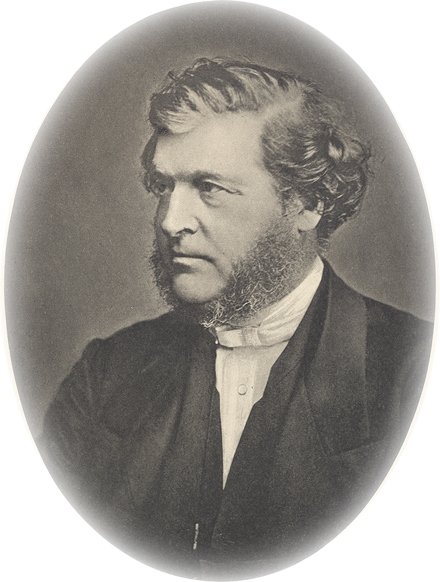
D.A. Carson: Collected Writings on Scripture (Leicester, Apollos, 2010) Pp. 335, Hardcover
D.A. Carson has, it seems, now reached the point where he merits a “collected writings” volume. This opening sentence should not be read as a criticism, because it isn’t – this book is an unalloyed good thing. The binding is another matter, however. Real cloth binding would have been far more appropriate than the rather cheap hardcover binding that needs to be hidden by the attractive dust jacket.
With the criticism out of the way early, we can move on to the contents. This book collects five essays and five book reviews that are broadly united by the theme of Scripture. They cover a period from 1983 to 2008, and all are worth the effort in reprinting them.
D.A. Carson is an excellent writer, and one of the men that our modern preachers need to read simply for style, let alone content! He is also a very thoughtful writer, and when he publishes a book, it is usually required reading. This book, although its various parts were originally published in a variety of places, is another required reading piece.
It begins with an essay on “Approaching the Bible” taken from the IVP New Bible Commentary, which serves as an introduction to the whole book as much as anything else. The second piece, “Recent Developments in the Doctrine of Scripture” deals with “recent developments” in 1986, when it was written. The realisation that we are now some 24 years from that date is rather staggering! Given the passage of time, it is remarkable how relevant this essay is, since it still falls within the period during which writings may be seen as “dated” rather than “classic”. The third essay, “Unity and Diversity in the New Testament: The Possibility of Systematic Theology,” is excellent, as it shows that Biblical theology and Systematic theology are not opposed to one another if properly understood. Chapter 4, on Redaction Criticism, is perhaps a little dated, since Redaction Criticism is no longer as much in vogue as once it was. Still, it is a helpful essay and useful in thinking through the application of literary tools in Bible study. The last essay in the first section, “Is the Doctrine of Claritas Scripturae Still Relevant Today,” is timeless, as it addresses the perspicuity of Scripture, and what this means and does not mean.
Part 2 is headed by two lengthy reviews, each of three books on the Bible, and then rounded off by three shorter pieces. Each review deals with questions that are still buzzing, the nature of inspiration, the Incarnational analogy as applied to Scripture, and the question of the truth of the Bible. Even if the reader has not read the books dealt with, he will be left informed about the current state of the question among Evangelicals.
This is a surprisingly easy book to read, considering the subjects dealt with, and ought to be required reading for anyone wanting to get a handle on the questions agitating the Christian world about the Bible today. Order from your local Christian Bookshop where possible.
Showing posts with label Bible. Show all posts
Showing posts with label Bible. Show all posts
Wednesday, July 28, 2010

Saturday, April 24, 2010
Inerrancy - the real issue
Several times on this blog I have had cause to refer to King James Onlyism, particularly as represented by the lunatic fringe, Gail Riplinger (whose latest book has drawn forth a rebuttal from one of the very sources quoted in it). Mrs. Riplinger has grown progressively more and more extreme in her views, to the point where her latest tome explicitly rejects the authority of the original languages, which she now holds God has finished with.
But all of this arguing over the identity of the text (and here it is easy to fall into the trap of thinking that the differences are far more than they are, and far more important) is distracting from the real issue - which is whether or not the Bible is true in what it claims. Traditionally it has been this claim that has set apart Evangelicalism from liberalism in its view of Scripture. The liberal holds that the Bible may and does contain errors of fact, mythological accounts, and other non-factual passages. In particular the liberal teaches at least the first twelve chapters of the book of Genesis to be purely mythological, and influenced by the myths of the surrounding nations. Liberals hold to late dates for the Old Testament, danying the Mosaic authorship of the Pentateuch (first 5 books of the Bible), and the unity of the book of Isaiah. This needs re-stating in the light of the claims by Gail Riplinger and her ilk that anyone who disagrees with them, including B.B. Warfield, a contributor to The Fundamentals, is a liberal.
Yet this consensus no longer exists. In the latter part of the 20th century, evangelicalism as a whole has followed the same path as did the mixed denominations in the earlier part of the century. Instead of holding to the high view of Scripture found in the Princeton men, in Spurgeon, and in other Evangelical leaders, evangelicals have become 'wobbly'. Before I ever dealt with Riplinger, I reviewed here a book by A.T.B. McGowan The Divine Spiration of Scripture, and noted its defficiencies in not affirming a robust doctrine of inerrancy. Perhaps ironically, the flaw at the root of McGowan's argument was to reject (if only implicitly) the bistoric Reformed position that what is derived by good and necessary consequence from Scripture is also Biblical.
Another attack has come from America, from Peter Enns, former professor at Westminster Theological Seminary. An Old Testament scholar, Peter Enns has argued for an "Incarnational" understanding of Scripture (interestingly Dr. McGowan rejects this terminology for an entirely different reason), holding the Bible to be both a fully human document as well as a divine document. Now, there is nothing inherently wrong with the terminology - Jesus is fully human and fully divine, yet without sin or error. Yet historically the call to recognise the "human" in the Bible has often been a cover for arguing against inerrancy! The fact of the matter is that it is only ignorant fanatics like Gail Riplinger who argue that there is no "human element" in the Bible, and they are not going to be reading Peter Enns! Like B.B. Warfield, the historic Reformed christian holds the Bible to have been produced by God in such a way that the authors wrote in their own style, with their own words - there is the human element - but that the Holy Spirit so moved them that what they wrote is also the very words of God, and therefore without error or mistake in the orginal manuscripts.
Yet Peter Enns claims that some of the Genesis narratives are mythological in nature, and that the Biblical narrators naively did not know this as they made use of pagan sources. He claims that since Biblical history is not objective, the presuppositions of the narrators have led them to distort history. He claims that modern definitions of truth and error cannot be applied necessarily to the Biblical text - but never actually explains what the ancient criteria for truth and error were. Unhelfully he does not mention which model of the incarnation his "incarnational" model of Scripture follows. This is important, as some models (e.g. kenotic models) actually predicate fallibility of Jesus.
Peter Enns pleads that his aim is apologetic. While at Seminary, I engaged in an in-depth study of the down-grade in the Free Church of Scotland, and I noted that it was an apologetic method that contributed to much of it. This false view of apologetics is that its aim is to make Christianity more palatable to the academic sceptic by abandoning certain positions that are viewed as simply "outworks" of the citadel of the faith. It was this that led Marcus Dods to argue that the Old Testament contained "errors and immoralities", and will lead no doubt (and has led in some cases) modern evangelical scholars to the same conclusions.
Enns also contends that the New Testament use of the Old is not as straightforward as it seems, that passages are taken out of context to apply to things that the original text was never intended to apply to. In a fascinating case of strange bedfellows, this argument has also been used by some dispensationalists to maintain their case where the New Testament seems to work against it.
And it is this down-grade in the very conception of what the Bible is that is the great threat, not a question of which English translation we ought to use, or even, dare I say it, relatively minor textual issues. My fear is that we will allow a minor issue to distract us from the main thing - which is the question of whether or not the Bible is true. Is Genesis a myth? Or is it history? Was there only one Isaiah? Does the Biblical history record facts and then interpret them, or have the authors allowed the interpretation to distort the facts? It seems to me that these are matters of infinitely greater importance than which English Bible we prefer! Take any honestly translated English Bible, even the most hopelessly flawed one-man translation, and you will not get a different Jesus or a different God from it. But once allow that Genesis contains myth that the author did not realise was not factual, and you are not far off saying that Jesus himself repeated such myths, thinking they were true - and then you have the errancy, not only of Scripture, but also of Jesus Himself!
But all of this arguing over the identity of the text (and here it is easy to fall into the trap of thinking that the differences are far more than they are, and far more important) is distracting from the real issue - which is whether or not the Bible is true in what it claims. Traditionally it has been this claim that has set apart Evangelicalism from liberalism in its view of Scripture. The liberal holds that the Bible may and does contain errors of fact, mythological accounts, and other non-factual passages. In particular the liberal teaches at least the first twelve chapters of the book of Genesis to be purely mythological, and influenced by the myths of the surrounding nations. Liberals hold to late dates for the Old Testament, danying the Mosaic authorship of the Pentateuch (first 5 books of the Bible), and the unity of the book of Isaiah. This needs re-stating in the light of the claims by Gail Riplinger and her ilk that anyone who disagrees with them, including B.B. Warfield, a contributor to The Fundamentals, is a liberal.
Yet this consensus no longer exists. In the latter part of the 20th century, evangelicalism as a whole has followed the same path as did the mixed denominations in the earlier part of the century. Instead of holding to the high view of Scripture found in the Princeton men, in Spurgeon, and in other Evangelical leaders, evangelicals have become 'wobbly'. Before I ever dealt with Riplinger, I reviewed here a book by A.T.B. McGowan The Divine Spiration of Scripture, and noted its defficiencies in not affirming a robust doctrine of inerrancy. Perhaps ironically, the flaw at the root of McGowan's argument was to reject (if only implicitly) the bistoric Reformed position that what is derived by good and necessary consequence from Scripture is also Biblical.
Another attack has come from America, from Peter Enns, former professor at Westminster Theological Seminary. An Old Testament scholar, Peter Enns has argued for an "Incarnational" understanding of Scripture (interestingly Dr. McGowan rejects this terminology for an entirely different reason), holding the Bible to be both a fully human document as well as a divine document. Now, there is nothing inherently wrong with the terminology - Jesus is fully human and fully divine, yet without sin or error. Yet historically the call to recognise the "human" in the Bible has often been a cover for arguing against inerrancy! The fact of the matter is that it is only ignorant fanatics like Gail Riplinger who argue that there is no "human element" in the Bible, and they are not going to be reading Peter Enns! Like B.B. Warfield, the historic Reformed christian holds the Bible to have been produced by God in such a way that the authors wrote in their own style, with their own words - there is the human element - but that the Holy Spirit so moved them that what they wrote is also the very words of God, and therefore without error or mistake in the orginal manuscripts.
Yet Peter Enns claims that some of the Genesis narratives are mythological in nature, and that the Biblical narrators naively did not know this as they made use of pagan sources. He claims that since Biblical history is not objective, the presuppositions of the narrators have led them to distort history. He claims that modern definitions of truth and error cannot be applied necessarily to the Biblical text - but never actually explains what the ancient criteria for truth and error were. Unhelfully he does not mention which model of the incarnation his "incarnational" model of Scripture follows. This is important, as some models (e.g. kenotic models) actually predicate fallibility of Jesus.
Peter Enns pleads that his aim is apologetic. While at Seminary, I engaged in an in-depth study of the down-grade in the Free Church of Scotland, and I noted that it was an apologetic method that contributed to much of it. This false view of apologetics is that its aim is to make Christianity more palatable to the academic sceptic by abandoning certain positions that are viewed as simply "outworks" of the citadel of the faith. It was this that led Marcus Dods to argue that the Old Testament contained "errors and immoralities", and will lead no doubt (and has led in some cases) modern evangelical scholars to the same conclusions.
Enns also contends that the New Testament use of the Old is not as straightforward as it seems, that passages are taken out of context to apply to things that the original text was never intended to apply to. In a fascinating case of strange bedfellows, this argument has also been used by some dispensationalists to maintain their case where the New Testament seems to work against it.
And it is this down-grade in the very conception of what the Bible is that is the great threat, not a question of which English translation we ought to use, or even, dare I say it, relatively minor textual issues. My fear is that we will allow a minor issue to distract us from the main thing - which is the question of whether or not the Bible is true. Is Genesis a myth? Or is it history? Was there only one Isaiah? Does the Biblical history record facts and then interpret them, or have the authors allowed the interpretation to distort the facts? It seems to me that these are matters of infinitely greater importance than which English Bible we prefer! Take any honestly translated English Bible, even the most hopelessly flawed one-man translation, and you will not get a different Jesus or a different God from it. But once allow that Genesis contains myth that the author did not realise was not factual, and you are not far off saying that Jesus himself repeated such myths, thinking they were true - and then you have the errancy, not only of Scripture, but also of Jesus Himself!
Friday, December 5, 2008
Further Thoughts on 'The Voice'

If there is one thing that I came away from the free PDF of the Gospel of John on The Voice website with, it was a feeling that this so-called translation is nothing of the kind. And the Preface of the Voice confirm this. Here is how it describes the process by which The Voice was produced:
"First, accomplished writers create an English rendering; then, respected Bible scholars adjust the rendering to align the manuscript with the original texts."
This is completely the opposite of a good translation methodology. In a good Bible translation (such as the ESV) what happens first is that a team of linguistic scholars will produce a faithful rendering of the original text, and then a team of English stylists will make sure that it is good English as well as a good translation. This is important because some scholars are not very good at writing clear English, as the New English Bible demonstrates (hence the Revised English Bible). In effect, what the Voice is is actually a paraphrase of an existing English translation (which is the only way that those who do not know the original languages could produce a 'rendering' of a Bible passage) that has been checked against the original. So once again, it fails the test of a translation completely.
The Voice also uses some non-traditional words. The rationale is explained in the preface:
"Words that are borrowed from another language or words that are not common outside of the theological community (such as “baptism,” “repentance,” and “salvation”) are translated into more common terminology."This sounds good, but there are two objections to it. Firstly, that it is impossible to actually follow this methodology. Read this:
"The Immerser knew his place in God’s redemptive plan. John the Immerser was a man sent from God, but Jesus is the Voice of God. John rejected any messianic claim outright. Jesus, though, accepted it with a smile, but only from a few of us—at least at first. Don’t get me wrong, John was important, but he wasn’t the Liberating King. He preached repentance."This is obviously The Voice, but look at all those theological words, including one that the preface specifically mentioned, 'Repentance'! Why? This brings us to the second objection, which is that these are technical terms. Every part of life has its technical terms, and every science. Theology is not immune, and nor is religion. Listen to Dr. Lloyd-Jones:
"Take the argument about the terms that the modern man does not understand, 'Justification', 'sanctification', and so on. I want to ask a question: When did the ordinary man ever understand those terms?... This is a very specious argument, but it does not hold water." (Knowing the Times [Edinburgh, Banner of Truth, 1989] P. 111)
The Voice is also downright misleading in some translations. Take just the title. It is derived from the translation given by The Voice to the Greek word 'Logos', translated 'the Word' in other versions. But why is this? Simply because that is the usual meaning of the word 'Logos'. Greek has a perfectly good word for 'voice', namely 'Phone', which is usually rendered as 'voice' in English. The same is true of its rendering of 'Christ' as 'The Liberating King'. This is interpretation pretending to be translation.
What about defenders of the Voice? One of the worst I have seen (and the inspiration for the illustration on this one) was a commenter on Extreme Theology. The fact that Emergent advocates of the Voice also call the critics 'the Elders' (I resent that, I'm 28) had some input into the illustration too! I have read the Voice version of John's Gospel, and the idea of anyone using this as their Bible Version is just too horrible to contemplate. But like The Message, it is being marketed as a Bible version, not as a paraphrastic interpretation.
The biggest failing of The Voice is its extreme expansion of passages. This is intrusive, and it puts man's interpretations on the level of the Word of God. It also actually detracts from the poetry of the Bible itself. If "writers, musicians, poets, and other artists" were involved in this, they must have been very egocentric!
This idea that we need a 'translation' that is nothing of the kind to reach Postmoderns betrays a lack of confidence in what God actually breathed out. Apparently for the Bible to reach people today it has to be added to, paraphrased and chopped around! No, it just needs to be properly translated and sent out into all the World.
This is God's world, whatever 'Emergent man' might say!
Thursday, December 4, 2008
Insanity and Bible PER-versions

The other week Chris Roseboro's item about The Voice, the new Emergent 'Bible version' caught my attention, and I considered blogging it. I decided not to at the time. But now a new story has come to my attention that means that Bible per-versions are on the menu again for this blog.
It cannot have escaped the notice of anyone who has not been living under a rock for the last few decades that there has been a proliferation of new Bible versions, from the excellent ESV to the Good News Bible (an Anglican clergyman once remarked to me "If I hear about 'God's Covenant Box' one more time I think I'll go mad."), to the horror that is The Word on the Street (formerly The Street Bible). I for one have nothing against the desire to translate the Word of God from the original languages into the language of every tribe and nation on the planet, including English. The Authorised Version is a good translation, but it is not inspired, and some of its language is archaic. What is more, the translators were restricted in some of their choices of words, and Greek language study has advanced since 1611, as has the number of manuscripts available to modern translators. It is simply irrational to confine ourselves to sixteenth century scholarship, and Anglican Scholarship at that!
Having said that, do we really need so many Bible versions? Ignoring the multiplicity of study Bibles for just about everyone (except me, because I'm just an ordinary white Brit, and we don't count), there are dozens of translations out there. But that's just a thought.
No, my main point has to do with what I call Bible perversions. I know this language is used by rabid KJV-Only writers such as Gail Riplinger to describe any version other than the Authorised Version, but I use it in a more restricted sense to describe supposed Bible 'versions' that are in fact guided not by a desire to accurately render the Greek and the Hebrew in the receptor language, but by a partisan and personal agenda.
This 'Princess Diana Bible' (warning, do not follow the link if of a nervous disposition, or holding a drink over your computer keyboard) is a prime example. That is, if it is not a parody, which I am not convinced that it is not. Look at it, it's linked to a movie, and it could well just be a publicity stunt. My advice is not to take this too seriously until the truth is revealed. Of course, if it is a parody, it works because it is close to the truth, just one step ahead of it. So take the whole thing with a pinch of salt until you see one of these things in print, because it looks like a publicity ploy to me.
Parody or not, one of the statements on the official website caught my eye:
According to Mitchell, "There are 116 versions of the Bible, why is any of them better than ours?"
If this is not a parody, the answer is "because the ESV and other genuine Bible versions are carefully translated from the original languages with a concern for the actual meaning of words, and are not driven by a personal desire to make the Bible say what I want it to. Whether or not Mitchell is actually serious, his words challenge us to ask the question: What makes a good Bible version? One way to answer that is to look at a bad one.
An example of this that is genuine is the Voice New Testament (official site). This is trumpeted as "A dynamic Translation that brings the Biblical narrative to life." 'Dynamic' is definitely the word, but 'translation' is stretching it a bit. This is actually a paraphrase of the Biblical text. This chart is used to show how The Voice compares with other 'versions' (although The Message is actually a paraphrase, not a translation). The Voice italicises those words that have been added 'to clarify' the text. This is acceptable when it is done properly, but rather than adding just a few words here and there to make Greek into good English, the Voice adds whole clauses and even sentences wholesale. Take this random example from their site:
"When you are filled with the Spirit, you are empowered to speak to each other in the soulful words of pious songs, hymns, and spiritual songs; to sing and make music with your hearts attuned to God; and to give thanks to God the Father every day through the name of the Lord Jesus, the Liberating King, for all He has done." Ephesians 5:19-20, in The Voice translation
Remember, words in italics are not in the original Greek Text (I looked, I can't find them). That means that two clauses in this text are simply added to it. The original says nothing about being 'empowered' by the filling of the Holy Spirit, nor does it refer to 'soulful words'. Then look at some of the language chosen for actual translations. To translate 'Christ' as 'Liberating King' is introducing an interpretation into the text, not translation. I would have no objection to 'God's anointed one', since that is an English version of 'Christ', but that is to miss the fact that 'Christ' or 'Messiah' had become a personal title by the time of the New Testament. So of this text, abut 60 words in this English version, fifteen, or a whole quarter of the text, have no antecedent in the Greek whatsoever, and have been arbitrarily inserted because someone thought they made it sound better!
How did this happen? The Voice website gives the answer:
"Previously most Bibles and biblical reference works were produced by professional scholars writing in academic settings. The Voice uniquely represents collaboration among scholars, pastors, writers, musicians, poets, and other artists."
There is a completely different philosophy at work here. The reason why Bibles have historically been translated by textual scholars is that the Bible was viewed as being inspired by God, and so the aim of translating was to render the original text faithfully in a receptor language. In 2 Timothy 3.16 we read:
"All Scripture is God-breathed..."Despite the Voice's declaration that it:
"Respects cultural shifts and the need for accuracy"The level of accuracy in this 'translation' is terrible. It adds reams to the Word of God (in a side-note, I found myself wondering how much longer than a proper New Testament The Voice is). But the Greek is very specific. every word of the Bible is breathed-out by God. The Voice is no more an accurate Bible version than the New World Translation of Jehovah's Witnesses or the Inspired Version of Joseph Smith. And if the Princess Diana Bible really exists, then I add that to the mix as well.
The Voice certainly does speak, but what it speaks is not the pure Word of God, but the Word of God twisted and distorted by our ideas. Let the Bible speak, let God speak, and let people read what God has said. The old Bible Societies committed themselves to distribute the Word of God 'Without note or comment' beyond mere textual and translational notes. There was a good reason for that, which is that notes in a Bible can easily be mistaken for inspired (I think of the way some people have viewed the Scofield Reference Bible). If that's true of notes in the margin and under the text, when notes are actually inserted into the text, it is almost certain that people will think they are what God has said. My only advice must be: Don't buy The Voice.
[Illustration: a reader expresses his opinion of these false Bible 'versions'. If Centuri0n can do it, why can't I?]
Subscribe to:
Posts (Atom)