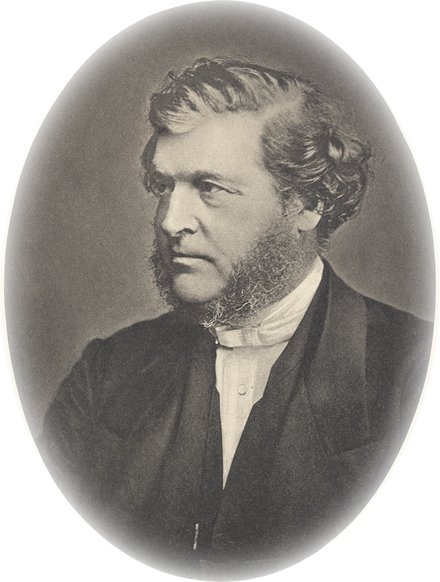
Mark Driscoll, senior pastor of Mars Hill Church in Seattle, Washington State, is an odd figure. Originally identified with the Emergent Church movement, he distanced himself from that group a few years ago when it became clear that Brian McLaren, Rob Bell and others were leading the way into a new phase of Protestant liberalism and away from historic Evangelicalism. At the same time Driscoll began to identify himself as a Calvinist, one of the so-called "New Calvinists". Many saw this as a promising sign; while we found Driscoll's use of profanity in the pulpit offputting (and let's be honest, what is the point of that? It's to shock, it's to provoke a reaction), we recognised, and still recognise, that people mature and change. His affirmation of Calvinism was a step in the right direction.
Recently, however, a number of things have happened to cause deep concern for Driscoll. First of all, Mars Hill has become a multi-site megachurch. The idea of the Multisite is that in addition to the main location, you have a number of satellite campuses where the sermon from the main location is beamed in on big screens. This amazes me, because the Emergent Church began as a protest against the inauthenticity of the big-box megachurches, and an affirmation of community. Now, I can imagine few things as inauthentic as a church meeting where the sermon is beamed in rather than being live. Ironically, the musical portion of the service is live at these locations, perhaps a telling point. We put this down to an inadequate doctrine of the Church, recommend that Driscoll read P.T. Forsyth's The Church and the Sacraments and move on.
More worrying was Driscoll's participation in the mainstreaming of Word-of-Faith teacher T.D. Jakes at the Elephant Room 2 conference earlier this year. Despite having the doctrinal knowledge to pin Jakes down, Driscoll refused to do so. Many of us were left with the impression that Jakes was affirmed because he has a huge congregation, and so his false teaching on the Trinity, the nature of faith and the whole Prosperity issue was roughly papered over and another person was allowed to insinuate that opposition to Jakes was racist, a low blow if I ever heard one. And not a whisper of criticism from Driscoll. It seemed that he had been pulled off course. It happens sometimes, a man passes through orthodoxy on his journey from one form of heterodoxy to another. I pray that is not what has happened to Mark Driscoll.
And then there was Driscoll's very public claim that God gives him what can only be described as "pornographic visions". Well, this is the result. You may ask why I tend to believe the woman over Driscoll? Very simply puit, because I have come across such things before. I have counselled a woman whose pastor falsely accused of having an affair, and asked to leave the Church and go elsewhere. Thankfully in this case it was the pastor who left, though leaving the Church in a terrible state. But this man I refer to was not Driscoll, he did not think he was having direct revelations from God; he was just suffering from a mental complaint.
Leaving aside the question of Driscoll's sanity (though the parallel worries me), here is the problem: when a minister says, "I suspect that Mrs. Smith is having an affair", then his fellow-elders can ask, "Really, John, are you sure? What makes you think that?" (Names have been changed to protect the innocent and the recovered). But what if Pastor John says, "God has shown me that Mrs. Smith is having an affair"? What if he shares salacious details? Well, then to question Pastor John is to question God. This is the Achilles' heel of the Charismatic; when a popular and influential pastor claims visions about private lives, how can he be stopped? Well, you may say, what about Pastor Driscoll's story? Wasn't it accurate? We do not know. If a man is actually delusional, he may see things that are not there and reconstruct events in his memory. So the claim is unproven.
And it gets worse: Driscoll believes that he has a vision from God as to how Mars Hill ought to develop, and anyone who disagrees with that should be "thrown under the bus". Well, it happens to those who were in leadership roles at Mars Hill, as we see here. Now, call me an old-fashioned Congregationalist, and I will take it as a compliment, I am an old-fashioned Congregationalist. I am also a firm believer in a collective leadership and plurality of elders - in fact I am one of four elders at Bethel Evangelical Free Church, and we each have equal authority, but different roles. Mark Driscoll is over the elders at Mars Hill. That means that anyone who does not sign up and follow him 100% gets thrown under the bus, because Mark is certain that he has a special message from God.
Now, he is by no means alone in this: whenever a person or a group think that they have a special revelation of God's will, this tends to happen. It happened in the Ecumenical Movement in the 1960s and 70s, when the advocates of church union schemes so identified their schemes with the will of God that they were willing to ignore the proper procedures in their denominations in order to reach that union (see Ian Henderson, Power Without Glory [London, Hutchinson, 1967] for Scotland, and R.W. Cleaves, Congregationalism 1960-1976 [Swansea, John Penry Press, 1977] for the URC in the UK). The man or organization that believes it has a private revelation from God is liable to become a despotism. Worse, this supposed private Word will tend to overshadow the revealed Word. In a culture obsessed with modernity and the now, a word given yesterday is far more exciting than a ward given almost two millennia ago, or before. And so they will follow that word, even though it is, to quote the very worst of the Star Trek films, "A vision you created."
My plea to all who think so is that of Cromwell to the Scots Presbyterians: "I beseech you, in the bowels of Christ, think it possible you may be mistaken."
Showing posts with label Emergent. Show all posts
Showing posts with label Emergent. Show all posts
Friday, June 22, 2012

Thursday, April 15, 2010
Liberalism is not the answer
When the Emergent Church first came on the British horizon, I read some of their material. My immediate thought was that they had good questions. They seemed to be dissatisfied with the shallowness of much of contemporary evangelicalism, something that I could very much identify with. Thus one Emergent writer wittily characterised Contemporary Worship as "Worship that is 30 years behind the culture." On the other hand they also rejected the narrow legalism of much of contemporary fundamentalism, with its anti-intellectual bias. Unusually for American evangelicals (witness British prejudice emerging) they seemed to be interested in the Church before the 19th century. A desire for more seriousness in worship is to be commended.
Sadly, even then it was obvious that not all was well. To the Emergents it seemed that there were only two options in terms of conservative evangelicalism, vacuous big-box megachurches where the 'sermon' is a self-help lecture, and shallow fundamentalism, where the sermon is libale to be a tirade against women wearing trousers and people using the New King James Bible. Now this is blatantly not the case. I was saved out of liberalism in a medium-sized (for the UK) Reformed Baptist Church where the minister used the NIV, and women wore trousers, while the pastor preached expository series' through books of the Bible. But it seems that in the US in particular, such churches were discounted because of their size (less than 100 in the congregation).
Thus Emergents, who even at the beginning seemed to me to have missed the right answer (namely that a Church should be a community, which probably does mean that most Churches should be under 150 members), and to have wandered off into the wilderness of theological liberalism. Liberalism is not the answer. I was brought up in a liberal Church (of a mild type, mind you) in the Church of England. The Emergents are more advanced liberals, and the effect of advanced liberalism is this - it tells people that God accepts them just the way they are. The end result of this is that people wonder why on earth they should give up Sunday like this when it's a lovely day, and the beach/golf-course/cinema is beckoning. Now, some preachers can hold a congregation whatever they say. Most can't, and that is why liberalism has a long record of closing Churches.
Protestant (and for that matter Roman Catholic) liberalism has already been tried and found wanting. I suggest that it is the Gospel, not liberalism, that is the answer.
Friday, December 5, 2008
Further Thoughts on 'The Voice'

If there is one thing that I came away from the free PDF of the Gospel of John on The Voice website with, it was a feeling that this so-called translation is nothing of the kind. And the Preface of the Voice confirm this. Here is how it describes the process by which The Voice was produced:
"First, accomplished writers create an English rendering; then, respected Bible scholars adjust the rendering to align the manuscript with the original texts."
This is completely the opposite of a good translation methodology. In a good Bible translation (such as the ESV) what happens first is that a team of linguistic scholars will produce a faithful rendering of the original text, and then a team of English stylists will make sure that it is good English as well as a good translation. This is important because some scholars are not very good at writing clear English, as the New English Bible demonstrates (hence the Revised English Bible). In effect, what the Voice is is actually a paraphrase of an existing English translation (which is the only way that those who do not know the original languages could produce a 'rendering' of a Bible passage) that has been checked against the original. So once again, it fails the test of a translation completely.
The Voice also uses some non-traditional words. The rationale is explained in the preface:
"Words that are borrowed from another language or words that are not common outside of the theological community (such as “baptism,” “repentance,” and “salvation”) are translated into more common terminology."This sounds good, but there are two objections to it. Firstly, that it is impossible to actually follow this methodology. Read this:
"The Immerser knew his place in God’s redemptive plan. John the Immerser was a man sent from God, but Jesus is the Voice of God. John rejected any messianic claim outright. Jesus, though, accepted it with a smile, but only from a few of us—at least at first. Don’t get me wrong, John was important, but he wasn’t the Liberating King. He preached repentance."This is obviously The Voice, but look at all those theological words, including one that the preface specifically mentioned, 'Repentance'! Why? This brings us to the second objection, which is that these are technical terms. Every part of life has its technical terms, and every science. Theology is not immune, and nor is religion. Listen to Dr. Lloyd-Jones:
"Take the argument about the terms that the modern man does not understand, 'Justification', 'sanctification', and so on. I want to ask a question: When did the ordinary man ever understand those terms?... This is a very specious argument, but it does not hold water." (Knowing the Times [Edinburgh, Banner of Truth, 1989] P. 111)
The Voice is also downright misleading in some translations. Take just the title. It is derived from the translation given by The Voice to the Greek word 'Logos', translated 'the Word' in other versions. But why is this? Simply because that is the usual meaning of the word 'Logos'. Greek has a perfectly good word for 'voice', namely 'Phone', which is usually rendered as 'voice' in English. The same is true of its rendering of 'Christ' as 'The Liberating King'. This is interpretation pretending to be translation.
What about defenders of the Voice? One of the worst I have seen (and the inspiration for the illustration on this one) was a commenter on Extreme Theology. The fact that Emergent advocates of the Voice also call the critics 'the Elders' (I resent that, I'm 28) had some input into the illustration too! I have read the Voice version of John's Gospel, and the idea of anyone using this as their Bible Version is just too horrible to contemplate. But like The Message, it is being marketed as a Bible version, not as a paraphrastic interpretation.
The biggest failing of The Voice is its extreme expansion of passages. This is intrusive, and it puts man's interpretations on the level of the Word of God. It also actually detracts from the poetry of the Bible itself. If "writers, musicians, poets, and other artists" were involved in this, they must have been very egocentric!
This idea that we need a 'translation' that is nothing of the kind to reach Postmoderns betrays a lack of confidence in what God actually breathed out. Apparently for the Bible to reach people today it has to be added to, paraphrased and chopped around! No, it just needs to be properly translated and sent out into all the World.
This is God's world, whatever 'Emergent man' might say!
Thursday, December 4, 2008
Insanity and Bible PER-versions

The other week Chris Roseboro's item about The Voice, the new Emergent 'Bible version' caught my attention, and I considered blogging it. I decided not to at the time. But now a new story has come to my attention that means that Bible per-versions are on the menu again for this blog.
It cannot have escaped the notice of anyone who has not been living under a rock for the last few decades that there has been a proliferation of new Bible versions, from the excellent ESV to the Good News Bible (an Anglican clergyman once remarked to me "If I hear about 'God's Covenant Box' one more time I think I'll go mad."), to the horror that is The Word on the Street (formerly The Street Bible). I for one have nothing against the desire to translate the Word of God from the original languages into the language of every tribe and nation on the planet, including English. The Authorised Version is a good translation, but it is not inspired, and some of its language is archaic. What is more, the translators were restricted in some of their choices of words, and Greek language study has advanced since 1611, as has the number of manuscripts available to modern translators. It is simply irrational to confine ourselves to sixteenth century scholarship, and Anglican Scholarship at that!
Having said that, do we really need so many Bible versions? Ignoring the multiplicity of study Bibles for just about everyone (except me, because I'm just an ordinary white Brit, and we don't count), there are dozens of translations out there. But that's just a thought.
No, my main point has to do with what I call Bible perversions. I know this language is used by rabid KJV-Only writers such as Gail Riplinger to describe any version other than the Authorised Version, but I use it in a more restricted sense to describe supposed Bible 'versions' that are in fact guided not by a desire to accurately render the Greek and the Hebrew in the receptor language, but by a partisan and personal agenda.
This 'Princess Diana Bible' (warning, do not follow the link if of a nervous disposition, or holding a drink over your computer keyboard) is a prime example. That is, if it is not a parody, which I am not convinced that it is not. Look at it, it's linked to a movie, and it could well just be a publicity stunt. My advice is not to take this too seriously until the truth is revealed. Of course, if it is a parody, it works because it is close to the truth, just one step ahead of it. So take the whole thing with a pinch of salt until you see one of these things in print, because it looks like a publicity ploy to me.
Parody or not, one of the statements on the official website caught my eye:
According to Mitchell, "There are 116 versions of the Bible, why is any of them better than ours?"
If this is not a parody, the answer is "because the ESV and other genuine Bible versions are carefully translated from the original languages with a concern for the actual meaning of words, and are not driven by a personal desire to make the Bible say what I want it to. Whether or not Mitchell is actually serious, his words challenge us to ask the question: What makes a good Bible version? One way to answer that is to look at a bad one.
An example of this that is genuine is the Voice New Testament (official site). This is trumpeted as "A dynamic Translation that brings the Biblical narrative to life." 'Dynamic' is definitely the word, but 'translation' is stretching it a bit. This is actually a paraphrase of the Biblical text. This chart is used to show how The Voice compares with other 'versions' (although The Message is actually a paraphrase, not a translation). The Voice italicises those words that have been added 'to clarify' the text. This is acceptable when it is done properly, but rather than adding just a few words here and there to make Greek into good English, the Voice adds whole clauses and even sentences wholesale. Take this random example from their site:
"When you are filled with the Spirit, you are empowered to speak to each other in the soulful words of pious songs, hymns, and spiritual songs; to sing and make music with your hearts attuned to God; and to give thanks to God the Father every day through the name of the Lord Jesus, the Liberating King, for all He has done." Ephesians 5:19-20, in The Voice translation
Remember, words in italics are not in the original Greek Text (I looked, I can't find them). That means that two clauses in this text are simply added to it. The original says nothing about being 'empowered' by the filling of the Holy Spirit, nor does it refer to 'soulful words'. Then look at some of the language chosen for actual translations. To translate 'Christ' as 'Liberating King' is introducing an interpretation into the text, not translation. I would have no objection to 'God's anointed one', since that is an English version of 'Christ', but that is to miss the fact that 'Christ' or 'Messiah' had become a personal title by the time of the New Testament. So of this text, abut 60 words in this English version, fifteen, or a whole quarter of the text, have no antecedent in the Greek whatsoever, and have been arbitrarily inserted because someone thought they made it sound better!
How did this happen? The Voice website gives the answer:
"Previously most Bibles and biblical reference works were produced by professional scholars writing in academic settings. The Voice uniquely represents collaboration among scholars, pastors, writers, musicians, poets, and other artists."
There is a completely different philosophy at work here. The reason why Bibles have historically been translated by textual scholars is that the Bible was viewed as being inspired by God, and so the aim of translating was to render the original text faithfully in a receptor language. In 2 Timothy 3.16 we read:
"All Scripture is God-breathed..."Despite the Voice's declaration that it:
"Respects cultural shifts and the need for accuracy"The level of accuracy in this 'translation' is terrible. It adds reams to the Word of God (in a side-note, I found myself wondering how much longer than a proper New Testament The Voice is). But the Greek is very specific. every word of the Bible is breathed-out by God. The Voice is no more an accurate Bible version than the New World Translation of Jehovah's Witnesses or the Inspired Version of Joseph Smith. And if the Princess Diana Bible really exists, then I add that to the mix as well.
The Voice certainly does speak, but what it speaks is not the pure Word of God, but the Word of God twisted and distorted by our ideas. Let the Bible speak, let God speak, and let people read what God has said. The old Bible Societies committed themselves to distribute the Word of God 'Without note or comment' beyond mere textual and translational notes. There was a good reason for that, which is that notes in a Bible can easily be mistaken for inspired (I think of the way some people have viewed the Scofield Reference Bible). If that's true of notes in the margin and under the text, when notes are actually inserted into the text, it is almost certain that people will think they are what God has said. My only advice must be: Don't buy The Voice.
[Illustration: a reader expresses his opinion of these false Bible 'versions'. If Centuri0n can do it, why can't I?]
Wednesday, November 19, 2008
The use and Abuse of History
Phyllis Tickle, an Emergent author, has declared that the Emergent Church is 'the Great Emergence', part of a pattern of great events in the Church every 500 years (source, source).
The problem with this is that it is not an interpretation of the evidence, it is a cherry-picking of the evidence to fit a pre-conceived pattern, so as to 'conveniently' wind up with the Emergent Church as being the latest great work of God. But this is not how you do history! What about the Great Awakening of the eighteenth century? It doesn't fit into the 'pattern' at all, yet it produced the modern missionary movement, the Methodist Churches, the New Connexion of General Baptists, and so on. The revival of 1859, which also had worldwide effects, doesn't fit in to the 'pattern' either. Of course they don't, because the 'pattern' doesn't exist, it is, if I may be allowed to borrow a 'postmodern' term, a powerplay, manipulating the evidence to back up one's position. Thus it answers objections by saying: "But this is the Great Emergence. If you don't support us, then you're opposing God's next Great Work!" This is history as propaganda, as a wax nose that can be manipulated into any shape the manipulator desires.
I am an amateur historian (in the sense I don't get paid for it), and the son of a professional historian (in the sense that he does get paid for it), and this sort of pretended historical study irritates me. It has as much to do with real history as the Landmark Baptists' 'trail of blood', and as the Roman Catholic doctrine of Apostolic Succession (in fact those two are the same thing, but we'll let that pass for now). This is simply the manipulation of historical evidence on behalf of a party. It is, in the worst sense of the term, sectarian history.
So then, the reader may ask, what is the proper use of history? First of all, history must be honest. We accept our forefathers 'warts and all'. Christians are sinners saved by grace, not perfect people, and the same goes for those in the past. But then again, we cannot be like the artist who would paint a picture of the wart and entitle it 'Cromwell'. That too is wrong.
History is to the Church what memory is to individuals, it is the life-story of the Church. We read history to inspire and to teach, and we do it to learn, not to buttress our preconceived notions. Unless we read history responsibly and sensibly, we shall find that we have forgotten it.
Subscribe to:
Posts (Atom)