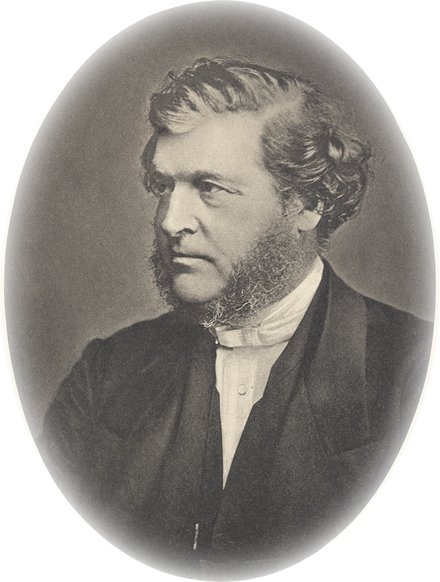
Mark Driscoll, senior pastor of Mars Hill Church in Seattle, Washington State, is an odd figure. Originally identified with the Emergent Church movement, he distanced himself from that group a few years ago when it became clear that Brian McLaren, Rob Bell and others were leading the way into a new phase of Protestant liberalism and away from historic Evangelicalism. At the same time Driscoll began to identify himself as a Calvinist, one of the so-called "New Calvinists". Many saw this as a promising sign; while we found Driscoll's use of profanity in the pulpit offputting (and let's be honest, what is the point of that? It's to shock, it's to provoke a reaction), we recognised, and still recognise, that people mature and change. His affirmation of Calvinism was a step in the right direction.
Recently, however, a number of things have happened to cause deep concern for Driscoll. First of all, Mars Hill has become a multi-site megachurch. The idea of the Multisite is that in addition to the main location, you have a number of satellite campuses where the sermon from the main location is beamed in on big screens. This amazes me, because the Emergent Church began as a protest against the inauthenticity of the big-box megachurches, and an affirmation of community. Now, I can imagine few things as inauthentic as a church meeting where the sermon is beamed in rather than being live. Ironically, the musical portion of the service is live at these locations, perhaps a telling point. We put this down to an inadequate doctrine of the Church, recommend that Driscoll read P.T. Forsyth's The Church and the Sacraments and move on.
More worrying was Driscoll's participation in the mainstreaming of Word-of-Faith teacher T.D. Jakes at the Elephant Room 2 conference earlier this year. Despite having the doctrinal knowledge to pin Jakes down, Driscoll refused to do so. Many of us were left with the impression that Jakes was affirmed because he has a huge congregation, and so his false teaching on the Trinity, the nature of faith and the whole Prosperity issue was roughly papered over and another person was allowed to insinuate that opposition to Jakes was racist, a low blow if I ever heard one. And not a whisper of criticism from Driscoll. It seemed that he had been pulled off course. It happens sometimes, a man passes through orthodoxy on his journey from one form of heterodoxy to another. I pray that is not what has happened to Mark Driscoll.
And then there was Driscoll's very public claim that God gives him what can only be described as "pornographic visions". Well, this is the result. You may ask why I tend to believe the woman over Driscoll? Very simply puit, because I have come across such things before. I have counselled a woman whose pastor falsely accused of having an affair, and asked to leave the Church and go elsewhere. Thankfully in this case it was the pastor who left, though leaving the Church in a terrible state. But this man I refer to was not Driscoll, he did not think he was having direct revelations from God; he was just suffering from a mental complaint.
Leaving aside the question of Driscoll's sanity (though the parallel worries me), here is the problem: when a minister says, "I suspect that Mrs. Smith is having an affair", then his fellow-elders can ask, "Really, John, are you sure? What makes you think that?" (Names have been changed to protect the innocent and the recovered). But what if Pastor John says, "God has shown me that Mrs. Smith is having an affair"? What if he shares salacious details? Well, then to question Pastor John is to question God. This is the Achilles' heel of the Charismatic; when a popular and influential pastor claims visions about private lives, how can he be stopped? Well, you may say, what about Pastor Driscoll's story? Wasn't it accurate? We do not know. If a man is actually delusional, he may see things that are not there and reconstruct events in his memory. So the claim is unproven.
And it gets worse: Driscoll believes that he has a vision from God as to how Mars Hill ought to develop, and anyone who disagrees with that should be "thrown under the bus". Well, it happens to those who were in leadership roles at Mars Hill, as we see here. Now, call me an old-fashioned Congregationalist, and I will take it as a compliment, I am an old-fashioned Congregationalist. I am also a firm believer in a collective leadership and plurality of elders - in fact I am one of four elders at Bethel Evangelical Free Church, and we each have equal authority, but different roles. Mark Driscoll is over the elders at Mars Hill. That means that anyone who does not sign up and follow him 100% gets thrown under the bus, because Mark is certain that he has a special message from God.
Now, he is by no means alone in this: whenever a person or a group think that they have a special revelation of God's will, this tends to happen. It happened in the Ecumenical Movement in the 1960s and 70s, when the advocates of church union schemes so identified their schemes with the will of God that they were willing to ignore the proper procedures in their denominations in order to reach that union (see Ian Henderson, Power Without Glory [London, Hutchinson, 1967] for Scotland, and R.W. Cleaves, Congregationalism 1960-1976 [Swansea, John Penry Press, 1977] for the URC in the UK). The man or organization that believes it has a private revelation from God is liable to become a despotism. Worse, this supposed private Word will tend to overshadow the revealed Word. In a culture obsessed with modernity and the now, a word given yesterday is far more exciting than a ward given almost two millennia ago, or before. And so they will follow that word, even though it is, to quote the very worst of the Star Trek films, "A vision you created."
My plea to all who think so is that of Cromwell to the Scots Presbyterians: "I beseech you, in the bowels of Christ, think it possible you may be mistaken."
Showing posts with label Elephant Room. Show all posts
Showing posts with label Elephant Room. Show all posts
Friday, June 22, 2012

Tuesday, January 31, 2012
Yes, but What Do You MEAN by That?
The Elephant Room controversy has claimed another victim, Brian Broderson of Calvary Chapel. In a blog post he has stated:
"According to the Oneness doctrine, there is no Trinity—one God in three persons; rather there is one God who expresses Himself in different modes, sometimes as Father, sometimes as Son, and sometimes as Spirit. Now this teaching is certainly contrary to the biblical doctrine of the triune nature of God and is therefore "heretical," but to say that those who hold this view are not Christians is in my opinion going too far. Granted, it is an incorrect view regarding the nature of God, but it is not like other anti-trinitarian views that deny the full deity of Christ. I personally do not think you can put those who hold the Oneness doctrine in the same category as a Jehovah's Witness or a Mormon. I might be wrong, but that's the way I see it at this point. Should we seek to correct the view of the Oneness Pentecostals? Yes we should, in the same way we would seek to correct any person or group that has fallen into theological error. What I don't think we should do is spurn them or cast a final eternal judgment on them."
Now this is, I am afraid, appallingly bad theology, and shows a huge doctrinal blind spot in Broderson's thinking; yet it is a blind spot that is increasingly common in Evangelicalism. Increasingly the tendency is to say "Well, so-and-so believes in Jesus" and leave it at that, as if that is enough. Broderson has taken this a little further and said, "Well, so-and-so believes Jesus is God, so he can't be that bad."
On the contrary, he can be; for the question is really more fundamental than "who is Jesus?" it is, "Who is God?" That brings us back to the question of the Mormons, for the Mormon says "Jesus is God." Now Mr. Broderson is still sharp enough to recognise that the Mormon god is not the same as the God of trinitarian Christianity, but seems to have compromised enough that he is willing to fudge the issue on the god of Oneness Pentecostalism.
A denial of the Trinity is fundamental, for it affects one's whole perception of God in a multitude of ways. If God is unipersonal, then what does it mean for God to be love? Love is defined in the Bible in terms of self-giving, but if God is unipersonal, to whom can that one person give himself? It means that either he is not essentially love, or that the universe is necessary to God; that God could not have done other than create beings whom he could love. It challenges the doctrine of the love of God and changes it, it also challenges the independence of God, giving us a picture of a god who needs something outside of himself and upon whom is therefore laid the necessity of creating.
And despite Mr. Broderson's naive remarks, Oneness does alter the conception of Christ. According to classical Oneness teaching Christ has two personalities, a human and a divine, and when he prayed it was the human personality praying to the divine. That creates at best a schizophrenic deity, and at worst an incarnation that is not truly an incarnation at all, where the human and divine are separated to such an extent that the divine merely indwells the human, in which case I fail to see how there is a difference of anything but degree between Jesus of Nazareth and a Christian who is indwelt by the Holy Spirit. It creates huge problems for our Theology and Christology.
Where does one draw the line? The moment you start to draw it anywhere other than where the Bible has drawn it, you are in trouble. Who is a Christian? Either we say "All those who claim the name are", which Broderson does not do, or we say "all those who believe in the Christ of the Bible." There is no middle ground.
So what is going on in Broderson's statement? What is going on all over the place; based on a personal and unwritten standard people are affirming modalists as, in some sense, brothers in Christ. Well, I am having none of it. If a fellow will not confess the Apostles' Creed I will not baptize him, and I cannot affirm as a brother in Christ a person whom I could not baptize. Nor can I share the Communion with him, and so again, he is not a brother in Christ.
That does not mean I could not call him a friend, or like him; I have never met a Unitarian I did not like, and I parted from the last Jehovah's Witness I had any interaction with on the best of terms, but we are quite clear; the Unitarians and I, the JW and I, may be friends, but we can never call one another brethren. We certainly cannot call one another Christians
Subscribe to:
Posts (Atom)