Rob Bell's book Love Wins is the hot news topic right now. I doubt, however, whether it will be the hot news topic in a century - assuming for the same of argument that there is another century ahead of us.
Bell is, as Al Mohler has correctly pointed out, nothing more than a modernist liberal - albeit a modernist liberal in really hip glasses. Modernist liberal books simply do not last long, because they are dictated largely by the spirit of the age. The liberal is a man (or woman) who is concerned that historic Christianity does not chime with the spirit of the age, and is therefore in earnest to make it do so. The trouble is that this simply does not work. William Macgregor noted, "The victories of the faith have commonly been won not by the proclamation of a bare minimum of belief but rather of things strange and hard to accept, because they are so full of God" (Persons and Ideals [Edinburgh, T. & T. Clark, 1939] P. 5). The liberal may, if he is well-placed enough, and his words are surprising enough, cause a stir, but liberalism has never built up churches.
Bell and his ilk are reacting against two things, what they perceive as the commericalness (if that is a word) and superficiality of the megachurches, and the self-righteousness of fundamentalism. We confessional Protestants are in complete agreement with him that both of these movements are false and dangerous.
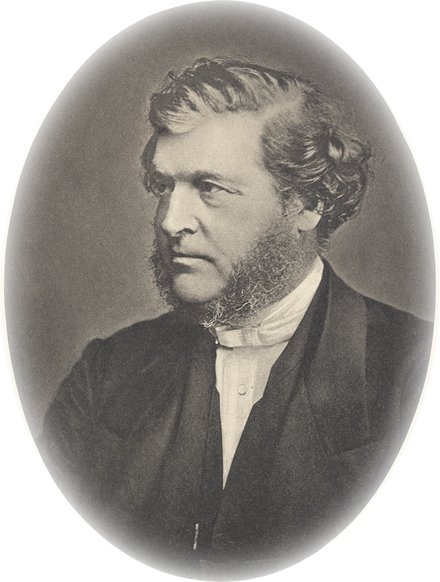
Dr. Martyn Lloyd-Jones, probably the greatest preacher of the 20th century, was asked in an interview in 1970 whether he had reacted against the liberalism of his father. He replied that he felt that he had not, rather he and his father had both reacted against the respectable moralism that had replaced the Gospel in the Calvinistic Methodist pulpits that they were familiar with. His father had adopted the left-wing theologically liberal 'New Theology' of R.J. Campbell. Lloyd-Jones returned to the confessional Calvinism of the Calvinistic Methodist fathers. He returned, in other words, to the Gospel. What the post-Victorians rejected as "Puritanism", Lloyd-Jones found was anything but - it was moralism. True Puritanism was Gospel-centred, it was centred on Christ and him crucified.
And once again we see the reaction against moralism going in the same two directions. I have always said that I think that, at least in their initial critique of American Evangelicalism, the Emergents were basically right. They recognised the problem. But the solution they have found is no solution at all, it is just to follow the liberals of a century ago. On the other hand there are the 'Young, Restless and Reformed' people, and those who have embraced Confessional Calvinism such as myself. We have discovered that, as Lloyd-Jones put it, the true way is to go "on to orthodoxy." Not to go backwards, for it was the moralists who did that. The liberals want to beat a still further retreat. But we must go onwards to orthodoxy.
I am afraid that today's liberals are far behind their counterparts of the last century. Campbell's manifesto The New Theology is a solid hardcover of over 260 pages. Rob Bell's ignorance of the history of the Church, and of ancient civilizations, is quite apparent to all who saw his Nooma video that dealt with Mithra, Attis, etc (Nooma 15). Compare this with 20th century liberal T.R. Glover, who taught classics at Cambridge. Meanwhile confessionalists are producing good quality, thoughtful works. Now, literary quality is no proof of orthodoxy (otherwise we would all have to be Roman Catholics like J.H. Newman), but it is an indicator of the health or otherwise of a movement. For all their claims to be thoughtful, the new liberals of the Emergent Church are intellectually shallow. Now, when an intellectually shallow writer encourages people to change their theology and to abandon the theology that the Church has always held, we should have serious pause for thought!
Let us then go onwards towards orthodoxy, with all the intellectual rigour that is called for. That is what is called for. It is the orthodox that are read today, not Campbell and Glover. It is the orthodox who form, and have formed, Christian thinking. Truth endures, error passes away.
Showing posts with label Liberalism. Show all posts
Showing posts with label Liberalism. Show all posts
Saturday, March 26, 2011

Thursday, April 15, 2010
Liberalism is not the answer
When the Emergent Church first came on the British horizon, I read some of their material. My immediate thought was that they had good questions. They seemed to be dissatisfied with the shallowness of much of contemporary evangelicalism, something that I could very much identify with. Thus one Emergent writer wittily characterised Contemporary Worship as "Worship that is 30 years behind the culture." On the other hand they also rejected the narrow legalism of much of contemporary fundamentalism, with its anti-intellectual bias. Unusually for American evangelicals (witness British prejudice emerging) they seemed to be interested in the Church before the 19th century. A desire for more seriousness in worship is to be commended.
Sadly, even then it was obvious that not all was well. To the Emergents it seemed that there were only two options in terms of conservative evangelicalism, vacuous big-box megachurches where the 'sermon' is a self-help lecture, and shallow fundamentalism, where the sermon is libale to be a tirade against women wearing trousers and people using the New King James Bible. Now this is blatantly not the case. I was saved out of liberalism in a medium-sized (for the UK) Reformed Baptist Church where the minister used the NIV, and women wore trousers, while the pastor preached expository series' through books of the Bible. But it seems that in the US in particular, such churches were discounted because of their size (less than 100 in the congregation).
Thus Emergents, who even at the beginning seemed to me to have missed the right answer (namely that a Church should be a community, which probably does mean that most Churches should be under 150 members), and to have wandered off into the wilderness of theological liberalism. Liberalism is not the answer. I was brought up in a liberal Church (of a mild type, mind you) in the Church of England. The Emergents are more advanced liberals, and the effect of advanced liberalism is this - it tells people that God accepts them just the way they are. The end result of this is that people wonder why on earth they should give up Sunday like this when it's a lovely day, and the beach/golf-course/cinema is beckoning. Now, some preachers can hold a congregation whatever they say. Most can't, and that is why liberalism has a long record of closing Churches.
Protestant (and for that matter Roman Catholic) liberalism has already been tried and found wanting. I suggest that it is the Gospel, not liberalism, that is the answer.
Thursday, January 8, 2009
Is This the Most 'Welcoming' Church in Britain?
A church's sign often tells you a lot about the church that meets in that building, whether it is conservative, trendy, liberal or just very strange. Liberal church signs are often extremely interesting. After all, if you don't believe in the inerrancy of the Bible, then what are you going to say? Well, one congregation in the very liberal United Reformed Church denomination wants you to know that they'll welcome you no matter what:

Yes, you read that sign correctly. This is not the product of the 'Church Sign Generator', it is a genuine photograph taken in the streets of a British city. Cardiff, to be exact. The congregation is the City United Reformed Church.

Of course you may find things less than welcoming if you come inside as a Bible-believing confessional Christian, but there you go, we all draw the line somewhere.
Subscribe to:
Posts (Atom)