Showing posts with label Historical study. Show all posts

Tuesday, December 17, 2013

Historiography: Rights and Wrongs

I am a pastor, not a professional historian. I am however an amateur historian, and have written history for publication, so I know a bit about how you do history. Sadly the discipline of Church history is either ignored or misunderstood by many evangelicals today. Historical ignorance is corrected by the injunction to "go and read a book", but there are those who know something about history, but do not understand how history is done

That was one of the worst things about the White-Pinto debate last week, that Chris Pinto demonstrated a thoroughly false historiography that is too common in certain circles. The word historiography in this context refers to the study of how we "do" history, and Pinto displays the view that certain historians of the 19th century form a "canon" (small 'c', note), a rule by which all other historians are to be judged. This isn't an uncommon view in certain circles, as witness the fact that there are still people who hold to the "trail of blood" view of Baptist history. Now of course when young Christians set out reading history, they will tend to go with the older writers, those of a viewpoint they themselves hold, and there is nothing wrong with that; a biography by a sympathetic author is always a far better read than a biography by an unsympathetic one, after all, and a history written by an atheistic Marxist intent on imposing his ideas of how things ought to have happened upon the record is going to be a pretty irritating read unless you are an atheistic Marxist (and even then...). But we must beware taking those favourite authors and saying, "If anyone disagrees with them, then so much the worse for the one disagreeing." As Christians who believe in the reality and objectivity of truth, our first commitment must be to that same truth, to what really happened, as opposed to what we would like to have happened. I don't just refer to the interpretation of history, what certain events mean, what motives lay behind a person's action, for example, but the actual historical record itself, who did what and when.

When we go any distance into the past beyond about a hundred years, our knowledge of history is based upon records, sources. As the knowledge of sources changes, so too our knowledge of the past does; to give one example, open a 19th century biography of John Knox such as Thomas M'Crie's famous work and it will tell you that Knox was born in 1505. More recent works, including the biography by Henry Cowan published in 1905, give the date as between 1513 and 1515, up to a whole decade later. Why is this? Because between M'Crie's writing in 1811 and Cowan in 1905 further research had been done on Knox, following M'Crie's lead. No historian is to be regarded ipso facto as having given the last word on a subject. Cowan notes that the traditional date of Knox's birth rested almost entirely upon a historian writing about 50 years later, in other words on a secondary source, while the later date is based upon Theodore Beza, who knew Knox personally, and other contemporary sources. Now M'Crie's work is a classic, and yet it is wrong on the date of Knox's birth because later historians were able to uncover data unknown to M'Crie. That is how history works, being based upon sources, the judgement of historians is liable to alteration if new sources come to light. There are also people who create fraudulent sources, which creates all sorts of havoc for historians. In E.C. Pike The Story of the Anabaptists (London, 1904) he refers to Goadby's Byepaths of  Baptist History and its reference to the graveyard at Hill Cliffe Baptist chapel, near Warrington, mentioning a gravestone dated 1357. It is quite certain that the stone in question had been fraudulently altered, firstly because its style was not 14th century, and secondly because old records exist that show what the original date on the stone was. In the effort to claim the name of "oldest" people have stretched points and flat out made things up. The temptation to exaggerate can be strong.

This being so, to claim that any historians, however orthodox their theology, are the canon by which all others are to be judged is just a demonstration of appalling ignorance of how history works. The great 19th century Church historians are not honoured by being treated as the be all and end all of history, as the men who gave us the infallible facts and interpretation, but by our following in their footsteps, taking up the trails that they blazed, developing the country they explored, exploring still further. Just because a particular interpretation of history is seen as favouring a particular theological position does not mean that, should the evidence force us to that conclusion, it may not have to be abandoned, as for example the claim that the Cathars and Paulicians were in any meaningful sense "reformers before the Reformation". Nor should we read back the excesses of the late Middle Ages into the age of Anselm, far less the age of Augustine. The historian must go where the evidence leads, not cling to Hill Cliffe as pre-Reformation when all the evidence shows it is of 17th century origin.

And the reader must recall that history is not an exact science; the reconstruction of what happened in the past is often straightforward, but sometimes it is not. In days past people were not so exact at keeping records as we are today, the exact date of an event was not seen as important in the way we see it - the event itself was what mattered. Historians of the past were men like us, capable of error, of being misled or of drawing false conclusions; that J.A. Wylie's estimate of the Cathars was in error does not mean that we should cast out everything he ever wrote, far less that we should all become Roman Catholics or something like that. But we should remember this: those writers were not infallible, and their writings are not inspired. And for us to treat them as such would be to do them a great disservice, for it would be to treat Protestant historians as though they were, in the field of history, infallible popes.

Friday, December 13, 2013

There is no Canon of Historians

Last night I caught up with the debate between James R. White and Chris Pinto on Fighting for the Faith. The subject was the date and provenance of Codex Sinaiticus, whether it is a genuine 3rd century manuscript, or was produced in the 1840s by Constantin Simonides. As one cannot prove a point by a series of speculations, I remain unconvinced by Pinto's arguments, which amount to "Well, it might have been." But the debate speaks for itself.

More worrying for me, as a student of 19th century church history, was the fact that is rather swiftly became apparent that Pinto elevated certain Victorian speculations about Jesuits, and certain Victorian historians, to a status of practical infallibility.

A friend directed me to Mr. Pinto's post-debate analysis/declaration of victory, in which I was disturbed, but not overly surprised, to read this phrase:
" The historic oracles of the 19th century were rejected in favor of White’s revisionist ideas of Church history."
Now that worries me for this reason: who decided that Wylie et al were "oracles"? Who made them a sort of "canon". I do not use the term to indicate inspiration, but in its strict sense of a rule by which all else is to be tested, because make no mistake, that is what Pinto has made them. And that is the undoing of all of his theories. No historian, however orthodox his theology, however good his research, is to be set up as an "oracle". No church historian speaks that way. All history is to be subject to revision if more data emerges on the issues at stake. The reality is that while J.A. Wylie was a very able man, he died in 1890, and many documents that were unavailable to him and his contemporaries are now freely available.

Now, I do not know which historian(s) Pinto relies upon for his statement concerning the Oxford Movement, "...the Oxford Movement which was the aggressive effort of Rome to reclaim England for the Pope" I suspect that he is relying on works such as Walter Walsh's The Secret History of the Oxford Movement, first published in 1898. It was suggested in some of these works that whilst Newman openly converted to Rome in 1845, in fact he had secretly become a Roman Catholic over ten years earlier on a visit to Rome in 1833, and that from 1833 until 1845 he had been a secret Jesuit agent working in the University of Oxford. It is important to remember that in the 1830s Roman Catholicism in the United Kingdom was still subject to certain restrictions, and many people regarded it as a foreign aggressor that wanted to take control of the state and bring back the execution of Protestants.

It is also however vital to point out that since Newman's death in 1890 no evidence has been discovered that would indicate a secret allegiance to the Papacy dating back to 1833, much less secret membership of the Jesuit order. Newman, after crossing the Tiber, joined the Oratorians, an entirely different religious order, and for much of his career in the Roman church was sidelined. There is in fact no reason to doubt that Newman's own account of his religious opinions and their changes given in the Apologia Pro Vita Sua is generally accurate, and any errors in it are lapses of the writer's memory rather than deliberate deception.

Brought up an evangelical Anglican, at Oxford Newman first came into contact, not with men pointing back to Rome, but with liberals who denied that the Bible was intended to teach the fundamentals of Christianity. Accepting this position, he sought authority elsewhere and found it in the Church. At first he adopted a position that can be called historic High Anglicanism, but found that logically untenable, and eventually ended up at Rome, the logical end of his position. Despite speculation by certain Protestant writers in the Victorian era, there has never come to light any evidence to suggest that the Oxford Movement was anything other than what it appeared to be, a group of Anglicans, influenced on the one hand by Romanticism and its visions of Medieval England and on the other hand by a liberalism that was questioning the authority of the Bible and thus led men like John Henry Newman to seek an infallible authority elsewhere.

And there is the great irony of all this; Pinto has erected Wylie and other Protestant writers into just such an infallible authority in the matter of history, not only its telling but also its interpretation. He does not mean to do this, does not even apparently see that he has done it, but he has.

[Illustration: The interior of Christ Church Cathedral, Oxford, where John Henry Newman was ordained]


Addendum: I missed the point where Pinto links the Revised Version of 1881 with the Jesuits, a truly remarkable feat given that the Roman Catholics invited to participate in the work (including, interestingly, John Henry Newman) refused to do so. And this is where I must accuse Pinto of being a conspiracy theorist. One mark of the conspiracy theorist is the tendency to connect everything to the conspiracy, which tends to assume the most enormous dimensions. The conspiracy theorist can become unable to understand that there are forces at work apart from his conspiracy, and sadly that seems to have happened with Pinto.

Tuesday, September 1, 2009

On History

Christianity is an historical religion. It is based on historical facts and historical events. Our whole salvation is dependent upon an event that happened, not in the realm of myth, or in Kant's Noumenal realm, or Plato's realm of Ideals, but in this real world, in real history. The death and resurrection of Jesus of Nazareth are events that took place in history, just like the assassination of Julius Caesar and the Second World War. If they are not, then Christianity is a meaningless fable - but of course they are historical events.

Thus, as Christians, it is incumbent upon us to know history. Not only that, but to know it as history. What do I mean? I mean that we must recognise that historical events take place within a matrix of history. We have probably all seen those Medieval images of events in the Bible in which the figures are dressed in Medieval clothing - the guards at the tomb of Christ in Medieval armour, and the tomb as a Medieval tomb, not a rock-cut tomb. This is anachronism, treating the past as if it were the present. While few of us today, at least in Protestant circles, would be guilty of such gross anachronism as to imagine the people of the Bible as wearing modern clothing, we all too often fall into the trap of reading non-Biblical writers of the past as if they lived today. An egregious example of this would be the Fundamentalist [see Extended Note for American Readers] who read Martin Luther and condemned him as not really converted because he retained so much of Rome. What the man had forgotten was Luther's sitz im laben, his situation in life, in Europe coming out of centuries of domination by the Roman Church. The question to ask was not so much how far Luther was from me, but how far he was from Rome! To give another example, John Calvin supported the punishment of heresy by the state. To modern ears that sounds terrible, and indeed if any modern Christian leader were to promote that (without first cloaking it in plausible-sounding language, of course), we would be rightly horrified. But we must put Calvin in his historical context, where just about everybody believed that heresy was a crime that threatened the nation as well as the Church. And so I might go on, pleading that we understand people in history.

Christians also ought to know the history of the period between the end of the Book of Acts and the present day, including the period from AD 100 to the 16th century. And for this period we ought not to rely on works written more than a century ago. I have nothing against Mosheim (I have a copy), but a great deal against the 'trail of blood' hypothesis, which is in fact nothing more than a bad Baptist copy of the theory of Apostolic Succession, of which Wesley said so truly that it was a fable no man can prove. Historical books must not be written in order to conform to a theory, but to conform to the realities of history. I do not care what the theory is, if it is false to the facts of history, it must be discarded.

Nor can we unchurch everyone who disagrees with us, tempting though it may be. The Church Fathers are odd. Some of them, like Origen, are really odd (and yes, that is the verdict of history on Origen). But to say "Church Fathers! Catholics! Evil!" and write them all off is just overly simplistic. It is a dream that there was a 'golden age' in the early Church, say the first two centuries, in which everyone understood the Bible perfectly, and then the whole period since was a period of decline. Anyone who thinks this needs to read the Epistles, and not just as a set of inspirational sayings. Read about the Church in Corinth, what they were doing. Then ask yourself this: If a man really understands Christianity, would he be doing that with his stepmother? And if a Church was really in the golden age, would they all be congratulating him on it?

No, the whole history of the Church has been, in general, one of growing into the Bible. Only a fool would think that there have not been periods of decline, periods in which true religion has been hard to find, but the Church as it is today is far more impressive than the Church of the second century. Of course, in each period of the Church's history there are aberrations, false teachings that depart from the Bible, such as Gnosticism, which detatches Christianity from history, or liberalism, which denies huge chunks of the Bible to be true. Thus the Bible itself acts as a control. Jesus said "I will build my Church, and the gates of hell shall not prevail against it." It's seemed a close-run thing at times, and it seems so right now in places, but we have to remember that Our Lord knows what He is doing.

In biography it is usually important to read books that do not just praise the subject, but mention the fact he was a sinner. Because he was, take it from me. It does no good to present Christian heroes as well-nigh perfect, editing out C.I. Scofield's neglect of his children from his first marriage, Billy Sunday's financial issues, and A.W. Tozer's relative neglect of his family. To do so makes them into Protestant versions of Roman Catholic saints, something no true Protestant should welcome! Biographies are the life story of an individual, and readers ought to be aware that the biographer may not have researched the lives of other individuals whose lives intersect with those of their subject as well, and so incidental references to persons may not be completely accurate.

Finally, we have nothing to fear from historical research, it's the abuse of that research that causes problems! Do not assume that just because you read something in a book it must be true. The claims Dan Brown retails in The Da Vinci Code are found in books. But this goes for claims that make you feel good as well! As I said, especially if the book in more than a century old, or is written using secondary sources over a century old. As a rule, if a book relies entirely on secondary sources, and those are century- old sources, then it's probably not worth reading. Academic historians are not all evil proponents of unbelief (my Father's one. An academic historian, I mean). Wylie may be fine for the outlines of history, but we have discovered more evidence since he passed away.


[Extended Note: I am an Englishman, and the word 'fundamentalist' in England does not carry a generally positive meaning. It has never really caught on as a self-designation for English Christians, and is usually used in a negative way. I use the word negatively myself to refer to an unreflective form of religion that is historically ignorant and culturally naive. The fundamentalist is typically sectarian in his view of history, treating his sect as the true Church, and anachronistic, applying the tenets and requirements of his sect to all he comes into contact with. He makes the tenets of his sect, not the historic faith, the test of all, even (indeed, especially) if the sect is of extremely recent birth]
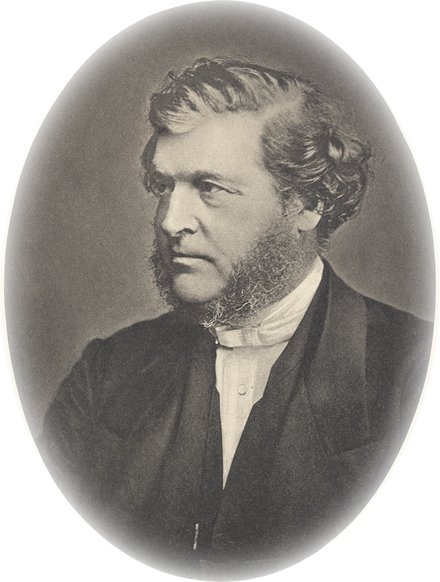
Picture: T.M. Lindsay, a good Church historian

Wednesday, November 19, 2008

The use and Abuse of History

Phyllis Tickle, an Emergent author, has declared that the Emergent Church is 'the Great Emergence', part of a pattern of great events in the Church every 500 years (source, source).

The problem with this is that it is not an interpretation of the evidence, it is a cherry-picking of the evidence to fit a pre-conceived pattern, so as to 'conveniently' wind up with the Emergent Church as being the latest great work of God. But this is not how you do history! What about the Great Awakening of the eighteenth century? It doesn't fit into the 'pattern' at all, yet it produced the modern missionary movement, the Methodist Churches, the New Connexion of General Baptists, and so on. The revival of 1859, which also had worldwide effects, doesn't fit in to the 'pattern' either. Of course they don't, because the 'pattern' doesn't exist, it is, if I may be allowed to borrow a 'postmodern' term, a powerplay, manipulating the evidence to back up one's position. Thus it answers objections by saying: "But this is the Great Emergence. If you don't support us, then you're opposing God's next Great Work!" This is history as propaganda, as a wax nose that can be manipulated into any shape the manipulator desires.

I am an amateur historian (in the sense I don't get paid for it), and the son of a professional historian (in the sense that he does get paid for it), and this sort of pretended historical study irritates me. It has as much to do with real history as the Landmark Baptists' 'trail of blood', and as the Roman Catholic doctrine of Apostolic Succession (in fact those two are the same thing, but we'll let that pass for now). This is simply the manipulation of historical evidence on behalf of a party. It is, in the worst sense of the term, sectarian history.

So then, the reader may ask, what is the proper use of history? First of all, history must be honest. We accept our forefathers 'warts and all'. Christians are sinners saved by grace, not perfect people, and the same goes for those in the past. But then again, we cannot be like the artist who would paint a picture of the wart and entitle it 'Cromwell'. That too is wrong.

History is to the Church what memory is to individuals, it is the life-story of the Church. We read history to inspire and to teach, and we do it to learn, not to buttress our preconceived notions. Unless we read history responsibly and sensibly, we shall find that we have forgotten it.