We have now read Samuel Waldron's book 'MacArthur's Millennial Manifesto'
Dr. John MacArthur is no stranger to controversy- quite the reverse, in fact. His works against modern-day antinomianism such as ‘The Gospel According to Jesus’ sparked a healthy debate about the connection of repentance and saving faith. And, on the whole, we have agreed with MacArthur in these controversies. Yet, as readers of this blog will know, we have been compelled to register our objections to the eschatology promoted by Dr. MacArthur.
Dr. MacArthur’s opening sermon at the 2007 Shepherds’ Conference, ‘Why Every Self-Respecting Calvinist is Premillennial’, sparked off quite a debate at the time, a debate that has finally reached the United Kingdom, if a recent letter in the British Church Newspaper is anything to go by. Therefore the appearance of Dr. Samuel E. Waldron’s book ‘MacArthur’s Millennial Manifesto’ is most welcome. This is, as the subtitle states, ‘A Friendly Response’, certainly its tone is far more irenic than that of MacArthur’s sermon that is herein critiqued.
We are not in total agreement with Dr. Waldron. He holds to a form of Augustinian amillennialism that sees no future conversion of the Jewish nation as a nation to Christ, we hold to a Puritan postmillennialism that sees, on the basis of Romans 11, a future restoration of the people of Israel to the Land and to faith in the true Messiah. Those wishing to read a commentary on Romans 11 from that perspective will find it in David Brown’s contribution to the Jamieson, Faussett and Brown Bible Commentary. We find David Brown’s writings on this point every bit as convincing as we find his book on the Second Advent of Christ.
Having made these necessary critical remarks, we find much to appreciate in Waldron’s book. He demonstrates that an unconscious dispensational tradition has distorted MacArthur’s understanding of Amillennialism, so that when MacArthur says that all Calvinists ought to be pre-mil, in fact what he is saying is that they ought to hold one particular brand of pre-mil teaching. Certainly he would not consider the teaching of Justin Martyr to be preferable to Amillennialism on this point. In fact, he would reject all the pre-mil teaching that existed before the Reformation, as there was a consensus at that time that the purpose of God for the Jewish nation had ceased. Those who wish to examine the veracity of this statement should consult David Brown’s ‘The Restoration of the Jews’, Iain Murray’s ‘The Puritan Hope’, and Peter Toon’s 1968 Puritan Conference paper ‘Puritan Eschatology: 1600 to 1648’. Unfortunately, like Dr. Barry Horner, MacArthur considers his brand of pre-millennial Dispensational teaching to be just ‘pre-mil’ on this point, when it is not. Waldron shows this clearly by appeals to history.
More, God willing, next time.
Monday, July 14, 2008

Saturday, July 12, 2008
Dispensational Men of Straw Demolished: 4
We conclude our remarks with some little defence of what we have said.
The question will be asked “what then about Roman Catholic claims that they believe in salvation through grace? Do you believe them?” In one sense, yes. You see, the Reformers never claimed that Rome taught salvation apart from grace. The Council of Trent is explicit that men are never saved apart from grace. But there is a word missing from Rome that the Reformers affirmed: ALONE. Rome has never claimed to teach salvation by grace ALONE, or by faith ALONE. Rome is actually quite open and honest.
The ‘cults’ are another matter. They redefine words, and that is why they can make statements that sound quite protestant and sound, but are in fact anything but - because words like ‘grace’ and ‘works’ have been redefined.
Let us emphasise that we know it is very possible for a person to unconsciously deny that which they consciously affirm, but we are always very reluctant to consider this and to charge people with holding positions that they explicitly deny. We Particular Baptists are historically very reluctant to accept inferences from Scripture. WE are still more reluctant to accept inferences from people’s writings as definitions of what they believe, particularly inferences that they themselves would deny. This was an unwarranted and tyrannical procedure when the General Assembly of the Church of Scotland used it to condemn the Marrow of Modern Divinity for teaching antinomianism (it actually teaches against it), it is just as unwarranted today. Again, when men accused J.C. Philpot of antinomianism ’by inference’ though he preached against it, that was uncharitable. We believe that it is always uncharitable to accuse a man by inference alone, particularly when he denies the charge inferred. Let us give the example of the ‘Marrow’. A Moderate minister might say to Thomas Boston: “You high-flyers are antinomians! Look at that book, it teaches rank antinomianism.”
Boston: “Indeed, sir, it does not. Look, one of the characters in the book is an antinomian, and his views are roundly condemned.”
Moderate: “It may do so, but nevertheless, as I read it I find that throughout it tends towards the teaching that Christians are under no obligation to live a holy life.”
Boston: “I deny that inference. Antinomianism is a horrible doctrine that both I and that book stand against.”
Or Mr. Philpot:
A Wesleyan: “Mr. Philpot, you are an antinomian.”
Mr. Philpot: “No, sir, I am not. Indeed, I believe that should a man teach that a Christian may live as he will without reference to God’s demands, that man is a false teacher.”
Wesleyan: “You may say so, but by teaching that believers are not under the law, your teaching tends to antinomianism.”
Philpot: “I deny that inference, I think antinomianism to be the most pernicious of teaching, and have stood against it ever since I was called by God’s grace.”
There is a direct parallel, in our opinion, between the argument of our hypothetical Moderate and Wesleyan and that of Mr. Phillips. We think both are unfair and could be used in a devastating fashion against Mr. Phillips’ own side, just as Mr. Boston could have used it to argue that the Moderate was a legalist. But we prefer to act as Mr. Boston did and act according to that famous dictum:
The question will be asked “what then about Roman Catholic claims that they believe in salvation through grace? Do you believe them?” In one sense, yes. You see, the Reformers never claimed that Rome taught salvation apart from grace. The Council of Trent is explicit that men are never saved apart from grace. But there is a word missing from Rome that the Reformers affirmed: ALONE. Rome has never claimed to teach salvation by grace ALONE, or by faith ALONE. Rome is actually quite open and honest.
The ‘cults’ are another matter. They redefine words, and that is why they can make statements that sound quite protestant and sound, but are in fact anything but - because words like ‘grace’ and ‘works’ have been redefined.
Let us emphasise that we know it is very possible for a person to unconsciously deny that which they consciously affirm, but we are always very reluctant to consider this and to charge people with holding positions that they explicitly deny. We Particular Baptists are historically very reluctant to accept inferences from Scripture. WE are still more reluctant to accept inferences from people’s writings as definitions of what they believe, particularly inferences that they themselves would deny. This was an unwarranted and tyrannical procedure when the General Assembly of the Church of Scotland used it to condemn the Marrow of Modern Divinity for teaching antinomianism (it actually teaches against it), it is just as unwarranted today. Again, when men accused J.C. Philpot of antinomianism ’by inference’ though he preached against it, that was uncharitable. We believe that it is always uncharitable to accuse a man by inference alone, particularly when he denies the charge inferred. Let us give the example of the ‘Marrow’. A Moderate minister might say to Thomas Boston: “You high-flyers are antinomians! Look at that book, it teaches rank antinomianism.”
Boston: “Indeed, sir, it does not. Look, one of the characters in the book is an antinomian, and his views are roundly condemned.”
Moderate: “It may do so, but nevertheless, as I read it I find that throughout it tends towards the teaching that Christians are under no obligation to live a holy life.”
Boston: “I deny that inference. Antinomianism is a horrible doctrine that both I and that book stand against.”
Or Mr. Philpot:
A Wesleyan: “Mr. Philpot, you are an antinomian.”
Mr. Philpot: “No, sir, I am not. Indeed, I believe that should a man teach that a Christian may live as he will without reference to God’s demands, that man is a false teacher.”
Wesleyan: “You may say so, but by teaching that believers are not under the law, your teaching tends to antinomianism.”
Philpot: “I deny that inference, I think antinomianism to be the most pernicious of teaching, and have stood against it ever since I was called by God’s grace.”
There is a direct parallel, in our opinion, between the argument of our hypothetical Moderate and Wesleyan and that of Mr. Phillips. We think both are unfair and could be used in a devastating fashion against Mr. Phillips’ own side, just as Mr. Boston could have used it to argue that the Moderate was a legalist. But we prefer to act as Mr. Boston did and act according to that famous dictum:
“In all things Charity.”
Friday, July 11, 2008
Dispensational Men of Straw Demolished: 3
The question may be asked: "Why spend so long replying to a minor point in a post? Our answer is that the minor point opened up a Dispensationalist straw man that we are honour-bound to demolish, firstly to defend the great non-Dispensational theologians of the past and secondly to ensure that dispensationalists do not continue to repeat this false claim in future.
Not only is Mr. Phillips' argument that it is possible to claim that making the glory of God the centre of human history is a dispensationalist distinctive because non-dispensational writers appear at times in their writings to deny what they explicitly claim to believe elsewhere backed up by a non-sequitur, it is also an argument that could be used with devasting force against his own position. We could use Mr. Phillips’ reasoning to prove that C.I. Scofield did not believe that the centre of history was the glory of God. Let us quote the august editor:
Now we could say: “Look, Mr. Scofield says that the central theme of the Bible is the person and work of Christ. That work was the redemption of man, therefore, despite what Scofield may say elsewhere, he really believes that the centre of history is the redemption of man.” But that would be to miss the point and to misrepresent Scofield.
Or we could use the same argument to prove that the insistence on a single ‘literal’ or ‘normal’ hermeneutic without spiritualizing is not a dispensational distinctive because Dr. John MacArthur and CI Scofield are guilty of spiritualizing in Revelation 2 and 3 (3.10 in MacArthur’s case). Dr. John MacArthur, like all historic non-dispensational protestant theologians, holds these to be letters to seven literal historic Churches then existing in Asia Minor. But dispensational writers such as C.I. Scofield find a fourfold application to these letters: “1. Local, to the churches actually addressed; (2) admonitory, to all churches in all time as tests by which they may discern their true spiritual state in the sight of God; (3) Personal, in the exhortations to him “that hath an ear”, and in the promises “to him that overcometh; (4) prophetic, as disclosing seven phases of the spiritual history of the Church from, say, AD 96 to the end. It is incredible that in a prophecy covering the Church period there be no such fore view. These messages must contain that for view if it is in the book at all, for the church does not appear after 3.22.” (SRB p. 1331 Note 3)
This is certainly spiritualizing if there is such a thing, and even Dr. MacArthur does not escape its influence, for he says of Revelation 3.10, “this verse promises that the church will be delivered from the tribulation, thus supporting a pretribulation rapture.” (‘Because the Time is Near’, [Moody, 2007] P. 92). For Dr. MacArthur then to fault those with whom he disagrees for employing spiritualizing interpretation therefore reminds us of an old saying about pots and kettles. What Revelation 3.10 says is: “Because thou hast kept the word of my patience, I also will keep thee from the hour of temptation, which shall come upon all the world, to try them that dwell upon the earth.” It is directed to the Church at Philadelphia, which Dr. John MacArthur tells us, “The Christians in Philadelphia stood firm even after the region was overrun by the Muslims, until finally disappearing sometime during the fourteenth century.” (P. 89). Thus, even if we take the passage as applying to the Church at Philadelphia throughout its history, the stubborn fact remains that there is no church there, though there would have to be to support MacArthur’s interpretation unless he is in fact spiritualizing the passage, so that ‘Church at Philadelphia’ really means ‘faithful Christians alive at the time of the Great Tribulation’. Unless we come to this text with a pre-existing idea (like that to which Scofield confesses in the quotation above), we would suppose that the passage refers to a great empire-wide persecution in the first or second centuries. The phrase translated ‘the whole world’ is the same one found in Luke 2.1 and Acts 11.28, so unless you want to insist that Caesar Augustus wanted to tax the whole globe, and that the famine affected the whole globe, you have to admit that it means ‘the whole empire’ in those places, and therefore there is no reason to take it as meaning anything else here. The ’plain sense’ of Revelation 3.10 is that the church at Philadelphia would be kept from an imminent empire-wide persecution. This makes sense, so why must Scofield and MacArthur seek another sense? If you will pardon the pun, that does not make sense.
Mr. Andrew Fuller, in his commentary on Revelation, writes: “Some have considered these churches as prophetically representing the different states of the Church at large under the Gospel dispensation. There is no doubt that analogies may be found between them, but it appears to me that the hypothesis is unfounded… Instead of considering the epistles to the seven churches either as prophetic or as descriptive of the church at large as it then was, I should rather consider them as descriptive of the state of those seven churches as they then were.” (Works of Andrew Fuller [Sprinkle, 1988] Vol. 3 P. 210). The Puritan Matthew Poole agrees: “The epistles concerning matters of faith and manners are written plainly, not in mysterious expressions.” (Commentary on the Holy Bible [Banner of Truth, 1963] Vol. 3. P. 953). And Dr. Adam Clarke, the great Wesleyan commentator, is extremely strong in expressing his opinion of those who spiritualize the seven churches: “I do not perceive any metaphorical or allegorical meaning in the epistles to these churches. I consider the churches as real; and that their spiritual state is here really and literally pointed out; and that they have no reference to the state of the church of Christ in all ages, as has been imagined, and that the notion… is unfounded, absurd and dangerous; and such expositions should not be entertained by any who wish to arrive at a sober and rational knowledge of the Holy Scriptures.” (Commentary on the Holy Bible [Thomas Tegg, 1837] P.2028) All three of these commentators, following their insistence on a literal interpretation, take the view that we do, that the ‘hour of temptation’ was some empire-wide persecution in the immediate future when the Revelation was written. Let us repeat, ANY OTHER VIEW IS ILLEGITIMATE SPIRITUALIZATION. Now we would not be as pungent as Dr. Clarke, who effectively declares Scofield and MacArthur to be extravagant and irrational in their interpretations, but we agree with the good doctor’s point. In fact let us add that we find Dr. Clarke an excellent commentator except when he is blinded by his own Arminianism. He certainly has a horror of spiritualizing that would make Dr. MacArthur look like Origen’s second cousin!
How is the above quote from MacArthur on Revelation 3.10 the ‘plain sense’ or ‘literal meaning’ of the passage? Scofield admits that the reason he must find a prophecy of the ‘Church Age’ in these two chapters is that “these messages must contain that’. It is not exegetical, it is in fact the eisegetical imposition of an a priori upon the text. We are so bold in fact as to say that no-one can find a pre-tribulation Rapture in any of MacArthur’s proof texts given on page 92 of Because the Time is Near who does not come looking for evidence of one. But we have written at great length on that subject elsewhere and would refer readers interested in the deficiencies to that series of articles.
God willing, we will conclude next time.
Not only is Mr. Phillips' argument that it is possible to claim that making the glory of God the centre of human history is a dispensationalist distinctive because non-dispensational writers appear at times in their writings to deny what they explicitly claim to believe elsewhere backed up by a non-sequitur, it is also an argument that could be used with devasting force against his own position. We could use Mr. Phillips’ reasoning to prove that C.I. Scofield did not believe that the centre of history was the glory of God. Let us quote the august editor:
“From beginning to end the Bible testifies to one redemption. From beginning to end the Bible has one great theme - the person and work of Christ.” (SRB 1917, introduction [not paginated])
Now we could say: “Look, Mr. Scofield says that the central theme of the Bible is the person and work of Christ. That work was the redemption of man, therefore, despite what Scofield may say elsewhere, he really believes that the centre of history is the redemption of man.” But that would be to miss the point and to misrepresent Scofield.
Or we could use the same argument to prove that the insistence on a single ‘literal’ or ‘normal’ hermeneutic without spiritualizing is not a dispensational distinctive because Dr. John MacArthur and CI Scofield are guilty of spiritualizing in Revelation 2 and 3 (3.10 in MacArthur’s case). Dr. John MacArthur, like all historic non-dispensational protestant theologians, holds these to be letters to seven literal historic Churches then existing in Asia Minor. But dispensational writers such as C.I. Scofield find a fourfold application to these letters: “1. Local, to the churches actually addressed; (2) admonitory, to all churches in all time as tests by which they may discern their true spiritual state in the sight of God; (3) Personal, in the exhortations to him “that hath an ear”, and in the promises “to him that overcometh; (4) prophetic, as disclosing seven phases of the spiritual history of the Church from, say, AD 96 to the end. It is incredible that in a prophecy covering the Church period there be no such fore view. These messages must contain that for view if it is in the book at all, for the church does not appear after 3.22.” (SRB p. 1331 Note 3)
This is certainly spiritualizing if there is such a thing, and even Dr. MacArthur does not escape its influence, for he says of Revelation 3.10, “this verse promises that the church will be delivered from the tribulation, thus supporting a pretribulation rapture.” (‘Because the Time is Near’, [Moody, 2007] P. 92). For Dr. MacArthur then to fault those with whom he disagrees for employing spiritualizing interpretation therefore reminds us of an old saying about pots and kettles. What Revelation 3.10 says is: “Because thou hast kept the word of my patience, I also will keep thee from the hour of temptation, which shall come upon all the world, to try them that dwell upon the earth.” It is directed to the Church at Philadelphia, which Dr. John MacArthur tells us, “The Christians in Philadelphia stood firm even after the region was overrun by the Muslims, until finally disappearing sometime during the fourteenth century.” (P. 89). Thus, even if we take the passage as applying to the Church at Philadelphia throughout its history, the stubborn fact remains that there is no church there, though there would have to be to support MacArthur’s interpretation unless he is in fact spiritualizing the passage, so that ‘Church at Philadelphia’ really means ‘faithful Christians alive at the time of the Great Tribulation’. Unless we come to this text with a pre-existing idea (like that to which Scofield confesses in the quotation above), we would suppose that the passage refers to a great empire-wide persecution in the first or second centuries. The phrase translated ‘the whole world’ is the same one found in Luke 2.1 and Acts 11.28, so unless you want to insist that Caesar Augustus wanted to tax the whole globe, and that the famine affected the whole globe, you have to admit that it means ‘the whole empire’ in those places, and therefore there is no reason to take it as meaning anything else here. The ’plain sense’ of Revelation 3.10 is that the church at Philadelphia would be kept from an imminent empire-wide persecution. This makes sense, so why must Scofield and MacArthur seek another sense? If you will pardon the pun, that does not make sense.
Mr. Andrew Fuller, in his commentary on Revelation, writes: “Some have considered these churches as prophetically representing the different states of the Church at large under the Gospel dispensation. There is no doubt that analogies may be found between them, but it appears to me that the hypothesis is unfounded… Instead of considering the epistles to the seven churches either as prophetic or as descriptive of the church at large as it then was, I should rather consider them as descriptive of the state of those seven churches as they then were.” (Works of Andrew Fuller [Sprinkle, 1988] Vol. 3 P. 210). The Puritan Matthew Poole agrees: “The epistles concerning matters of faith and manners are written plainly, not in mysterious expressions.” (Commentary on the Holy Bible [Banner of Truth, 1963] Vol. 3. P. 953). And Dr. Adam Clarke, the great Wesleyan commentator, is extremely strong in expressing his opinion of those who spiritualize the seven churches: “I do not perceive any metaphorical or allegorical meaning in the epistles to these churches. I consider the churches as real; and that their spiritual state is here really and literally pointed out; and that they have no reference to the state of the church of Christ in all ages, as has been imagined, and that the notion… is unfounded, absurd and dangerous; and such expositions should not be entertained by any who wish to arrive at a sober and rational knowledge of the Holy Scriptures.” (Commentary on the Holy Bible [Thomas Tegg, 1837] P.2028) All three of these commentators, following their insistence on a literal interpretation, take the view that we do, that the ‘hour of temptation’ was some empire-wide persecution in the immediate future when the Revelation was written. Let us repeat, ANY OTHER VIEW IS ILLEGITIMATE SPIRITUALIZATION. Now we would not be as pungent as Dr. Clarke, who effectively declares Scofield and MacArthur to be extravagant and irrational in their interpretations, but we agree with the good doctor’s point. In fact let us add that we find Dr. Clarke an excellent commentator except when he is blinded by his own Arminianism. He certainly has a horror of spiritualizing that would make Dr. MacArthur look like Origen’s second cousin!
How is the above quote from MacArthur on Revelation 3.10 the ‘plain sense’ or ‘literal meaning’ of the passage? Scofield admits that the reason he must find a prophecy of the ‘Church Age’ in these two chapters is that “these messages must contain that’. It is not exegetical, it is in fact the eisegetical imposition of an a priori upon the text. We are so bold in fact as to say that no-one can find a pre-tribulation Rapture in any of MacArthur’s proof texts given on page 92 of Because the Time is Near who does not come looking for evidence of one. But we have written at great length on that subject elsewhere and would refer readers interested in the deficiencies to that series of articles.
God willing, we will conclude next time.
Thursday, July 10, 2008
Dispensational Men of Straw Demolished: 2
The long response to a few words in a comment thread contines.
Mr. Phillips asks:
Secondly, there is an error here. Our subject was this: Does dispensationalism alone teach that God's end in all His dealings with men is His own glory. Yet Mr. Phillips' argument actually comes down to "Covenant Theologians teach that there is only one covenant, the covenant of redemption, therefore they do not make the glory of God the centre of all His dealings with man." This is a non sequitur. The conclusion does not follow from the premise. Using the same argument wecould say that Dispensationalists do not believe that God's end in His dealings with men is His own glory, but to test mankind. Only we think it to be a lousy argument, so we'd never use it.
And it is possible for a person's language to be misunderstood, so that they appear to be teaching what they do not. Let us give an example that is germane to this debate: Dispensationalists say that they believe there is only one way of salvation in all the dispensations. I believe them when they say that. So, when I read C.I. Scofield saying as he contrasts the dispensations of law and grace:
I assume that he is using the term ‘condition of salvation’ in a loose way, because he says that there is only one way of salvation through all dispensations - that is charity. If I read in Lewis Sperry Chafer:
Or I could take another example. When we recall that Dr. Barry Horner is a dispensationalist, and therefore would agree with Ryrie that the centre of history is the glory of God, we do not say “Well, in ‘Future Israel’ (his only major work that we are aware of) it sounds like he really makes a distinction between Israel and the Church the centre of history. No, we say ‘he believes that the reason behind this distinction is the glory of God’, even if he does not explicitly say that. It is the same when we read or hear Dr. MacArthur’s controversial sermon, we do no say “Well, whatever he might say, he obviously really thinks that the centre of history is a distinction between Israel and the Church’. No, I say “he says that the centre of history is the glory of God, and obviously he thinks that this Israel-Church distinction is for that glory.” That is charity. To act otherwise would be uncharitable for us. We prefer the clear statements of writers to anyone’s inferences from what they say. Sin has affected our minds as well as the rest of us, and that means that we can make mistaken inferences. I doubt that any Covenant Theologian has made such apparently contradictory statements as those we have quoted from Scofield and Chafer, but we are quite prepared to believe that both men believed that salvation in all dispensations is, was and shall be through Christ and never through human merit.
More, God willing, next time.
Mr. Phillips asks:
“Are you unable to grant that someone can say "Oh yes, it's all about the glory of God," but then while he handles the actual details of the text, he hammers everything down to what (it emerges is) his real theme — for instance, a putative single, textually-questionable covenant of redemption? If massive amounts of uncongenial details are made subservient to this theory, is one not allowed to observe that the theory has overwhelmed the evidence? Is someone's stated belief or priority always his actual belief or priority?”Oh, certainly we do. We also however think it is a sin, namely lying, to say that you hold to a position when you know that you do not. Therefore we are very reluctant to charge anyone with disingenuous behaviour unless there is plain evidence of it, that is unless there is an obvious and real contradiction. We have read many books by many writers of different schools, Arminian, Calvinistic, Amillennial, post-millennial, pre-millennial, even dispensationalist, protestant and Roman Catholic, and in each case we have approached the work in a an attitude of charity, that is, while someone may define terms differently from us, we shall assume that he means what he says.
Secondly, there is an error here. Our subject was this: Does dispensationalism alone teach that God's end in all His dealings with men is His own glory. Yet Mr. Phillips' argument actually comes down to "Covenant Theologians teach that there is only one covenant, the covenant of redemption, therefore they do not make the glory of God the centre of all His dealings with man." This is a non sequitur. The conclusion does not follow from the premise. Using the same argument wecould say that Dispensationalists do not believe that God's end in His dealings with men is His own glory, but to test mankind. Only we think it to be a lousy argument, so we'd never use it.
And it is possible for a person's language to be misunderstood, so that they appear to be teaching what they do not. Let us give an example that is germane to this debate: Dispensationalists say that they believe there is only one way of salvation in all the dispensations. I believe them when they say that. So, when I read C.I. Scofield saying as he contrasts the dispensations of law and grace:
“The point of testing is no longer legal obedience as the condition of salvation, but acceptance or rejection of Christ.” (SRB [Oxford University Press, 1917] P. 1115 note 2)
I assume that he is using the term ‘condition of salvation’ in a loose way, because he says that there is only one way of salvation through all dispensations - that is charity. If I read in Lewis Sperry Chafer:
“The essential elements of a grace administration - faith as the sole basis of acceptance with God, unmerited acceptance through a perfect standing in Christ, the present possession of eternal life, an absolute security from all condemnation, and the enabling power of the indwelling Spirit - are not found in the kingdom administration.” (Dispensationalism [Dallas Seminary Press, 1951], P. 416)I assume again that he is speaking loosely, and does not think that people in the Kingdom dispensation will be saved through their own merit apart from or in addition to the perfect righteousness of Christ. That is charity.
Or I could take another example. When we recall that Dr. Barry Horner is a dispensationalist, and therefore would agree with Ryrie that the centre of history is the glory of God, we do not say “Well, in ‘Future Israel’ (his only major work that we are aware of) it sounds like he really makes a distinction between Israel and the Church the centre of history. No, we say ‘he believes that the reason behind this distinction is the glory of God’, even if he does not explicitly say that. It is the same when we read or hear Dr. MacArthur’s controversial sermon, we do no say “Well, whatever he might say, he obviously really thinks that the centre of history is a distinction between Israel and the Church’. No, I say “he says that the centre of history is the glory of God, and obviously he thinks that this Israel-Church distinction is for that glory.” That is charity. To act otherwise would be uncharitable for us. We prefer the clear statements of writers to anyone’s inferences from what they say. Sin has affected our minds as well as the rest of us, and that means that we can make mistaken inferences. I doubt that any Covenant Theologian has made such apparently contradictory statements as those we have quoted from Scofield and Chafer, but we are quite prepared to believe that both men believed that salvation in all dispensations is, was and shall be through Christ and never through human merit.
More, God willing, next time.
Wednesday, July 9, 2008
Dispensational men of straw demolished: 1.
We continue to respond to points made in this post, and in Mr. Phillips' comments in the thread.
Mr. Phillips may reply that he has read dozens of Covenant Theologians, and he thinks that his analysis is fair. Well, Dave Hunt says that he has read hundreds of Calvinist books and still horribly misrepresents Calvinism. Dave Hunt has read them through the lenses of his own prejudice. In the same way Mr. Phillips has read Covenant Theologians through the lenses of his Dispensationalist prejudices. It is always more important for us to give credence to men’s express statements than what we ‘feel’ them to be teaching. The objective rather than the subjective must rule in this, otherwise what Mr. Phillips is simply knocking down a straw man set up be his Dispensationalist teachers.
We are sorry to have had to spend so much time pressing this point, but we believe that it is essential that we, as Christians, do not misrepresent our opponents. You see, if we come to a debate and immediately misrepresent the other side, we in effect say ‘I have not bothered to find out what you actually believe, I don’t care about that.’ At once we have alienated the other side. Speaking for ourselves, when we read Mr. Phillips’ declaration that non-Dispensational Reformed theologians believe that God’s ultimate end in His dealings with man is the redemption of the elect, we were extremely annoyed. And then when he came back to say, in effect, ‘you’re wrong, you don’t understand your own writers’, he gives the impression that he is more concerned to keep hold of his Dispensationalist straw man than he is to take our denials at face value.
C.I. Scofield defines a dispensation as:
Mr. Phillips may reply that he has read dozens of Covenant Theologians, and he thinks that his analysis is fair. Well, Dave Hunt says that he has read hundreds of Calvinist books and still horribly misrepresents Calvinism. Dave Hunt has read them through the lenses of his own prejudice. In the same way Mr. Phillips has read Covenant Theologians through the lenses of his Dispensationalist prejudices. It is always more important for us to give credence to men’s express statements than what we ‘feel’ them to be teaching. The objective rather than the subjective must rule in this, otherwise what Mr. Phillips is simply knocking down a straw man set up be his Dispensationalist teachers.
We are sorry to have had to spend so much time pressing this point, but we believe that it is essential that we, as Christians, do not misrepresent our opponents. You see, if we come to a debate and immediately misrepresent the other side, we in effect say ‘I have not bothered to find out what you actually believe, I don’t care about that.’ At once we have alienated the other side. Speaking for ourselves, when we read Mr. Phillips’ declaration that non-Dispensational Reformed theologians believe that God’s ultimate end in His dealings with man is the redemption of the elect, we were extremely annoyed. And then when he came back to say, in effect, ‘you’re wrong, you don’t understand your own writers’, he gives the impression that he is more concerned to keep hold of his Dispensationalist straw man than he is to take our denials at face value.
C.I. Scofield defines a dispensation as:
“a period of time during which man is tested in respect of obedience to some Specific revelation of the will of God.” (Scofield Reference Bible [1917 Oxford University Press] P. 5 note 4)If dispensationalists still accept this definition, we would humbly suggest that a better ‘third distinctive’ would be
“The division of history into a series dispensations, which are defined as periods in which man is tested in respect of obedience to some specific revelation of the will of God.”This would have the advantage of actually being a distinctive. Obviously it could be better worded, but we leave that to the Dispensationalists themselves.
I beg to differ!

Fred Butler has written a blog article in which he seems to suggest that non-dispensational hermeneutics are the cause (or something) of theistic evolution and other such compromises with naturalistic science. We beg to differ. Mr. Butler says:
"My point along these lines is simple: It has been my experience that those who are prone to use hermeneutics which spiritualize, allegorize, and utilize excessive typology in understanding eschatology, tend toward using the same method when dealing with Genesis and what is wrongly perceived as conflicts with modern, secular, scientific paradigms."
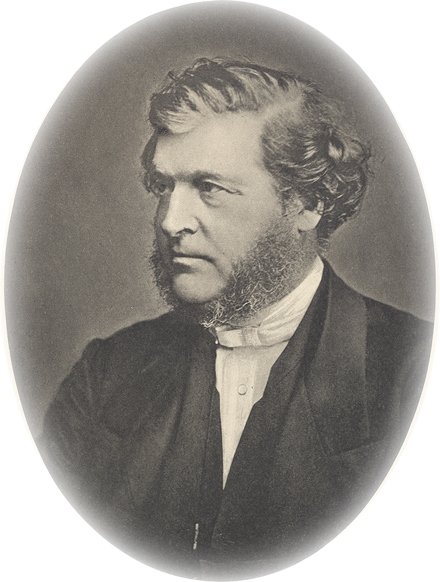
No, Mr. Butler. It is simply a lack of faith that leads to men compromising with naturalistic and unbelieving science. Otherwise we would not have examples of leading Dispensationalists who committed the same acts of compromise. None other than C.I. Scofield (see picture) in his far-famed Reference Bible taught the Gap Theory, which is a method for reconciling Genesis with long ages. G.H. Pember, in Earth's Earliest Ages advocated the same theory, and he too was a Dispensationalist. Indeed, many of the early Dispensationalist writers held to some version of the Gap theory. One website cites J.N. Darby, Sir Robert Anderson and Lewis Sperry Chafer "all major pioneers in the dispensational movement" as proponents of this theory. Note that this website is itself dispensationalist, and in favour of the Gap theory. We warn our readers that the theology here is NOT sound. Dr. Arthur Rendle-Short, a surgeon and a preacher among the English Open Brethren in the mid-twentieth century (and therefore by definition a Dispensationalist), actually held to a form of theistic evolution (see J. Rendle-Short: Green Eye of the Storm [Edinburgh, Banner of Truth]). Darby, Scofield, Chafer... it's practically a hall of fame for leading Dispensationalists. These are the men who developed the system, and they all taught versions of the Gap Theory! There must be something about Dispensationalism that makes its teachers tend towards that particular compromise... No, except that it was developed during a period when many Christians thought that the conclusions of naturalistic science were unassailable, and therefore they had to develop some method to accommodate long ages with the Biblical creation account. That is why the non-dispensational Thomas Chalmers also taught the Gap Theory. The real cause is something other than the Dispensational or non-dispensational theologies of these men.
Mr. Butler, we fear, is gulity of the fallacy of post hoc, propter hoc (after it, so because of it). The truth is more complicated, as is all too often the case with nice easy arguments.
Simon Padbury's 2007 James Begg Society lecture 'Creationism and the Reformed Faith' is an excellent treatment of the subject historically.
We reserve our remarks about Dispensationalist use of the term 'allegorizing' for a future date.
Tuesday, July 8, 2008
The Archbishop and Yoda.
Dr. John Sentamu, Archbishop of York, further evidenced the state of the Church of England by, in an address dealing with knife crime and a perception of increasing violence among young people in Britain's inner cities, quoting not the Bible but the Star Wars films:
We are NOT saying that Dr. Sentamu does not have the right to watch Star Wars in the privacy of his own home, or at the Cinema, or in any other location where it's legal. Rather we are saying that if all the Church of England has to say in the face of a society slipping into anarchy is quotations from popular entertainment, it's doomed. If all the Church, any Church, can do is parrot the culture, even if it is the better part of the culture, it's doomed. Without a 'thus saith the Lord', the Church is doomed to irrelevance. Yet the crowning irony is that the very reason that we have Archbishops quoting Star Wars in public pronouncements and pastors preaching sermon series' on Spider-Man is that they are attempting to be 'relevant'!
And what are they preaching? What is the message of Yoda and Spider-Man? It is simply morality. Now we have no problem with morality in its right place, nor with Moral teaching. But the Church does not exist for the purpose of imparting moral teaching. No, our motto is 'But we preach Christ crucified.' The Gospel is not a way to live a better life, it is not 'do this and live', it is this: it is Christ crucified for sinners, it is the Son of God, the Lord of Glory, hung upon a cross, suffering and dying in the place of perishing sinners. It is a declaration that we are not in need of a mere renovation, but 'ye must be born again'. The problem is not that men are not living up to their full potential, it is that we are all sinners, hateful and hating one another, and that were it not for God's withholding hand, we should make this world a hell, and go from it into another hell of eternal torment. Yet 'This is a true saying and worthy of all acceptation, that Christ Jesus came into the world to save sinners, of whom I am chief.' That 'God so loved the world', not a world of men who fell into occasional mistakes, but a world of evil, rebellious and hell-deserving sinners who did not love God, but hated Him. 'That He gave His only-begotten Son', gave Him up to suffering and to death, 'that whosoever believeth in Him', EVERY ONE who believes in Him, 'might not perish' everlastingly, 'but have everlasting life.' Unless we are preaching that, we are truly irrelevant.
But what does the modern Church preach? all too often morality. Brothers, if a Church only preaches morality, it may claim to be evangelical, but it looks just like a liberal church. We have some experience of liberal Churches - we were brought up in one. Not one of these mad liberal churches where all manner of sin is approved, but an old-fashioned liberal church where the pulpit sounded morality. Christian morality, the morality of the 1950s. And what does moral preaching produce? It produces on the one hand pharisees and on the other those who, disgusted, cast off the heavy yoke of the Law. The Law CANNOT change lives. It has no power, it can only condemn. But the Gospel is 'the power of God unto salvation'. What we need is not Archbishops spouting pop-spirituality, we need faithful men of God to PREACH THE GOSPEL!!!
Oh may we give God no rest as we cry out for His mercy.
"Fear leads to anger. Anger leads to hate. Hate leads to the dark side."This sentiment may be true as far as it goes, it may be noble, but quite simply, anybody could have said that. The Church's place is NOT to quote nuggets of pop-spirituality from the movies in answer to the problems of the world. Anyone can do that. And should anyone think that this is an isolated case, it isn't, he's done it before. Read this.
We are NOT saying that Dr. Sentamu does not have the right to watch Star Wars in the privacy of his own home, or at the Cinema, or in any other location where it's legal. Rather we are saying that if all the Church of England has to say in the face of a society slipping into anarchy is quotations from popular entertainment, it's doomed. If all the Church, any Church, can do is parrot the culture, even if it is the better part of the culture, it's doomed. Without a 'thus saith the Lord', the Church is doomed to irrelevance. Yet the crowning irony is that the very reason that we have Archbishops quoting Star Wars in public pronouncements and pastors preaching sermon series' on Spider-Man is that they are attempting to be 'relevant'!
And what are they preaching? What is the message of Yoda and Spider-Man? It is simply morality. Now we have no problem with morality in its right place, nor with Moral teaching. But the Church does not exist for the purpose of imparting moral teaching. No, our motto is 'But we preach Christ crucified.' The Gospel is not a way to live a better life, it is not 'do this and live', it is this: it is Christ crucified for sinners, it is the Son of God, the Lord of Glory, hung upon a cross, suffering and dying in the place of perishing sinners. It is a declaration that we are not in need of a mere renovation, but 'ye must be born again'. The problem is not that men are not living up to their full potential, it is that we are all sinners, hateful and hating one another, and that were it not for God's withholding hand, we should make this world a hell, and go from it into another hell of eternal torment. Yet 'This is a true saying and worthy of all acceptation, that Christ Jesus came into the world to save sinners, of whom I am chief.' That 'God so loved the world', not a world of men who fell into occasional mistakes, but a world of evil, rebellious and hell-deserving sinners who did not love God, but hated Him. 'That He gave His only-begotten Son', gave Him up to suffering and to death, 'that whosoever believeth in Him', EVERY ONE who believes in Him, 'might not perish' everlastingly, 'but have everlasting life.' Unless we are preaching that, we are truly irrelevant.
But what does the modern Church preach? all too often morality. Brothers, if a Church only preaches morality, it may claim to be evangelical, but it looks just like a liberal church. We have some experience of liberal Churches - we were brought up in one. Not one of these mad liberal churches where all manner of sin is approved, but an old-fashioned liberal church where the pulpit sounded morality. Christian morality, the morality of the 1950s. And what does moral preaching produce? It produces on the one hand pharisees and on the other those who, disgusted, cast off the heavy yoke of the Law. The Law CANNOT change lives. It has no power, it can only condemn. But the Gospel is 'the power of God unto salvation'. What we need is not Archbishops spouting pop-spirituality, we need faithful men of God to PREACH THE GOSPEL!!!
Oh may we give God no rest as we cry out for His mercy.
Subscribe to:
Posts (Atom)