Christianity is an historical religion. It is based on historical facts and historical events. Our whole salvation is dependent upon an event that happened, not in the realm of myth, or in Kant's Noumenal realm, or Plato's realm of Ideals, but in this real world, in real history. The death and resurrection of Jesus of Nazareth are events that took place in history, just like the assassination of Julius Caesar and the Second World War. If they are not, then Christianity is a meaningless fable - but of course they are historical events.
Thus, as Christians, it is incumbent upon us to know history. Not only that, but to know it as history. What do I mean? I mean that we must recognise that historical events take place within a matrix of history. We have probably all seen those Medieval images of events in the Bible in which the figures are dressed in Medieval clothing - the guards at the tomb of Christ in Medieval armour, and the tomb as a Medieval tomb, not a rock-cut tomb. This is anachronism, treating the past as if it were the present. While few of us today, at least in Protestant circles, would be guilty of such gross anachronism as to imagine the people of the Bible as wearing modern clothing, we all too often fall into the trap of reading non-Biblical writers of the past as if they lived today. An egregious example of this would be the Fundamentalist [see Extended Note for American Readers] who read Martin Luther and condemned him as not really converted because he retained so much of Rome. What the man had forgotten was Luther's sitz im laben, his situation in life, in Europe coming out of centuries of domination by the Roman Church. The question to ask was not so much how far Luther was from me, but how far he was from Rome! To give another example, John Calvin supported the punishment of heresy by the state. To modern ears that sounds terrible, and indeed if any modern Christian leader were to promote that (without first cloaking it in plausible-sounding language, of course), we would be rightly horrified. But we must put Calvin in his historical context, where just about everybody believed that heresy was a crime that threatened the nation as well as the Church. And so I might go on, pleading that we understand people in history.
Christians also ought to know the history of the period between the end of the Book of Acts and the present day, including the period from AD 100 to the 16th century. And for this period we ought not to rely on works written more than a century ago. I have nothing against Mosheim (I have a copy), but a great deal against the 'trail of blood' hypothesis, which is in fact nothing more than a bad Baptist copy of the theory of Apostolic Succession, of which Wesley said so truly that it was a fable no man can prove. Historical books must not be written in order to conform to a theory, but to conform to the realities of history. I do not care what the theory is, if it is false to the facts of history, it must be discarded.
Nor can we unchurch everyone who disagrees with us, tempting though it may be. The Church Fathers are odd. Some of them, like Origen, are really odd (and yes, that is the verdict of history on Origen). But to say "Church Fathers! Catholics! Evil!" and write them all off is just overly simplistic. It is a dream that there was a 'golden age' in the early Church, say the first two centuries, in which everyone understood the Bible perfectly, and then the whole period since was a period of decline. Anyone who thinks this needs to read the Epistles, and not just as a set of inspirational sayings. Read about the Church in Corinth, what they were doing. Then ask yourself this: If a man really understands Christianity, would he be doing that with his stepmother? And if a Church was really in the golden age, would they all be congratulating him on it?
No, the whole history of the Church has been, in general, one of growing into the Bible. Only a fool would think that there have not been periods of decline, periods in which true religion has been hard to find, but the Church as it is today is far more impressive than the Church of the second century. Of course, in each period of the Church's history there are aberrations, false teachings that depart from the Bible, such as Gnosticism, which detatches Christianity from history, or liberalism, which denies huge chunks of the Bible to be true. Thus the Bible itself acts as a control. Jesus said "I will build my Church, and the gates of hell shall not prevail against it." It's seemed a close-run thing at times, and it seems so right now in places, but we have to remember that Our Lord knows what He is doing.
In biography it is usually important to read books that do not just praise the subject, but mention the fact he was a sinner. Because he was, take it from me. It does no good to present Christian heroes as well-nigh perfect, editing out C.I. Scofield's neglect of his children from his first marriage, Billy Sunday's financial issues, and A.W. Tozer's relative neglect of his family. To do so makes them into Protestant versions of Roman Catholic saints, something no true Protestant should welcome! Biographies are the life story of an individual, and readers ought to be aware that the biographer may not have researched the lives of other individuals whose lives intersect with those of their subject as well, and so incidental references to persons may not be completely accurate.
Finally, we have nothing to fear from historical research, it's the abuse of that research that causes problems! Do not assume that just because you read something in a book it must be true. The claims Dan Brown retails in The Da Vinci Code are found in books. But this goes for claims that make you feel good as well! As I said, especially if the book in more than a century old, or is written using secondary sources over a century old. As a rule, if a book relies entirely on secondary sources, and those are century- old sources, then it's probably not worth reading. Academic historians are not all evil proponents of unbelief (my Father's one. An academic historian, I mean). Wylie may be fine for the outlines of history, but we have discovered more evidence since he passed away.
[Extended Note: I am an Englishman, and the word 'fundamentalist' in England does not carry a generally positive meaning. It has never really caught on as a self-designation for English Christians, and is usually used in a negative way. I use the word negatively myself to refer to an unreflective form of religion that is historically ignorant and culturally naive. The fundamentalist is typically sectarian in his view of history, treating his sect as the true Church, and anachronistic, applying the tenets and requirements of his sect to all he comes into contact with. He makes the tenets of his sect, not the historic faith, the test of all, even (indeed, especially) if the sect is of extremely recent birth]
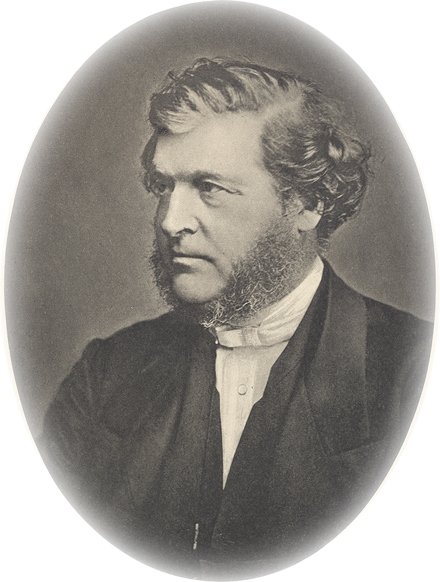
Picture: T.M. Lindsay, a good Church historian
 The gay marriage debate is one of the most acrimonious and unpleasant things around at the moment. One of the more amusing (to those with a warped sense of humour) aspects of it is the number of times that secularists say that religious arguments should not be brought to the table or given any weight. My response to this is, "why? I know that your argument is an excellent dodge to get your point of view passed without real debate or discussion, but why?"