Showing posts with label morality. Show all posts

Tuesday, September 28, 2010

Very Disappointing

What is? This is. Now, I am just a pastor in a small Church in a small city in the Midlands. They call it 'The Church next to Tesco', and Tesco is due to move this year. But then, perhaps I'm representing all small-church pastors, especially those with a small mosque round the corner, where the second largest religious group (though by quite some way) is Islam (3.2% at the last census).


As Islam becomes more visible in the UK, and minarets start to join the spires and church towers in our cities, pastors and other Christians look around for books and resources to help us to understand this newcomer religion (the oldest mosque in Britain is only about 100 years old) in our land. The tragic thing is that some people will do what I did a few years ago, and buy Unveiling Islam by the Caner brothers on the basis that these two men are former devout Muslims. The trouble is, they're not! Ergun has pretended to speak Arabic, but has in fact been speaking gibberish. They pretended to be experts in Islam, in fact they are not. The use of references to 'Hadith such-and-such' should prove that - as I now know, there are no fewer than 6 authoritative Hadith collections, all different!


The facts are known now. But Ergun Caner is, according to this article, quite unrepentant. To be honest, it saddens me. First of all, and most importantly, because Dr. Caner shows his own condition to be bad. He has not repented of bearing false witness, and therefore shows that he is in a morally precarious position. He needs our prayers. Secondly, it saddens me because it affects our witness to Muslims. They already believe a lot of nonsense about us (my fellow ministers and I in this city have to reply to the assertion that we are paid by the government!), the last thing we need is Ergun Caner making things up about them!


This man is not an expert on Islam, he pretends to be. Avoid him, and tell your Muslim neighbours that he does not speak for you - he certainly does not speak for me!
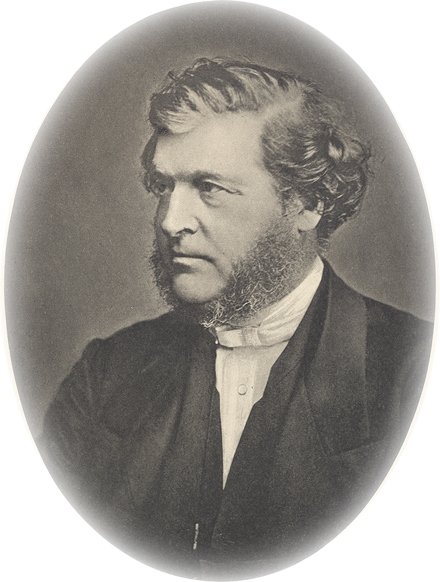
[Additional note: I am reading right now the Autobiography of R.F. Horton, a noted Congregational pastor in London about 100 years ago. In it he refers to a difficult period he had when a cousin of his decided to become a Roman Catholic, and repeats, a statement this young man made when confronted with an example of deceit by a man who was in the process of becoming an RC. The cousin said, "But you may deceive in the interest of Religion." Now, I hope that today no Roman Catholics would agree with that statement. "Love hopeth all things". In 1917 Horton could count on all Protestants to agree with him. But by approving Ergun Caner, many Evangelicals have practically affirmed the sentiment of Horton's cousin. This is why I have been one with Dr. White from the beginning on this controversy, unless I condemn unequivocally the lies of Dr, Caner, I cannot hold up my head as an Evangelical. Those men like Norman Geisler who continue to give Caner a platform and credibility are bringing disgrace upon Evangelicalism. Had I been a Roman Catholic in the room with Horton and his cousin, I would have hung my head in shame at the statement. Now I say this - you may not deceive in the interest of religion. And if any man does so, let him beware of falling into the condemnation of the father of lies.]
Illustration: The former Bedford Chapel in Shelton, now a mosque

Saturday, July 17, 2010

Looking for Answers in the Wrong Place

One of the most amazingly daft ideas I have ever come across is that somehow natural science can decide for us questions of morality. This is foolish, because natural science (I possess a batchelor's degree in environmental science from the University of Liverpool, so I think I know something about natural science) can only describe what is. Morality, however, is a matter of how human beings ought to behave, and that cannot be the same as how human beings do behave. Why? Because we are all agreed that there are boundaries to acceptable human behaviour. It is an unarguable fact that murder, pederasty, incest, rape and torture happen. Yet there are (thankfully) very few people who think that they are fine, good things - and quite right too!

So why is it that there are attempts to argue that we should accept homosexual behaviour because it is 'natural'? If natural science tells us that some people are disposed to homosexual behaviour, while others are not, then does it follow it's good? No! Moral questions are outside of the realm of natural science - and rightly so. Natural science tells us what is, it cannot tell us what is good.

Which is why you will not see our lawmakers going to scientists to learn ethics.

Friday, May 21, 2010

How NOT to Answer those you disagree with

It amazes me how many people in our post-modern culture take everything personally. Instead of saying "I disagree with you," or "you're wrong", the first answer some give is along the lines of, "You're being mean," or "You're lying!"

And this seems to crop up even in conservative Christian circles. James White has posted an e-mail received from a Caner defender that is sadly all too typical of a certain sort of person. Instead of replying to White's arguments, he attacks White personally. The amazing thing is that in the course of this diatribe he describes White as a "fraud". Now, the reason I am amazed by this is simple. The Caner Controversy is over the allegations that Ergun Caner is a fraud by some measure, as he has fabricated a back-story for himself that does not fit the facts. Yet instead of answering the charges, Caner has been silent, and those who are "defending" him, having no real answers (since Caner has not deigned to give us any), are therefore left with the temptation to resort to insults.

This is very much what "the Puritan" has done with my criticisms of Gail Riplinger. Instead of showing where I am wrong, and how Mrs. Riplinger's flagrant dishonesty in abusing the words of a dead man is really justified, he accuses me of "defending the devil", as if the worst sin in the world was daring to defend Westcott from flagrant lies. Gail Riplinger herself prefers to abuse her critics rather than engage with them. In her latest rant she suggests that the only reason anyone disagrees with her is pride - not the fact that her research is piecemeal and shoddy. To say that C.J. Vaughan sat in the House of Lords as "First Baron of the Realm" is incredible, and I am literally at a loss to think where she could have got such a ludicrous idea!

Both Mr. Daliessio and "the Puritan" have in common is this - they are attached to a leader in such a way that they take any criticism of that person very personally. Rather than attempting to show that the criticism is wrong, they attack the critic. Yet in both cases they do so with a double-standard. "The Puritan" criticises me for noting details in Riplinger's books, yet Riplinger herself majors on the details in the books of others! (What is more, how on earth can you criticize poor research without giving examples of individual problems?). Mr. Daliessio calls James White a "Fraud", when Ergun Caner is a documented fraud.

Neither actually helps. I have no anger towards Mrs. Riplinger, or Ergun Caner. They have both done things they should not have done, both have lied to the people of God in order to sell books and make a name for themselves. But what they need is prayer. They must come to repentance for what they have done. However, the manner of bringing men to repentance is not an easy one, and may require excommunication, not in a censorious spirit, but "in a Spirit of gentleness."

Wednesday, March 10, 2010

Where does Morality come from?

[Note: This is an expansion of some points in my previous post]

Morality is a fundamental necessity in any society. Everyone has some sort of moral code, however fractured or distorted it might be. But where does it come from? There are, as I have said, three basic options. Morality is either:

1. Private: I decide for myself what is good and bad, recognising that other people construct their own moralities. This is a postmodern option, as in postmodernism absolute truth is unknowable, and therefore nothing can be absolutely true or false, even in the moral sphere. Yet in practice this would break down completely, there can be no basis for making moral judgements of another's actions that is outside of themselves. I once met a man whose sole basis for making moral judgements was sincerity. "To your own self be true", as Ibsen puts it in Peer Gynt (tellingly, the difference between the 'good' philosophy in that play, and the evil of the trolls is concern for others, the troll version is "To your own self be true - and to hell with the rest of the world!"). This man thus concluded that Hitler was morally good, because as far as he could tell, Hitler was always sincere! While it may have some attractions in the abstract, privatised morality is horrible when considered in the concrete. It may sound good when proposed by a French philosopher, but loses its charm when used to defend mass-murder.

2. Social: Morality is a result of society, and society is the final arbiter. This is probably the position held by most people today. It fits well with an evoutionary worldview, allowing us to look down on previous ages as holding to a "less developed morality." It has the advantage over the purely personal view of morality that it governs whole societies, and thus can be the basis of making laws. But it is not without its own problems. Chief among them is that there must be a definition of "society" for it to work. Who is "Society"? The government? Then Anti-Semitism was moral in Nazi Germany. 51% of the population? This is the reason why modern goverments get so bogged down when they try to change the law on certain issues - because there is no working definition of society that they can use. And, in the modern world, with rapid communications, where is the boundary of society? Is it to be found at the national borders or not?

Another pitfall of a social or societal definition of morality is that it logically robs men of the ability to make moral criticisms of society. If enough people think slavery is right, then it is right, and the man who criticises it, he is wrong. Now, very few people actually hold this position consistently - but that is rather my point, that examined carefully a purely societal view of morality breaks down. According to this system, what is right and wrong changes according to time and place.

3. Empirical: This is an attempt to construct a "scientific" morality, based on observation. Natural science, by its very nature, can only observe what is. Here is the pitfall, logically the result of an empirical morality is that "Whatever is, is right." It is in fact subject to the same pitfall as Societal morality, that it robs men of the ability to criticise what is happening, and lacks the control of public outrage that societal morality has. An empirical morality says, "Africans enslave their fellows, therefore we can buy those enslaved African from the Africans who enslaved them, because the system of slavery is." Logically considered an empirical morality is impossible.

4. Transcendental: Morality is determined by an authority outside of man, the creator God, and is true for all people in all places and at all times. Thus if an individual or group depart from this morality, they can be criticised and called back to the transcendent and absolute standard. The standard is not man, man is subject to it. This position is both logically coherent and workable. It has been the basis for law for most of human history.

Of course, we are then left with the question as to which of the competing truth claims of various religions is true. On that matter I am confident that, weighed fairly, the Bible will be proven to be the truth.