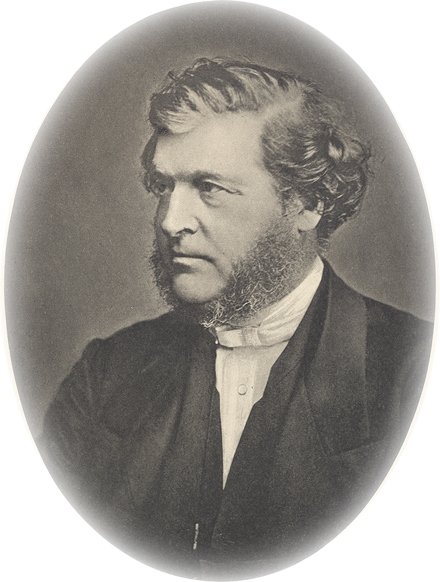
A while ago I referred to Principal Rainy's words on the dangers of critics seeing what is not there in the Bible. I have now got my copy of the relevant book back, and give the quotation:
"But, then, on the other hand, it is to be remembered that there is an eagerness in the critic's nature; he would always be seeing something, especially something that common people cannot see, or at any rate have not seen. Therefore, unless he is exceptionally self-restraining, he may persuade himself that he is seeing something remarkable, when all the time he is deluding himself with mere arbitrary combinations, And this too can be illustrated. You have sat before a fire, and seen a face in the glowing embers. Now that face, though it might be worth looking at for its lifelike suggestiveness, was nothing real; not a face objectively and actually presented to you. Move your head a little way, and the likeness vanishes. It was all in your point of view, aided by your fancy. In itself it was a meaningless, fortuitous collocation of pieces of glowing cinders, which at a certain angle yielded a deceptive perspective to your eye. So it is sometimes with the critics. I should think this befalls them all, even the best of them...
"Therefore the critic must make good to the public, I mean the public which studies such things, the method of his researches; he must make them see it, and establish it by evidence."
Robert Rainy: The Bible and Criticism (London, Hodder and Stoughton, 1878), Pp. 103-4
This applies to Gail Riplinger's seeing the New Age movement in modern Bible versions. I assert that as regards the NASB, the NKJV, the ESV and the NIV, this is merely a "a meaningless, fortuitous collocation of pieces of glowing cinders", nothing more. Just as the Higher Critics have seen in the "glowing cinders" of the five Books of Moses the phantom persons of JEDP, four writers who never existed, so by the same subjective method, certain modern fundamentalists have seen all sorts of evil in words that are not at all evil in themselves, good words like 'the Christ', and such like.
Oh, and I extend the "meaningless, fortuitous collocation of pieces of glowing cinders" to the supposed numerical codes proposed by some.
And I thought of the passage before I read this. Which all goes to show you can't caricature some of these people. If you go to the blog linked to from Dr. White's, you'll see the whole 'English Preservationist' thing referred to in the comments. I am beginning to think this is a straw man set up by the King James Only crowd to say "well, we don't hold this." No, you don't, whoever said that you did?
"But, then, on the other hand, it is to be remembered that there is an eagerness in the critic's nature; he would always be seeing something, especially something that common people cannot see, or at any rate have not seen. Therefore, unless he is exceptionally self-restraining, he may persuade himself that he is seeing something remarkable, when all the time he is deluding himself with mere arbitrary combinations, And this too can be illustrated. You have sat before a fire, and seen a face in the glowing embers. Now that face, though it might be worth looking at for its lifelike suggestiveness, was nothing real; not a face objectively and actually presented to you. Move your head a little way, and the likeness vanishes. It was all in your point of view, aided by your fancy. In itself it was a meaningless, fortuitous collocation of pieces of glowing cinders, which at a certain angle yielded a deceptive perspective to your eye. So it is sometimes with the critics. I should think this befalls them all, even the best of them...
"Therefore the critic must make good to the public, I mean the public which studies such things, the method of his researches; he must make them see it, and establish it by evidence."
Robert Rainy: The Bible and Criticism (London, Hodder and Stoughton, 1878), Pp. 103-4
This applies to Gail Riplinger's seeing the New Age movement in modern Bible versions. I assert that as regards the NASB, the NKJV, the ESV and the NIV, this is merely a "a meaningless, fortuitous collocation of pieces of glowing cinders", nothing more. Just as the Higher Critics have seen in the "glowing cinders" of the five Books of Moses the phantom persons of JEDP, four writers who never existed, so by the same subjective method, certain modern fundamentalists have seen all sorts of evil in words that are not at all evil in themselves, good words like 'the Christ', and such like.
Oh, and I extend the "meaningless, fortuitous collocation of pieces of glowing cinders" to the supposed numerical codes proposed by some.
And I thought of the passage before I read this. Which all goes to show you can't caricature some of these people. If you go to the blog linked to from Dr. White's, you'll see the whole 'English Preservationist' thing referred to in the comments. I am beginning to think this is a straw man set up by the King James Only crowd to say "well, we don't hold this." No, you don't, whoever said that you did?
Picture from James White, of course. I really had no intention of linking to it, but the Rainy quote is just so apposite!