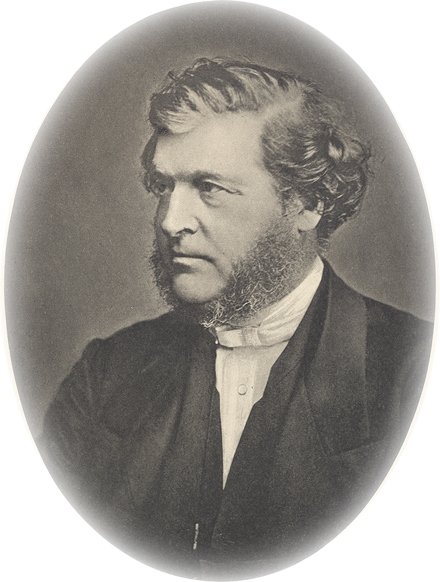
In honour of April Fool's Day, I feature a link to one of the sillier atheist claims about Jesus.
The first problem with this article is the tone - it is obviously addressed to fellow atheists, not to Christians. Becaue of this, it stretches things, and engages in nit-picking fault-finding. Every single claim here is secondhand, and has been refuted dozens of times. Undoubtedly the silliest bit is the claim about angels. Biblically, angels are presented as spiritual beings that are in consequence able to adopt a variety of physical shapes, often indistinguishable from humans (such as the angels in Sodom). No-where are they presented as winged humanoids. So, while we may have proven that the X-Man called Angel is unable to fly (which I hope we all realised is just fantasy, this proves nothing but ignorance on the part of the atheist writer.
The scepticism displayed about the Gospels is in radical contrast to the attitude displayed by historian Martin Goodman in his 2007 book Rome and Jerusalem. There Goodman treats the New Testament as a reliable source on a par with Josephus.
A word to the wise: Mockery is not the same as argument. You can assert all you like that you find the New Testament unconvincing, that does not make it unreliable!
As for the oft-repeated claim about paralells between Jesus and other ancient religious figures, one must actually demonstrate them, not just say they exist. Those of us who heard Dan Barker's debate with James White will recall how laughable some of them were when actually stated (most notably the "getting into a boat and sitting down" paralell).
"The fool has said in his heart, 'There is no God.'"
Showing posts with label Nonsense. Show all posts
Showing posts with label Nonsense. Show all posts
Thursday, April 1, 2010

Tuesday, December 22, 2009
Total and Complete Insanity
Just before Chritmas is not the time I want to write this, but I ought to. I have recently become aware of claims that there are "Counterfeit King James" Bibles in circulation. What is the problem:
"Here are some of the changes I located: Asswaged has been changed to assuaged. Basons has been changed to basins. Chesnut has been changed to chestnut. Cloke has been changed to cloak. Enquire has been changed to inquire. Further has been changed to farther. Jubile has been changed to jubilee. Intreat has been changed to entreat. Morter has been changed to mortar. Ought has been changed to aught, and rereward has been changed to rearward. "
In other words, some spellings have been updated. Now, what is most utterly crazy about it is that the vast majority of the differences between the 1611 King James and the 1769 Blayney revision of the text are just like these examples, they are spelling changes, updating Elizabethan spellings with 18th century ones. Thus in 1611 Noah built an Arke, while in the 18th century revision he built an ark. Pass was often spelled Passe, and Days was spelled Dayes. Son was spelled Sonne, and Year was Yeere. Believe was spelled Beleeve, and Truth Trueth. In terms of names, Jerusalem in the 1611 AV is Hierusalem, and Pharisee is Pharise. Now, unless I am very much mistaken, the same thought process that produced the hysterical article about "Counterfeit King James Bibles" because 18th century spelling had been updates to 21st century spelling, would also logically apply to the spelling changes in the 18th century. In other words, if spelling is so vital that it cannot be updated. I quote again:
"You see I believe God wrote the Bible through sinful men. I believe God copied the Bible through sinful men. I believe God translated the Bible through sinful men, and I believe God edited (purified) the Bible through sinful men. So therefore I believe God gave us the exact words in the exact order He wanted us to have them in. If that’s the case then He spelled the words exactly the way He wanted to spell them, and gave them to us in a pure language, and that language is the standard text of the King James Bible. "
Again, if spelling is so important that God inspired the spelling, then any changes to the spelling of the King James Bible are wrong, and always have been. Yet the fact of the matter is that the AV that our author holds to be the standard departs in literally thousands of places from the 1611 original (there are multiple spelling changes on literally every page). He is therefore on the horns of a dilemma. Either the 18th century revision was wrong, or the original translators were.
Because he does not allow that this insistence on correct spelling is a relatively modern phenomenon in the English language. My own surname is spelled in at least a dozen different ways in the parish records of my forefathers, and John Wycliffe spelled his own name in many different ways! What is more, the spelling of a word does not affect its meaning. Whether Peter's confession was "Thou art Christ the sonne of the living God" (1611), or "Thou art the Christ, the Son of the living God" (20th century Oxford King James), the meaning is the same. Surely this is taking King James Only silliness to new heights of ridiculousness!
Oh, and I note that the modern King James has the definite article before "Christ", making it New Age accoding to Gail Riplinger, as opposed to the 1611, which has just "Christ".
Note: I checked, the 20th century Oxford King James I am using for comparison does not have an updated text. Well, unless it's compared with the 1611, of course!
"Here are some of the changes I located: Asswaged has been changed to assuaged. Basons has been changed to basins. Chesnut has been changed to chestnut. Cloke has been changed to cloak. Enquire has been changed to inquire. Further has been changed to farther. Jubile has been changed to jubilee. Intreat has been changed to entreat. Morter has been changed to mortar. Ought has been changed to aught, and rereward has been changed to rearward. "
In other words, some spellings have been updated. Now, what is most utterly crazy about it is that the vast majority of the differences between the 1611 King James and the 1769 Blayney revision of the text are just like these examples, they are spelling changes, updating Elizabethan spellings with 18th century ones. Thus in 1611 Noah built an Arke, while in the 18th century revision he built an ark. Pass was often spelled Passe, and Days was spelled Dayes. Son was spelled Sonne, and Year was Yeere. Believe was spelled Beleeve, and Truth Trueth. In terms of names, Jerusalem in the 1611 AV is Hierusalem, and Pharisee is Pharise. Now, unless I am very much mistaken, the same thought process that produced the hysterical article about "Counterfeit King James Bibles" because 18th century spelling had been updates to 21st century spelling, would also logically apply to the spelling changes in the 18th century. In other words, if spelling is so vital that it cannot be updated. I quote again:
"You see I believe God wrote the Bible through sinful men. I believe God copied the Bible through sinful men. I believe God translated the Bible through sinful men, and I believe God edited (purified) the Bible through sinful men. So therefore I believe God gave us the exact words in the exact order He wanted us to have them in. If that’s the case then He spelled the words exactly the way He wanted to spell them, and gave them to us in a pure language, and that language is the standard text of the King James Bible. "
Again, if spelling is so important that God inspired the spelling, then any changes to the spelling of the King James Bible are wrong, and always have been. Yet the fact of the matter is that the AV that our author holds to be the standard departs in literally thousands of places from the 1611 original (there are multiple spelling changes on literally every page). He is therefore on the horns of a dilemma. Either the 18th century revision was wrong, or the original translators were.
Because he does not allow that this insistence on correct spelling is a relatively modern phenomenon in the English language. My own surname is spelled in at least a dozen different ways in the parish records of my forefathers, and John Wycliffe spelled his own name in many different ways! What is more, the spelling of a word does not affect its meaning. Whether Peter's confession was "Thou art Christ the sonne of the living God" (1611), or "Thou art the Christ, the Son of the living God" (20th century Oxford King James), the meaning is the same. Surely this is taking King James Only silliness to new heights of ridiculousness!
Oh, and I note that the modern King James has the definite article before "Christ", making it New Age accoding to Gail Riplinger, as opposed to the 1611, which has just "Christ".
Note: I checked, the 20th century Oxford King James I am using for comparison does not have an updated text. Well, unless it's compared with the 1611, of course!
Friday, December 4, 2009
Conspiracy! Two Babylons Revisited
Presenting a second post on conspiracy theories:
Alexander Hislop's book The Two Babylons is sadly still regarded by many as a work of outstanding scholarship and a great help in the controversy with Rome. Ralph Woodrow, among others, has shown that it is neither. The great problem with Hislop's approach is that it is arbitrary and can be used to prove anything (and therefore it actually proves nothing).
Put simply, the Hislop Hypothesis is that the worship of the Roman Catholic Church today is practically identical to that of the ancient Babylonian Mystery Religion, and that the Roman Catholic Church is nothing more than paganism Christianized.
The greatest problem with Hislop's thesis is that it does not fit the facts, and therefore the facts have to be massaged to fit it. All must be placed on Hislop's Procrustean bed and forced to fit! The second problem is that the method, if applied consistently, ends with the claims of Dan Brown that there is nothing original in Christianity! Why? Because similarity (even a similarity that, on closer examination, proves to be nothing of the kind) is enough for Hislop to establish a link. The Babylonians had a celibate priesthood, so does Rome! No, the Babylonians had priests who were Eunuchs. There is a slight difference here! Where this sort of thing leads those who do not hold on to Hislop's relatively orthodox Presbyterianism is to make like Dan Barker in the now-notorious debate with James White, claiming that Mark must have borrowed from Homer because in Homer's Oddysey they got into a boat and sat down, and in Mark's Gospel they got into a boat and sat down. Really? You know what I did last time I got into a boat? I sat down.
Let me repeat, that two people do something similar does not prove a connection. The Medieval dualist sect called the Bogomils believed that Jesus and Satan were brothers, sone of the most high God, but Satan disobeyed and became evil, while Jesus was obedient. The Mormons believe essentially the same thing. Does this prove that Mormonism is nothing other than a continuation of Bogomilism? Of course not! As Yuri Stoyanov has shown in his book The Other God, the dualist heresy has resurfaced time and again through history with no apparent connections to previous dualist groups. Thus similarity, even of belief, cannot prove a connection. How much less can a mere similarity of form? And that is even if one exists!
And another thing, there was no "Babylonian Mystery Religion". The Mystery religions (plural!) originated in many areas, Greece, Egypt, Phrygia, Syria and Persia (see Romanld H. Nash: The Gospel and the Greeks [P. & R., 2003]. Nash is undoing some of the damage caused by Hislop's recklessness). None of the chief mystery religions originated in Babylon, and the Persian mystery was that of Mithras, not a worship of Nimrod. Hislop conflates dozens of gods from a score of nations to produce his own mythic Nimrod. In his zeal against Rome he forgot the first rule of controversy - be fair. If you can pick and choose bits from all over antiquity to make your "Babylonian Mystery Religion," you can make it look like anything you want! Which of course fits very well if you want to make Rome look pagan.
Hislop was not a historian or a student of Babylonian culture, he was a parish minister with a bee in his bonnet about the Church of Rome who was not too particular what arguments he used against it. The main thing was that the arguments were against Rome!
To summarize. There are many faults with the Church of Rome, and these have beeen laid out in such books as Dr. James R. White's The Roman Catholic Controversy, Eric Svedsen's Evangelical Answers and McCarthy's The Gospel According to Rome. The objections are doctrinal, rooted in Rome's exaltation of the pope, her doctrine of justification and merits, and her undue exaltation of the Virgin Mary, to name just three points. None of these are derived from Babylon. It may fairly be argued that Romanism is "Christianity paganized", to paraphrase Thomas E. Peck, it cannot be argued that it is Paganism Christianized.
Christians ought not to read Hislop's book. As he was Free Church minister of Arbroath, I can only conclude that the book is the result of too many kippers! Joking aside, The Two Babylons will not prepare any Christian to answer the claims of Rome, and Rome has no doubt answers to it - such as the obvious one that it is chock-full of errors. Thus, if a person's opposition to Rome is built on a myth, they can easily be shaken from it. But, if it is based on facts, then it is going to be much more stable.
Alexander Hislop's book The Two Babylons is sadly still regarded by many as a work of outstanding scholarship and a great help in the controversy with Rome. Ralph Woodrow, among others, has shown that it is neither. The great problem with Hislop's approach is that it is arbitrary and can be used to prove anything (and therefore it actually proves nothing).
Put simply, the Hislop Hypothesis is that the worship of the Roman Catholic Church today is practically identical to that of the ancient Babylonian Mystery Religion, and that the Roman Catholic Church is nothing more than paganism Christianized.
The greatest problem with Hislop's thesis is that it does not fit the facts, and therefore the facts have to be massaged to fit it. All must be placed on Hislop's Procrustean bed and forced to fit! The second problem is that the method, if applied consistently, ends with the claims of Dan Brown that there is nothing original in Christianity! Why? Because similarity (even a similarity that, on closer examination, proves to be nothing of the kind) is enough for Hislop to establish a link. The Babylonians had a celibate priesthood, so does Rome! No, the Babylonians had priests who were Eunuchs. There is a slight difference here! Where this sort of thing leads those who do not hold on to Hislop's relatively orthodox Presbyterianism is to make like Dan Barker in the now-notorious debate with James White, claiming that Mark must have borrowed from Homer because in Homer's Oddysey they got into a boat and sat down, and in Mark's Gospel they got into a boat and sat down. Really? You know what I did last time I got into a boat? I sat down.
Let me repeat, that two people do something similar does not prove a connection. The Medieval dualist sect called the Bogomils believed that Jesus and Satan were brothers, sone of the most high God, but Satan disobeyed and became evil, while Jesus was obedient. The Mormons believe essentially the same thing. Does this prove that Mormonism is nothing other than a continuation of Bogomilism? Of course not! As Yuri Stoyanov has shown in his book The Other God, the dualist heresy has resurfaced time and again through history with no apparent connections to previous dualist groups. Thus similarity, even of belief, cannot prove a connection. How much less can a mere similarity of form? And that is even if one exists!
And another thing, there was no "Babylonian Mystery Religion". The Mystery religions (plural!) originated in many areas, Greece, Egypt, Phrygia, Syria and Persia (see Romanld H. Nash: The Gospel and the Greeks [P. & R., 2003]. Nash is undoing some of the damage caused by Hislop's recklessness). None of the chief mystery religions originated in Babylon, and the Persian mystery was that of Mithras, not a worship of Nimrod. Hislop conflates dozens of gods from a score of nations to produce his own mythic Nimrod. In his zeal against Rome he forgot the first rule of controversy - be fair. If you can pick and choose bits from all over antiquity to make your "Babylonian Mystery Religion," you can make it look like anything you want! Which of course fits very well if you want to make Rome look pagan.
Hislop was not a historian or a student of Babylonian culture, he was a parish minister with a bee in his bonnet about the Church of Rome who was not too particular what arguments he used against it. The main thing was that the arguments were against Rome!
To summarize. There are many faults with the Church of Rome, and these have beeen laid out in such books as Dr. James R. White's The Roman Catholic Controversy, Eric Svedsen's Evangelical Answers and McCarthy's The Gospel According to Rome. The objections are doctrinal, rooted in Rome's exaltation of the pope, her doctrine of justification and merits, and her undue exaltation of the Virgin Mary, to name just three points. None of these are derived from Babylon. It may fairly be argued that Romanism is "Christianity paganized", to paraphrase Thomas E. Peck, it cannot be argued that it is Paganism Christianized.
Christians ought not to read Hislop's book. As he was Free Church minister of Arbroath, I can only conclude that the book is the result of too many kippers! Joking aside, The Two Babylons will not prepare any Christian to answer the claims of Rome, and Rome has no doubt answers to it - such as the obvious one that it is chock-full of errors. Thus, if a person's opposition to Rome is built on a myth, they can easily be shaken from it. But, if it is based on facts, then it is going to be much more stable.
Wednesday, December 2, 2009
Conspiracy Theories
One blog I frequent is Screw Loose Change, a blog devoted to debunking 9/11 conspiracy theories. This is a secular blog, and particularly in the comments there can be some use of profanity. But what is fascinating about it is how the conspiracy theory is a sort of substitute religion. Instead of a benevolent deity in control, there is some sort of malevolent conspiracy. The identity of the conspiracy differs between theorists, but still, the common theme is a conspiracy. A conspiracy theory is a worldview, and the conspiracy theorist filters reality through the theory.
The trouble is, it is a false worldview. This is demonstrated by its inability to make sense of the world as it really is. To take an example, until this year it was practically gospel among the believers in 9/11 conspiracy theories that the men behind the conspiracy were George W. Bush and Dick Cheyney. They staged 9/11, as the theory went, to seize power in the United States. Now, since the US constitution only allows a man to hold office as president for two terms, obviously the 2008 election, when Bush would not be allowed to stand, was a crucial test for this theory. As the election approached, it became a widely-held opinion that Bush would set up another 9/11, call off the election and declare martial law. Of course that didn't happen. After the election, in which the Republicans lost, there was speculation that Obama would never become president, that Bush would impose martial law. Never happened.
And I have yet to find evidence that any of the people who were speculating that Bush was in reality some sort of evil dictator who anted to suspeced the constitution ever apologised or admitted they were wrong! In fact, they go right on using the language of "coup". It is possible for an elected government to perform a coup, but this would necessitate that Bush, with military aid, adopted extra-constitutional powers and took direct control of the courts and the legislature, which he did not. Nor is Bush in power any more, having surrendered his office according to the constitution. Thus the world-view is revealed to be false. None of which is to deny the possibility of governments conspiring to seize power (Hitler was democratically elected), but to say that there is no evidence that Bush sought to do so!
So what are the Conspiracy nuts saying? That it was all a secret power behind the government. But that secret power must have already been in place, and so did not need to seize power. The worldview fails completely.
Should Christians entertain such conspiracy theories? No. Do they? Yes! But they ought not to. To take another example, there are some Christians who promote the idea that Obama is a secret Muslim. In fact that makes no sense, because Obama not only promotes Islam, ne also promotes so-called gay marriage, which is an abomination to Islam. Now, a cospiracy theorist could say, "Bell, that just proves how devious he is," but what makes more sense is to say that Obama is a religious liberal. You see, 'Obama is a Muslim" might explain Obama being pro-Muslim, but it does not explain his support of same-sex marriage. That he is a religious liberal explains everything! I have heard a liberal minister in the URC (the UK body of that name) say that Christians ought to "Reverence Mohammed." Religious liberals also hold that cultural acceptance of homosexual behaviour should be mirrored by the Church. Thus Obama as a religious liberal makes more sense than Obama as a secret Muslim. It also explains why he was a member of a liberal church in Chicago!
And the fact that there is no vast conspiracy explains better why the government can be extraordinarily incompetent at times. Also why we still have free elections, and why Mr. Brown, unless he can do something amazing in the next few months, will be on the lecture circuit this time next year.
Of course, as Christians we do believe that there are evil powers moving behind the powers of this world, but we also believe that there are angelic forces fighting for us, and that finally all history is controlled, nit by human conspirators, or by Satan, but by God. And what I have said about political conspiracies also applies to the idea of the New Age conspiracy beloved of Gail Riplinger. Because I had to get her in somewhere!
The trouble is, it is a false worldview. This is demonstrated by its inability to make sense of the world as it really is. To take an example, until this year it was practically gospel among the believers in 9/11 conspiracy theories that the men behind the conspiracy were George W. Bush and Dick Cheyney. They staged 9/11, as the theory went, to seize power in the United States. Now, since the US constitution only allows a man to hold office as president for two terms, obviously the 2008 election, when Bush would not be allowed to stand, was a crucial test for this theory. As the election approached, it became a widely-held opinion that Bush would set up another 9/11, call off the election and declare martial law. Of course that didn't happen. After the election, in which the Republicans lost, there was speculation that Obama would never become president, that Bush would impose martial law. Never happened.
And I have yet to find evidence that any of the people who were speculating that Bush was in reality some sort of evil dictator who anted to suspeced the constitution ever apologised or admitted they were wrong! In fact, they go right on using the language of "coup". It is possible for an elected government to perform a coup, but this would necessitate that Bush, with military aid, adopted extra-constitutional powers and took direct control of the courts and the legislature, which he did not. Nor is Bush in power any more, having surrendered his office according to the constitution. Thus the world-view is revealed to be false. None of which is to deny the possibility of governments conspiring to seize power (Hitler was democratically elected), but to say that there is no evidence that Bush sought to do so!
So what are the Conspiracy nuts saying? That it was all a secret power behind the government. But that secret power must have already been in place, and so did not need to seize power. The worldview fails completely.
Should Christians entertain such conspiracy theories? No. Do they? Yes! But they ought not to. To take another example, there are some Christians who promote the idea that Obama is a secret Muslim. In fact that makes no sense, because Obama not only promotes Islam, ne also promotes so-called gay marriage, which is an abomination to Islam. Now, a cospiracy theorist could say, "Bell, that just proves how devious he is," but what makes more sense is to say that Obama is a religious liberal. You see, 'Obama is a Muslim" might explain Obama being pro-Muslim, but it does not explain his support of same-sex marriage. That he is a religious liberal explains everything! I have heard a liberal minister in the URC (the UK body of that name) say that Christians ought to "Reverence Mohammed." Religious liberals also hold that cultural acceptance of homosexual behaviour should be mirrored by the Church. Thus Obama as a religious liberal makes more sense than Obama as a secret Muslim. It also explains why he was a member of a liberal church in Chicago!
And the fact that there is no vast conspiracy explains better why the government can be extraordinarily incompetent at times. Also why we still have free elections, and why Mr. Brown, unless he can do something amazing in the next few months, will be on the lecture circuit this time next year.
Of course, as Christians we do believe that there are evil powers moving behind the powers of this world, but we also believe that there are angelic forces fighting for us, and that finally all history is controlled, nit by human conspirators, or by Satan, but by God. And what I have said about political conspiracies also applies to the idea of the New Age conspiracy beloved of Gail Riplinger. Because I had to get her in somewhere!
Friday, November 13, 2009
Gail Riplinger (Accidentally) Undermines the Massoretic Text!
One of the greatest complaints about Gail Riplinger's books is that they are in need of an editor. Harzardous Materials, weighing in at over 1200 pages, definitely so. There are just pages and pages of irrelevant material. I have my copy back, and hope to present some of the irrelevant material and blunders to show how it is possible to write a book on the subject of textual criticism without knowing anything to speak of about it!
On Pp. 1051-1058 of the great brick of a book called Hazardous Materials (hereafter HazMat), Gail Riplinger plays advocate for the Shapira Strips. These strips of leather, purporting to be ancient fragments of the Book of Deuteronomy, were discovered in 1883, and immediately announced as genuine ancient manuscripts. The text was written in an ancient style, corresponding to the alphabet found on the Moabite Stone. Moses Shapira, an antiquities dealer, declared that they dated from around the 9th century BC. While the strips were announced with a journalistic fanfare, doubts soon began to emerge about their authenticity. Several scholars, including C.D. Ginsberg, announced their doubts, and finally the strips were declared to be a fraud, written in an ancient script, but in modern times. In other words, the whoe thing bears some resemblance to the case of the "James Ossuary".
Gail Riplinger writes:
“Examination revealed that the strips contained certain dating elements (words and orthography) which would prove that Moses was their author. This evidence could fracture the entire higher critical movement…” (P. 1052). The strips were declared to be fraudulent, and Shapira committed suicide, Riplinger suggests that he could in fact have been murdered (P. 1057).
What Riplinger is apparently unaware of is the character of the Shapira strips and the text they contained. Frederic Kenyon of the British Museum was aware of this, and he writes:
“The contents were striking enough. They purported to be portions of the Book of Deuteronomy, but with many remarkable variations. To the Ten Commandments was added an eleventh, and the language of the others was altered and amplified. In these strips of leather there was enough to cast doubt on the whole of the received text of the Old Testament” Our Bible and the Ancient Manuscripts (London, Eyre and Spottiswoode, 1898), P. 43.
Please note this fact. If the Shapira strips were indeed “The world’s oldest Scriptures” (HazMat P. 1051), then they differ significantly from the text we have today. Far from showing that the Hebrew text has been wonderfully preserved, they would give the impression that it had been significantly altered in the course of the two millennia between the purported date of the Shapira Strips and the date of what, at the time of their discovery, was the oldest known manuscript of Deuteronomy. Gail Riplinger claims to uphold the “received text of the Old Testament”, does she really want to lend her support to a disputed text that casts doubt on “the whole” of that text? I think not. So we have another 7 pages of HazMat that are completely irrelevant.
I have sent this information to Riplinger via AV Publications, because I am sure that she was unaware of the actual character of the text of the strips. So chalk this one up to bad research by Mrs. Riplinger, not malice.
On Pp. 1051-1058 of the great brick of a book called Hazardous Materials (hereafter HazMat), Gail Riplinger plays advocate for the Shapira Strips. These strips of leather, purporting to be ancient fragments of the Book of Deuteronomy, were discovered in 1883, and immediately announced as genuine ancient manuscripts. The text was written in an ancient style, corresponding to the alphabet found on the Moabite Stone. Moses Shapira, an antiquities dealer, declared that they dated from around the 9th century BC. While the strips were announced with a journalistic fanfare, doubts soon began to emerge about their authenticity. Several scholars, including C.D. Ginsberg, announced their doubts, and finally the strips were declared to be a fraud, written in an ancient script, but in modern times. In other words, the whoe thing bears some resemblance to the case of the "James Ossuary".
Gail Riplinger writes:
“Examination revealed that the strips contained certain dating elements (words and orthography) which would prove that Moses was their author. This evidence could fracture the entire higher critical movement…” (P. 1052). The strips were declared to be fraudulent, and Shapira committed suicide, Riplinger suggests that he could in fact have been murdered (P. 1057).
What Riplinger is apparently unaware of is the character of the Shapira strips and the text they contained. Frederic Kenyon of the British Museum was aware of this, and he writes:
“The contents were striking enough. They purported to be portions of the Book of Deuteronomy, but with many remarkable variations. To the Ten Commandments was added an eleventh, and the language of the others was altered and amplified. In these strips of leather there was enough to cast doubt on the whole of the received text of the Old Testament” Our Bible and the Ancient Manuscripts (London, Eyre and Spottiswoode, 1898), P. 43.
Please note this fact. If the Shapira strips were indeed “The world’s oldest Scriptures” (HazMat P. 1051), then they differ significantly from the text we have today. Far from showing that the Hebrew text has been wonderfully preserved, they would give the impression that it had been significantly altered in the course of the two millennia between the purported date of the Shapira Strips and the date of what, at the time of their discovery, was the oldest known manuscript of Deuteronomy. Gail Riplinger claims to uphold the “received text of the Old Testament”, does she really want to lend her support to a disputed text that casts doubt on “the whole” of that text? I think not. So we have another 7 pages of HazMat that are completely irrelevant.
I have sent this information to Riplinger via AV Publications, because I am sure that she was unaware of the actual character of the text of the strips. So chalk this one up to bad research by Mrs. Riplinger, not malice.
Monday, October 12, 2009
King James Only Meltdown
In the comments, 'The Puritan' has melted down and made an accusation that is actually actionable at law (not that I'd sue him for defamation of character if I knew who he was, but I could if I felt like it). Wow! I didn't think he was capable of such viciousness. This is an object lesson in what the King James Only sect are like, I'm afraid.
Time and again I asked him to explain why he thought it was acceptable to make like the comic book villain in the last post with B.F. Westcott's words and to accuse Westcott of holding opinions he never held. And he never answered the question. I asked him to justify Gail Riplinger's behavour, and he could not. I think this speaks for itself. It is apparently a tenet of this sect that you may speak all manner of falsehood against those who dare question any of their members' actions. Well, 'm sorry, but I don't find that in any Bible version, least of all the AV. Instead I find "Thou shalt not bear false witness against thy neighbour." We all sin, and we all break God's law. But to make bearing false witness an acceptable tactic against those you disagree with is frankly antichristian!
The real 'heresy' of Brooke Foss Westcott, according to this pernicious sect, is that he, with Fenton John Anthony Hort (they were probably first introduced by a university friend who said to Hort "Hey, I know a chap why doesn't have any first name, just surnames!"), co-edited an edition of the Greek New Testament that departed from the readings underlying the AV in many places. Then he and Hort were leading lights in the Revised Version project. Undoubtedly both of these projects were flawed. The RV was really a failure. Although many pastors used it in the study, it was generally viwed as unsuitable for the pulpit. In their Greek Testament, Westcott and Hort gave too much weight to two manuscripts, resulting in readings that were not authentic being adopted.
The honest way to deal with this question, then, is to show that the RV is wrong in many places, and that Westcott and Hort's Greek Testament is seriously flawed. Lacking the ability in the original languages to do this, Gail Riplinger instead claimed all modern Bible versions are part of a New Age plot, and made untrue charges against Westcott and Hort. Her follower in turn refused to admit she had lied, even when confronted with the evidence (which is shocking, and which shocked me). Unable to refute the charges, he first attempted to
change the subject, and then attacked me for daring to say that a book which is stuffed with false accusations, altered quotations, logical fallacies and downright lies was... well, a book stuffed with false accusations, altered quotations, logical fallacies and downright lies. A man who began by making a great show of how cultrued he was has ended in the sewers throwing dung. This is the sort of man King James Onlyism either produces or attracts.
Do you wonder why I write against it?
Time and again I asked him to explain why he thought it was acceptable to make like the comic book villain in the last post with B.F. Westcott's words and to accuse Westcott of holding opinions he never held. And he never answered the question. I asked him to justify Gail Riplinger's behavour, and he could not. I think this speaks for itself. It is apparently a tenet of this sect that you may speak all manner of falsehood against those who dare question any of their members' actions. Well, 'm sorry, but I don't find that in any Bible version, least of all the AV. Instead I find "Thou shalt not bear false witness against thy neighbour." We all sin, and we all break God's law. But to make bearing false witness an acceptable tactic against those you disagree with is frankly antichristian!
The real 'heresy' of Brooke Foss Westcott, according to this pernicious sect, is that he, with Fenton John Anthony Hort (they were probably first introduced by a university friend who said to Hort "Hey, I know a chap why doesn't have any first name, just surnames!"), co-edited an edition of the Greek New Testament that departed from the readings underlying the AV in many places. Then he and Hort were leading lights in the Revised Version project. Undoubtedly both of these projects were flawed. The RV was really a failure. Although many pastors used it in the study, it was generally viwed as unsuitable for the pulpit. In their Greek Testament, Westcott and Hort gave too much weight to two manuscripts, resulting in readings that were not authentic being adopted.
The honest way to deal with this question, then, is to show that the RV is wrong in many places, and that Westcott and Hort's Greek Testament is seriously flawed. Lacking the ability in the original languages to do this, Gail Riplinger instead claimed all modern Bible versions are part of a New Age plot, and made untrue charges against Westcott and Hort. Her follower in turn refused to admit she had lied, even when confronted with the evidence (which is shocking, and which shocked me). Unable to refute the charges, he first attempted to
change the subject, and then attacked me for daring to say that a book which is stuffed with false accusations, altered quotations, logical fallacies and downright lies was... well, a book stuffed with false accusations, altered quotations, logical fallacies and downright lies. A man who began by making a great show of how cultrued he was has ended in the sewers throwing dung. This is the sort of man King James Onlyism either produces or attracts.
Do you wonder why I write against it?
Thursday, October 8, 2009
"The Godhead's Gone" - is That Bad?
On of the sinister signs of the Serpent's subtlety (sorry, it must be catching) that Gail Riplinger 'exposes' in her books is the fact that modern Bible versions have removed the word 'Godhead' from the Bible (Chapter 28 of NABV is titled "The Godhead's Gone". On P. 379 of NABV she gives a chart showing this. She states that the word "Godhead" means "Father, Son and Holy Ghost." Haowever, Gail Riplinger’s idea that 'Godhead' as used in the AV means 'Trinity' is an error, making a common term into a technical one, or in other words importing a systematic theological use of a term into a Biblical one. Let me explain my point further.
First of all, the term ‘godhead’, as used in the 17th century simply meant 'deity', as a perusal of Puritan literature will reveal. Thus in his Commentary on John,[1] first published in 1657, George Hutcheson writes that John's statement in John 1.3 that all things were made by Christ is "a proof of Christ's godhead" (P. 11). I might multiply quotations ad nauseum from Hutcheson, but it would serve no useful purpose. Matthew Poole wrote in 1685 on the same text that “The Divine nature and eternal existence of the Lord Christ is evident from his efficiency in the creation of the world.”[2] Also note that this is a comment on the same passage as the earlier quote from Hutcheson, incidentally showing that the old term ‘Godhead’ is a (now obsolete in this sense) synonym for ‘Divine nature’. Commenting on Colossians 2.9,[3] Poole uses ‘Godhead’ and ‘Divine nature’ interchangeably.
‘Godhead’ is in fact derived from the same root as the German ‘Gottheit’, Deity, that which makes God God, the essence of God. The Puritans – and the AV translators – use the word accordingly.
Second, Riplinger's argument is contrary to the Biblical usage of the term in the AV. In Romans 1.20 we read that creation reveals God’s “eternal power and Godhead.” Does creation reveal the Trinity so that it is “clearly seen’? Incidentally the Greek here is ‘Theiotes’, while in Colossians 2.9 it is ‘Theotes’. Both are translated ‘Godhead’ in the AV. This may seem slight, but remember that at the Council of Nicea the difference between heresy and orthodoxy was this same letter, iota. This letter can make a great deal of difference in Greek. The fact Riplinger does not think so only exposes the fact that she does not know Greek. The word in Romans could be hyper-literally translated ‘Godlikeness’ (German, ‘Gottlichkeit’). All of which is just to confuse you, of course.[4]
Colossians 2.9 is the passage that is most important in the discussion. There we read of Jesus Christ that "In Him dwelleth all the fulness of the Godhead bodily." Now, if we understand 'Godhead', when used in the AV as a technical term for the Trinity, it follows that the whole Trinity became incarnate in Jesus of Nazareth. The 'oneness' sects use this as a 'proof' for their false doctrine by importing the idea of the Trinity into the term 'Godhead', when a comparison with 17th century usage reveals that 'godhead' had not at that point the technical meaning Riplinger assigns to it. Thus switching to a word like "Deity" robs the Oneness teachers of a text they could otherwise pervert.
Nor is the term 'Divine nature' solely the property of the New Age Movement. The terms are common English ones. Just as Riplinger erroneously asserts that the term 'The Christ' is New Age (despite the AV itself stating that 'Jesus is the Christ', and never using the term 'the Christ' except in a positive way), so she has erroneously supposed 'Godhead' to refer to the Trinity, and 'Divine Nature' to be the sole property of the New Age. Now, I know the date of the origin of the New Age Movement is a bone of contention, but everyone agrees it is within the last 150 years, more or less. So you cannot accuse the Puritan Matthew Poole of New Age tendencies when he wrote in 1685 on John 1.3 that “The Divine nature and eternal existence of the Lord Christ is evident from his efficiency in the creation of the world” (Commentary on the Bible [Reprinted Edinburgh, Banner of Truth, 1975], Vol. 3 P. 278).
Friendly Footnotes:
[1] Modern edition London, Banner of Truth, 1972. And no, I didn't go hunting through Puritan literature for the word, I have better things to do with my time, I just happened to be using Hutcheson when I noticed his use of "Godhead" and thought 'well, isn't that interesting'.
[2] Matthew Poole: Commentary on the Bible (Reprinted Edinburgh, Banner of Truth, 1975), Vol. 3 P. 278
[3] Vol. 3 P. 716
[4] From Eadie: A Commentary on the Greek Text of Paul’s Letter to the Colossians (Reprint, Vestavia Hills, AL, Solid Ground, 2005) P. 141. The etymology of "Godhead" is quite interesting if you're into that sort of thing.
First of all, the term ‘godhead’, as used in the 17th century simply meant 'deity', as a perusal of Puritan literature will reveal. Thus in his Commentary on John,[1] first published in 1657, George Hutcheson writes that John's statement in John 1.3 that all things were made by Christ is "a proof of Christ's godhead" (P. 11). I might multiply quotations ad nauseum from Hutcheson, but it would serve no useful purpose. Matthew Poole wrote in 1685 on the same text that “The Divine nature and eternal existence of the Lord Christ is evident from his efficiency in the creation of the world.”[2] Also note that this is a comment on the same passage as the earlier quote from Hutcheson, incidentally showing that the old term ‘Godhead’ is a (now obsolete in this sense) synonym for ‘Divine nature’. Commenting on Colossians 2.9,[3] Poole uses ‘Godhead’ and ‘Divine nature’ interchangeably.
‘Godhead’ is in fact derived from the same root as the German ‘Gottheit’, Deity, that which makes God God, the essence of God. The Puritans – and the AV translators – use the word accordingly.
Second, Riplinger's argument is contrary to the Biblical usage of the term in the AV. In Romans 1.20 we read that creation reveals God’s “eternal power and Godhead.” Does creation reveal the Trinity so that it is “clearly seen’? Incidentally the Greek here is ‘Theiotes’, while in Colossians 2.9 it is ‘Theotes’. Both are translated ‘Godhead’ in the AV. This may seem slight, but remember that at the Council of Nicea the difference between heresy and orthodoxy was this same letter, iota. This letter can make a great deal of difference in Greek. The fact Riplinger does not think so only exposes the fact that she does not know Greek. The word in Romans could be hyper-literally translated ‘Godlikeness’ (German, ‘Gottlichkeit’). All of which is just to confuse you, of course.[4]
Colossians 2.9 is the passage that is most important in the discussion. There we read of Jesus Christ that "In Him dwelleth all the fulness of the Godhead bodily." Now, if we understand 'Godhead', when used in the AV as a technical term for the Trinity, it follows that the whole Trinity became incarnate in Jesus of Nazareth. The 'oneness' sects use this as a 'proof' for their false doctrine by importing the idea of the Trinity into the term 'Godhead', when a comparison with 17th century usage reveals that 'godhead' had not at that point the technical meaning Riplinger assigns to it. Thus switching to a word like "Deity" robs the Oneness teachers of a text they could otherwise pervert.
Nor is the term 'Divine nature' solely the property of the New Age Movement. The terms are common English ones. Just as Riplinger erroneously asserts that the term 'The Christ' is New Age (despite the AV itself stating that 'Jesus is the Christ', and never using the term 'the Christ' except in a positive way), so she has erroneously supposed 'Godhead' to refer to the Trinity, and 'Divine Nature' to be the sole property of the New Age. Now, I know the date of the origin of the New Age Movement is a bone of contention, but everyone agrees it is within the last 150 years, more or less. So you cannot accuse the Puritan Matthew Poole of New Age tendencies when he wrote in 1685 on John 1.3 that “The Divine nature and eternal existence of the Lord Christ is evident from his efficiency in the creation of the world” (Commentary on the Bible [Reprinted Edinburgh, Banner of Truth, 1975], Vol. 3 P. 278).
Friendly Footnotes:
[1] Modern edition London, Banner of Truth, 1972. And no, I didn't go hunting through Puritan literature for the word, I have better things to do with my time, I just happened to be using Hutcheson when I noticed his use of "Godhead" and thought 'well, isn't that interesting'.
[2] Matthew Poole: Commentary on the Bible (Reprinted Edinburgh, Banner of Truth, 1975), Vol. 3 P. 278
[3] Vol. 3 P. 716
[4] From Eadie: A Commentary on the Greek Text of Paul’s Letter to the Colossians (Reprint, Vestavia Hills, AL, Solid Ground, 2005) P. 141. The etymology of "Godhead" is quite interesting if you're into that sort of thing.
Wednesday, October 7, 2009
Another word on 'The Christ'
The idea that the title 'The Christ' is necessarily evil is frankly bizarre. The elephant in the room that Gail Riplinger does not seem to have fully recognised is that the New Age movement has taken over wholesale Christian language, filling words that can really only be read in a Christian sense, with a meaning taken from Eastern Pantheism.
The fact that New Agers may use the term does not give them ownership of it, any more than the use of the word ‘teacher’ means that Sunday-school teachers are New Age agents. Yet on P. 318 of NABV, Riplinger heads a section in all seriousness: “T-H-E Christ: Antichrist.” The reasoning behind this hatred of the term is difficult to fathom. While the use of the term is rare in the AV, it does occur some 19 times, these are:
1. Matthew 16:16
2. Matthew 16:20
3. Mark 8:29
4. Mark 14:61
5. Luke 3:15
6. Luke 9:20
7. Luke 22:67
8. John 1:20
9. John 1:41
10. John 3:28
11. John 4:29
12. John 4:42
13. John 7:41
14. John 10:24
15. John 11:27
16. John 20:31
17. John 20:31
18. 1John 2:22
19. 1John 5:1
In not one of these cases is it used in a negative way or by a pretender to Messiah-ship. The Bible no-where says that “Antichrist will call himself the Christ,” or, as Riplinger, that “the Christ is antichrist.” In fact the AV says: “Whosoever believeth that Jesus is the Christ is born of God” (1 John 5.1). According to the AV, “Who is a liar but he that denieth that Jesus is the Christ? He is antichrist, that denieth the Father and the Son” (1 John 2.22). So the AV, while it does not use the term “The Christ” often, demands that all Christians must affirm that “Jesus is the Christ.” Riplinger, in her eagerness to condemn the modern Bible versions, and her paranoia about the New Age movement, has inadvertently condemned the AV as well! It would be one thing if the new versions called Jesus ‘Hermes,’ but they do not (though Paul was mistaken for Hermes once). Instead they use a title that the AV itself uses for Jesus.[1] What is illegitimate is the use of a term that never appears in pre-Christian pagan literature to refer to pagan ideas.
Of course Riplinger tries to back up her point. First of all, though, every Christian must confess that the Word of God is the final authority. If the Bible uses a title of Jesus, then to use that title of Jesus cannot be wrong. Secondly, Bob Larson, her authority, does not say what she wants him to say:
“By using the definite article (the) when referring to Christ, mind sciences distinguish between Jesus the man and the divine idea of Christ-realization attainable by men.”[2]
Note what Larson is not saying: he is not saying that the term ‘the Christ’ is the exclusive property or trademark of the mind-science cults. He is in fact explaining how the mind-science cults abuse Christian vocabulary. They also use the word ‘Christ’ with no article. Does this make that word occultic?
Riplinger’s error is that she has missed that the heresy of the New Age does not lie in the use of the term “The Christ” at all; but in their denial (as condemned in 1 John 2.22) that “Jesus is the Christ.” What is heretical and New Age is to make a distinction between the historical man, Jesus of Nazareth, and the Christ, however that is done. Norman Geisler notes that it is not so simple as Riplinger makes out:
“We should be particularly wary when someone refers to Jesus Christ as ‘the Christ-spirit’ or ‘Christ-consciousness.’ Generally, when New Agers (and many liberal Christians) speak of Christ, they are not referring to the historical Jesus spoken of in the New Testament and the great Christian creeds. If they do speak of the historical Jesus, they usually refer to Him as only one of several Christ figures in human history.”[3]
“Christ” is not a name; it is a title, a Greek word corresponding to the Hebrew ‘Messiah’, meaning ‘the anointed one’. It is usually preceded in Greek by the definite article, which is usually rendered in English as ‘the’. The Greek article does not correspond exactly to the English in all situations, nor does its use. It is commonly given in Greek before proper nouns, something that is bad English. But it is good English to place a definite article before a title when that title is used to describe a man, for example, “the pastor” or “the captain.” Thus it is good English to say “the Christ”. There is no conspiracy here; a phrase that is used only positively in the AV has simply appeared elsewhere.
Yet Riplinger writes,
“The following verses will be ripe for picking from the serpent’s tree to force feed starving souls following ‘the Christ’. The KJV clearly presents the past tense visit of Jesus Christ. The new version [sic] have ‘the Christ’ to come.”
Of course this is simply not the case. One can give a verse out of context to support all kinds of unbiblical nonsense, but such a procedure can be followed as easily with the AV as with modern Bibles. Remember, the Mormons use the AV!
Those who have written genuine New Age ‘Bible’ versions, doctored to teach their own ideas, have not contented themselves with changes to a few verses, or to words, but have massively re-written whole sections without any sanction from any ancient manuscripts. The ancient Gnostics did not change a few words here and there. Marcion radically pruned the canon, removing the whole Old Testament and reducing the New Testament to “The Gospel (most of Luke) and the Apostle (much of Paul).”[4] The Gnostics created their own books, such as those found in the Nag Hammadi Library. Joseph Smith, who taught that God was once a man and that man could become God, added several books of his own creation to the Bible. The peculiarities of the New World Translation produced by the Watchtower Bible and Tract Society[5] are not the result of the underlying Greek text used by the Society, but the result of forcing the Bible to conform to the pre-existing theology of the Society. The modernist paraphrase Good as New[6] engages in radical editing, and omits several New Testament books, adding the Gnostic Gospel of Thomas.[7] In other words, like Marcion, its editor has taken upon himself to revise the canon. What he does not like he omits or changes.
It must also be noted that on P. 321 Riplinger puts words into the mouth of the Apostle John. She writes:
“’Who is a liar,’ says the apostle John, but he who claims to be Christ. ‘Jesus is the Christ,’ not Buddha, a church, ‘each of us’ nor the coming antichrist.”
But what John wrote was: “Who is a liar but he that denieth that Jesus is the Christ? He is antichrist, that denieth the Father and the Son” (1 John 2.22). John did not say that the one who is “a liar” claims to be Christ, but that he “denieth that Jesus is the Christ.” Why does Riplinger twist the Bible like this? Of course he who claims to be Christ is a liar, and is denying that Jesus is the Christ, but they are not the same thing!
In conclusion, what needs to be proved is what Riplinger has not even attempted to prove, that by using the phrase ‘the Christ’ modern versions intend to deny that “Jesus is the Christ.” Since the NIV, the NASB and the ESV all contain 1 John 2.22, denouncing “he who denies that Jesus is the Christ” (ESV), they cannot reasonably be said to separate Jesus of Nazareth from the title that He alone can wear, that of “the Christ, the Son of the living God.”
Things missing from Hazardous Materials - Footnotes!
[1] This is the only permissible version of the Argumentum ad Hominem, demonstrating that even from the perspective of one’s opponent her argument is faulty. The real reason Riplinger attacks the use of the term ‘the Christ’ in the modern versions is of course that its wider use represents a change from the King James Bible. She seems incapable of discriminating between a change in the underlying Greek Text and a change that exists solely in the English translation. It is for this reason that her position is correctly denominated King James Only, as opposed to the more nuanced Textus Receptus and Majority Text positions.
[2] Bob Larson as quoted NABV P. 318
[3] The Infiltration of the New Age (Wheaton, Illinois, Tyndale, 1989) P. 142
[4] Harold O.J. Brown: Heresies (Peabody, Mass., Hendrickson, 2003) P. 63
[5] See http://www.bible-researcher.com/new-world.html As I am simply using the NWT as an example, comments attempting to defend the NWT will be regarded as off-topic and ignored.
[6] John Henson, (ed.), Good As New: A Radical Retelling of the Scriptures (New Alresford, Hampshire, O Books [Imprint of John Hunt Publishing], 2004). I am glad to say that this perversion appears to have sunk without trace. I have only ever seen one copy of it, in a secondhand bookstore. In passing, let me say that it is frankly dishonest for the King James Only lobby to lump together such blatant perversions as this with formal translations such as the NKJV and the ESV. Henson has gone far beyond the NWT, let alone the NRSV or any Evangelical translation!
[7] http://www.bible-researcher.com/gan.html accessed 03/10/09
The fact that New Agers may use the term does not give them ownership of it, any more than the use of the word ‘teacher’ means that Sunday-school teachers are New Age agents. Yet on P. 318 of NABV, Riplinger heads a section in all seriousness: “T-H-E Christ: Antichrist.” The reasoning behind this hatred of the term is difficult to fathom. While the use of the term is rare in the AV, it does occur some 19 times, these are:
1. Matthew 16:16
2. Matthew 16:20
3. Mark 8:29
4. Mark 14:61
5. Luke 3:15
6. Luke 9:20
7. Luke 22:67
8. John 1:20
9. John 1:41
10. John 3:28
11. John 4:29
12. John 4:42
13. John 7:41
14. John 10:24
15. John 11:27
16. John 20:31
17. John 20:31
18. 1John 2:22
19. 1John 5:1
In not one of these cases is it used in a negative way or by a pretender to Messiah-ship. The Bible no-where says that “Antichrist will call himself the Christ,” or, as Riplinger, that “the Christ is antichrist.” In fact the AV says: “Whosoever believeth that Jesus is the Christ is born of God” (1 John 5.1). According to the AV, “Who is a liar but he that denieth that Jesus is the Christ? He is antichrist, that denieth the Father and the Son” (1 John 2.22). So the AV, while it does not use the term “The Christ” often, demands that all Christians must affirm that “Jesus is the Christ.” Riplinger, in her eagerness to condemn the modern Bible versions, and her paranoia about the New Age movement, has inadvertently condemned the AV as well! It would be one thing if the new versions called Jesus ‘Hermes,’ but they do not (though Paul was mistaken for Hermes once). Instead they use a title that the AV itself uses for Jesus.[1] What is illegitimate is the use of a term that never appears in pre-Christian pagan literature to refer to pagan ideas.
Of course Riplinger tries to back up her point. First of all, though, every Christian must confess that the Word of God is the final authority. If the Bible uses a title of Jesus, then to use that title of Jesus cannot be wrong. Secondly, Bob Larson, her authority, does not say what she wants him to say:
“By using the definite article (the) when referring to Christ, mind sciences distinguish between Jesus the man and the divine idea of Christ-realization attainable by men.”[2]
Note what Larson is not saying: he is not saying that the term ‘the Christ’ is the exclusive property or trademark of the mind-science cults. He is in fact explaining how the mind-science cults abuse Christian vocabulary. They also use the word ‘Christ’ with no article. Does this make that word occultic?
Riplinger’s error is that she has missed that the heresy of the New Age does not lie in the use of the term “The Christ” at all; but in their denial (as condemned in 1 John 2.22) that “Jesus is the Christ.” What is heretical and New Age is to make a distinction between the historical man, Jesus of Nazareth, and the Christ, however that is done. Norman Geisler notes that it is not so simple as Riplinger makes out:
“We should be particularly wary when someone refers to Jesus Christ as ‘the Christ-spirit’ or ‘Christ-consciousness.’ Generally, when New Agers (and many liberal Christians) speak of Christ, they are not referring to the historical Jesus spoken of in the New Testament and the great Christian creeds. If they do speak of the historical Jesus, they usually refer to Him as only one of several Christ figures in human history.”[3]
“Christ” is not a name; it is a title, a Greek word corresponding to the Hebrew ‘Messiah’, meaning ‘the anointed one’. It is usually preceded in Greek by the definite article, which is usually rendered in English as ‘the’. The Greek article does not correspond exactly to the English in all situations, nor does its use. It is commonly given in Greek before proper nouns, something that is bad English. But it is good English to place a definite article before a title when that title is used to describe a man, for example, “the pastor” or “the captain.” Thus it is good English to say “the Christ”. There is no conspiracy here; a phrase that is used only positively in the AV has simply appeared elsewhere.
Yet Riplinger writes,
“The following verses will be ripe for picking from the serpent’s tree to force feed starving souls following ‘the Christ’. The KJV clearly presents the past tense visit of Jesus Christ. The new version [sic] have ‘the Christ’ to come.”
Of course this is simply not the case. One can give a verse out of context to support all kinds of unbiblical nonsense, but such a procedure can be followed as easily with the AV as with modern Bibles. Remember, the Mormons use the AV!
Those who have written genuine New Age ‘Bible’ versions, doctored to teach their own ideas, have not contented themselves with changes to a few verses, or to words, but have massively re-written whole sections without any sanction from any ancient manuscripts. The ancient Gnostics did not change a few words here and there. Marcion radically pruned the canon, removing the whole Old Testament and reducing the New Testament to “The Gospel (most of Luke) and the Apostle (much of Paul).”[4] The Gnostics created their own books, such as those found in the Nag Hammadi Library. Joseph Smith, who taught that God was once a man and that man could become God, added several books of his own creation to the Bible. The peculiarities of the New World Translation produced by the Watchtower Bible and Tract Society[5] are not the result of the underlying Greek text used by the Society, but the result of forcing the Bible to conform to the pre-existing theology of the Society. The modernist paraphrase Good as New[6] engages in radical editing, and omits several New Testament books, adding the Gnostic Gospel of Thomas.[7] In other words, like Marcion, its editor has taken upon himself to revise the canon. What he does not like he omits or changes.
It must also be noted that on P. 321 Riplinger puts words into the mouth of the Apostle John. She writes:
“’Who is a liar,’ says the apostle John, but he who claims to be Christ. ‘Jesus is the Christ,’ not Buddha, a church, ‘each of us’ nor the coming antichrist.”
But what John wrote was: “Who is a liar but he that denieth that Jesus is the Christ? He is antichrist, that denieth the Father and the Son” (1 John 2.22). John did not say that the one who is “a liar” claims to be Christ, but that he “denieth that Jesus is the Christ.” Why does Riplinger twist the Bible like this? Of course he who claims to be Christ is a liar, and is denying that Jesus is the Christ, but they are not the same thing!
In conclusion, what needs to be proved is what Riplinger has not even attempted to prove, that by using the phrase ‘the Christ’ modern versions intend to deny that “Jesus is the Christ.” Since the NIV, the NASB and the ESV all contain 1 John 2.22, denouncing “he who denies that Jesus is the Christ” (ESV), they cannot reasonably be said to separate Jesus of Nazareth from the title that He alone can wear, that of “the Christ, the Son of the living God.”
Things missing from Hazardous Materials - Footnotes!
[1] This is the only permissible version of the Argumentum ad Hominem, demonstrating that even from the perspective of one’s opponent her argument is faulty. The real reason Riplinger attacks the use of the term ‘the Christ’ in the modern versions is of course that its wider use represents a change from the King James Bible. She seems incapable of discriminating between a change in the underlying Greek Text and a change that exists solely in the English translation. It is for this reason that her position is correctly denominated King James Only, as opposed to the more nuanced Textus Receptus and Majority Text positions.
[2] Bob Larson as quoted NABV P. 318
[3] The Infiltration of the New Age (Wheaton, Illinois, Tyndale, 1989) P. 142
[4] Harold O.J. Brown: Heresies (Peabody, Mass., Hendrickson, 2003) P. 63
[5] See http://www.bible-researcher.com/new-world.html As I am simply using the NWT as an example, comments attempting to defend the NWT will be regarded as off-topic and ignored.
[6] John Henson, (ed.), Good As New: A Radical Retelling of the Scriptures (New Alresford, Hampshire, O Books [Imprint of John Hunt Publishing], 2004). I am glad to say that this perversion appears to have sunk without trace. I have only ever seen one copy of it, in a secondhand bookstore. In passing, let me say that it is frankly dishonest for the King James Only lobby to lump together such blatant perversions as this with formal translations such as the NKJV and the ESV. Henson has gone far beyond the NWT, let alone the NRSV or any Evangelical translation!
[7] http://www.bible-researcher.com/gan.html accessed 03/10/09
Tuesday, October 6, 2009
On the use of words. Or: Why you're not a New Ager because you went to the Office today
In many places Riplinger uses common vocabulary to 'prove' a New Age involvement in modern Bible versions. The trouble is that the words she cites are not necessarily New Age or occultic at all. They may be used by the New Age, but they are used by many other people in other ways. The New Age likes to turn words that are used in English in a variety of ways as 'codewords', but the use of these words does not itself prove involvement with the New Age, rather a New Age connection has to be proved before the word can be interpreted in a New Age way. So it is not the title ‘The Christ’ that is evil (contra Riplinger on Pp.318-321 and in many other places)[1], but the meaning that the New Age movement has filled the title with. The AV itself uses the title several times, for example in John 1:41, John 20:31, 1 John 5:1, and 1 John 2:22. Riplinger has reversed the correct procedure, which is first to prove that a writer is New Age, and then (and only then) to understand the words as New Age.
Words mean things, but they mean different things to different people, which is why a Mormon and a J.W. can both call Jesus 'The Son of God', but mean completely different things by it (both of which are wrong). What is more, the New Testament itself uses language that is also used by the Greek philosophers. If mere similarity of language is enough to establish an identity of ideas, then we must concede that the New Testament borrows from pagan thought (it does not). Rather we need to heed the words of Gordon Clark,
“Since the New Testament was written in Greek, it uses words found in pagan writings… But the point in question is not the use of words but the occurrence of ideas … One cannot forbid Christian writers to use common words on pain of becoming pagans.”[2]
This witness is true. Making the necessary changes, we can say that this caution is still in force. Some of the words referred to by Riplinger to make her case are: Demon,[3] Love,[4] One,[5] Teacher,[6] Teaching,[7] Age,[8] and Office,[9] not to mention many other such “common words.” Not one of these words is in itself a technical New Age term. To use these terms does not necessarily make its user a heretic or New Ager. Thus it can be seen that it is not enough to prove that a writer uses a specific term that the New Age uses, it must also be proven that the writer uses it in the same way as the New Age movement’s writers, and this can only be done by citing the use of the word in context.
Of course there are genuine heretical catchphrases and terms. The catchphrase of the Arian is "There was a time when he [Jesus] was not." The Semi-Arian says that Jesus is "Of a similar nature to the Father." The New Ager refers to "The Christ-consciousness," and the Swedenborgian speaks of "Our Lord God Jesus Christ." The Mormon speaks of "The only-begotten of the Father according to the flesh," and so on. It is by these uncommon words and phrases that we identify false teaching.
Necessary Info in the Footnotes
[1] It has been pointed out to me that Riplinger’s quotation of Norman Geisler, “Liberty University's Dean Norman Geisler adds: 'We should be particularly wary when someone refers to Jesus Christ as "the Christ" . . . “ (NABV P. 318) to back up her point is dishonest. This is in fact a doctored quotation. The original reads: “We should be particularly wary when someone refers to Jesus Christ as "the Christ spirit" or "Christ-consciousness.” Quoted by Bob and Gretchen Passantino, http://answers.org/bookreviews/newagevers.html (accessed 29/09/09). Geisler does not say that it is the title ‘The Christ’ that is New Age, but the phrases “The Christ-Consciousness” and “The Christ-Spirit.”
[2] Gordon H. Clark, Thales to Dewey, as quoted in Ronald Nash, The Gospel and the Greeks (Phillipsburg, Presbyterian and Reformed, 2003) P. 7. Emphasis added by Nash. The whole of this book, which deals with the claim that the New Testament borrows wholesale from pagan thought, is well worth reading, not only for those interested in the subject and seeking to reply to claims such as those found in the Da Vinci Code, but to those interested in the whole question of how far similarity of language can be used to show dependence of thought. It is fascinating to see how closely Gail Riplinger's method with the modern Bible versions resembles that of the History-of-Religions-School with the New Testament. As well as scary, of course.
[3] P. 13
[4] P. 13
[5] Chapter 5, Pp. 76-97
[6] P.20
[7] Pp. 325-9
[8] P. 283
[9] P. 347
Words mean things, but they mean different things to different people, which is why a Mormon and a J.W. can both call Jesus 'The Son of God', but mean completely different things by it (both of which are wrong). What is more, the New Testament itself uses language that is also used by the Greek philosophers. If mere similarity of language is enough to establish an identity of ideas, then we must concede that the New Testament borrows from pagan thought (it does not). Rather we need to heed the words of Gordon Clark,
“Since the New Testament was written in Greek, it uses words found in pagan writings… But the point in question is not the use of words but the occurrence of ideas … One cannot forbid Christian writers to use common words on pain of becoming pagans.”[2]
This witness is true. Making the necessary changes, we can say that this caution is still in force. Some of the words referred to by Riplinger to make her case are: Demon,[3] Love,[4] One,[5] Teacher,[6] Teaching,[7] Age,[8] and Office,[9] not to mention many other such “common words.” Not one of these words is in itself a technical New Age term. To use these terms does not necessarily make its user a heretic or New Ager. Thus it can be seen that it is not enough to prove that a writer uses a specific term that the New Age uses, it must also be proven that the writer uses it in the same way as the New Age movement’s writers, and this can only be done by citing the use of the word in context.
Of course there are genuine heretical catchphrases and terms. The catchphrase of the Arian is "There was a time when he [Jesus] was not." The Semi-Arian says that Jesus is "Of a similar nature to the Father." The New Ager refers to "The Christ-consciousness," and the Swedenborgian speaks of "Our Lord God Jesus Christ." The Mormon speaks of "The only-begotten of the Father according to the flesh," and so on. It is by these uncommon words and phrases that we identify false teaching.
Necessary Info in the Footnotes
[1] It has been pointed out to me that Riplinger’s quotation of Norman Geisler, “Liberty University's Dean Norman Geisler adds: 'We should be particularly wary when someone refers to Jesus Christ as "the Christ" . . . “ (NABV P. 318) to back up her point is dishonest. This is in fact a doctored quotation. The original reads: “We should be particularly wary when someone refers to Jesus Christ as "the Christ spirit" or "Christ-consciousness.” Quoted by Bob and Gretchen Passantino, http://answers.org/bookreviews/newagevers.html (accessed 29/09/09). Geisler does not say that it is the title ‘The Christ’ that is New Age, but the phrases “The Christ-Consciousness” and “The Christ-Spirit.”
[2] Gordon H. Clark, Thales to Dewey, as quoted in Ronald Nash, The Gospel and the Greeks (Phillipsburg, Presbyterian and Reformed, 2003) P. 7. Emphasis added by Nash. The whole of this book, which deals with the claim that the New Testament borrows wholesale from pagan thought, is well worth reading, not only for those interested in the subject and seeking to reply to claims such as those found in the Da Vinci Code, but to those interested in the whole question of how far similarity of language can be used to show dependence of thought. It is fascinating to see how closely Gail Riplinger's method with the modern Bible versions resembles that of the History-of-Religions-School with the New Testament. As well as scary, of course.
[3] P. 13
[4] P. 13
[5] Chapter 5, Pp. 76-97
[6] P.20
[7] Pp. 325-9
[8] P. 283
[9] P. 347
Monday, October 5, 2009
Westcott and 1 John 2.2
The following forms Appendix 3 to my essay 'The Craft of Dishonest Quotation'. The abbreviations in the titles of books are those used in the body of the essay.
On P. 234 of NABV Riplinger writes of Westcott:
“Commenting on I John 2:2 which reads, ‘[H]e is the propitiation for our sins,’ Westcott says this verse is ‘Foreign to the language of the New Testament.’”
The implication is that B.F. Westcott denied that 1 John 2.2 belongs in the New Testament. Since the book I facetiously refer to as The Big Book of Textual Variants (Philip Comfort's New Testament Text and Translation Commentary) lists no variant in this place, it follows that Riplinger is accusing Westcott of engaging in conjectural criticism of the text – a sort of New Testament version of the so-called ‘Higher Criticism’[1] of the Old Testament. If this were true it would indeed be a serious indication of unsoundness in Westcott, rejecting a verse that is in every manuscript that contains 1 John 2 for purely theological reasons. But there’s the rub, is it true?
At this point Riplinger has forgotten to give the reference to Westcott’s Epistles. As the specific quotation is not found in the body of the work on the text in question,[2] but in an additional note, this failure to give the reference actually gives the false impression that Riplinger has given a bad reference, when in fact she has given no reference at all. The context is:
“The Scriptural conception of hilaskesthai is not that of appeasing one who is angry, with a personal feeling, against the offender, but of altering the character of that which from without occasions a necessary alienation, and interposes an inevitable obstacle to fellowship. Such phrases as ‘propitiating God’ and God ‘being reconciled’ are foreign to the language of the N.T. Man is reconciled (2 Cor. V.18 ff.; Rom. V.10 f.). There is a ‘propitiation’ in the matter of the sin or of the sinner. The love of God is the same throughout; but He ‘cannot’. In virtue of His very Nature welcome the impenitent and sinful: and more than this, He ‘cannot’ treat sin as if it were not sin.
“This being so, the hilasmos, when it is applied to the sinner, so to speak, neutralises the sin. In this respect the idea of the efficacy of Christ’s propitiation corresponds with one aspect of the Pauline phrase ‘in Christ.’ The believer being united with Christ enjoys the quickening, purifying, action of Christ’s ‘Blood,’ of the virtue of His life and death.”[3]
Note first of all that it is not the verse that Westcott says is “Foreign to the language of the New Testament.” He is not engaging in the 'higher criticism' (or, as James Begg called it, "the lower scepticism"). At first reading the passage the evangelical reader is put on the defensive. Westcott appears to be trying to make the verse say something other than its plain meaning by quoting various extra-Biblical sources and Greek translations of Old Testament texts. Then, however, a second reading clears the air somewhat.
An Evangelical would not have used Westcott’s language, but in fact he is substantially correct. Westcott is right to say that the idea that Christ’s sacrifice changes something in God is unbiblical, and this is in fact the force of the passage. He is also quite right to say that the effect of Christ’s death is finally not in God, but in us. If Christ’s death affects the way God treats those who believe in Jesus, it is because the death has changed something about us, it has taken away our sins. And it is the false idea of Christ’s death changing God’s mind that Westcott, rightly understood, says is “foreign to the language of the N.T.” There has been, sadly, a school of Evangelical preaching that has given the impression of God the Father in a fearful rage being mollified by the self-sacrifice of a loving Son. The impression is given that, before the cross, the Father had no love for us, and that it was the cross that created the Father’s love. This is of course not what the Bible teaches at all, nor is it what the best Evangelical preachers have taught. Most of the time it is merely rhetoric, bad and false rhetoric, but still merely rhetoric and not the actual belief of the speaker. Still, Westcott is quite right to say that such a view of the cross is false, and ultimately dangerous, for it creates the idea of disharmony in the Trinity, the Son loving those the Father does not love. It also gives the impression that the Father’s wrath is ultimately unjust, wrong and merely emotional.
Thus, while I disagree with Westcott that “Such phrases as ‘propitiating God’ and God ‘being reconciled’ are foreign to the language of the N.T.” absolutely, I agree that, if understood as referring to a change produced in God, such phrases are. But, if they are understood as referring to a new relation which we, as Christians, now enjoy due to our position in Christ, the phrases are quite permissible.
The Footnotes Begin Here
[1] “Why ‘higher’? The word bewilders me always.” – B.F Westcott to Archbishop Benson, Life Vol. 2 P. 224
[2] Epistles P. 44
[3] Ibid. P. 87.
On P. 234 of NABV Riplinger writes of Westcott:
“Commenting on I John 2:2 which reads, ‘[H]e is the propitiation for our sins,’ Westcott says this verse is ‘Foreign to the language of the New Testament.’”
The implication is that B.F. Westcott denied that 1 John 2.2 belongs in the New Testament. Since the book I facetiously refer to as The Big Book of Textual Variants (Philip Comfort's New Testament Text and Translation Commentary) lists no variant in this place, it follows that Riplinger is accusing Westcott of engaging in conjectural criticism of the text – a sort of New Testament version of the so-called ‘Higher Criticism’[1] of the Old Testament. If this were true it would indeed be a serious indication of unsoundness in Westcott, rejecting a verse that is in every manuscript that contains 1 John 2 for purely theological reasons. But there’s the rub, is it true?
At this point Riplinger has forgotten to give the reference to Westcott’s Epistles. As the specific quotation is not found in the body of the work on the text in question,[2] but in an additional note, this failure to give the reference actually gives the false impression that Riplinger has given a bad reference, when in fact she has given no reference at all. The context is:
“The Scriptural conception of hilaskesthai is not that of appeasing one who is angry, with a personal feeling, against the offender, but of altering the character of that which from without occasions a necessary alienation, and interposes an inevitable obstacle to fellowship. Such phrases as ‘propitiating God’ and God ‘being reconciled’ are foreign to the language of the N.T. Man is reconciled (2 Cor. V.18 ff.; Rom. V.10 f.). There is a ‘propitiation’ in the matter of the sin or of the sinner. The love of God is the same throughout; but He ‘cannot’. In virtue of His very Nature welcome the impenitent and sinful: and more than this, He ‘cannot’ treat sin as if it were not sin.
“This being so, the hilasmos, when it is applied to the sinner, so to speak, neutralises the sin. In this respect the idea of the efficacy of Christ’s propitiation corresponds with one aspect of the Pauline phrase ‘in Christ.’ The believer being united with Christ enjoys the quickening, purifying, action of Christ’s ‘Blood,’ of the virtue of His life and death.”[3]
Note first of all that it is not the verse that Westcott says is “Foreign to the language of the New Testament.” He is not engaging in the 'higher criticism' (or, as James Begg called it, "the lower scepticism"). At first reading the passage the evangelical reader is put on the defensive. Westcott appears to be trying to make the verse say something other than its plain meaning by quoting various extra-Biblical sources and Greek translations of Old Testament texts. Then, however, a second reading clears the air somewhat.
An Evangelical would not have used Westcott’s language, but in fact he is substantially correct. Westcott is right to say that the idea that Christ’s sacrifice changes something in God is unbiblical, and this is in fact the force of the passage. He is also quite right to say that the effect of Christ’s death is finally not in God, but in us. If Christ’s death affects the way God treats those who believe in Jesus, it is because the death has changed something about us, it has taken away our sins. And it is the false idea of Christ’s death changing God’s mind that Westcott, rightly understood, says is “foreign to the language of the N.T.” There has been, sadly, a school of Evangelical preaching that has given the impression of God the Father in a fearful rage being mollified by the self-sacrifice of a loving Son. The impression is given that, before the cross, the Father had no love for us, and that it was the cross that created the Father’s love. This is of course not what the Bible teaches at all, nor is it what the best Evangelical preachers have taught. Most of the time it is merely rhetoric, bad and false rhetoric, but still merely rhetoric and not the actual belief of the speaker. Still, Westcott is quite right to say that such a view of the cross is false, and ultimately dangerous, for it creates the idea of disharmony in the Trinity, the Son loving those the Father does not love. It also gives the impression that the Father’s wrath is ultimately unjust, wrong and merely emotional.
Thus, while I disagree with Westcott that “Such phrases as ‘propitiating God’ and God ‘being reconciled’ are foreign to the language of the N.T.” absolutely, I agree that, if understood as referring to a change produced in God, such phrases are. But, if they are understood as referring to a new relation which we, as Christians, now enjoy due to our position in Christ, the phrases are quite permissible.
The Footnotes Begin Here
[1] “Why ‘higher’? The word bewilders me always.” – B.F Westcott to Archbishop Benson, Life Vol. 2 P. 224
[2] Epistles P. 44
[3] Ibid. P. 87.
Friday, October 2, 2009
Was B.F. Westcott a Communist?
 (This post is in the nature of "Appendix 2" to The Craft of Dishonest Quotation.)
It has been said by King James Only writers that Brooke Foss Westcott was a communist. Most found this accusation on a quotation found in Life Vol. 1 P. 309: “I suppose I am a communist by nature.”
A fuller quotation reads:
“But ‘the Speaker’s’ made me bitterly sad. I suppose I am a communist by nature; but surely dress and jewels cannot be tolerated even in this world for ever. What a ‘Commentary on the Bible,’ could the people of Whitechapel have seen it, that would have seemed!”
A few words of explanation are in order. Westcott’s John first appeared as a volume in the Speaker’s Commentary on the Bible series. There was some sort of reception or launch party associated with the commentary, and Westcott records his disgust with the level of display in the clothing of those attending the party. Whitechapel was of course a slum district of London, notorious as the place where Jack the Ripper committed his crimes. The quotation comes from a private letter, and in context can only be a rather acid social comment, that professed Christians, instead of caring for the poor, were adorning themselves with jewellery and expensive clothes. What Westcott is in fact saying is that he would be viewed as a communist by many people for such remarks, not that he actually was a communist.
The other ‘evidence’ for Westcott’s socialism often cited is his involvement in the Christian Social Union. This is to mistake the CSU for a socialist body, or in other words to read the title of the organisation as if it was ‘Christian Socialist Union. Westcott admits, “The title ‘Christian Social Union’ is liable to misconstruction.”[1] Thus he goes on to explain the true meaning of the name:
“The use of the word ‘Christian’ is positive and not negative. It says that the work of the Union is founded on the Christian Creed. It says nothing of others. ‘Social’ again is necessary. It indicates that the aim of the Union is to influence our social life, as distinguished from our individual life. It is perhaps unfortunate that the first two epithets suggest the title ‘Christian Socialist,’ but members of the Union are by no means pledged to what is called Christian Socialism – a most vague phrase.”[2]
It should not need to be added that a genuine Christian Socialist would not view the phrase ‘Christian Socialism’ as vague at all. Nor is there any reason Westcott would have concealed his views. Others did not, after all! Indeed, in his biography of his father, Westcott’s son writes that his father, “Acted as a restraining influence on those who would confine the Union practically to the promulgation of advanced socialistic views.”[3] It must be recalled that Westcott was at this time the Bishop of Durham, and that the diocese contained large industrial areas. This was the age of starvation wages and inadequate housing. In the 19th century many Evangelical believers interested themselves in improving the lot of the poor in society. While Westcott’s theology was hardly evangelical, his interest in improving the lot of the poor does not make him a communist.
Furthermore, the fact that he was offered the Bishopric of Durham, which brought with it a seat in the House of Lords, indicates first of all that his politics cannot have been radically Socialist. W.E. Gladstone would not have offered such an opportunity to air his views to a man known to hold subversive and revolutionary views. Secondly, the fact that Westcott accepted an appointment that brought with it the trappings of aristocracy, including a grand castle (pictured) as his main Episcopal residence, fits ill with any sort of “communism”.
Footnotes:
[1] Life Vol. 2 P. 260
[2] Ibid.
[3] Life Vol. 2 P. 198
Thursday, October 1, 2009
Was Brooke Foss Westcott an Occultist?
 Riplinger’s doughty defender has written that Riplinger’s method with the writings of Westcott is quote correct, because
“Riplinger is reading him between the lines as his fellow occultist [sic] did”
Of course, this defence fails first of all on the ground that we are supplied with no evidence that Westcott intended his writings to be thus interpreted. We have instead the ipse dixit that occultists hide their true beliefs in their writings, a method I have facetiously compared to a scene in Without a Clue an otherwise very bad spoof Sherlock Holmes film I saw many years ago, where Holmes, who is in the film a bungling American (don’t ask), declares that Moriarty has hidden clues in his name, and comes up with the remarkable deduction that Moriarty is really called Arty Morty. How do we know Westcott’s writings have to be read in this manner? Because Riplinger’s defender says so!
Secondly, he fails on the count that Westcott was not an occultist at all. The sum of the evidence for Westcott’s occultism presented by Riplinger is as follows:
1). While an undergraduate at Cambridge he was a founder member of a club called ‘Hermes.’
2). While a graduate student at the same University, he was a founder member of an institution called ‘The Ghostlie Guild.’
3). A man called W.W. Westcott, who founded the Hermetic Order of the Golden Dawn, might be an alternative identity of B.F. Westcott.
None of these proofs, however, can support the weight Riplinger wishes to hang on them, that Westcott was an ‘occultist.’
1). The Hermes Club.
Arthur Westcott writes in his biography of his father B.F. Westcott:
“These four, together with W.C. Bromhead, J.E.B. Mayor, and J.C. Wright, were the original members of an essay-reading club, which was started in May 1845, under the name of ‘The Philological Society.’ At a later date the society took the name of ‘Hermes.’ The society met on Saturday evenings in one or other of the members’ rooms, when a paper was read, and a discussion, not infrequently somewhat discursive, ensued. The following were the subjects of papers read by my father:- The Lydian Origin of the Etruscans; the Nominative Absolute; The Roman Games of (or at) Ball; The so-called Aoristic Use of the Perfect in Latin; The Funeral Ceremonies of the Romans; The Eleatic School of Philosophy; The Mythology of the Homeric Poems; The Theology of Aristotle; Theramenes.”[1]
This is all the evidence that we have of the activities of the ‘Hermes Club’. It tells us firstly that it was an “essay-reading club”, and originally christened the “Philological”, a name that sounds dull rather than sinister. Take the subjects, and behold, the true nature of the club becomes apparent – a group of earnest young classicists meeting together to discuss classical subjects! The only danger I can conceive in the meetings of this club might be that of extreme boredom in some of the meetings! Seriously, only Riplinger, who regards the poetry of Homer as satanic, would find anything sinister in this list of classical subjects. I can think of far worse activities for students to engage in on Saturday nights. And most of them happen in the city centre here!
As for the identity of ‘Hermes’, Riplinger on P. 400 of NABV refers to “Hermes Trismegister”. She is confusing the Egyptian Hermes, usually identified with the ancient Egyptian god of Wisdom, Thoth, with the Greek. Of course those classicists who met to discuss the mythology of Homer referred to the Grecian Hermes. They were not Egyptologists or occultists. This is the same Greek Hermes whose name appears in the Greek New Testament in Acts 14.12. The AV translators, Latinists as many of them were, render the name “Mercurius”, but the Greek is ‘Hermes’. J.A. Alexander writes that Hermes was “the interpreter or spokesman of the gods.”[2] In other words, Riplinger has confused the Hermes’! This I call the ‘Another Man of the Same Name’ fallacy. I hope to be able to show you a picture of the true Egyptian Hermes as soon as I am able to get out to Biddulph on my bicycle! You will agree he looks most unlike the Grecian Hermes.[3] Also that Paul is unlikely to have been confused with him.
It seems that this harmless “essay-reading club” existed only as long as Westcott was an undergraduate.
2). The ‘Ghostlie Guild’
According to Westcott’s biographer, the chief source we have for this club, its aim was to investigate reports of supernatural activity. It was not engaged in séances or attempts to provoke or cause supernatural events.[4] Arthur Westcott writes:
“What happened to this Guild in the end I have not discovered. My father ceased to interest himself in these matters, not altogether, I believe, from want of faith in what, for lack of a better name, one must call Spiritualism, but that he was seriously convinced that such investigations led to no good.”[5]
Please note that the only source Riplinger quotes to prove Westcott’s involvement in the occult limits that involvement to a few years during his years as a graduate student! A man who dabbled in the investigation of alleged ghost sightings as a graduate student is not properly called an ‘occultist’, yet that is all the evidence we have of Westcott’s involvement with the occult. Yes, I labour the point. It needs labouring! Note also that Westcott’s mature judgement was that: “such investigations led to no good,” and that he "ceased to interest himself in such matters" for that reason.
3). W.W. Westcott
It has been satisfactorily proven that William Wynn Westcott was an individual separate from Brooke Foss Westcott, Bishop of Durham. Riplinger’s speculation is to be found on Pp. 676-7 of NABV, where she speculates that Bishop Westcott of Durham was also W.W. Westcott, founder of the ‘Hermetic Order of the Golden Dawn” Riplinger writes, “The similar identity of these two is not a matter of historical record.” Now, I will admit to not being a logician, but two men are either “identical” or “similar”, I suppose she means ‘the identity of these men’ (i.e. their in fact being the same man). They are in fact two different people. She sheepishly admits, “The connection between B.F. Westcott and the activities attributed to the possible allonym W.W. Westcott are speculation on my part.” The fact remains that that they were as much different persons as were Matthew Henry and Matthew Poole! And yes, the Hermes of ‘Golden Dawn’ was the Egyptian, not the Grecian. Yet Riplinger refers to Bishop Westcott as "B.F Westcott, a London Spiritualist" on P. 25, a description that only fits if Brooke Poss Westcott was also W.W. Westcott. If the two were not the same man, then Bishop Westcott is not the man whom "Secular historians and numerous occult books see... as 'the father' of the modern channeling phenomenon, a major source of the 'doctrines of demons' driving the New Age movement" (NABV P. 25).
Of course it is possible, given the information Riplinger supplies, to think that the identity of W.W. Westcott is a mystery, that he is nothing but a name. He is not; he is a real person whose life is documented extensively, there are even pictures of him - as seen above! Nor does he suddenly appear on the scene out of no-where and disappear again about the time of Bishop Westcott's death. For this reason it is impossible to suppose that he is a mere “allonym” of Bishop Westcott. And in fact "allonym" is the wrong word, as a dictionary definition of 'allonym' is 'the name of a historical figure taken as a pen-name.' The correct word for a literary alias that is not the name of a historical figure would be a "pseudonym". Thus, were I to write under the name 'Spartacus', that would be an allonym. 'The Highland Host' is only a nom de plume or pseudonym. But to return from nit-picking... (I apologise, but Riplinger twits others for their use of English, so hers is fair game in my book)
Brooke Foss Westcott was born in Birmingham on 12th January 1825. His father was Frederick Brooke Westcott. He was baptized according to the rite of the Church of England in St. Philip’s Church on 7th February.[6] He went to school in Birmingham and took his degree at Cambridge. On leaving Cambridge in 1852 he taught at Harrow School.[7]
William Wynn Westcott was born in Leamington, Warwickshire, on 17th December 1848. He was adopted by his uncle after the death of his parents when he was ten, and educated at Kingston-upon-Thames. He studied medicine at University College London, and on taking his medical degree he became a rural doctor.[8]
In 1869 Brooke Foss Westcott became a canon of Peterborough Cathedral,[9] in 1870 he became Regius professor of Divinity at Cambridge.[10] In 1890 he became Bishop of Durham.[11] Brooke Foss Westcott died on 27th July 1901.[12] He wrote a number of books, including commentaries on John's Gospel and Epistles, on the Epistle to the Hebrews, and on the Epistle to the Ephesians.
In 1881 W.W. Westcott became Coroner for central London,[13] an official post of great responsibility, meaning that he had to carry out inquests into deaths within central London. It is estimated that he carried out more than ten thousand inquests – a level of activity incompatible with also being the Bishop of Durham and having another family up north. He held this post until 1910 – nine years after the death of the Bishop of Durham. In 1918 he emigrated to South Africa, where he died in Durban on 30 June 1925.[14] Willim Wynn Westcott seems to have become involved with the occult after moving to London. There he joined (and eventually led) the Societas Roscruciana in Anglia, and co-founded the Hermetic Order of the Golden Dawn, as well as being a member of the Theosophical Society. He authored more than a dozen books on the occult, including An Introduction to the Study of the Kabalah, Sepher Yetzira, The Number 666: Its Symbolism, The Occult Power of Numbers, and The Magical Mason. He was active in the occult from the 1880s onwards, although in the latter part of the 1890s he was forced to curtail his occult activities by the authorities, who did not want the bad press attendant on a senior coroner being a leading spiritualist.
There is simply no way that Brooke Foss Westcott and William Wynn Westcott could be the same person. Both were highly educated men whose lives left a long paper trail. Neither man’s origin nor end is shrouded in mystery, and their activities do not overlap in location. The Bishop died nearly a quarter of a century before the occultist coroner, who was born more than twenty years after his namesake. Their lives overlap, but that is all. Riplinger refers to Bishop Westcott as "B.F Westcott, a London Spiritualist" on P. 25, a description that is most inapt for the Bishop of Durham, but fits perfectly with William Wynn Westcott. While Brooke Foss Westcott spent very little time in London, and is most linked with Durham and Cambridge, William Wynn Westcott was based in London for more than thirty years, and held his most prominent post in London. He was also deeply involved in the London occultic scene. It is William Westcott whom "Secular historians and numerous occult books see... as 'the father' of the modern channeling phenomenon, a major source of the 'doctrines of demons' driving the New Age movement" (NABV P. 25). Thus Riplinger, on the basis of wild and errant speculation, has libelled Bishop Westcott. About the only connection between the two men is that they both had the same surname! It is as if someone should suppose Dr. James White and Dr. John White to be the same person.
The alternative is that Brooke Foss Westcott took the identity of William Wynn Westcott, who either died naturally or was bumped off by the Bishop at some point. Did he do this when W.W. Westcott was a doctor in the West Country? Certainly not during W.W. Westcott's time in London, as it would be impossible to replace such a prominent public official without someone noticing!
We would then have to belive that this clergyman, in order to keep up the pretence that W.W. Westcott and B.F. Westcott were two different people, instead of opening a private clinic in London, applied for the post of coroner for central London and was employed in that post. He then accepted a post as a university professor at Cambridge, and then the Bishopric of Durham, hundreds of miles from London. In an age when the fastest mode of transport was the steam train, Brooke Foss Westcott was able to live a double life in London and Durham, often being in both places at the same time, or at least managing to appear to be. He faked his own death in his bed in 1901, and then lived for another twenty-four years in the identity of William Wynn Westcott without anyone suspecting until Gail Riplinger. Moreover, the period of W.W. Westcott's emergence as an occult leader coincides with the period at which B.F. Westcott was at his busiest, first as a Cambridge Professor, and then as Bishop of Durham. You will pardon my inability to believe such errant nonsense.
The fact that there is no dark veil of mystery over the identity of W.W. Westcott means that Riplinger’s speculation is utterly pointless. So why does she do it? The same reason she engages in all this misquotation – the hope that if she slings enough mud, some of it will stick!
So let me recap.
1). The Hermes Club was a harmless essay-reading club of young classicists.
2). The 'Ghostlie Guild' was a club to investigate reported sightings of Ghosts, and after leaving Cambridge Westcott abandoned all such activity.
3). Brooke Foss Westcott and William Wynn Westcott were two completely different individuals. There is no eveidence the two men ever even met each other.
The evidence that B.F. Westcott was an occultist is therefore non-existent. The most that could be said is that he dabbled in the paranormal for a few years while a graduate student, before giving up such invesigations as dangerous. And don’t bother coming up with the quotations using supposed occultic vocabulary. Remember, what must be proved is that Westcott intends the words in an occult way, and to do that, you must first prove that he was an occultist. B.F. Westcott, not William Wynn.
If I receive an answer along the lines of “but of course he hid the fact…”, I think I will laugh very loudly and advise the writer to read some elementary texts on research. Or boil his head, whichever he likes.
Here come the footnotes!
[1] Life, vol. 1 P. 47
[2] Joseph Addison Alexander, A Commentary on the Acts of the Apostles (Reprinted London, Banner of Truth, 1963) Vol. 2 P. 54
[3] He is to be found beneath a pyramid of topiary, in a secret underground grotto. Those who know Biddulph Grange gardens will know of what I speak.
[4] Life vol. 1, Pp. 117-8
[5] Ibid. P. 119
[6] Life Vol. 1 P. 1
[7] Ibid. P. 173
[8] http://www.casebook.org/about_the_casebook/cbindex.html?showindex=William%20Wynn%20Westcott It amuses me to give this citation, as Riplinger uses the same site to link Charles Dodgson (‘Lewis Carroll’) with the Ripper murders. Perhaps she can link B.F. Westcott too! W.W. Westcott is also a highly unlikely suspect, suggested ony by recent conspiracy theorists. See also http://www.golden-dawn.org/biowestcott.html
[9] Life i. 301
[10] Ibid. P. 366
[11] Life ii. P. 91
[12] Ibid. P. 401
[13] http://www.casebook.org/about_the_casebook/cbindex.html?showindex=William%20Wynn%20Westcott
[14] Ibid.
A Note:
Our 'Puritan' Commenter has written of Westcott that:
"he was a dark-minded, dishonest, consciously dishonest individual who knew very well he was dishonestly putting a false bible over on the Christian world ..."
It is a common piece of rhetoric to argue that those you disagree with are dishonest. However, unless one is able to prove it (as I believe I have done with Riplinger), it really amounts to little more than saying "I don't agree with your interpretation of the evidence." Fine. It's a free internet, after all. But Christians ought to be cautious of throwing such accusations around. After all, lying is a sin. So unless you can prove the charge, don't make it. The same goes for the accusation Westcott was an occultist, and incidentally the charge he was a pederast.
Wednesday, September 30, 2009
The Craft of Dishonest Quotation - Conclusion
So I conclude what was originally an essay prepared to help people to think through Gail Riplinger's abuse of quotations in NABV.
The previous posts have demonstrated conclusively that Gail Riplinger appears to have a cavalier disregard for the rules of fair play. She alters quotations at will, and appears to think that this is a quite legitimate procedure. She has no regard at all for context, but then, this is true of her use of the Bible as well. To illustrate how the modern versions teach error she compares on P. 106 the AV and the NASB, where she claims the modern versions encourage the seeing of visions. To prove this she cites Colossians 2.18, “taking his stand on visions he has seen.” Of course the problem here is the context, for those who are seeing visions in Colossians 2.18 are false teachers, who are seeking to “defraud you of your prize” (NASB). She falls over Colossians 2 once more on P. 129, where she cites Colossians 2.23 to prove that the new versions encourage asceticism, promoting, “Self-abasement… severe treatment of the body… harsh treatment of the body,” in contrast to the AV’s “humility… neglecting of the body.” But who are spoken of in Colossians 2.23? Those same heretics referred to in 2.18!
It becomes apparent that Riplinger’s present Christian association is with a circle that routinely use single verses plucked out of context to back up their statements, and Riplinger has picked up this bad habit, which she applies to sources other than the Bible. Of course this is not how one ought to do Bible study, and it is certainly not how one reads a book. Context is king. Words do not have meanings on their own, but placed in a context, something Riplinger seems dimly to understand in some places, but which she generally ignores. Thus, for example, she spends Pp. 559-80 doing something exceedingly strange with The Shepherd of Hermas. What she does is take words and phrases from the Shepherd and place opposite them quotations from the Bible, that are in completely different contexts, to 'prove' that the Shepherd is an occultic work (or something like that, anyway, otherwise the whole thing is just pointless). Thus on P. 561 she notes that the Shepherd contains the phrase “delivered unto him”, and cross references this with, “Luke 4.6 records, ‘the devil said… that is delivered unto me.’” But Matthew 11.27 records that Jesus said, “All things are delivered unto me.” Why must we understand that the Shepherd is not referring to Christ here?
On P. 563 she quotes from the Shepherd, “The gate was made recent that they which are to be saved may enter.” Opposite she writes, “This Calvinistic predestination statement appears in numerous new versions, particularly the NIV… the gate here referred to is the ‘wide gate… that leadeth to destruction’ (Matt. 7.13) and the ‘gates of hell’ (Matt. 16.18).” Now, what fair-minded person would conclude such a thing? Is it not in fact apparent from the context that this is intended to be “the gate… which leadeth unto life’ (Matt. 7.14), "made recently" by the death of Jesus Christ? Only by taking single word and phrases out of context can Riplinger make the Shepherd appear to be a New Age work, rather than what it is, an early Christian allegory. It would be very easy to show that Riplinger is herself a New Age heretic by using this method on her writings! For example, on P.315 she writes: “‘Christ’ takes centre stage in the new versions as Satan attempts to move the true God… into the wings.” I have of course omitted the words “Jesus Christ,” but this is no more than Riplinger does with Westcott when she omits "but assumes" from the phrase, "He does not expressly affirm but assumes the identification of the Word with Jesus Christ." Of course, this would is highly unfair, but that is rather the point! If it is wrong for me to quote Riplinger like this, why is it right for her to quote others this way?
I would note that Riplinger, like all too many Independent Fundamentalist Baptists, regards anything outside of her own system of belief as not only wrong but actually heretical. Most well-known in this regard is her attitude towards Calvinism, which she has called “heretical”, stating that the “five points form a satanic pentagram,” a form of argument that has no basis in reason at all. Most notorious, however, ought to be her denial of the eternal Sonship of Christ. Gail Riplinger holds to an ‘Incarnational Sonship’, that is, that Jesus is called ‘the only-begotten Son of God’ because of the miracle of His birth. Although this has been a minority position frowned on by most of the Church, it is not a heresy, just an error[1]. Riplinger, however, condemns as heretical the teaching of the eternal Sonship! On P. 337 she writes, “Begotten is used in reference to the body of ‘flesh’ ‘beheld’ by mankind.” Thus, to her mind, any reference to the Father ‘begetting’ the Son eternally is heresy. Now, she is at liberty to use the word ‘begotten’ however she likes in her own theology (even if she is wrong), what she is not at liberty to do is to read her own minority understanding of this word into the writings of others. Yet on P. 344 she cites Edwin Palmer’s statement, “The Holy Spirit did not beget the Son” as if it refers to the incarnation and not to inter-Trinitarian relationships. Although she has disclaimed this intent, why else would she have juxtaposed a quotation from a Mormon source? She certainly gives the impression that Palmer and Brigham young are referring to the same thing.
With this in mind, it is not surprising that she has been tempted to twist Westcott’s quotations as she has. What is most appalling is just how completely she has yielded to that temptation. Riplinger liberally sprinkles the book with dishonestly doctored quotations from those she opposes. I have concentrated on quotations from a single source, Bishop Westcott, because as a full-time minister I have to spend most of my time preaching the Gospel - which is as it ought to be. Unlike Riplinger's son-in-law, I am not an evangelist for a Bible version, but for Jesus Christ (see Hazardous Materials). Westcott is quoted often, and I happened to possess several volumes of his works. I came to Riplinger’s book with an open mind, but having examined the quotations from Westcott, I find I cannot trust any of her quotations without examining them for myself. A defender of Mrs. Riplinger has written on this blog that he admires her spirit. I would like to ask how any Christian can admire the spirit of a person who uses the words of others as I have documented Riplinger using the words of Bishop Westcott. We are faced with a choice, either Riplinger is completely ignorant, and unable to understand a word of what Westcott said, or she is dishonest. In either case she is unfitted to write books, and disqualified from teaching Christians. One is in fact left with serious doubts about her salvation, for “… all liars shall have their part in the lake which burneth with fire and brimstone,” according to Revelation 21.8, and “whatsoever… maketh a lie” shall “in no wise enter into” the New Jerusalem” (Rev. 21.27).
Pray for Gail Riplinger that she repents and withdraws this book.
Lone Footnote:
[1] I use the common theological terminology, referring only to those departures from the historic faith that undermine the fundamentals as ‘heresies’, and other wrong theological ideas as ‘errors’
The previous posts have demonstrated conclusively that Gail Riplinger appears to have a cavalier disregard for the rules of fair play. She alters quotations at will, and appears to think that this is a quite legitimate procedure. She has no regard at all for context, but then, this is true of her use of the Bible as well. To illustrate how the modern versions teach error she compares on P. 106 the AV and the NASB, where she claims the modern versions encourage the seeing of visions. To prove this she cites Colossians 2.18, “taking his stand on visions he has seen.” Of course the problem here is the context, for those who are seeing visions in Colossians 2.18 are false teachers, who are seeking to “defraud you of your prize” (NASB). She falls over Colossians 2 once more on P. 129, where she cites Colossians 2.23 to prove that the new versions encourage asceticism, promoting, “Self-abasement… severe treatment of the body… harsh treatment of the body,” in contrast to the AV’s “humility… neglecting of the body.” But who are spoken of in Colossians 2.23? Those same heretics referred to in 2.18!
It becomes apparent that Riplinger’s present Christian association is with a circle that routinely use single verses plucked out of context to back up their statements, and Riplinger has picked up this bad habit, which she applies to sources other than the Bible. Of course this is not how one ought to do Bible study, and it is certainly not how one reads a book. Context is king. Words do not have meanings on their own, but placed in a context, something Riplinger seems dimly to understand in some places, but which she generally ignores. Thus, for example, she spends Pp. 559-80 doing something exceedingly strange with The Shepherd of Hermas. What she does is take words and phrases from the Shepherd and place opposite them quotations from the Bible, that are in completely different contexts, to 'prove' that the Shepherd is an occultic work (or something like that, anyway, otherwise the whole thing is just pointless). Thus on P. 561 she notes that the Shepherd contains the phrase “delivered unto him”, and cross references this with, “Luke 4.6 records, ‘the devil said… that is delivered unto me.’” But Matthew 11.27 records that Jesus said, “All things are delivered unto me.” Why must we understand that the Shepherd is not referring to Christ here?
On P. 563 she quotes from the Shepherd, “The gate was made recent that they which are to be saved may enter.” Opposite she writes, “This Calvinistic predestination statement appears in numerous new versions, particularly the NIV… the gate here referred to is the ‘wide gate… that leadeth to destruction’ (Matt. 7.13) and the ‘gates of hell’ (Matt. 16.18).” Now, what fair-minded person would conclude such a thing? Is it not in fact apparent from the context that this is intended to be “the gate… which leadeth unto life’ (Matt. 7.14), "made recently" by the death of Jesus Christ? Only by taking single word and phrases out of context can Riplinger make the Shepherd appear to be a New Age work, rather than what it is, an early Christian allegory. It would be very easy to show that Riplinger is herself a New Age heretic by using this method on her writings! For example, on P.315 she writes: “‘Christ’ takes centre stage in the new versions as Satan attempts to move the true God… into the wings.” I have of course omitted the words “Jesus Christ,” but this is no more than Riplinger does with Westcott when she omits "but assumes" from the phrase, "He does not expressly affirm but assumes the identification of the Word with Jesus Christ." Of course, this would is highly unfair, but that is rather the point! If it is wrong for me to quote Riplinger like this, why is it right for her to quote others this way?
I would note that Riplinger, like all too many Independent Fundamentalist Baptists, regards anything outside of her own system of belief as not only wrong but actually heretical. Most well-known in this regard is her attitude towards Calvinism, which she has called “heretical”, stating that the “five points form a satanic pentagram,” a form of argument that has no basis in reason at all. Most notorious, however, ought to be her denial of the eternal Sonship of Christ. Gail Riplinger holds to an ‘Incarnational Sonship’, that is, that Jesus is called ‘the only-begotten Son of God’ because of the miracle of His birth. Although this has been a minority position frowned on by most of the Church, it is not a heresy, just an error[1]. Riplinger, however, condemns as heretical the teaching of the eternal Sonship! On P. 337 she writes, “Begotten is used in reference to the body of ‘flesh’ ‘beheld’ by mankind.” Thus, to her mind, any reference to the Father ‘begetting’ the Son eternally is heresy. Now, she is at liberty to use the word ‘begotten’ however she likes in her own theology (even if she is wrong), what she is not at liberty to do is to read her own minority understanding of this word into the writings of others. Yet on P. 344 she cites Edwin Palmer’s statement, “The Holy Spirit did not beget the Son” as if it refers to the incarnation and not to inter-Trinitarian relationships. Although she has disclaimed this intent, why else would she have juxtaposed a quotation from a Mormon source? She certainly gives the impression that Palmer and Brigham young are referring to the same thing.
With this in mind, it is not surprising that she has been tempted to twist Westcott’s quotations as she has. What is most appalling is just how completely she has yielded to that temptation. Riplinger liberally sprinkles the book with dishonestly doctored quotations from those she opposes. I have concentrated on quotations from a single source, Bishop Westcott, because as a full-time minister I have to spend most of my time preaching the Gospel - which is as it ought to be. Unlike Riplinger's son-in-law, I am not an evangelist for a Bible version, but for Jesus Christ (see Hazardous Materials). Westcott is quoted often, and I happened to possess several volumes of his works. I came to Riplinger’s book with an open mind, but having examined the quotations from Westcott, I find I cannot trust any of her quotations without examining them for myself. A defender of Mrs. Riplinger has written on this blog that he admires her spirit. I would like to ask how any Christian can admire the spirit of a person who uses the words of others as I have documented Riplinger using the words of Bishop Westcott. We are faced with a choice, either Riplinger is completely ignorant, and unable to understand a word of what Westcott said, or she is dishonest. In either case she is unfitted to write books, and disqualified from teaching Christians. One is in fact left with serious doubts about her salvation, for “… all liars shall have their part in the lake which burneth with fire and brimstone,” according to Revelation 21.8, and “whatsoever… maketh a lie” shall “in no wise enter into” the New Jerusalem” (Rev. 21.27).
Pray for Gail Riplinger that she repents and withdraws this book.
Lone Footnote:
[1] I use the common theological terminology, referring only to those departures from the historic faith that undermine the fundamentals as ‘heresies’, and other wrong theological ideas as ‘errors’
Tuesday, September 29, 2009
The Craft of Dishonest Quotation - 9
So we have come to our final category of dishonest quotation. This is a less serious category in some ways, but it is still:
5. When an illegitimate inference is drawn from a quotation.
In fact it would be possible to charge Mrs. Riplinger with serious theological error in this regard, for she cites statements that Jesus is fully man as if to say so meant that he is not also God! On P. 304 she quotes from Westcott's Historic Faith: “Christ was and is perfectly man,[1]” as if it is a heretical statement. Now, if Westcott had said that Christ was perfectly man and nothing else, it would be questionable, but of course he did not! In fact he had already taught in the same book that “His Godhead is one with the Godhead of the Father.”[2] Westcott was an orthodox Trinitarian, as any perusal of his works will more than make clear, and as our series has shown!
On P. 368 Riplinger asserts that Westcott “Believed Jesus had sinned.” She refers the reader to P. 35 of Westcott’s John. Nothing on that page necessarily indicates that Westcott believed Jesus was a sinner; this has to be read into what Westcott wrote. It may be that she is thinking of this passage:
“All that truly belongs to humanity, all therefore that belongs to every individual in the whole race, belongs also to Him.”
But to say that includes sin is to beg the question, to assume what has to be proved. Many theologians deny that sin can be said to ‘truly belong’ to humanity as created, and that it is therefore an interloper. Then again, it may be she is thinking of what he says concerning the “weakness” of the incarnate Christ:
“As ‘the Son of Man’ He is revealed to the eyes of His first martyr, that Christians may learn that which is begun in weakness shall be completed in eternal majesty.”
But then it is incumbent upon Riplinger to prove that Westcott necessarily equated sin and weakness. Westcott’s own writings do not allow us to say that he did, however, for, writing on Hebrews 5.2, Westcott says,
“Weakness does not absolutely involve sin, so that the weakness and the sin, even in the case of man as he is, are two separate elements. In the case of the human High-priest weakness actually issued in sin. In this respect the parallel with Christ fails. But it has been seen (iv.15) that a sense of the power of the temptation and not the being overpowered by it is the true ground of sympathy. Comp. vii.27.”[3]
Thus we find that Riplinger is once again guilty of libel against Westcott. She has stated that he denied the sinlessness of Christ, apparently making an inference from his use of the word ‘weakness’ to describe Christ’s condition in His humiliation, but when we examine his use of the word ‘weakness;, we find that as Westcott used it, it did not involve sin. Turning to his exposition of Hebrews 4.15, “Tempted in every way like as we are, yet without sin,” a passage that expressly deals with the sinlessness of Christ, we find that Westcott has this to say:
“The words are capable of two distinct interpretations. They may (1) simply describe the issue of the Lord’s temptation, so far as He endured all without the least stain of sin (c. vii.2). Or they may (2) describe a limitation to His temptation. Man’s temptations come in many cases from previous sin. Such temptations had necessarily no place in Christ. He was tempted as we are, sharing our nature, yet with this exception, that there was no sin in him to become the spring of trial.”[4]
So, having gone to a place where the question of the sinlessness of Christ (note that Westcott here, as elsewhere, uses ‘Christ’ to describe the Incarnate Son) is expressly dealt with, we find that Westcott affirmed it. Of course, the fact that Riplinger does not refer her readers to Westcott on Hebrews 4.15 should raise warning signs. If a man has written on Hebrews, then his comment on Hebrews 4.15 will settle once and for all what he thought about the sinlessness of Christ! Note that Westcott gives two options as to what the passage may mean, neither is an attempt to evade the force of the statement "yet without sin." One can only conclude that Riplinger did not refer to Westcott on Hebrews 4.15 because she is not interested in the truth.
Thus end the quotations. The conclusion will follow, God willing, tomorrow.
Supplementary Note:
On P. 213 Riplinger, arguing that the modern versions call into question the historicity of some Biblical characters, quotes Westcott as saying: “David is not a chronological… person.” She cites P. 127 of Vol 2 of westcott's Life. Nothing on this page corresponds to her quotation, as this is a place where there is an error in the reference - the notes in NABV have not been checked very well. Reading Westcott's Life again, I came across the genuine quotation on P. 147. The real quote reads in context:
“David is not a chronological, but a spiritual person in relation, e.g. to Ps cx.”[5]
Note again that Riplinger has universalised a statement that refers to a very specific context, namely a Messianic Psalm. Certainly David is a spiritual figure in Psalm 110, and it is disingenuous to cite a phrase with a specific context as if it were a denial of David’s historicity – which it is not.
Footnotes!
[1] The passage may be found in Historic Faith P. 62
[2] P. 49. Westcott uses 'Godhead' in the archaic sense of 'deity' here, not as a technical term for the Trinity. Compare Colossians 2.9 in the AV. Despite Gail Riplinger's insistence that 'Godhead' always means the Trinity (P. 379), if it is understood to mean 'Trinity' here, then it must follow that the whole Trinity became incarnate in Jesus of Nazareth. Certain 'Oneness' Pentecostals indeed use this verse in the AV to promote their own heresy that there is only one person who is God. A familiarity with older Christian writers' use of the word 'godhead' would have preserved Riplinger from this error.
[3] Hebrews P. 122
[4] Ibid. P. 108, emphasis added
[5] Life Vol. 2 P. 147
5. When an illegitimate inference is drawn from a quotation.
In fact it would be possible to charge Mrs. Riplinger with serious theological error in this regard, for she cites statements that Jesus is fully man as if to say so meant that he is not also God! On P. 304 she quotes from Westcott's Historic Faith: “Christ was and is perfectly man,[1]” as if it is a heretical statement. Now, if Westcott had said that Christ was perfectly man and nothing else, it would be questionable, but of course he did not! In fact he had already taught in the same book that “His Godhead is one with the Godhead of the Father.”[2] Westcott was an orthodox Trinitarian, as any perusal of his works will more than make clear, and as our series has shown!
On P. 368 Riplinger asserts that Westcott “Believed Jesus had sinned.” She refers the reader to P. 35 of Westcott’s John. Nothing on that page necessarily indicates that Westcott believed Jesus was a sinner; this has to be read into what Westcott wrote. It may be that she is thinking of this passage:
“All that truly belongs to humanity, all therefore that belongs to every individual in the whole race, belongs also to Him.”
But to say that includes sin is to beg the question, to assume what has to be proved. Many theologians deny that sin can be said to ‘truly belong’ to humanity as created, and that it is therefore an interloper. Then again, it may be she is thinking of what he says concerning the “weakness” of the incarnate Christ:
“As ‘the Son of Man’ He is revealed to the eyes of His first martyr, that Christians may learn that which is begun in weakness shall be completed in eternal majesty.”
But then it is incumbent upon Riplinger to prove that Westcott necessarily equated sin and weakness. Westcott’s own writings do not allow us to say that he did, however, for, writing on Hebrews 5.2, Westcott says,
“Weakness does not absolutely involve sin, so that the weakness and the sin, even in the case of man as he is, are two separate elements. In the case of the human High-priest weakness actually issued in sin. In this respect the parallel with Christ fails. But it has been seen (iv.15) that a sense of the power of the temptation and not the being overpowered by it is the true ground of sympathy. Comp. vii.27.”[3]
Thus we find that Riplinger is once again guilty of libel against Westcott. She has stated that he denied the sinlessness of Christ, apparently making an inference from his use of the word ‘weakness’ to describe Christ’s condition in His humiliation, but when we examine his use of the word ‘weakness;, we find that as Westcott used it, it did not involve sin. Turning to his exposition of Hebrews 4.15, “Tempted in every way like as we are, yet without sin,” a passage that expressly deals with the sinlessness of Christ, we find that Westcott has this to say:
“The words are capable of two distinct interpretations. They may (1) simply describe the issue of the Lord’s temptation, so far as He endured all without the least stain of sin (c. vii.2). Or they may (2) describe a limitation to His temptation. Man’s temptations come in many cases from previous sin. Such temptations had necessarily no place in Christ. He was tempted as we are, sharing our nature, yet with this exception, that there was no sin in him to become the spring of trial.”[4]
So, having gone to a place where the question of the sinlessness of Christ (note that Westcott here, as elsewhere, uses ‘Christ’ to describe the Incarnate Son) is expressly dealt with, we find that Westcott affirmed it. Of course, the fact that Riplinger does not refer her readers to Westcott on Hebrews 4.15 should raise warning signs. If a man has written on Hebrews, then his comment on Hebrews 4.15 will settle once and for all what he thought about the sinlessness of Christ! Note that Westcott gives two options as to what the passage may mean, neither is an attempt to evade the force of the statement "yet without sin." One can only conclude that Riplinger did not refer to Westcott on Hebrews 4.15 because she is not interested in the truth.
Thus end the quotations. The conclusion will follow, God willing, tomorrow.
Supplementary Note:
On P. 213 Riplinger, arguing that the modern versions call into question the historicity of some Biblical characters, quotes Westcott as saying: “David is not a chronological… person.” She cites P. 127 of Vol 2 of westcott's Life. Nothing on this page corresponds to her quotation, as this is a place where there is an error in the reference - the notes in NABV have not been checked very well. Reading Westcott's Life again, I came across the genuine quotation on P. 147. The real quote reads in context:
“David is not a chronological, but a spiritual person in relation, e.g. to Ps cx.”[5]
Note again that Riplinger has universalised a statement that refers to a very specific context, namely a Messianic Psalm. Certainly David is a spiritual figure in Psalm 110, and it is disingenuous to cite a phrase with a specific context as if it were a denial of David’s historicity – which it is not.
Footnotes!
[1] The passage may be found in Historic Faith P. 62
[2] P. 49. Westcott uses 'Godhead' in the archaic sense of 'deity' here, not as a technical term for the Trinity. Compare Colossians 2.9 in the AV. Despite Gail Riplinger's insistence that 'Godhead' always means the Trinity (P. 379), if it is understood to mean 'Trinity' here, then it must follow that the whole Trinity became incarnate in Jesus of Nazareth. Certain 'Oneness' Pentecostals indeed use this verse in the AV to promote their own heresy that there is only one person who is God. A familiarity with older Christian writers' use of the word 'godhead' would have preserved Riplinger from this error.
[3] Hebrews P. 122
[4] Ibid. P. 108, emphasis added
[5] Life Vol. 2 P. 147
Monday, September 28, 2009
The Craft of Dishonest Quotation - 8
Continuing the cavalcade of Riplinger's wretched wrenched references, we come to quotation twist No.
4. Where a quotation is carefully altered to say what Mrs. Riplinger wants it to say. This is the most blatant form of false quotation, the sort everyone recognises as such. It is therefore not surprising that Riplinger uses it sparingly, but sadly it is not surprising that, when she feels she can get away with it, she does not hesitate to change the wording of the original.
On P. 234 she writes: “He [Westcott] has ‘great difficulty with the notion of sacrifice and vicarious punishment.’” This is a doctored quotation from Life Vol. I. P. 231. But Westcott does not say what Riplinger makes him say. In fact the full quotation is as follows:
“He preached on the atonement. But who is equal to such a subject? What he said was very good, but then he did not enter into the great difficulties of the notion of sacrifice and vicarious punishment…”
Note what Riplinger has done. Taking a sentence fragment, she has inserted the word ‘with’, without any warrant in the text being quoted and changed “difficulties” to “difficulty.” Why? To make Westcott say that he had doubts about the doctrine of the atonement, rather than saying that it is a difficult subject for a minister to preach about!
P. 304 contains another example of this, although this time it is an unnoticed omission in the original, where she quotes Westcott as saying, “He does not expressly affirm the identification of the Word with Jesus Christ.” This quotation comes from Westcott’s John P. 16. Turning to the relevant page, we find that she has omitted two vital words without telling us. Indeed, it would have been ruinous for her to have included those words, for the full quotation is:
“He does not expressly affirm but assumes the identification of the Word with Jesus Christ.”[1]
From Riplinger’s version of the quotation one gets the impression that Westcott is denying that the person of Jesus Christ is to be identified with the Word of the prologue to John’s Gospel, when in fact Westcott’s position is exactly opposite! Sadly I can only assume that this is a dishonest and deliberate omission. Not only does Riplinger not indicate the omission, but the actual quotation affirms what she wants to imply Westcott denied. She juxtaposes this quotation with two more, firstly from Historic Faith P. 62, “Christ was and is perfectly man.” This, of course, is a fact that all Christians affirm. Unless Riplinger holds to a heretical Christology, she must herself affirm that “Christ was and is perfectly man.” Second from P 297 of Westcott’s John, “He never spoke directly of himself as God.” I have already dealt with the context of this twice. Suffice to say that in context Westcott affirms the deity of Christ, arguing that Jesus leads us to confess Him as God without Him having expressly stated that He is God. Not one of these quotations in context denies the deity of Christ, and in fact two expressly affirm the doctrine, yet Riplinger uses them as if they deny it!
On P. 313 she gives the quotation:
“The Son of Man was not necessarily identified with the Christ.”
She juxtaposes it with a quotation from Madame Blavatsky that reads in part: “The Christ with the Gnostics mean [sic] the impersonal principle… not Jesus… Jesus the’Christ’God is a myth.” Now, in context, Westcott writes on P. 184 of his John:
“The question clearly shews that the title, ‘the Son of Man’ was not necessarily identified with ‘the Christ.’”[2]
The omission of Westcott’s inverted commas, and of the vital phrase “the title”, has made it appear that the Bishop is denying that Jesus is the Christ, when in fact it is a discussion of titles, stating that the two titles, ‘Son of Man’ and ‘Christ’ were not necessarily seen as synonymous in 1st century Jewish thought.
On P. 349 Riplinger attempts to charge Westcott with the adoptionist heresy that Jesus became ‘the Christ’ at His baptism. She quotes:
“We realise the perfect humanity of Christ… at this crisis [baptism] first became ‘conscious’ as a man of a power of the spirit within him.”
This is from P. 23 of Westcott’s John. The words Riplinger has put in bold are compared with New Age quotations asserting that Jesus received the Christ power at baptism. But Westcott actually wrote:
“At the same time we cannot but believe (so far as we realise the perfect humanity of Christ) that Christ at this crisis first became conscious as man of a power of the Spirit within Him corresponding to the new form of His work.
“For the rest it will be seen that the narratives of this event lend no support to the Ebionitic view that the Holy Spirit was first imparted to Christ at His baptism; or to the Gnostic view that the Logos was then united to the man Jesus.”
Note first of all that Westcott expressly denies the very heresy Riplinger tries to charge him with – whatever he means, he cannot mean that! It is a principle in theological controversy that a man ought not to be charged with a heresy that he explicitly denies. This is made more certain by the fact that Westcott denies the heresy in the very context Riplinger is quoting from! Secondly, the omission of brackets that are in the original give the impression that Westcott is saying something he is not. That Jesus at His baptism first became aware that He was prepared for His public ministry is surely not false but a truism! Certainly it does not follow that to say as much is to hold to an Adoptionist Christology! And if Mrs. Riplinger's defeders reply that she merely said it sounded like Adoptionism, then what, pray, was the point of quoting it? Only the age-old principle that if you throw enough mud some of it is sure to stick!
On P. 424 we have another example of Riplinger essentially making things up. She writes: “Arthur Westcott recalls his father’s tradition of reading Goblin stories at Christmas.” She references Life, Vol. ii, P. 185. There we read:
“On Christmas day he enters: ‘evening reading: Andersen: Goblin Market.’ The meaning of this is that after we had, in family conclave assembled, exchanged Christmas gifts, receiving them with appropriate words from my father’s hands, he read to us, according to ancient custom, a fairy tale. This was always a great treat, reserved exclusively for Christmas Day.”
The reference is in fact to reading the fairy tales of Hans Christian Andersen, an activity very many parents have engaged in with their children. While one may disapprove of a Bishop reading fairy stories to his children, only the most narrow-minded fundamentalist would see anything sinister in it! This is probably why Riplinger has changed it to the much more sinister-sounding “Goblin stories.” Why? Because Riplinger is determined to make Westcott appear to be the most monstrous and cunning villain, not to mention one of the worst heretics in history (with the other one as his friend Hort.
Next time, God willing, we shall deal with the final category of doctored quotations. By now we have seen more than enough evidence to charge Riplinger with deliberate falsification of the evidence, and if any reader can still admire this woman, well, he is beyond reason.
Footnotes! Footnotes! Footnotes! Get your footnotes here!
[1] Emphasis added
[2] Emphasis added
4. Where a quotation is carefully altered to say what Mrs. Riplinger wants it to say. This is the most blatant form of false quotation, the sort everyone recognises as such. It is therefore not surprising that Riplinger uses it sparingly, but sadly it is not surprising that, when she feels she can get away with it, she does not hesitate to change the wording of the original.
On P. 234 she writes: “He [Westcott] has ‘great difficulty with the notion of sacrifice and vicarious punishment.’” This is a doctored quotation from Life Vol. I. P. 231. But Westcott does not say what Riplinger makes him say. In fact the full quotation is as follows:
“He preached on the atonement. But who is equal to such a subject? What he said was very good, but then he did not enter into the great difficulties of the notion of sacrifice and vicarious punishment…”
Note what Riplinger has done. Taking a sentence fragment, she has inserted the word ‘with’, without any warrant in the text being quoted and changed “difficulties” to “difficulty.” Why? To make Westcott say that he had doubts about the doctrine of the atonement, rather than saying that it is a difficult subject for a minister to preach about!
P. 304 contains another example of this, although this time it is an unnoticed omission in the original, where she quotes Westcott as saying, “He does not expressly affirm the identification of the Word with Jesus Christ.” This quotation comes from Westcott’s John P. 16. Turning to the relevant page, we find that she has omitted two vital words without telling us. Indeed, it would have been ruinous for her to have included those words, for the full quotation is:
“He does not expressly affirm but assumes the identification of the Word with Jesus Christ.”[1]
From Riplinger’s version of the quotation one gets the impression that Westcott is denying that the person of Jesus Christ is to be identified with the Word of the prologue to John’s Gospel, when in fact Westcott’s position is exactly opposite! Sadly I can only assume that this is a dishonest and deliberate omission. Not only does Riplinger not indicate the omission, but the actual quotation affirms what she wants to imply Westcott denied. She juxtaposes this quotation with two more, firstly from Historic Faith P. 62, “Christ was and is perfectly man.” This, of course, is a fact that all Christians affirm. Unless Riplinger holds to a heretical Christology, she must herself affirm that “Christ was and is perfectly man.” Second from P 297 of Westcott’s John, “He never spoke directly of himself as God.” I have already dealt with the context of this twice. Suffice to say that in context Westcott affirms the deity of Christ, arguing that Jesus leads us to confess Him as God without Him having expressly stated that He is God. Not one of these quotations in context denies the deity of Christ, and in fact two expressly affirm the doctrine, yet Riplinger uses them as if they deny it!
On P. 313 she gives the quotation:
“The Son of Man was not necessarily identified with the Christ.”
She juxtaposes it with a quotation from Madame Blavatsky that reads in part: “The Christ with the Gnostics mean [sic] the impersonal principle… not Jesus… Jesus the’Christ’God is a myth.” Now, in context, Westcott writes on P. 184 of his John:
“The question clearly shews that the title, ‘the Son of Man’ was not necessarily identified with ‘the Christ.’”[2]
The omission of Westcott’s inverted commas, and of the vital phrase “the title”, has made it appear that the Bishop is denying that Jesus is the Christ, when in fact it is a discussion of titles, stating that the two titles, ‘Son of Man’ and ‘Christ’ were not necessarily seen as synonymous in 1st century Jewish thought.
On P. 349 Riplinger attempts to charge Westcott with the adoptionist heresy that Jesus became ‘the Christ’ at His baptism. She quotes:
“We realise the perfect humanity of Christ… at this crisis [baptism] first became ‘conscious’ as a man of a power of the spirit within him.”
This is from P. 23 of Westcott’s John. The words Riplinger has put in bold are compared with New Age quotations asserting that Jesus received the Christ power at baptism. But Westcott actually wrote:
“At the same time we cannot but believe (so far as we realise the perfect humanity of Christ) that Christ at this crisis first became conscious as man of a power of the Spirit within Him corresponding to the new form of His work.
“For the rest it will be seen that the narratives of this event lend no support to the Ebionitic view that the Holy Spirit was first imparted to Christ at His baptism; or to the Gnostic view that the Logos was then united to the man Jesus.”
Note first of all that Westcott expressly denies the very heresy Riplinger tries to charge him with – whatever he means, he cannot mean that! It is a principle in theological controversy that a man ought not to be charged with a heresy that he explicitly denies. This is made more certain by the fact that Westcott denies the heresy in the very context Riplinger is quoting from! Secondly, the omission of brackets that are in the original give the impression that Westcott is saying something he is not. That Jesus at His baptism first became aware that He was prepared for His public ministry is surely not false but a truism! Certainly it does not follow that to say as much is to hold to an Adoptionist Christology! And if Mrs. Riplinger's defeders reply that she merely said it sounded like Adoptionism, then what, pray, was the point of quoting it? Only the age-old principle that if you throw enough mud some of it is sure to stick!
On P. 424 we have another example of Riplinger essentially making things up. She writes: “Arthur Westcott recalls his father’s tradition of reading Goblin stories at Christmas.” She references Life, Vol. ii, P. 185. There we read:
“On Christmas day he enters: ‘evening reading: Andersen: Goblin Market.’ The meaning of this is that after we had, in family conclave assembled, exchanged Christmas gifts, receiving them with appropriate words from my father’s hands, he read to us, according to ancient custom, a fairy tale. This was always a great treat, reserved exclusively for Christmas Day.”
The reference is in fact to reading the fairy tales of Hans Christian Andersen, an activity very many parents have engaged in with their children. While one may disapprove of a Bishop reading fairy stories to his children, only the most narrow-minded fundamentalist would see anything sinister in it! This is probably why Riplinger has changed it to the much more sinister-sounding “Goblin stories.” Why? Because Riplinger is determined to make Westcott appear to be the most monstrous and cunning villain, not to mention one of the worst heretics in history (with the other one as his friend Hort.
Next time, God willing, we shall deal with the final category of doctored quotations. By now we have seen more than enough evidence to charge Riplinger with deliberate falsification of the evidence, and if any reader can still admire this woman, well, he is beyond reason.
Footnotes! Footnotes! Footnotes! Get your footnotes here!
[1] Emphasis added
[2] Emphasis added
Subscribe to:
Posts (Atom)