Showing posts with label Hazardous Materials. Show all posts

Monday, December 19, 2011

Six Books that Should Not Have Been Written (at least in the form they are in)

"Of the making of many books there is no end" says the Preacher, and while there are very many good and profitable books in the world, there are also a large number of really bad ones out there. Christians have produced a large number of books, and behold that the good are very good, and the bad are very bad! The thought occurred to me that it might be of help to reflect on five of the worst I have ever read, six books that ought not to have been written, at least in the form that they have. They are presented in no particular order.

1. Alexander Hislop: The Two Babylons.
First published in 1858 as an expansion of a pamphlet published in 1853, the great burden of this book is to attempt to prove that the Roman Catholic Church is not Christian at all, but is really just old paganism with a Christian veneer. In order to 'prove' his point, Hislop reduces all pagan worship to the worship of Nimrod, his wife Semiramis, and their son. In the course of this polemic the author denounces the very symbol of the cross itself as pagan. The root fallacy is that Hislop everywhere proceeds on the principle that similarity proves connection, which is by no means proven, and which has been shown to be false time and again. The arguments that he uses have been quite successfully adopted by such authors as those drawn upon by Dan Brown in The Da Vinci Code to 'prove' that all of Christianity is in fact derived from paganism. The book is utterly useless, moreover, in the Roman Catholic controversy, for it proceeds not on the sound principle of addressing what the Roman Catholic Church now teaches or believes, but on a speculative theory as to the origins of its ceremonies and symbols. The book is calculated to produce a great deal of heat, but very little light. What is more, it is now horrifically outdated in terms of the scholarship that Hislop replies on. This book stands as an example of really bad anti-Roman Catholic polemic that should have gone out of print over a century ago; only foolish fanaticism keeps it in print.

2. Awful Disclosures of Maria Monk
This is another really bad piece of anti-Roman Catholic literature that ought to have been consigned to the dustbin of history long ago, but thanks to certain fanatics with more zeal than sense, it can still be obtained. It purports to have been written by a young woman who was an escaped nun, and in it she talks about terrible things going on in a particular Canadian nunnery. According to 'Maria Monk', the nunnery was nothing less than a seraglio for the Seminary across the street, the offspring of the illicit unions being smothered at birth and buried in the secret tunnel that linked the two establishments. It is perhaps almost needless to say that the story proved to be a fabrication from end to end, and no evidence of its truth has ever been found. 'Maria' had never been a nun, but was almost certainly mentally ill. Even were it true, it would be meaningless; the problem with the Church of Rome is not that its priests and 'Religious' are particularly wicked, but that its doctrine is wrong, and that is what these sensational works almost completely ignored. If every Roman Catholic priest was an exemplary moral person, and every nun a loving and humble person, Rome would still be wrong!

3. Tim LaHaye and Jerry Jenkins: Left Behind.
Projected as a trilogy, the Left Behind series began publication in 1995. The success of the first novel led to the saga being spun out to an obscene length. These books are probably some of the worst Christian fiction ever written. I am not a dispensationalist, but I do not refer to the theology that underlies these books; the rapture doctrine could, if handled well, be the basis for a compelling work of fiction, but Left Behind is not that. It is badly written, has cardboard characters, and singularly fails to rise above the level of the mediocre at any point, usually remaining far below that level. Put simply, this is a bad book, and the first in a series of bad books. It evidences an astonishing lack of imagination, while the protagonists are unpleasant, arrogant men who remain unpleasant even after their conversions. Now, this might be fine if we were meant to think of them in such a way, but we are actually meant to identify with them. The storyline is constructed on the basis of a certain understanding of the End Times that its authors regard this timeline as set in stone and unchangeable, which is fair enough; the failure is that they have their characters decide that they can do nothing to stop Antichrist and that they should therefore work for him. The authors' thought-processes at this point are beyond my powers to explain, but suffice to say that they are wrong. The problem is that they locked themselves into a narrative style that meant they only tell us what happens to two main characters, who therefore have to be at the centre of things, and then they decided that both had to be 'good guys'. It would have been far better either to have an omniscient narrator, or to have one of the two main characters end up on the bad side (as happens in the vastly superior end-times novel The Clock Strikes).
I have put Left Behind in the list because it represents everything that is wrong with Christian fiction; cardboard characters, a smug satisfaction with being 'not as other men are', and a pedestrian style that makes events that should be exciting dull as ditchwater. Oh, and it lacks all imagination, for which it should for ever be consigned to the dustbin of bad literature. Christian fiction is all too often synonymous with bad fiction; brethren, these things ought not to be so.

4. H.D. Williams: The Attack on the Canon of Scripture
This book is one of those where you read it with increasing irritation because it could have been a good book! There really is a modern-day attack on the Canon, as witness the arguments of the Jesus Seminar, and the arguments put forward by such men as Bart Ehrman, and there is a call for a good book on the subject; this is not it. No, this is a bad King James Only book by a man who does not understand the issue; it is not really about Canon Criticism at all, but textual criticism, it mixes up the question of the canon with the question of the text. The King James Onlyist is simply not equipped to deal with Ehrman. This is a missed opportunity.

5. Gail Riplinger: New Age Bible Versions
If anyone is surprised that I have included this book, then they ought not to be; my antagonism to Mrs. Riplinger is well-known. The reason for this is that she is a liar, and I have proven it (see previous blog entries). In the course of this book she fabricates quotations to make it appear that men taught things that they abominated, and denied that which they affirmed. This is not a book of scholarship, it is the product of a twisted mind. Mrs. Riplinger has convinced herself, I know not how, that every modern Bible version is a product of a Satanic plot to usher in a one-world New Age religion. Convinced that this is the case, she has set out to find evidence for it, evidence she thinks is hidden in the modern versions and in the writings of those responsible for them. To her mind these versions and their authors are certainly guilty, and so she proceeds on that basis. The result is, of course, entirely unconvincing to all those who are not already disposed to believe her. It is mildly entertaining in an absurd and tragic sort of way, but justifies the verdict of many, even King James Only people, who have pronounced NABV possibly the worst Christian book ever written.

6. Gail Riplinger: Hazardous Materials
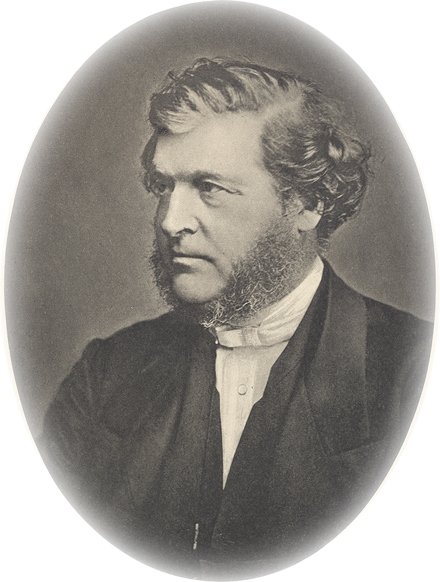
A book so bad that one of the men quoted favourably in it wrote a rebuttal, HazMat as I semi-affectionately call it, is huge, rambling, and at times baffling. Though I have not been able to find any repetition of Riplinger's quote-manufacturing technique from NABV in it, it is if anything worse than its predecessor. First of all, HazMat is formless; it has no real progression in it, but is a collection of loosely-linked sections with only one connection, Riplinger's conviction that the study of Greek and Hebrew is bad and dangerous. The book is hysterical in tone, not to mention conspiratorial. On one page we are shown a picture of Archbishop Trench of Dublin wearing a medallion bearing a St. Patrick's Cross, which is labelled 'Masonic' on the grounds that Mrs. Riplinger has decided that the 'X' is evil, apparently not realising that such a cross may be worn for other reasons (such as Trench's Irish bishopric). She accuses Trench of 'putting a serpent on his book', when it is really the logo of his American Publisher (she spends about ten pages on the question without once tumbling to this simple explanation, which ought to have occurred to her in a matter of minutes). Oh, and she cites Hislop's Two Babylons, always a mark against an author. Add a rant against Calvinism, thoroughly pointless discussions of Cecil Rhodes and the Knights Templar, not to mention a discussion of the the Pyramids that literally caused me to laugh out loud, and we have a book that is surely even worse than NABV, "full of sound and fury, signifying nothing", as the Bard would say. I list Mrs. Riplinger as illustrative of the very worst tendencies in Fundamentalist literature taken to their extreme.


These are my opinions, and frankly I do not want to hear from Mrs. Riplinger's supporters until they have explained why it is acceptable for her to create bogus quotations to sustain accusations of heresy against men. The Bible says "Thou shalt not bear false witness against thy neighbour", and unless you really want to argue that that only applies to Christians and therefore one can lie as much as one likes about those one deems to be non-Christians (a wretched sophism that I hope exists only in my imagination and perhaps an old Jesuit work or two), Mrs. Riplinger has flagrantly breached this law over and over. She refuses to listen to those calling her to repent, and therefore must be exposed publicly for the purveyor of falsehoods that she is.

Friday, May 7, 2010

Book Reiew: "Cleaning-Up Hazardous Materials" by Kirk DiVietro

When I received my copy of Riplinger's Hazardous Materials, my first impression was that this is a huge book. My second was that most of the matter was actually irrelevant, consisting in ad hominem attacks against a wide variety of people. Having read the book, I concluded that much of it was poorly researched, and guilty of the triple fallacies of ad hominem (Against the Man, attacking the writer, not the argument), Petitio Principi (Begging the Question, that is, assuming one's conclusions), and Non Sequitur (It Does Not Follow, the conclusion does not actually rest on the premises, but on an unstated premise). Kirk DiVietro, in his new book Cleaning Up Hazardous Materials (Dean Burgon Society, 2010), comes to essentially the same conclusion.

DiVietro is a King James Only writer who is cited favourably by Riplinger, and it may be that his being linked to Hazardous Materials in this way has moved him to write this book. What concerns him is not that Riplinger defends the use of the AV, but that Riplinger has attacked all study of the original languages, and basically declared that God no longer uses the original languages, but vernacular versions. He disagrees strongly with her view of inspiration as an ongoing miracle that periodically produces new inspired vernacular Bibles from a line of inspired vernacular Bibles that reaches back to Pentecost.

It is DiVietro's contention that lexicons and language study aids are useful tools, and should be used as such. They were not intended to be the final authority for us, and a tool is only as good as the one who uses it. Clearly, if we make improper use of a tool the result will be bad. The purpose of studying the original languages, he says, is not to correct the Bible, but to make sure we actually understand what a passage means. It helps to prevent preachers making fools of themselves (DiVietro gives examples).

He notes that Riplinger's reasoning logically leads to the conclusion that no language can be translated into an unrelated language - which is plainly absurd. We can know what the Greek and Hebrew words mean, in context (Hebrew in particular is a very context-bound language, and has a relatively small vocabulary, certainly compared to Greek). There is, he points out, no evidence at all to support Riplinger's idea that the gift of tongues led to the creation of written documents - in all Biblical mention of tongues it is referred to as spoken (check the AV). Thus it is merely a baseless assumption that Bible translations were produced at Pentecost. This, he quite rightly says, is a huge problem for Riplinger.

It also leads to a misrepresentation of the AV or King James Bible, for it means that, instead of having been translated from the Greek, Riplinger's theory requires it to have been based on a line of vernacular Bibles from the Gothic through the Saxon, through Middle English, and finally to the English of the AV. It means Tyndlae must be understood not as the man who translated the New Testament from Greek to English, but as the updater of an older vernacular version.

DiVietro points out a number of places where Riplinger has misunderstood words and given false etymologies. One statement I puzzled over is the incorrect statement that Scrivener back-translated the AV. He did not, but I knew there had to be a basis for the statement. Riplinger cites D.A. Waite Jr. as the source. It seems from DiVietro's book (endorsed and edited by D.A. Waite) that she misunderstood a statement of D.A. Waite Jr. that in places where the KJV text had no known Greek support, Scrivener "Refused to backwards translate from Latin to Greek" to mean that in other places he back-translated from English to Greek (Pp. 202-8). She is mistaken (please note that I am NOT saying she deliberately misrepresented either Waite or Scrivener, but misundersttod what she read). In other places Riplinger gives false etymologies (probably not her own) for Hell (deriving it from Helios, the Greek word for sun, of all things, when it is fact derived from the Norse Hel, the underworld and the goddess of the underworld), and Ball (deriving it from Baal, when it is in fact derived from a Saxon word meaning a spherical object), neither of which are supported by any scholar at all. On P. 230 DiVietro shows that Riplinger's Greek etymology is apparently no better than her English, as she derives huiothesia from huios, a son, and then bizarrely states the second part comes from "thespian, from theo, means "adoption of." Like DiVietro, I can only hope this is a typographical error! A Thespian is an actor, and the Greek compound word huiothesia is in fact the Greek word for "adoption", derived from huios and thesis, which is related to tithemi, to place (Thus literally "to place as a son, to adopt"). Thesia does not mean to adopt, the whole word does. There is of course nothing wrong in translating the word "the adoption of children" as in Ephesians 1.5 in the AV. Riplinger has in the past admitted that she does not know Greek, and this may simply be an example of someone struggling with matters beyond her expertise. When I try to mend my own bicycle, I make a mess of it, because I am not trained in cycle repair. This does not make me morally wrong, just misguided in thinking I can fix my bike on my own.

Riplinger's defenders like to say that answers to her often pick up on little things. This is true, but then this is the woman who majors in picking up on little things in the works of others, including Archbishop Trench's badge of office and the number of pages in the Old Testament portion of Berry's interlinear! If a writer sees sinister meaning in little details, she should expect to be corrected when she makes mistakes in her own little details.


There are a couple of disappointments about this book. Firstly, it has the feel of having been rushed into print to answer Riplinger. I grant that the rambling nature of Riplinger's book makes it hard to construct a coherent reply, but a little more work on the clean-up would have been appreciated. Those who are not King James Only, and who do not use the TR, will obviously fault DiVietro on these matters, but as a New King James user with a couple of reservations about that Bible (1 John 5.7 and Acts 9.5-6, both of which have very little Greek support, the extra words in Acts having the support of a grand total of NO Greek manuscripts), I found this a very helpful book. Secondly, I do think that in a few places DiVietro is too harsh about Riplinger, finding deliberate deception where I saw only ignorant error, and I would caution against seeing sinister motives where there may be an innocent explanation.

Finally, it seems to me that the explanation for many of Riplinger's errors is that she forulated a thesis and then set out to prove it, quote-mining for that purpose, without taking sufficient care over the actual intent of the author. Anyone who has ever written a paper or an essay has probably done the same, of course! I know I have, and having re-read the section in context I have been deeply embarrassed to see my mistake! I saw what I wanted to see - and I suspect Riplinger has done the same in Hazardous Materials. The only thing that causes some pause for thought is that New Age Bible Versions is still in print, with knowingly doctored quotes. But where charity can lay the blame at the foot of error, she does so. And so do I.

Thus endeth the review, and my dealing with Riplinger for the present time.

Thursday, May 6, 2010

"Cleaning-Up Hazardous Materials" - first impressions

Yesterday I received my copy of Cleaning-Up Hazardous Materials by Kirk DiVietro (Published by the Dean Burgon Society). I have thus far read to P. 88. I had some reservations about this book. First of all, when there are these debates, it often happens that there is a great deal of ad hominem argument. Gail Riplinger is expert at this herself, and Hazardous Materials is full of this method of argumentation. Thankfully DiVietro avoids ad hominem and engages with Riplinger's actual argument. Obviously P. 88 is not a very long way into the book, but it is apparent that the main target of his criticism is Riplinger's strange view of inspiration, which sees inspiration as ongoing, and sees the original languages as no longer relevant to modern Christians, who are instead pointed to inspired translations in their own tongues.

DiVietro helpfully points out the proper use of lexicons (as opposed to their abuse), which is not to correct the Bible, but to understand it. We have all heard someone say "the Greek really means...", followed by a translation that is followed by no English translation, not even the New World Translation of Jehovah's Witnesses, in that place. The lexicon can only show the semantic range of a word (i.e. its various possible meanings), only one of which is actually valid for the context. To take an example from English, the word "Ball" may mean either a spherical object or a posh party. It cannot mean both, and to read both meanings into any single usage would be absurd (the fallacy of "illegitimate totality transfer").

DiVietro aso takes exception to Riplinger's view that all lexicons must be written by saved people, pointing out that this would also mean that all interpreters for missionaries must be converted - an impossible requirement for a missionary making contact with an unreached people group! He points out that lexicons are not above the Bible, they are fallible human works (and hence need revision at times) giving lists of the usage of words. I have pointed out before that, if you insist on proof positive that every lexicographer and translator on a modern Bible version is saved, logically you must be able to provide proof that every AV translator was saved. Can you? Can anyone? I doubt it, seeing as there was a drunkard and a number of persecutors among the AV translators! (for documentation see earlier posts).

There are errors in the book, and DiVietro apologises for these. He was badly injured during a mission trip to Iraq. Still, the statement on P. 65 that "When the world spoke Latin, the Roman Catholic Church continued writing in Greek. Once vulgar language developed and people no longer understood Latin, they continued writing in Latin" is not correct. The Roman Catholic Church (despite its claims) did not exist in the early centuries, and Greek writing was, by the fourth century, mostly restricted to those areas that today are the home of the Eastern Orthodox Churches. The Roman Catholic Church historically spoke Latin, which is why it regarded the Latin Bible as the only authoritative version.

Despite the odd error, I have rather enjoyed the book so far. I pray Dr. DiVietro will recover enough to issue a revised second edition. A full review will follow. DiVietro himself will have to answer his critics, not me. I'm far too busy being the pastor of a small inner-city congregation in the Midlands.

Wednesday, May 5, 2010

Clean-up Begins

Readers may remember last year's posts about Gail Riplinger, and Riplinger's defender "The Puritan". Well, a few minutes ago the postman delivered to my door a copy of Cleaning-Up Hazardous Materials by Kirk DiVietro. Published by the Dean Burgon Society, this comes out of moderate King James Onlyism, and is warmly commended by none other than D.A. Waite, who has written the blurb on the back. He tells us that this books is needed for four reasons, "Because of the false view of inspiration," "Because of the false view of the King James Bible," "Because of the false view of lexicons and textual aids," and "Because of the correcting of pastors and other leaders."

DiVietro is quoted favourably by Riplinger, but he obviously does not agree with her! And quite right too! According to the author profile in the back of the book, Dr. DiVietro has relevant earned degrees. The fact that he is King James Only in a mild way is in some respects a help, as it means that he is a relatively sympathetic critic.

I am looking forward to reading this book of about 400 pages, which seems much better written than Riplinger - which is not hard! Much of what will be dealt with I suspect to be false arguments and logical fallacies. Plus He notes that Riplinger refers to Dr. Maurice Robinson (P. ii) as an editor of Berry's interlinear. Given that Berry's was published in the 1890s, I find that hard to believe (would you believe that he read it once?).

A lengthy appendix (Pp. 285-377) contains letters dealing with Riplinger's errors and dishonesty, as well as facsimiles of original documents and a table of corrections made to the original printed 1611 AV in later editions (mostly printing errors).

Friday, November 13, 2009

Gail Riplinger (Accidentally) Undermines the Massoretic Text!

One of the greatest complaints about Gail Riplinger's books is that they are in need of an editor. Harzardous Materials, weighing in at over 1200 pages, definitely so. There are just pages and pages of irrelevant material. I have my copy back, and hope to present some of the irrelevant material and blunders to show how it is possible to write a book on the subject of textual criticism without knowing anything to speak of about it!

On Pp. 1051-1058 of the great brick of a book called Hazardous Materials (hereafter HazMat), Gail Riplinger plays advocate for the Shapira Strips. These strips of leather, purporting to be ancient fragments of the Book of Deuteronomy, were discovered in 1883, and immediately announced as genuine ancient manuscripts. The text was written in an ancient style, corresponding to the alphabet found on the Moabite Stone. Moses Shapira, an antiquities dealer, declared that they dated from around the 9th century BC. While the strips were announced with a journalistic fanfare, doubts soon began to emerge about their authenticity. Several scholars, including C.D. Ginsberg, announced their doubts, and finally the strips were declared to be a fraud, written in an ancient script, but in modern times. In other words, the whoe thing bears some resemblance to the case of the "James Ossuary".

Gail Riplinger writes:
“Examination revealed that the strips contained certain dating elements (words and orthography) which would prove that Moses was their author. This evidence could fracture the entire higher critical movement…” (P. 1052). The strips were declared to be fraudulent, and Shapira committed suicide, Riplinger suggests that he could in fact have been murdered (P. 1057).

What Riplinger is apparently unaware of is the character of the Shapira strips and the text they contained. Frederic Kenyon of the British Museum was aware of this, and he writes:

“The contents were striking enough. They purported to be portions of the Book of Deuteronomy, but with many remarkable variations. To the Ten Commandments was added an eleventh, and the language of the others was altered and amplified. In these strips of leather there was enough to cast doubt on the whole of the received text of the Old Testament” Our Bible and the Ancient Manuscripts (London, Eyre and Spottiswoode, 1898), P. 43.

Please note this fact. If the Shapira strips were indeed “The world’s oldest Scriptures” (HazMat P. 1051), then they differ significantly from the text we have today. Far from showing that the Hebrew text has been wonderfully preserved, they would give the impression that it had been significantly altered in the course of the two millennia between the purported date of the Shapira Strips and the date of what, at the time of their discovery, was the oldest known manuscript of Deuteronomy. Gail Riplinger claims to uphold the “received text of the Old Testament”, does she really want to lend her support to a disputed text that casts doubt on “the whole” of that text? I think not. So we have another 7 pages of HazMat that are completely irrelevant.

I have sent this information to Riplinger via AV Publications, because I am sure that she was unaware of the actual character of the text of the strips. So chalk this one up to bad research by Mrs. Riplinger, not malice.

Monday, August 24, 2009

What really happened on the RV committees.

According to Gail Riplinger, the Revised Version was a Luciferian plot, and merely being on the RV committee lays a man open to all sort of aspersions. But what was it really like? First of all, we must remember that not all members of the committee agreed with Westcott and Hort. Among them were some of the most conservative Bible scholars of the period, some of whom produced a 'minority report' charging Westcott and Hort with going far beyond the remit of the committee.

According to Riplinger, the RV committee were determined to Let me quote to you Prof. David Brown, one of Westcott and Hort's critics on the RV committee. In 'The Expository Times' Vol. 4, P. 63 he recounts how a change was introduced in Matt. 2. 2:
"The wise men of the East ask: 'Where is He that is born king of the Jews? For we have seen His star in the east and are come to worship Him.' The question here is, What kind of worship is here meant? Is it the homage due to a superior among ourselves (as in Luke 14.10) or is it religious worship? The former, it was thought by one member, was the meaning intended, and therefore proper to be expressed. But, as it was belived by one member that verse 11 would throw light on this question, the Company agreed to wait until they reached that verse. On which it was stated that the phrase here rendered, 'they presented gifts' is one used several hundred times in the LXX., and always in the sense of religious offerings made in worship to God; and the only question here was, Is the phrase used in that sense in the New Testament? And the six passages besides this one in which it is found in the New Testament are admittedly used in this sense. Hence (it was argued), it ought to be so understood there; and therefore in verse 2 'worship' should be retained, and in verse 11, instead of 'presented unto Him gifts,' etc., we should render it 'they offered unto Him,' etc. This was accordingly done, if not unanimously, certainly without objection." (David Brown, 'Is the Revised Version a Failure?' Pp. 63-5, The Expository Times Vol. 4 (Edinburgh, T. & T. Clark, 1892) P. 63.

Note that Brown did regard the RV as a failure. Elsewhere in the article he condemns it stylistically, and he is well known to have felt Westcott and Hort relied too much on the two Uncials Vaticanus and Sinaiaticus. That is not my concern here. My concern is to show that the RV committees did not sit in a smoke-filled room gleefully tearing out the deity of Christ from the New Testament, and that in fact in several places they strengthened the testimony to the deity of Christ.

It is interesting that while Riplinger piles abuse on Liddell of Liddell-Scott, she says nothing about Scott. Well, Scott was actually on the RV Committee! David Brown had something to say about this man that rather indicates why Riplinger may have been silent about him. Brown's biographer recounts how In Roman 6.1 one of the company, Dr. Kennedy, argued for the translation 'God who is over all be blessed for ever,' (thus replacing the ambiguous AV reading with one that is confessedly opposed to the deity of Christ) declaring that the only reason anyone disagreed with him was theology. Dean Scott (of the Liddell Scott Lexicon), replied, "No, sir, we stand upon Greek. The verse won't translate but, as in the Authorised Version, according to the Septuagint and New Testament Greek." Thus the R.V. (following the Geneva Bible, which here as in other places is much stronger than the AV) DOES describe Christ as 'God over all, blessed for ever.' Hardly an enemy of the deity of Christ, I think!

Friday, August 14, 2009

"Heretical Calvinism"

Gail Riplinger has a lot to say about everyone she disagrees with, even engaging in the vilest innuendo (see P. 829 for one that I am not going to repeat because of its vileness). But there is one theological view that she always describes as "heretical", and it is Calvinism. Now never mind that the majority of the translators of the AV were Calvinists, Riplinger is determined that Calvinism is a heresy!

George Abbott was one of the translators of the AV, a godly man and a gifted preacher, he was one of the best men ever to occupy the See of Canterbury, as well as a learned Bible scholar. Today his two chief monuments are his library, preserved in Lambeth Palace, and Abbott's Hospital in Guildford, a splendid set of almshouses for the poor of the town. Learning and charity sum up his life. When he accidentally shot a gamekeeper while out hunting, Abbott was stricken with grief, and settled an pension on the man's widow. She married again, but Abbott still paid the pension to her. He was also a Calvinist. Indeed all of the best men on the AV committee were Calvinists, as I have already said.

Time and again Riplinger refers to Calvinism as 'heresy' Some examples I have noted are to be found on P. 528, P. 529, P.685 (Theodore Beza), P. 686 ("one of the most unscriptural heresies imaginable - Five Point Calvinism"), P.712, P. 798, P. 821, P. 823. On P. 824 she states that John 3.16 has "little meaning for Calvinists." Really? So why is it the verse from the Bible I quote most often in preaching? P. 1150, Warfield and Barth equated as if they taught the same thing, which they do not; P. 1153, B.B. Warfield a heretical Calvinist; 1155, ditto; P. 1175, C.A. Strong, P. 1173: "Calvinists spend their time writing theology books, instead of evangelizing". I would have found more if Riplinger had an index to this book, which she doesn't.

"Beza's text, like any other one-man exercise, must be examined with caution in the minutiae, particularly because of his rabid Calvinism," she writes (P. 685). At this point I have a question for Riplinger's doughty defenders - where is the Textus Receptus to be found today?

Pp. 687-9 contain a feeble attack on Calvinism. Riplinger is apparently a 'Once-saved-always-saved' Arminian. She holds that the will of man is freely able to choose God, and that depravity does not extend to the human will, thus agreeing with the Roman Church. She holds to election of a class only, falsely claiming that Calvinists "skip around Romans 9, ignoring the words 'having done any good or evil' (that is, good works and evil works) and ignore the words 'not of works'" (Pp.687-8). What she means here I really don't know, as Calvinists insist on those very words. "When God said, 'I will have mercy on whom I will have mercy,' he means he chooses the means; he chose to have mercy on those who will belive on the Lord Jesus Christ." Where is this in Romans 9? She belives Jesus died equally for the sins of everyone who ever lived and ever will live. She believes God draws all men to Christ, and some refuse to come. She needs to read John 6 again. The verses she quotes to support her own position are nothing to the purpose, being John 5.40, Acts 7.51, Proverbs 1.24, and Titus 1.11, not one of which states that men resist the saving grace of God successfully. Finally she gives the usual carping criticism of the phrase 'Perseverence of the saints', "God will preserve his saints; they are eternally secure. However their word 'perseverence' has a connotation of works. Their word is actually only used once in the Bible in the context of unceasing prayer, not salvation (Eph 6.18)" (Pp. 688-9). The word 'Trinity' is not in the Bible at all, theology, like ay other branch of human knowledge, has its own vocabulary. The existence of heresy requires Biblical ideas to be expressed in words other than those of the Bible. For example, both Arius and Athanasius were willing to say that Jesus is God, but they meant rather different things when they said it.

"Beza's lack of scriptural understanding, which would allow him to misunderstand all of the above verses, gives me little confidence in his choice of Greek words... Though Beza's Greek text was generally that which came down from the first century, evidently God saw at least 139 small errors in it, to which he alerted the KJB translators" (P. 689) Though not to Beza's conjectural emendation in Revelation 11.17, where all Greek manuscripts read, 'who was and is, O Holy One', which Beza 'corrected' to 'who is to come', a phrase which is in the AV, but was in no Greek text before Beza. See Comfort: New Testament Text and Translation Commentary for details.

On the basis of this attack on Calvinism, why would any Calvinist use Riplinger's works? After all, she believes that Calvinists hold to "one of the most unscriptural heresies imaginable!" Are you a Calvinist? Riplinger says you're a heretic. What is more, as I have shown, Riplinger's latest book is riddled with bad arguments, errors in fact and logical fallacies. This book does indeed contain Hazardous Materials. So if you want a Calvinist defence of the Textus Receptus, go and contact the Trinitarian Bible Society. I know several members of the Society personally, and they are sane and reasonable men.

Thursday, August 13, 2009

What's wrong with Riplinger's main thesis

In Hazardous Materials as well as in New Age Bible Versions, the main argument Riplinger employs is to focus on the moral failings and spiritual errors of those associated with the works she is attacking. In some cases these are 'errors' and 'heresies' that are only considered such in her own narrow corner of American Fundamentalism, such as Calvinism, a Spiritual view of the Lord's Supper, and the baptism of infants. In terms of moral failings, firstly this is easy, as we are all sinners, and secondly she sometimes makes those up - such as the unmentionable accusation against B.F. Westcott.

The trouble with this method is that, if followed consistently, it rebounds on the user, because all Bible versions are translated by sinners. Not only were the texts commonly called the Textus Receptus compiled by the Roman Catholic Erasmus and the Calvinists Beza and Stephanus (remember that it is Riplinger's position that is being engaged with), but the AV itself was produced by a committee of sinners.

From Benson Bobrick's The Making of the English Bible (London, Phoenix, 2001), we find that:

1). All but one of the AV translators were Anglican clergymen (P. 223), and thus also paedobaptists.

2). Lancelot Andrewes was a one-time Puritan turned Anglo-Catholic (P. 226)

3). Hadrian Saravia "a terrible high churchman", turned Anglican from Presbyterianism and wrote a book upholding episcopacy (P. 228)

4). William Bedwell was a lexicographer who wrote a book "which argued that a knowledge of Arabic was indispensible for an understanding of ancient Hebrew texts," a position Riplinger condemns modern lexicographers for holding to (P. 229).

5). Bishop Overall "knew Greek, but was primarily known as a Latinist and was so fluent in that language that he once admitted it was sometimes difficult for him to speak English at any length" (P. 229). Overall had marital problems (P. 230).

6). Richard Thompson "was an urbane, worldly, and cosmopolitan man who 'seldom went to bed sober', and was notoriously partial to racy epigrams" (P. 231).

7). Edward Lively had serious debt problems (P. 232).

8). John Reynolds, though a Puritan in other ways, accepted the doctrine of Apostolic Succession (P. 235). As a student he played a girl in a collge play.

9). Thomas Holland was a student of the Church Fathers and the Medieval Scholastic theologians, people Riplinger condemns others for studying (P. 237).

10). Samuel Ward (not to be confused with the Puritan of the same name) was a Pluralist, that is to say a man who held several Church posts at the same time, including pastorates hundreds of miles apart (P. 239)

11). Thomas Ravis was a persecutor of Calvinists (P. 241)

12). Sir Henry Savil was the editor of an edition of the Works of John Chrysostom, and spent so much time at his scholarly pursuits that his wife wished she was a book so that he would spend more time with her (Pp. 241-2).

13). Archbishop George Abbott not only was a Calvinist who killed a gamekeeper while out hunting, but he also had 140 students thrown in prison for sitting with their hats on in St. Mary's Church when he was preaching (Pp. 242-3).

14). Most of the translators were Calvinists. Laurence Chaderton was desinherited by his Roman Catholic father for embracing Calvinism (P. 233).

15). Seven of the AV translators became Anglican bishops.

Now Riplinger's defenders will argue that these are all minor matters, but the point I am making is that Riplinger's thesis that all modern versions are tainted by the errors of their translators must, if applied consistently, apply also to the AV. If the lexical tools available today are flawed because they reference Attic Greek and the Greek classics, then the same goes for all Greek tools throughout history, including those used by the AV translators. If Hebrew scholars who appeal to the Arabic are condemned with their works - then so is the AV, with William Bedwell's lexicon and grammar.

One may arge cogently and coherently for the primacy of the Greek and Hebrew texts underlying the AV, and for the competence of the translation, but Riplinger's method only muddies the waters. For all its size, Hazardous Materials is a shallow book that can only be accepted by those who already hold the position of the author.

Once again let me point out that to disagree with Gail Riplinger is not to attack the AV, nor is this post an attack on the AV. The Authorized Version is a masterpiece of translation, and that is not in the least affected by the fact that one of its translators was a drunkard. I am a Calvinist myself, and so I do not view the fact that a man is a Calvinist as a bad thing - remember, my target is Gail Riplinger. My worry is that Riplinger, while intending to uphold the AV, may in fact be, all unawares, undermining it.

Wednesday, August 12, 2009

Riplinger Weirdness.

There are some passges in Riplinger that, while they cannot be cited as errors, are just really weird. Some defy comment.


On P. 51 she says of Greek professors: "The professor may just as well have shown the students pornography..." I was apalled at the comparison, but this is by the same woman who uses filthy innuendo that I do not consider suitable for publication (see P. 829 and P. 841 if you must). This is part of an introduction that makes little sense. Riplinger's use of rhyming couplets in prose is also very distracting. Examples of those will follow.


On P. 56 she tells us in a note: "Hermeneutics... is named after the pagan Greek god Hermes..." What is this supposed to do? Make us all stop interpreting the Bible? There would be an end to sermons if we did that. Perhaps we should just sit and listen to someone read Gail Riplinger instead?


On P. 91 she equates the works of Homer with the magic books burned in Acts 19. Throughout the book she condemns study of ancient Greek literature as degrading and wicked. In a private communication a representative of Riplinger said much the same about Shakespeare.


On P. 113 she states "It is absolute blasphemy for an undergraduate Bible school student to make a translation of a chapter from the Bible."


On P. 115 we read the following gem: "Anyone who suggests that a translation cannot be inspired knows little of the wide and wild theological heresies which have been generated using the Greek words which are common to all Greek texts." What about the wild heresies that have been generated by (ab)using the AV?


On P. 133 we find that she thinks that New Testament Greek is a special 'holy' dialect of Greek.


On P. 148 she writes: "Have men become sorcerers by being asked to give an 'interpretation' of God's words?"

On P. 194 she heads a section about German influences in McClintlock and Strong "Nazi", despite the fact that the work was published between 1867 and 1881, long before the Nazi party existed. Like some schoolboys, she seems to think 'German' and 'Nazi' are synonymns.


She insists that Heb 4.18 refers to the pre-incarnate Jesus (P. 201), not to Joshua.


On P. 208 she lambasts the drinking habits of Henry Liddell and his fellow students for their drinking alcohol. Yet she goes on that "The ten members [of a club Liddell was a member of] 'consumed, in four nights, less than four bottles of wine.'" I make that about a glass a night, per person. Hardly an example of drunken debauchery!


On P. 213 we are gravely warned of the occult dangers of the game of football. In a glaring example of "fanciful etymology" we are told that the word 'ball' comes from "the pagan god Baal," when in fact it is derived from the Greek ballo, to throw. Baal means 'lord' or 'master' or 'husband'.


On P. 217 she quotes Dean Henry Liddell, "'I kneeled this day before the Bishop,' and hoped God would 'so exalt my being while I am left here.' He echoes Lucifer, who said, 'I will exalt my throne above the stars of God.'" Is this fair? Liddel hoped God would exalt him, Lucifer wanted to exalt himself. There is all the difference between heaven and hell between these two statements!


One of her sillier rhying couplets in prose is found on P. 227, "a referee with no eyes, where religious squabbles end in ties." She may think this enlivens her style, it does not.


We are asked (P. 243) to believe that Liddell's Greek Lexicon was responsible for the corruption of Cecil Rhodes, as opposed to Rhodes' own evil heart.


On P. 307 we read: "Alcoholic beverages are called 'spirits' for a reason. They numb the mind, leaing it an 'empty' host for evil 'spirits' who seek bodies to work out their evil desires."


A statement at the bottom of P. 37 seems to condemn all universities, despite the fact that every one of the AV translators ad a university education.


On P. 393 she writes in criticism of Trench's rendering of James 3.5: "Christians need no warning against pyromania, but being a 'busybody in other men's matters is a problem (1 Peter 4.15; James 3.8). In James 3 in the KJB 'memb-ber' corresponds with 'mat-ter.' The cross-references and corresponding sounds in the KJB [she doesn't hold the centre -column to be inspired as well, does she?] are God's means of 'comparing spiritual things with spiritual.'" Apparently missing the figure of speech James is using.


Riplinger cannot keep her story straight as regards the Greek manuscripts. One page (e.g. 437)she will cite the "5300" Greek manuscripts we have, and a few hundred pages later she will rubbish all of those Manuscripts as the product of apostate Greek Orthodox monks (P. 741).

"We know God is not the author of confusion. Therefore He must be the author of today's one perfectly translated English Holy Bible, the King James Bible" (P. 454). This is an example of the logical fallacy non sequitur.

"We love pizza and puppies, not Jesus Christ, according to Vine" (p. 464). I have no idea where she got the pizza and puppies from either, though I'd hazard the local petshop and pizza parlour.

"John did not write the book of John, God did" (P. 520). In fact both statements are true, denial of one or the other is a species of rationalism.

On P. 593 she links Scrivener with occultism on the basis of his capitalizing the word 'Truth', then admits that there is in fact no connection, "He is not an occultist, but he is talking like one."

Riplinger's AV Publications supplies Greek and Hebrew texts "with the caveat that [they] not be used for study or translation" (P. 631).

"All Englishmen will be judged by the same English Bible" (P. 711). What about Americans, Australians and Scotsmen? Will all Welshmen, including those who do not speak Welsh, be judged by the Welsh Bible?

She quotes approvingly Jack Moorman when he writes: "It would seem far more honouring towards God's promises of preservation to believe that the Greek and not the English had strayed from the original" (P. 734).

On P. 745 Riplinger abuses 1 Corinthians 1.23, chopping up the quotation to read "the Greeks foolishness". Her reason for doing this is beyond me, but it shows a cavalier disregard for the actual meaning of the Bible.

On P. 792 she writes: "Ancient Greek was for ancient Greeks."

On P. 811 she lambasts Zodhiates for having 1 John 2.23 missing from his text. This is because he is using a Byzantine text, and the Byzantine tradition commonly omits this verse.

The vilest sins result from "focus on the Greek language and Greek mythology" (P. 841)

On P. 962 we read "Hebrew word study has become virtually impossible, outside of the King James Bible." How you can study Hebrew in an English translation is beyond me. After six months in a bilingual country, I am very aware that different languages have different idioms. For example, what in English is called a 'Tourist information centre' is literally a 'welcome centre' in Welsh.

"James Price, the NJKV Old Testament editor, is sinking in the sea of his personal opinion, in the battle using a rattle instead of a paddle" (P. 977). Some may accuse me of mocking Riplinger (partly guilty), but they give her a free pass to use this sort of childish mockery.

One of the charges against C.D. Ginsburg is "Ginsburg was a member of 'The National Liberal Club'" (P. 1007). Riplinger thinks this means 'theological liberal', when in fact it means a member of the Liberal Party, which was the party of the majority of British Nonconformists at the time. C.H. Spurgeon was a Liberal supporter as well.

The charges of occultism against C.D. Ginsburg are backed up with quotations from his book on the Kabbalah. However, without examining the book it is impossible to tell if Ginsburg is promoting the teaching of the Kabbalah or simply reporting it. In New Age Bible Versions Riplinger adopted this procedure with quotations, and so she may well be doing the same here. The fact that a man reports a position does not mean he holds to it. Ginsburg was a professing Christian, and a professing Christian could not possibly have held to the theology of the Kabbalah (see P. 1042-5). It is telling that not one of the quotes from Ginsburg are in the first person, plural or singular.

She strongly suggests that Ginsburg was a murderer, despite the fact that this is based on pure speculation on her part (P. 1057). This is the second man whom Riplinger accuses of murder in this book. If you disagree with her, she may suggest that you are a murderer or a practitioner of wickedness too filthy for me to mention here.

"The two chains of Greek and Hebrew study tugged on the Reformers, who still clung to a few of their other Catholic doctrines..." (P. 1077)

"Why can't the English Holy Bible be translated into any language, as needed?" (P. 1105) In answer I point to the fact the the idioms of languages differ, and when a writing is pulled from one language to another, and then from the second language to a third, things get changed. Consult the Book of Common Prayer version of the Psalms if you don't belive me. The psalms in the BCP were translated into English from the Latin Vulgate, which had in turn been translated from the Greek, which had been translated from Hebrew. Psalm 2 in the BCP reads:
"WHY do the heathen so furiously rage together : and why do the people imagine a
vain thing?2. The kings of the earth stand up, and the rulers take counsel
together : against the Lord, and against his Anointed.3. Let us break their
bonds asunder : and cast away their cords from us.4. He that dwelleth in heaven
shall laugh them to scorn : the Lord shall have them in derision.5. Then shall
he speak unto them in his wrath : and vex them in his sore displeasure.6. Yet
have I set my King : upon my holy hill of Sion.7. I will preach the law, whereof
the Lord hath said unto me : Thou art my Son, this day have I begotten thee.8.
Desire of me, and I shall give thee the heathen for thine inheritance: and the
utmost parts of the earth for thy possession.9. Thou shalt bruise them with a
rod of iron : and break them in pieces like a potter's vessel.10. Be wise now
therefore, O ye kings : be learned, ye that are judges of the earth.11. Serve
the Lord in fear : and rejoice unto him with reverence.12. Kiss the Son, lest he
be angry, and so ye perish from the right way : if his wrath be kindled, (yea,
but a little,) blessed are all they that put their trust in him."
Compare this with your Bible! This is not a result of evil Catholics putting words in, but of translating from one language to another via two more languages. It would be like translating 'Tourist Information centre' into Spanish via Welsh. The Welsh is Canolfan Croeso, put this into Spanish and you get Eje Agradable. But 'Agradable' translates into English as 'agreeable', and Eje is 'hub'. So we put our twice-translated word back into English, and we get 'agreeable hub'. Silly example, but it shows that as a phrase is moved from one language to another shades of meaning can be lost, and if it is then further translated into a third languagem then a fourth (in our example back into the original language), shades of meaning may have been introduced that are not in the original. Extra words may be added, or words needed in the original language but not the first receptor language removed. This is why it is always safer to translate directly from the original language of a document to the receptor language, and why all modern translations into languages which have never had Bibles are made directly from the original language. Where a Bible translation already exists it is only sensible to revise that version if it needs to be revised. Which is why the AV is basically a revision of the Bishops' Bible, by the way.


And again, this is only a sample!

Tuesday, August 11, 2009

A Pot-Pourri of Riplinger errors!


Hazardous Materials is so full of errors that I cannot hope to cover them all. I do not want to cumber a review with so much material, so I will present some in summary form, citing page references. Off we go!
1). P. 103. Readability is determined not only by the number of syllables in a word, but also by vocabulary. A book or essay with a large and unfamiliar vocabulary may use only short-syllable words, but it will be less easy to read than a work that has a smaller, more familiar vocabulary with longer words.


2). On Pp. 164-5 we have a picture of Philip Schaff with his hand inside his waistcoat (American 'vest'). Facing it are 11 pictures, two from Masonic handbooks. We are gravely told that these images prove that Schaff is making an occult hand signal. How they do so is beyond me, as the hands are in different postions in each image, and even which hand is making the alleged signal varies.
3). Her charts of ommissions usually lack chapter and verse references, making it all but impossible to check some of the references.
4). In the chart on P. 178 it is Riplinger herself who has omitted the reference to "In Jesus Christ" from Galatians 5.6 in the American Standard Version and "The name of the Son of God" from the ASV rendering of 1 John 5.13. The actual text of the ASV contains the words she insists are omitted. Now why has she done this?
5). On P.181 she states that new version contain "Identical corruptions" to the ASV in Acts 20.28. They do not. The NIV, ESV, NASB, NLT, NKJV, HCSB, and TNIV all read as does the AV here. Interestingly this is a place where the ASV departs from Westcott and Hort, for the ASV gives the reading "The Church of the Lord", while Westcott and Hort's Appendix to the Greek New Testament states: "Tou Theou is assuredly genuine." (P. 99). No major modern version follows the ASV reading.
6). Riplinger on P. 191 describes the fanatical Anabaptists of Munster as "These good Anabaptists", although they initiated a reign of anarchy and polygamy, and have been disowned by all good Baptists from that day to this.Not that I am saying Riplinger approves of Polygamy, but that here she has no idea what she is talking about. Her view of Church history is a naive 'Trail of Blood' position that still holds to the pre-19th century idea that the term 'Anabaptist' describes a single movement rather than a disparate group of movements that had little in common beyond the rejection of the Papacy and the rejection of infant baptism. The Anabaptists of Munster were bad Anabaptists, it was men like Menno Simons who were the good ones, and they rejected the excesses of the Munsterites.
7). Riplinger insists that the word 'Godhead' in the AV always refers to the Trinity (P. 336). If we take this position we are left with the startling (and heretical) proposition that the whole Trinity became incarnate in Jesus of Nazreth, for in Colossians 2.9 we read that "For in him dwelleth all the fulness of the Godhead bodily." This verse is used by Oneness Pentecostals and other anti-Trinitarians to back up their position!
8). Archbishop Trench's badge of office as the Archbishop of Dublin, a medallion bearing the cros of St. Patrick, is described as a masonic medallion.
9). On. P.362 we read that "Schaff had worked with the Luciferian Theosophical Society in directing the Parliament of World Religions on 1893." In context, as the passage is refering to 1869, this should read "Shaff would work with..."
10). On P.394 Trench is described as "Archbishop of Ireland, Church of England." Of course this ought to read "Archbishop of Dublin, Church of Ireland."
11). She attacks the use of fermented wine (-gasp!-) at the Lord's Table (see P. 485 for example), ignorant of the fact that until the 19th century all denominations used wine at communion. She is horrified that anyone should dare to say that Jesus actually turned water into wine at the wedding at Cana. She desribes alcohol (P. 770) as "God-forbidden". Where in the Bible is alcohol consumption forbidden? Drunkenness is forbidden, but the two are not the same!
12). Oddly she claims that "Any man who was walking in the spirit [sic.]" can be described as "a being having divine attributes." (P. 495). Where in the Bible are Christians ever described as having divine attributes?
13). Wuest is dismissed as a Bible-attacker for saying "We do not claim inspiration for any translation." (P. 496)
14). On P. 527 there is an amusing misprint, where we read: "Milligan, William: Commentary on John Schaff's Popular Commentary. New York, 1883."
15). On p. 623 Riplinger evidences that she thinks the very Chapter and verse numbers in the AV are inspired. On p.625 she cites the fact that the Bible in Acts 13.33 refers to "The second Psalm" as evidence for this, despite the fact that the Psalms are independent compositions, while the chapters of Genesis, Isaiah, Matthew and Acts are not.
16). She constantly refers to Scrivener's method in producing his 'TR' as "Back-translation" (e.g. P. 637), a misleading term, as it implies that he took an AV and translated it into Greek, when in fact he merely chose readings from Greek manuscripts that corresponded with the readings in the AV. Riplinger herself agrees with a correspondent quoted on P. 670 that the AV translators "may not have followed an extant GREEK text or manuscript." at times.
17). On P. 700 she tells us that Berry's Interlinear "omits the Lord". I have no idea what she means by this, but the word 'Lord' is applied to God and Jesus in it.
18). On P. 712 she writes "Calvin promoted burning men at the stake." This is total nonsense. I have spent many months studying the life of Calvin, and every reputable biography of Calvin states that he opposed burning Servetus at the stake. See my upcoming article on Calvin in Peace and Truth for more details.
19). On P. 731 she tells us that the "Greek Bogamiles [sic.] [and] Paulicians" were real Christians. The fact that she persistantly mis-spells Bogomils shows her source is a extremely outdated work in the 'Trail of Blood' tradition (from 1922 actually). This tradition of a Baptist succession is, like the Roman view of 'Apostolic Succession', "a fable which no man can prove" (John Wesley). In fact the Bogomils and Paulicians were Gnostic and Dualistic heretics. Without any evidence at all she tells us on P. 759 that "The Greek Bogamiles, Paulicians and others had the true Greek text which included the pure readings."
20). Riplinger condemns all views of the Lord's Supper other than her own bare memorialism as heresy on Pp. 770-771. While I do not hold to a local presence of Christ in the bread and wine, like Mr. Spurgeon I hold that Christ is really and Spiritually present among us at the Table.
21). On P. 775 she states that Mary was "the mother of the human body which Christ took on," a statement that lays her open to the charge of Appolinarianism (the heresy that Christ had only a human body and no human soul).
22). She accuses the Greek Orthodox Church of being 'Nicolaitans' (P. 740), committing a textbook example of the etymological fallacy. While it is true that 'Nicolaitans' etymologically means 'conquerors of the laity', in fact it is derived from the name 'Nicholas' and means 'the party of Nicholas.' What heresy Nicholas taught is a matter of debate.
23) On P. 843 she tells us that "As the 'Master,' Vaughan became the 'Dean' or 'Bishop' of the Temple Church." Of course he did nothing of the sort. He was dean of Llandaff Cathedral in Wales (which is why he is commonly called 'Dean Vaughan'), but the title 'Master of the Temple' refers to the man who is the minister of the Temple Church. 'Dean' and 'Bishop' are entirely separate ecclesiastical titles.
24). She goes on (P. 843) "The title 'Master of the Temple' is 'originally the official title of the Grand Master of the Templars.'" Of course the official title of the Grand Master of the Templars was 'Grand Master'.
25) She refers to the Knights Templar in the present tense when the order was dissolved in 1307, stating (p. 483) that the Temple Church in London "is used for their initiation ceremonies." On P. 850 we have a thoroughly fanciful interpretation of a Medieval funerary effigy. The whole Templar section is an essay in the absurd.
26). On P. 851 she refers to Westminster Abbey as a "cathedral", it is not. A cathedral is so-called because it contains the cathedra or seat of a Bishop, which Westminster Abbey does not. A good clue as to whether or not a large Church is a cathedral is its name. For example, Llandaff Cathedral is a Cathedral, Wrexham Church, is not. Beverly Minster is not.
27). On P. 882 her 'expert witness' states Westminster Abbey is one of two Royal Peculiar Institutions in England". It is in fact one of no fewer than nine, the others being All Saints' Chapel, Windsor, St. George's Chapel, Windsor, the Chapel Royal, St. James' Palace, the Quenn's Chapel, St. James' Palace, the Chapel Royal, Hampton Court Palace, the Queen's Chapel at the Savoy, and the Chapels of St. John and St. Peter-ad-vincular in the Tower of London.
28). The plot in which C. A. Briggs joined with Roman Catholics is persistently described (Pp. 939-948) as a "Catholic Plot." In fact it is best described as a "Modernist plot", in which Roman Catholic and Protestant modernists joined forces in a combined attack on both Protestant and Roman Catholic Churches.
29). In the section on "The Occult and Catholic Origin of Greek & Hebrew Focus" (Pp. 1064-2), she persistently confuses Roman Catholics and true Christians. In one citation on P. 1071 she adds the explanatory note "true Christians" when the people described can only be pre-Reformation Roman Catholics! This is not to say that she is a closet Romanist, but that she is possessed of a colossal ignorance of true history.
30). While constantly lambasting others for quoting 'dodgy' sources, she herself will quote those same sources to back up her position! And indeed sources of a far greater dodginess, as witness the Templar section. Were we to use her standard to judge her, we would have to conclude that she is a closet Romanist and New Ager, a conclusion that is self-evidently absurd.
Well, that's a lot of errors, and the list is by no means complete! More to come.

Monday, August 10, 2009

The passage that disturbed the poor folk in Victoria Coach Station


"I could write an entire book on the letter X. An aerial view of the Egyptian pyraminds is an x inside of a square. The word pyramid comes from pryo (fire) and mid (in the middle). Within the pyramid two sticks (crossed feverishly in an X shape) create a spark and hence a fire upon which a human sacrifice was made." - Hazardous Materials P. 996

Now I ask you, what in the world does this passage actually mean? It is notorious that the Egyptian pyramids were not temples for human sacrifice, but gigantic cenotaphs for the Pharaohs. She is either following some nonsensical New Age text here, outdated pseudo-scholarship, insane conspiratorial gibberings, or just confusing the Egyptian and Central American pyramids, stuctures that look similar but are for quite different purposes. She has also been misled by the etymological fallacy, a fallacy she elsewhere shows some understanding of, as she lambasts the lexicons that are her target for their use of doubtful derivations. Put simply, the Etymological Fallacy is that the meaning of a word is taken from its etymology, its derivation, not its usage. In fact the meaning of a word is taken from its usage in context. Thus, even if this etmology of 'Pyramid' is valid, it does not define the meaning of the word 'pyramid' let alone describe the pyramids of Egypt.
In fact there is no agreement on the etymology of 'Pyramid', some saying that it is a latinization of a Greek rendering of the Egyptian 'Pimar', a Pyramid (which leaves us back where we started), and no source I have located gives her etymology. On P. 531 she criticizes Vincent of Vincent's Word Studies, saying "The derivation is not absolute, merely presumed," yet here she is definite in a most doubtful derivation! On P. 396 she cites another authors declaration that there is some "fanciful etymology" in Trench. And in Ripinger too!Physician, heal thyself!
The first sentence, "I could write a whole book on the letter X," provoked the immediate reaction 'No! Anything but that!'
The removal of passages like this side-splitting gem of nonsense would make Hazardous Materials far shorter, but far less entertaining!
More to come, God willing.