Showing posts with label R.W Dale. Show all posts
Showing posts with label R.W Dale. Show all posts
Wednesday, November 11, 2009
Gems from R.W Dale - 4
“The power of the cross is the power of the love of Christ. And yet, not the love of Christ only. For the sufferings of Christ were not a mere dramatic display of love. ‘I delivered unto you first of all,’ said St. Paul, writing to the Corinthians, ‘that which I also received, how that Christ died for our sins.’ This truth, according to the greatest evangelist among the apostles, was one of the chief things, the fundamental things, that he made known to those heathen people when he preached the Gospel to them. It is not enough to tell men that Christ died because He loved them; the gospel of the death of Christ includes the fact that He died for their sins. Until men know what sin is – sin as distinguished from mere natural defects and infirmities, which they may attribute to their temperament and to the physical constitution which they have inherited from their parents; - sin as distinguished from mere deformity which offends their ideal of moral grace and beauty; - sin as distinguished from mere vice, which conscience condemns, and which, in the absence of any belief in the authority or even the existence of the Living God, conscience would continue to condemn; - until, I say, men know what sin is they can see no meaning in a large part of St. Paul’s gospel of the death of Christ. Until they are troubled, ashamed, and alarmed by the consciousness of sin, they will listen to a large part of this gospel with moral indifference, or even with moral resentment.” –P. 210

Monday, November 9, 2009
Gems From R.W. Dale - 3
“The line from an ancient poet is not quoted to show that the Greeks had already anticipated a large part of the revelation which it was St. Paul’s commission to make known to mankind; it was quoted with the express object of attacking the whole system of idolatry: “Forasmuch, then, as we are the offspring of God, we ought not to think that the Godhead is like unto gold or silver or stone, graven by art and man’s device.” This was St. Paul’s method of meeting unbelievers on their own ground. He found his way into their fortifications to turn their own guns upon them. He exploded their whole system from within. He quoted the inscription on one of their own altars in order to suggest that neither their philosophy nor the traditions of their ancestors had given them any knowledge of the true God. He quoted Aratus or Kleanthes in order to expose the ignorance of the Divine greatness which was illustrated by the temples and statues which they had erected in honour of their divinities.
“Nor – though this was the first discourse that he delivered to them – did he keep within the limits of philosophical discussion about the nature of God, and the true method of worshipping Him. He went on at once to speak about judgment to come, and about Christ’s resurrection from the dead. He might, had he chosen, have said many things to which the Epicureans and Stoics would have listened with interest, and even with respect. He might have discussed questions of morals. He might have compared or contrasted the ethical teachings of Christ with their own. But all this would have been to no purpose. The resurrection of Christ might provoke their mockery, but to have been silent about it would have given them a false conception of the gospel. It was more important that the Athenians should know the truth – whether they received it or not – than that St. Paul should conciliate their respect.
“The principle on which I am insisting is a very simple one: whether true or false, it is intelligible. We shall never make men Christians by suppressing and throwing into the shade those parts of the Christian revelation which especially provoke their hostility. Truth which men regard as incredible, truth which men resent – we must be sure, first of all, that it is truth, and truth of an important kind – is precisely the truth which men most need to hear , and which is most likely to produce the deepest moral impression.”
Pp. 200-1
“Nor – though this was the first discourse that he delivered to them – did he keep within the limits of philosophical discussion about the nature of God, and the true method of worshipping Him. He went on at once to speak about judgment to come, and about Christ’s resurrection from the dead. He might, had he chosen, have said many things to which the Epicureans and Stoics would have listened with interest, and even with respect. He might have discussed questions of morals. He might have compared or contrasted the ethical teachings of Christ with their own. But all this would have been to no purpose. The resurrection of Christ might provoke their mockery, but to have been silent about it would have given them a false conception of the gospel. It was more important that the Athenians should know the truth – whether they received it or not – than that St. Paul should conciliate their respect.
“The principle on which I am insisting is a very simple one: whether true or false, it is intelligible. We shall never make men Christians by suppressing and throwing into the shade those parts of the Christian revelation which especially provoke their hostility. Truth which men regard as incredible, truth which men resent – we must be sure, first of all, that it is truth, and truth of an important kind – is precisely the truth which men most need to hear , and which is most likely to produce the deepest moral impression.”
Pp. 200-1
Friday, November 6, 2009
Gems from R.W. Dale - 2
Our second Dale gem from Nine Lectures on Preaching concerns the question of controversial preaching. And, I might add, all engaging in controversies.
“If you touch controversies… you ought to be quite certain that you understand the theories which you are attacking, and that you have mastered the grounds on which they rest. You ought, also, to be quite sure that you can reply – not to the weakest – but to the strongest argument by which they are supported. The serious beliefs of men ought to be discussed seriously and fairly. It is perfectly legitimate to illustrate the grotesque absurdity of a false speculation when we can prove it to be false; it is perfectly legitimate to kindle a generous indignation against an intellectual imposture if we have the knowledge and skill to unmask it; but to attempt to laugh it out of court without meeting their case, and to make passion take the place of reason, are shameful offences against the laws of intellectual honour and equity. I trust that the ethics of theological controversy are better understood by us than they were by our fathers; but theological controversialists, like controversialists of other kinds, are always under a strong temptation to seek fair ends by foul means. We have no right to secure the condemnation of the basest criminals by menacing the jury and bribing the judge. I do not believe in Lynch law, even for the worst crimes. It is dangerous to try to cast out devils in the name of Beelzebub the prince of the devils. We shall never fight the battles of Heaven to any purpose with arms forged in hell. To attempt to destroy even the most pernicious error by reckless misrepresentation, by appeals to ignorance and blind passion, by weapons poisoned with slander, is to repeat the crime of the Jesuits, who are credited with sanctioning the assassination of heretical princes. If you touch controversy, be just, be generous, to your opponents.”
“If you touch controversies… you ought to be quite certain that you understand the theories which you are attacking, and that you have mastered the grounds on which they rest. You ought, also, to be quite sure that you can reply – not to the weakest – but to the strongest argument by which they are supported. The serious beliefs of men ought to be discussed seriously and fairly. It is perfectly legitimate to illustrate the grotesque absurdity of a false speculation when we can prove it to be false; it is perfectly legitimate to kindle a generous indignation against an intellectual imposture if we have the knowledge and skill to unmask it; but to attempt to laugh it out of court without meeting their case, and to make passion take the place of reason, are shameful offences against the laws of intellectual honour and equity. I trust that the ethics of theological controversy are better understood by us than they were by our fathers; but theological controversialists, like controversialists of other kinds, are always under a strong temptation to seek fair ends by foul means. We have no right to secure the condemnation of the basest criminals by menacing the jury and bribing the judge. I do not believe in Lynch law, even for the worst crimes. It is dangerous to try to cast out devils in the name of Beelzebub the prince of the devils. We shall never fight the battles of Heaven to any purpose with arms forged in hell. To attempt to destroy even the most pernicious error by reckless misrepresentation, by appeals to ignorance and blind passion, by weapons poisoned with slander, is to repeat the crime of the Jesuits, who are credited with sanctioning the assassination of heretical princes. If you touch controversy, be just, be generous, to your opponents.”
Wednesday, November 4, 2009
Gems from R.W. Dale - 1

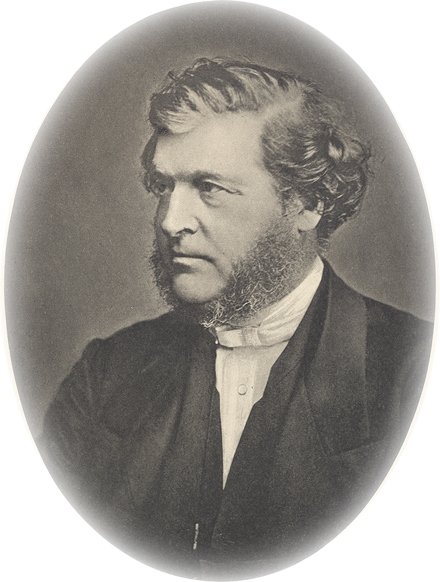
The latter part of the 19th century was an age of great preachers. The names of Spurgeon, Maclaren, Parker and Dale are chief among the greats of the English pulpit in that era. R.W. Dale of Birmingham was one of the greats of the Congregationalists. He is best known for his able defence of the atonement. Spurgeon wrote of Dale: “Among modern divines, few rank as highly as Mr. Dale. Daring and bold in thought, and yet for the most part warmly on the side of orthodoxy, his works command the appreciation of cultured minds.” Thus Dale comes with Spurgeon’s commendation. Dale was a great preacher, and his book Nine Lectures on Preaching (Hodder and Stoughton, 1878) is worth its weight in gold. Dale’s prose style is excellent, and the lessons of this book are lessons that the 21st century needs as much as the 19th. If I had my way, every theological student would have to read this book. If it were widely read, it would vastly improve modern preaching. I intend to give a few select portions from this valuable work to encourage its reading. Dale was an Arminian, but that ought not to keep the Reformed theologian from reading him.
Our first quotation is a rather humorous story with a serious point.
“When you take a text be sure that it is in the Bible. A friends of mine now dead – a very eminent preacher – once made what has been described to me as a very fine sermon on some words which he imagined were in the Book of Proverbs. On Sunday morning, before starting for Church, he thought that it would be as well if he looked up the chapter in which he supposed the words occurred. To his dismay the words were not to be found. He turned to his ‘Cruden,’ but Cruden failed him. He was still confident that the words were in the Book of Proverbs, and when the critical moment came for beginning to preach, he began by saying something to this effect: ‘You will remember, my friends, the words of the wisest of kings’ – then he quoted his text and glided into his sermon as if he had innocently forgotten to say where the words of the wisest of kings occurred. Many a child in the congregation that afternoon hunted in vain through the Book of Proverbs and the Book of Ecclesiastes to discover the text of the morning. I think my friend would have done better if he had warned the people that though he thought the words were Solomon’s, he had not been able to find them, even with the help of a concordance. He discovered afterwards, I think, that the words were in one of the collects or prayers of the Anglican Prayer-book.” – P. 125
“When you take a text be sure that it is in the Bible. A friends of mine now dead – a very eminent preacher – once made what has been described to me as a very fine sermon on some words which he imagined were in the Book of Proverbs. On Sunday morning, before starting for Church, he thought that it would be as well if he looked up the chapter in which he supposed the words occurred. To his dismay the words were not to be found. He turned to his ‘Cruden,’ but Cruden failed him. He was still confident that the words were in the Book of Proverbs, and when the critical moment came for beginning to preach, he began by saying something to this effect: ‘You will remember, my friends, the words of the wisest of kings’ – then he quoted his text and glided into his sermon as if he had innocently forgotten to say where the words of the wisest of kings occurred. Many a child in the congregation that afternoon hunted in vain through the Book of Proverbs and the Book of Ecclesiastes to discover the text of the morning. I think my friend would have done better if he had warned the people that though he thought the words were Solomon’s, he had not been able to find them, even with the help of a concordance. He discovered afterwards, I think, that the words were in one of the collects or prayers of the Anglican Prayer-book.” – P. 125
Subscribe to:
Posts (Atom)