Thursday, July 31, 2008

How to Criticize those we disagree with


Michael Haykin has written an excellent post over at the Andrew Fuller Centre on the subject of criticizing Andrew Fuller. A quotation used by Dr. Haykin in the post struck us as particularly apt:
“Once for all, we must enter our protest against that system of wholesale condemnation, that will admit of nothing good in a man, if some part of his divinity system happen to be open to question.”
This is excellent advice, especially as it comes from a critic of Fuller. We have begun serious study of John Calvin in preparation for a lecture that we shall be giving in Surrey, God willing, some time next year, and if ever there was a man concerning whom the wise words of this old book review whom Haykin quotes were often broken, it is the Reformer of Geneva. From Jerome Bolsec through every sort of silly Arminian and Romanist, to Dave Hunt and Nelson Price (from the ridiculous to.. the ridiculous), Calvin has been besieged by all sorts of men who have decided that, because they do not agree with Calvin's theology, he must have been the greatest monster who ever lived.

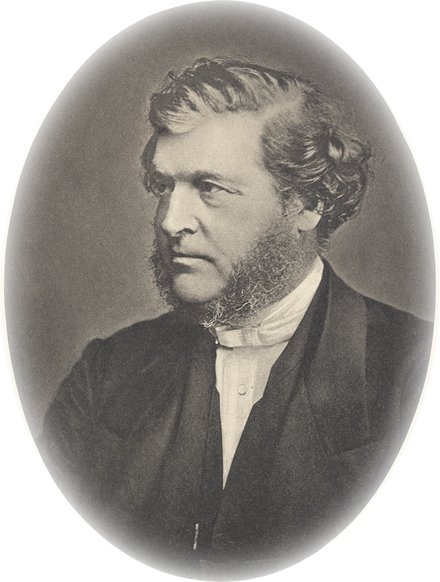
It was therefore refreshing to receive by post this morning Volume 2 of the Cambridge Modern History (first published in 1903), which contains a delightful essay on Calvin and the Reformed Church by Principal A.M. Fairbairn of Mansfield College, Oxford (pictured). A lifelong Arminian and forthright critic of Calvin's theology (let it never be said we only read biographies of Calvin by Calvinists!), Fairbairn nevertheless refused to ignore the good that Calvin had done. Of Fairbairn's essay, his biographer, W.B. Selbie, writes:
"In Calvin Fairbairn had a subject altogether to his mind, and his study of him is among the best things he ever wrote. He always distinguished between the man and his system. Of the latter he had been a convinced and determined critic from the earliest days of his ministry. But he always recognised the great part it had played in the development of Christendom, and he would never suffer the good that was in it to be forgotten. For the man he had a genuine admiration. In describing him as one whose mind was the mind of Erasmus, while his faith and conscience were those of Luther, he struck a point of affinity with himself that could not fail to win his sympathy." (The Life of Andrew Martin Fairbairn [Hodder and Stoughton, 1914] Pp. 403-4)
Like Arminius himself, he lauded Calvin's work as a commentator to the skies. Indeed, We doubt that any Calvinist has been so immoderate in praise of Calvin:
"His services to the cause of sacred learning must not be forgotten. These it is hardly possible to exaggerate; he is the sanest of commentators, the most skilled of exegetes, the most reasonable of critics. He knows how to use an age to interpret a man, a man to interpret an age. His exegesis is never forced or fantastic; he is less rash and subjective in his judgments than Luther; more reverent to Scripture, more faithful to history, more modern in spirit. His work on the Psalms has much to make our most advanced scholars ashamed of the small progress we have made either in method or in conclusions. And his work is inspired by a noble belief; he thought that the one way to realise Christianity was by knowing the mind of Christ; that this mind was to be found in the Scriptures; and that to make them living and credible was to make indefinitely more possible its incorporation in the thoughts and Institutions of man." (Cambridge Modern history, Vol. 2 P. 376)
And what Calvinist can disagree with this Arminian? It warmed our heart to know that Calvin's personality and skill as a commentator had won the sincere admiration and regard of the Oxford scholar.

Thursday, July 24, 2008

Tell the Minister!

Have you ever sat in a service and wanted to tell the minister afterwards that something he said confused you, or that you disagree with something he said? Probably. But have you actually done so? We do not mean in a mean-spirited, fault-finding way, but sincerely. If you have held back, we submit that you were wrong. Ministers need critics, not the nasty sort, but those who are genuinely concerned for the effectiveness of the Gospel ministry. We tend to develop bad habits over time, and it is only constructive criticism (we count personal remarks about the minister as out of court and unhelpful) that will allow us to spot these bad habits and correct them. So take care of your minister, and remember, unless he is completely self-centred and a fool, he will thank you for criticism. What he will not thank you for is holding back.

Despite rumours to the contrary, and claims by those who should know better, ministers are not pysychic. We do not know what you are thinking unless you tell us.

Wednesday, July 23, 2008

Servetus.


With the 500th anniversary of Calvin's birth approaching, we have been asked to give a lecture some time next year on John Calvin. In preparation for this we are searching out the facts of Calvin's life, not only in our own extensive library (more than 2'000 volumes, plus electronic versions of other works, including the complete works of Arminius and Calvin), but also online. An interesting article on Servetus is to be found here.

Tuesday, July 22, 2008

A word on Calvin sources

W while ago we wrote a series defending John Calvin from the attacks of Nelson Price in an abominably badly-written and researched piece on his website (our series is here). Although our list of sources contained some fifteen books, it has come to our attention that in a discussion on another blog, we were charged with relying heavily on Calvinist sources. First of all, we shall say that simply because a book is written by someone who is favourable to its subject does not mean that it is to be discarded as reliable history. Were we to do that, we should have to reject the four Gospels, since they were written by men who worshipped the subject as God!

One of the few gains of Postmodernism is the realisation that there is no such thing as an unbiassed writer. We all have our biases, and this is certainly true with John Calvin. Yet we must here show our hand. Our main source in the writing of our defence of John Calvin was none other than the biography by R.N. Carew Hunt (R.N. Carew Hunt, Calvin [London, the Centenary Press, 1933]). Of this book T.H.L. Parker noted:
"whatever qualifications must be made about its interpretation of Calvin's theology, [it] is reliable and well-written history."
Robert Reymond wrote of it:
"As a biography it is unsurpassed, but Hunt is somewhat hard at times on Calvin because of his doctrine of predestination." ('John Calvin: His LIfe and Influence [Christian Focus, 2004] P. 146)
In other words, far from being heavily dependent on Calvinist sources, our main source was a scholarly biography by a non-Calvinist writer!

Our other non-Calvinist sources were:
Hugh Y. Reyburn, John Calvin (London, Hodder and Stoughton, 1914) [Modernist Church of Scotland pastor who rejected Calvinism]
Williston Walker, History of the Church (Edinburgh, T. and T. Clark, 1960) [Modernist Yale historian]
John Laurence Von Mosheim, Institutes of Ecclesiastical History. Trans. James Murdock (London, William Tegg, 1880) [Historic Lutheran]

In addition we quoted John Wesley, Richard Baxter and Jacobus Arminus himself to show that one need not agree theologically with Calvinism to speak well of Calvin as a man. We examined a number of the older and better non-Calvinist writers to see what they had to say about the man Nelson Price portrayed as an evil dictator. All of these men gave balanced and on the whole favourable accounts of Calvin. Why? Let us leave the last word to Carew Hunt:

"At this point what we may think of his doctrine or his system become of no importance. We are left in the presence of a man who followed what he believed to be the truth, and consecrated his life to its attainment, and for this he will be had in honour as long as courage and singleness of purpose are held as virtues among men."
R.N. Carew Hunt, Calvin (London, the Centenary Press, 1933) P. 316

Monday, July 21, 2008

How not to debate Theology. 1 -Begging the Question

Theological debate is a cut-and-thrust world. To get the best out of any debate, we have to understand some of the principles. Just as Don Carson's book 'Exegetical Fallacies' teaches good exegesis by bringing up examples of bad, so we shall make some remarks on how to conduct onesself in a debate by bringing up a few examples of how not to. We begin with the ever-popular fallacy of 'begging the question' consists in assuming one or more of the points to be proved in the debate. A wider application of this would be to attribute to your opponent a view that you hold, but that he does not.

In the debate with our Dispensational brothers in Christ:

1. Dispensationalist: "If you interpreted Genesis the way you interpret Revelation you would make the Bible into silly putty." (But we don't, because we don't believe that there is a single hermeneutic for all of Scripture, but different genres should be interpreted differently. So apocalyptic should NEVER be interpreted in the same way as history)

2. Dispensationalist: "You believe the Church has replaced Israel." (No, we believe that the Church is an enlarged and reformed Israel. The Dispensationalist, on the other hand, views the Church as an exclusively Gentile body.)

3. Dispensationalist: "You believe that the centre of history is God's redemption of man. We believe it to be His own glory." When the Covenant Theologian replies that he thinks nothing of the sort, the Dispensationalist will declare that he does so, though not in those words. Thus theological debate will be stifled.

4. Roman Catholic: "The early Church was Catholic. They believed what I believe." (No, the word 'Catholic' then did not mean what it means in western culture today. It meant universal, as opposed to heretical)

NOTE: We do not think that the errors of Dispensationalism are one tenth as bad as those of Rome.

Saturday, July 19, 2008

'MacArthur's Millennial Manifesto' - 5

We close our review with a few observations about other parts of Waldron's book.

Waldron shows that, despite the protestations of MacArthur to be speaking as a simple pre-mil, in fact Dr. MacArthur’s sermon presents a form of Dispensationalism, so that the sermon ought to have been entitled ‘Why Every Self-Respecting Calvinist is a Dispensational Premillennialist’. This is not to accuse Dr. MacArthur of dishonesty, it is to note that he has unconsciously confused Dispensationalism with historic premillennialism (unless he has, like Barry Horner, defined historic premillennialism with almost sole reference to Horatius Bonar). Church history, Waldron points out, shows that Calvinism and premillennialism have historically NOT been closely related. While J.N. Darby and other early Brethren leaders were Calvinistic, those who have come after (for example C.A. Coates) moved to a more Arminian position, making the claim that Dispensationalism is the natural Calvinistic position rather tenuous to say the least. To give one prominent example, C.I. Scofield in his ‘Reference Bible‘, P. 1203 refers Romans 9.11 to corporate election, not personal. This is really quite logical if you believe that the purpose of the Dispensation of grace is to test men in respect to obedience to the command to believe on the Lord Jesus Christ. While Dr. MacArthur insists (rightly) that Dispensationalism teaches God’s gracious election of Israel, he fails to point out that even the most rabid Arminians teach corporate election. The thing is, that’s the only election that they DO teach.

Dr. Waldron points out that Dr. MacArthur and other Dispensationalists assume in their criticism of the non-Dispensational position the Dispensational distinction between Israel and the Church, namely that the Church began at Pentecost and is an essentially Gentile institution, while those they criticise hold that there is a continuity between Israel and the Church, so that the Church does not replace Israel but is Israel reformed and expanded to embrace Gentiles who are engrafted into Israel by faith. Thus it is inaccurate to describe this alone as replacement theology. The trouble is that Dr. MacArthur is assuming that we agree with him on the nature of the Church and the relation between the Church and Israel. WE DON’T!!! This is one of the points at issue, not a point of agreement between us!

We teach, following what we understand the Bible to teach, that Christians are members by faith of a Jewish Church with a Jewish head and founded by Jewish Apostles, based on a Bible written by Jewish men (though some think that Luke was a Gentile, we tend to agree with those who think that he was a Jewish man like the other Biblical writers). In this book Dr. Waldron exegetes the key passages showing that the Apostle Paul identifies the Church and Israel. He points out that MacArthur is erroneous in supposing that non-Dispensationalists teach that God cast out Israel for disobedience and made a new people out of the Gentiles. No, He engrafted the elect Gentiles into the olive tree of Israel.

Other chapters deal with such important issues as “Must Israelites be ethnic Jews’ (No. By accepting circumcision those who were born Gentiles could become Israelites by law) and ‘If the Church is Israel, why doesn’t it inherit Israel’s curses?’ (because the true Church is made up of faithful people. As Cranmer put it, it is "the blessed company of all faithful people". The true Church can‘t apostatize, so it cannot receive the curses for disobedience).

This is an excellent response to Dr. MacArthur, presented in a loving, straightforward way. Waldron corrects from the Bible and does his utmost to present MacArthur’s true position. The whole of MacArthur’s offending message is printed as an appendix, allowing the reader to check Waldron’s use of MacArthur in the work. Like all works by men, it ought to be read with discernment, but it will be profitable for anyone who wants to understand more about the ongoing debates over eschatology and Dispensationalism.

Friday, July 18, 2008

'MacArthur's Millennial Manifesto' - 4

Last time we referred further to the common Dispensationalist argument that non-dispensationalistsinterpret the Bible 'allegorically' and showed it to be false. This argument is often stated as 'if you interpreted Genesis the way you interpret Revelation, you'd all be theistic evolutionists', or in the still more sweeping accusation 'if you interpreted the rest of the Bible the way you interpret Revelation, you'd all be raving liberals'. Unfortunately both of these accusations proceed on the mistaken assumption of a SINGLE, simple hermeneutic, which whist it is often assumed by Dispensationalists, is in fact one of the very things we deny. Instead we hold that each book of the Bible is to be interpreted according to its genre. Thus we CANNOT interpret Revelation (apocalypse) as if it were Genesis (history).

As a six-day, young-earth creationist, Dr. Waldron takes Chapter 14 to show that slippery-slope arguments about non-Dispensational hermeneutics leading to theistic evolution and ultimately liberalism are false, using exactly this argument, one which even Dr. MacArthur actually understands. Dr. MacArthur’s contention is further falsified by the difficult fact that it is not only a-millennialists and post-millennialists who hold and have held the various old-earth and theistic evolutionist positions. The 1917 Scofield Bible, the touchstone of early Dispensationalists (we have in our possession one that was literally read to pieces by an old Brethren lady) taught the Gap Theory, which is a form of old-earth creationism. Here is the quotation:
“The first creative act refers to the dateless past, and gives scope for all the geological ages.” (Scofield Reference Bible [Oxford University Press, 1917] P. 3, note 2, emphasis ours)

John Rendle-Short in his book Green Eye of the Storm (Edinburgh, Banner of Truth, 1998) documents how his father, Arthur Rendle-Short, was a devoted member of the Brethren nevertheless embraced a form of theistic evolution (P. 133; 135). So far from this leading to his being put under discipline by the Fellowship, Dr. Rendle-Short was a popular Brethren preacher! The Brethren (we refer to the old Brethren, obviously) do not have a full-time ministry, and so a Brethren preacher cannot rest on his official position. If his theology is suspect he will simply not be invited to preach. The Brethren of Dr. Arthur Rendle-Short’s day did not HAVE liberals, they were thoroughly evangelical and Dispensationalist (we have met many of them, and our Scofield Bible comes from a member of the same Brethren grouping as Dr. Rendle-Short). Thus we must conclude that the Open Brethren of that age found theistic evolution to be within the pale of orthodoxy. We could add that Scofield’s embrace of the Gap Theory opened up the way for this, and we will. After all, the Bible says that God made the sun on the fourth day of creation (Genesis 1.16: “and God made two great lights…” emphasis ours), yet Scofield says of the light of Genesis 3:
“The ‘light’ of course came from the sun.” (SRB P. 3)
And we would ask in passing, what happened to the literal reading of the Bible? Surely ‘if the plain sense makes sense, seek no other sense’. But the plain sense is that God created the sun on the fourth day! That makes sense, so why insert the idea of a pre-existing sun? Answer: because Scofield wants to fit long ages into the Bible!

No doubt there have been many other Dispensationalists who have embraced a form of Theistic Evolution, and many more who have held a form of the gap theory that requires the sort of hermeneutical wriggling that Scofield was forced to use. I might say that this was the inevitable result of a hermeneutic that imposed from without certain conclusions such as the pre-tribulation rapture, and therefore allowed its adherents to impose long ages and evolution on Genesis. But that would be unfair and silly. The fact of the matter is that men on both sides come to the Bible with our presuppositions and cultural influences. The Victorian age with its commitment to the dogma of development has affected us all, either positively or negatively. So men’s reasons for embracing the error of theistic evolution or long-age creationism are not related to their hermeneutic in Revelation, but to the influence of secular science. While we understand the reasons for Dr. MacArthur’s mistake, we wish that this misrepresentation would cease. For further study on this matter we strongly recommend the 2007 James Begg Society lecture.

We have spent so much time on this point because we hold it to be important. Just as the old Brethren idea of a ‘law of first use’ (namely that the meaning of a word in Scripture is to be defined by its meaning the first time that it is used) was an exegetical fallacy, so is this idea of a single ‘normal hermeneutic’. Now this is not (as some may think) to shut up the Bible to scholars alone, for we further maintain that the genres of Biblical literature are apparent to the ordinary reader on their face. Only a fool would mistake the Psalms for history, and as we have noted the Revelation carries in its first verse the declaration that it is a symbolical book. Furthermore, a man does not need to take some commentary to understand the meaning of the symbols of Revelation mean, but only to search the Scriptures diligently.

God willing, we shall conclude next time with some random observations on other parts of the book.